
← Back to Blog
Market Trends
Tallahassee Real Estate Market Guide: Prices, Neighborhoods and Timing for Buyers and Sellers
By Jacqueline Betancourt
Hill Spooner & Elliott, Real Estate, Inc.
September 29, 2026 · 11 min read
If you are trying to understand the Tallahassee real estate market guide covering prices, neighborhoods and timing, this article gives you the concrete numbers and local context you need to make a confident decision in September 2026. Whether you are buying, selling, or relocating, the Tallahassee market has its own rhythms that differ meaningfully from the broader Florida story. Here is what the data shows right now.
1. Where Tallahassee Home Prices Stand Right Now
The Tallahassee median home price sits at approximately $295,000 to $310,000 as of September 2026. That figure has held relatively steady through mid-2026 after a period of modest softening in late 2025. Price per square foot across the metro area runs roughly $165 to $195, depending on the corridor and the age of the home.
Median Price and Price Per Square Foot
Entry-level homes in Tallahassee, generally meaning three-bedroom, two-bath properties built between the 1970s and 1990s, are trading in the $220,000 to $265,000 range. Move-up homes with four bedrooms, larger lots, and updated kitchens are concentrated in the $310,000 to $450,000 band. Custom-built homes on larger parcels in established subdivisions routinely exceed $550,000, with some reaching well above $700,000 in corridors where lot sizes and finishes support those figures.
New construction adds another layer. Builders active in Tallahassee's growth corridors are pricing new single-family homes starting around $320,000 for standard plans and reaching $500,000 or more for larger footprints with premium lots. Those prices reflect current lumber and labor costs, which remain elevated compared to pre-2022 levels.
How Tallahassee Compares to Florida Trends
Tallahassee has historically priced below Florida's coastal metros. While Miami, Tampa, and Orlando have seen dramatic run-ups followed by sharper corrections, Tallahassee's market has moved more gradually in both directions. That stability reflects the city's economic base: state government employment, Florida State University, Florida A&M University, and Tallahassee Community College collectively anchor demand in a way that insulates the market from the speculative swings more common on the coasts. For context on statewide dynamics, Inman's September 2026 analysis of Florida's evolving real estate market offers useful perspective on how different Florida metros are diverging from each other right now.
2. Tallahassee Neighborhoods: Housing Stock, Prices and What You Get
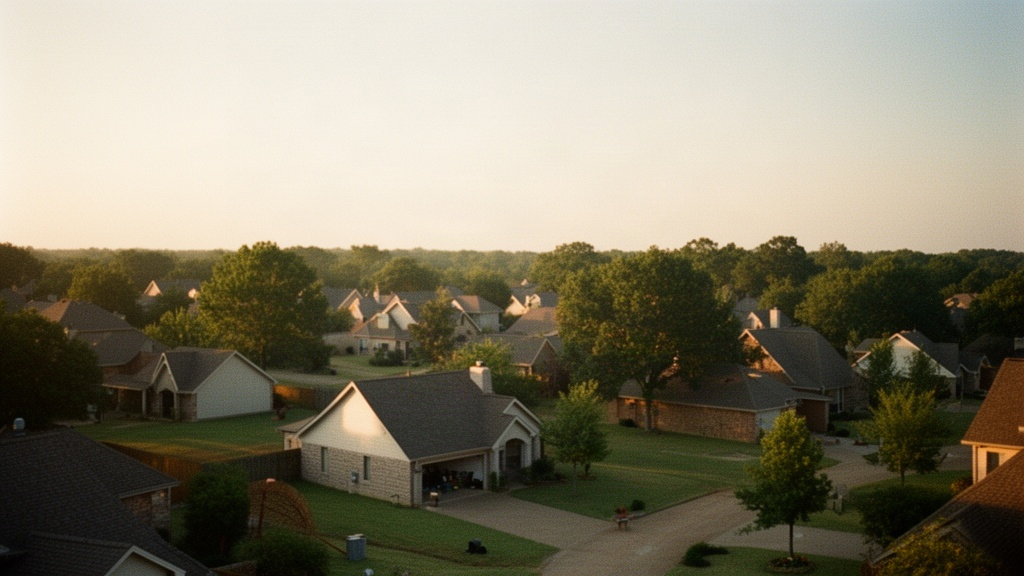
Tallahassee's neighborhoods each have a distinct character defined by their housing stock, lot sizes, tree canopy, and proximity to major employers and amenities. Understanding what each corridor offers physically is the most practical starting point for narrowing your search. This Tallahassee real estate market guide breaks them down by what you will actually find, not by rankings or labels.
Northeast Tallahassee
Northeast Tallahassee stretches from the Thomasville Road corridor out toward Killearn Estates, Killearn Lakes, and Buck Lake Road. The housing stock here is predominantly single-family homes built from the late 1970s through the early 2000s, with lot sizes ranging from a quarter acre to well over an acre in some of the older subdivisions. Killearn Estates, one of the largest planned communities in the Southeast, features a mix of ranch-style homes, two-story colonials, and updated contemporaries, with prices spanning roughly $280,000 to $550,000 depending on size and condition.
The northeast corridor is well served by Publix, Costco, the Bannerman Road commercial district, and Maclay Gardens State Park, a 1,176-acre property with walking trails along Lake Hall. Commute times to the Capitol complex or FSU's main campus run approximately 20 to 30 minutes by car depending on traffic and exact origin. For a detailed look at selling in this corridor, see our article on selling a home in northeast Tallahassee.
Northwest and Southwest Tallahassee
The northwest quadrant, anchored by the Bradfordville and Ox Bottom Road areas, features newer construction from the 2000s and 2010s on lots that tend to be smaller than those in the older northeast subdivisions. Prices here range from roughly $260,000 for older townhomes up to $480,000 for larger single-family homes in newer phases. The northwest is also home to Walmart Supercenter locations, multiple urgent care clinics, and quick access to I-10.
Southwest Tallahassee, including areas near Crawfordville Highway and Capital Circle SW, offers some of the most affordable single-family inventory in the metro. Homes in the $185,000 to $270,000 range are more common here than anywhere else in the city. The tradeoff is longer commutes to the university campuses and the downtown Capitol district, typically 25 to 40 minutes depending on traffic. Our dedicated guide on northwest and southwest Tallahassee pricing and timing covers this corridor in greater depth.
Midtown and In-Town Areas
Midtown Tallahassee sits roughly between Apalachee Parkway to the south, Tennessee Street to the north, Monroe Street to the west, and Capital Circle NE to the east. The housing stock is older, with many bungalows, cottages, and mid-century ranches built between the 1940s and 1970s. Lot sizes are modest, often 6,000 to 9,000 square feet, but the tree canopy is dense and the walkability to restaurants, coffee shops along Thomasville Road, and Cascades Park is a concrete feature of the area.
Midtown prices have climbed steadily. Renovated bungalows in the $290,000 to $420,000 range are common, with unrenovated properties offering entry points closer to $230,000 for buyers willing to take on a project. Condominiums near the downtown core are a separate category; our guide on buying a condo in downtown Tallahassee covers what to know before you sign.
SouthWood and Southeast Tallahassee
SouthWood is a master-planned community off Capital Circle SE that opened in the early 2000s and continues to develop. It features a mix of townhomes, single-family homes, and larger estate-style properties, all connected by a network of trails and ponds. Prices range from approximately $270,000 for smaller attached units to $600,000 or more for larger detached homes on premium lots. The community is about 10 miles from the Capitol building, with Capital Circle SE providing a direct route.
The broader southeast corridor also includes older subdivisions along Apalachee Parkway and Mahan Drive. These neighborhoods feature ranch-style homes from the 1960s through 1980s, with prices generally in the $195,000 to $310,000 range. The SouthWood area guide on this site goes deeper into HOA structure, lot types, and recent sale trends.
3. Market Conditions: Supply, Demand and Days on Market
Tallahassee currently sits in a balanced to slightly buyer-favoring market as of September 2026. Active inventory has grown compared to the tight conditions of 2022 and 2023, giving buyers more options and more negotiating room than they had two years ago. Sellers who price correctly are still moving homes at a reasonable pace, but overpriced listings are sitting longer than they would have in the peak market.
Inventory Levels in September 2026
Tallahassee's active listing count has been running at roughly 3 to 4 months of supply across the metro, which places it in balanced territory by traditional real estate standards. Below $275,000, inventory is tighter, often closer to 2 months, because demand from first-time buyers and investors competes for a limited pool of affordable homes. Above $500,000, supply has loosened more noticeably, with some listings sitting 60 to 90 days before going under contract.
For a granular look at how long homes are actually sitting before going under contract, the Steadily 2026 Tallahassee real estate market overview provides additional context on absorption rates and rental market dynamics that affect overall housing demand in the city.
What the Pace of Sales Tells Buyers and Sellers
Median days on market for Tallahassee homes in September 2026 is running approximately 35 to 50 days across all price points. That is a meaningful increase from the 10 to 20 day averages of 2021 and 2022, and it signals that buyers now have time to complete due diligence without the pressure of same-day decision-making. Well-prepared sellers with accurately priced homes in move-in condition are still seeing competitive offers, particularly in the northeast corridor and in SouthWood.
List-to-sale price ratios have settled around 96 to 98 percent for correctly priced homes. That means a seller listing at $350,000 can reasonably expect to close somewhere between $336,000 and $343,000 if the home is priced at market. Homes priced above comparable sales are seeing larger concessions or price reductions before going under contract.
4. Timing the Tallahassee Market: When to Buy and When to Sell
Tallahassee follows seasonal real estate patterns that are somewhat distinct from Florida's coastal markets. Understanding those patterns helps both buyers and sellers make more deliberate decisions about when to act. This section of the Tallahassee real estate market guide covers timing from both sides of the transaction.
Seasonal Patterns in Tallahassee
Spring, from March through May, is historically the most active listing season in Tallahassee. Families with children in Leon County schools tend to time their moves to avoid disrupting the school year, which concentrates buying activity in the spring and early summer. Sellers who list in March or April typically see the most showings and the strongest offers.
Fall, and specifically September through November, presents a different dynamic. Inventory tends to thin out as motivated spring sellers have already sold and some would-be sellers pull listings until the following year. That reduction in competition can actually benefit sellers who list in the fall, because serious buyers are still active and have fewer options to compare. Our article on selling a home in Tallahassee in fall 2026 versus spring breaks down the tradeoffs in detail.
The FSU and FAMU academic calendar also influences demand. Faculty and staff relocations tied to university hiring cycles tend to concentrate in late spring and summer, which adds a layer of demand beyond the typical residential buyer pool. Investors purchasing rental properties near campus tend to move year-round, though they are particularly active in January through March as they prepare for the following academic year.
Interest Rate Context and Purchasing Power
Mortgage rates in September 2026 are running in the mid-to-upper 6 percent range for a 30-year conventional loan, down modestly from the peaks of late 2023. At 6.75 percent, a buyer financing $280,000 carries a principal and interest payment of approximately $1,815 per month. That figure is meaningfully higher than what buyers faced in 2020 and 2021, but the rate environment has stabilized enough that many buyers are proceeding rather than waiting for further reductions.
The refinance option is a practical consideration for buyers purchasing now. If rates drop by 75 to 100 basis points over the next 12 to 18 months, buyers who purchased in 2026 will have the opportunity to refinance and reduce their monthly payment. Waiting for rates to drop before buying means competing against more buyers in a market with potentially less inventory and higher prices.
5. What This Means If You Are Buying or Selling Right Now
The current Tallahassee real estate market rewards preparation on both sides of the transaction. Buyers have more options and negotiating leverage than they did two years ago. Sellers can still achieve strong prices, but they need to be strategic about pricing and presentation in a way that was less critical during the frenzied 2021 to 2022 period.
Advice for Buyers in September 2026
Get pre-approved before you start touring homes. Even in a balanced market, sellers in Tallahassee's most active price bands expect buyers to arrive with financing documentation in hand. A pre-approval letter from a local or regional lender carries more weight with listing agents than a generic online pre-qualification.
Budget for closing costs in addition to your down payment. In Tallahassee, buyers typically pay 2 to 4 percent of the purchase price in closing costs, covering items like lender fees, title insurance, recording fees, and prepaid insurance and taxes. On a $300,000 purchase, that is $6,000 to $12,000 out of pocket beyond the down payment. For a full breakdown, see our article on closing costs for home buyers in Tallahassee.
Use inspection contingencies. Unlike the peak market years when buyers were waiving inspections to compete, the current Tallahassee market allows buyers to include standard inspection and financing contingencies without automatically losing to competing offers. This is a meaningful protection, particularly for older homes in Midtown or the northeast corridor where deferred maintenance on roofs, HVAC systems, and plumbing is common.
Advice for Sellers in September 2026
Pricing accurately from day one is the single most important decision a seller makes. Tallahassee buyers in September 2026 are doing their research. They are seeing comparable sales data, tracking how long homes have been listed, and noticing price reductions. A home that enters the market overpriced and sits for 45 days before a reduction will receive lower offers than a comparable home that was priced correctly from the start.
Presentation matters more now than it did in 2021. Professional photography, a clean and decluttered interior, and minor cosmetic repairs like fresh paint and updated fixtures make a measurable difference in how quickly a home goes under contract. Sellers who invest $1,000 to $3,000 in pre-listing preparation routinely recover that investment in the final sale price. For a complete overview of the selling process and what to expect at each stage, the article on selling a home in Tallahassee covers pricing strategy, timelines, and negotiation in detail.
Consider your net proceeds carefully before setting your list price. Sellers in Tallahassee typically pay 5 to 6 percent in agent commissions, plus any seller-paid closing costs or buyer concessions negotiated during the contract. On a $320,000 sale, commission alone represents $16,000 to $19,200. Understanding your net before you list helps you make clear-eyed decisions when offers come in.
FAQ
Is the Tallahassee real estate market a buyer's market or seller's market in September 2026?
Tallahassee is currently in a balanced to slightly buyer-favoring market as of September 2026. Active inventory has grown to roughly 3 to 4 months of supply across the metro, giving buyers more choices and negotiating room than during the tight conditions of 2021 through 2023. Below $275,000, supply remains tighter and competition is more intense. Above $500,000, buyers have more leverage and sellers are more willing to negotiate on price and concessions. The market varies meaningfully by price band and corridor, so working with a local agent who tracks specific neighborhoods is the most reliable way to understand conditions for your particular situation.
What is the median home price in Tallahassee right now?
The median home price in Tallahassee is approximately $295,000 to $310,000 as of September 2026. Entry-level homes in the $220,000 to $265,000 range are available primarily in the southwest and parts of the southeast corridor. Move-up homes with four bedrooms and updated finishes are concentrated in the $310,000 to $450,000 range, with custom and luxury properties exceeding $550,000 in established northeast subdivisions and SouthWood. New construction is generally priced above the resale median, starting around $320,000 for standard plans from active builders in the metro's growth corridors.
When is the best time to list a home for sale in Tallahassee?
Spring, specifically March through May, is historically the peak listing season in Tallahassee, driven by families timing moves around the Leon County school calendar and university hiring cycles at FSU and FAMU. However, fall listings from September through November can also perform well because serious buyers remain active while competing inventory thins out. The most important factor is not the month but the accuracy of your pricing and the condition of the home. A well-priced, well-prepared home listed in October will outperform an overpriced home listed in April. Consulting with a local agent who can pull current comparable sales data for your specific neighborhood is the most reliable way to determine your optimal list date.