← Back to Blog
Market Trends
Louisville Real Estate Market Guide: Prices, Neighborhoods and Timing
By Jalyn Nutgrass
Re/Max Premier Properties | The Lewis Real Estate Group · DRE# 301453
September 3, 2026 · 11 min read
If you are buying, selling, or relocating to Louisville, Kentucky, understanding the local market before you make a move can save you thousands of dollars and weeks of frustration. This Louisville real estate market guide covers current home prices across different parts of the city, what the housing stock actually looks like neighborhood by neighborhood, and how to think about timing your transaction in September 2026.
1. Where Louisville Home Prices Stand Right Now
Louisville's median home sale price is currently sitting in the low-to-mid $280,000s as of September 2026. That figure represents a meaningful increase from where the market was two years ago, driven by steady in-migration, limited new construction in established neighborhoods, and mortgage rate adjustments that have gradually pulled more buyers back into the market. The city remains one of the more accessible mid-size metros in the eastern half of the country for buyers who are priced out of Nashville or Cincinnati.
For deeper context on how Louisville compares to other regional markets, HousingWire's local market analysis on Louisville highlights the metro's relative affordability and the demand pressures that have kept inventory tight across most price bands.
Median Price and Price-Per-Square-Foot Benchmarks
Price per square foot in Louisville currently ranges from roughly $130 on the lower end in some of the city's older south-side neighborhoods to $200 or above in areas like the Highlands, Crescent Hill, and parts of St. Matthews. Entry-level buyers can still find single-family homes under $200,000 in pockets of Shively, Okolona, and parts of the Pleasure Ridge Park corridor, though those listings move quickly and rarely sit more than a week before attracting multiple showings.
Move-up buyers targeting three-bedroom, two-bath homes with a garage and a finished basement are generally shopping in the $280,000 to $380,000 range depending on the area. Luxury product, defined loosely as homes above $600,000, is concentrated in the River Road corridor, parts of Prospect, and select streets in Indian Hills and Glenview. That segment has seen slower appreciation than the mid-market because the buyer pool is narrower and days on market stretch longer.
How Prices Vary Across Louisville's Zip Codes
The 40206 zip code, which covers the Highlands, routinely posts median sale prices above $350,000 and often closer to $390,000 for updated bungalows and craftsman-style homes. Contrast that with 40214, which covers the Iroquois and Beechmont areas of south Louisville, where the median hovers closer to $195,000 and buyers can still find brick ranches on generous lots. The spread between these zip codes reflects differences in lot size, home age, walkability to Cherokee Park and Bardstown Road, and proximity to the Ohio River.
East end zip codes like 40245 (Middletown and Anchorage area) and 40223 (Prospect corridor) tend to reflect newer construction and larger square footage, with medians in the $350,000 to $450,000 range. Jeffersontown, covered in its own detailed guide on this site, sits in a price band that draws buyers who want suburban lot sizes without a long commute to the Gene Snyder Freeway employment corridor.
2. What the Housing Stock Looks Like Across Louisville's Neighborhoods
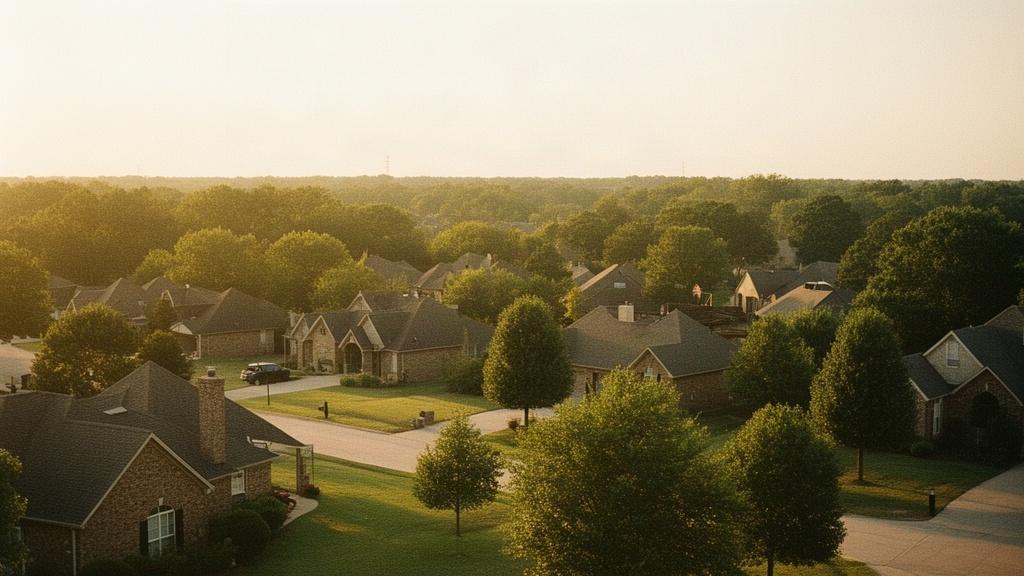
Louisville's housing stock is one of the most architecturally varied in Kentucky, ranging from pre-World War II brick colonials and shotgun-style cottages to 1970s ranch homes and 2010s new construction subdivisions. Understanding what you are likely to encounter in each part of the city helps you set realistic expectations for condition, maintenance needs, and renovation potential before you ever step through a front door.
Older Urban Neighborhoods: Architecture and Lot Sizes
The Highlands, Crescent Hill, Clifton, and Cherokee Triangle are built on a grid street pattern with lots typically running 40 to 50 feet wide. You will find a mix of Victorian-era two-stories, brick bungalows from the 1920s and 1930s, and occasional mid-century infill. Basements are common and often partially finished. These homes tend to have smaller garages or detached carriage-style garages at the back of the lot. Updated kitchens and baths add significant value here because buyers in this market are willing to pay for move-in-ready condition.
Crescent Hill in particular has seen strong price appreciation tied to its walkable commercial strip along Frankfort Avenue, with coffee shops, independent restaurants, and proximity to the Louisville Waterfront Park. Homes on the larger lots closest to the park command a premium, and updated three-bedrooms in the neighborhood regularly close above $400,000.
East End and Suburban Corridors
Moving east along the Brownsboro Road and US-42 corridors, the housing stock shifts toward larger lots, more attached garages, and subdivision-style construction from the 1980s through the 2010s. St. Matthews sits at the intersection of older suburban ranch homes and newer infill construction, with some streets showing a mix of 1950s brick ranches alongside recently built two-story colonials. Lot sizes here tend to run a quarter-acre or more, which is a meaningful shift from the urban core.
Further east toward Prospect and Anchorage, buyers encounter larger planned subdivisions, some with HOA amenities like pools and walking trails. Homes in this corridor frequently offer four or five bedrooms, three-car garages, and half-acre to full-acre lots. New construction is still active in pockets of this area, which gives buyers the option to purchase a home with a builder warranty rather than taking on the deferred maintenance that older stock sometimes carries.
South Louisville and the Shively Corridor
South Louisville stretches from the Iroquois neighborhood near Iroquois Park all the way down toward Okolona and the I-265 loop. The housing stock here is dominated by brick ranch homes built between the late 1950s and the early 1980s, typically on lots of a quarter to a third of an acre. These homes often have two or three bedrooms, one or two baths, a single-car garage, and unfinished basements that offer significant square footage potential. For buyers who want a project with room to build equity, this corridor consistently delivers.
Jeffersontown and the Gene Snyder Corridor
Jeffersontown, known locally as J-Town, sits about 12 miles east of downtown Louisville along the Gene Snyder Freeway (I-265). The housing stock ranges from 1970s split-levels and two-story colonials to newer patio homes and townhomes built in the 2000s and 2010s. The area has its own downtown district along Taylorsville Road and offers buyers a mix of established neighborhoods and newer subdivisions. If you want the full breakdown on buying in J-Town specifically, the Jeffersontown buyer's guide on this site covers the process, costs, and timeline in detail.
3. Market Conditions: Supply, Demand, and What They Mean for You
Louisville's market in September 2026 is operating with below-average inventory relative to historical norms, which continues to put upward pressure on prices in the most in-demand price bands. That said, conditions are more balanced than they were during the peak frenzy of 2021 and 2022. Buyers have more time to conduct inspections, and sellers are less likely to receive ten offers the first weekend. Understanding the current rhythm matters whether you are listing or shopping.
Inventory Levels and Days on Market
Active listings across the Louisville metro currently represent roughly two to three months of supply at the current absorption rate, which is below the four-to-six-month range that typically signals a balanced market. Homes priced correctly in the $230,000 to $350,000 range are averaging fewer than 20 days on market before going under contract. Homes above $500,000 are taking longer, often 45 to 60 days, because the buyer pool at that price point is smaller and more deliberate.
How Sellers Are Pricing and Negotiating
Sellers who price at or slightly below recent comparable sales are still generating strong interest and, in some cases, multiple offers. Sellers who stretch the list price above what the comps support are finding that their homes sit, then require a price reduction that signals weakness to buyers. The lesson from the current market is that accurate pricing from day one outperforms aspirational pricing followed by a cut. For a full walkthrough of what sellers should expect from list to close, the Louisville seller's guide on this site is worth reading before you decide on your list price.
What Buyers Are Competing Against
The most competitive segment for buyers right now is the starter and move-up range between $200,000 and $320,000. In this band, buyers are frequently competing against other financed buyers and, in some cases, cash investors who are targeting rental-ready properties in south Louisville and the Shively corridor. Coming in with a strong pre-approval, a flexible closing date, and a clean offer structure gives buyers a meaningful edge when they find the right home.
4. Timing Your Move in Louisville's Market
Timing in Louisville's real estate market follows a predictable seasonal pattern, though the specifics shift slightly depending on which part of the city you are focused on and what price range you are working in. Knowing when the market heats up and when it cools helps both buyers and sellers make more deliberate decisions rather than reacting to urgency that may or may not be real.
The Seasonal Pattern Louisville Follows
Louisville's market typically ramps up in late February and March as buyers who have been waiting through winter begin their search in earnest. The spring selling season runs through late May and into June, which is historically when the most listings hit the market and when buyer competition peaks. Summer brings a slight slowdown as families with school-age children try to close before the new school year. Fall, including the September window we are in right now, tends to bring a second, smaller wave of activity as buyers who missed the spring rush return to the market.
When Sellers Get the Most Attention
Sellers who list between mid-March and late May in Louisville consistently see the highest number of showings and the strongest offers. Curb appeal is a factor here: Louisville's dogwood and redbud trees are in bloom during that window, and a home that photographs well in spring light tends to attract more online clicks, which translates to more in-person showings. Sellers who list in September, like right now, are working with a motivated but smaller buyer pool, which means pricing precision matters even more.
When Buyers Find More Room to Negotiate
November through January is historically Louisville's slowest period for home sales, and that slowdown creates negotiating leverage for buyers who are willing to shop during the colder months. Sellers who list in winter are often more motivated, either because of a job relocation, an estate situation, or a price reduction after a failed spring or fall listing. Buyers in that window tend to face fewer competing offers and have more room to negotiate on price, closing costs, or repairs. The tradeoff is a thinner selection of available homes.
For additional context on whether this specific moment is a good entry point, the NAR Regional Market Assessment for Kentucky provides a state-level view of demand indicators, affordability trends, and inventory conditions that give useful background for anyone evaluating timing in the Louisville metro.
5. Commute, Infrastructure, and What Ties the Market Together
Louisville's highway infrastructure is one of the strongest predictors of where home prices cluster and why certain neighborhoods hold value better than others. The city is built around several major interstate corridors, and proximity to those corridors, along with the amenities that cluster near them, shapes the demand for housing in each quadrant of the metro.
Major Corridors and Drive Times
I-64 runs east-west through the city and connects the Highlands and downtown to St. Matthews, Middletown, and the Blankenbaker corridor. A drive from St. Matthews to downtown Louisville takes roughly 15 to 20 minutes in normal traffic. I-265, the Gene Snyder Freeway, forms a loop around the eastern and southern portions of the metro and connects Jeffersontown, Okolona, and the Fern Creek area to both I-64 and I-65. The Watterson Expressway (I-264) is the inner loop, connecting the south end to the east end without passing through downtown.
Buyers who work in the Ford Motor Company truck plant in Louisville's south end or in the UPS Worldport hub near the airport will find that south Louisville and the Shively corridor offer short commutes of 10 to 20 minutes. Buyers who work in the medical corridor around the University of Louisville Health campus on East Broadway will find that the Highlands, Germantown, and Schnitzelburg neighborhoods put them within a 10-minute drive or a reasonable bike ride.
Proximity to Downtown and Employment Centers
Downtown Louisville anchors the northwestern edge of the metro's employment geography, with the NuLu arts district, the KFC Yum! Center arena, and the Fourth Street Live entertainment corridor all within walking distance of each other. Buyers who prioritize walkability to these anchors tend to focus on Butchertown, NuLu, and Old Louisville, where older Victorian and Italianate homes often start in the $200,000s for properties that need updating and climb well above $400,000 for fully renovated examples. Old Louisville in particular is home to one of the largest intact Victorian residential districts in the United States, which gives it a distinctive architectural character that buyers either find compelling or overwhelming.
The Louisville market's long-term stability is also supported by its diverse employer base, which includes healthcare systems like Norton Healthcare and Baptist Health, the bourbon industry's growing presence along the Urban Bourbon Trail, and the logistics sector anchored by UPS's global air hub. That employer diversity means the housing market is not dependent on a single industry, which has historically kept Louisville from experiencing the sharp boom-and-bust cycles that hit more monoculture economies.
If you are weighing whether to act now or hold off, the detailed breakdown of current Louisville housing market trends on this site goes deeper on the supply and demand data that shapes the month-to-month picture for buyers and sellers alike.
FAQ
What is the median home price in Louisville, Kentucky right now?
As of September 2026, Louisville's median home sale price is in the low-to-mid $280,000s across the broader metro. That number varies significantly by area: the Highlands and Crescent Hill routinely see medians closer to $350,000 to $390,000, while south Louisville neighborhoods like Beechmont and Okolona sit closer to $190,000 to $210,000. Price per square foot ranges from around $130 in older south-side neighborhoods to $200 or above in walkable urban areas. The best way to get an accurate current value for a specific address or zip code is to request a comparative market analysis from a local agent who tracks those numbers daily.
Is Louisville a buyer's market or a seller's market in September 2026?
Louisville is currently operating in a mild seller's market, with inventory representing roughly two to three months of supply rather than the four to six months that signals a balanced market. Homes in the $200,000 to $350,000 range are moving quickly, often under contract within 20 days when priced correctly. Buyers in the upper price bands above $500,000 have more negotiating room and more time to make decisions. The market has moderated from the extreme conditions of 2021 and 2022, so buyers can generally conduct inspections and negotiate repairs, but competitive offers are still the norm in the most active price bands.
What is the best time of year to buy or sell a home in Louisville?
For sellers, the spring window from mid-March through late May is historically Louisville's strongest season, with the most buyer activity, the most showings, and the highest probability of receiving multiple offers. For buyers who want less competition and more negotiating leverage, the November through January window tends to be the slowest, with motivated sellers and fewer competing offers. Fall, the period we are in right now in September 2026, represents a secondary active season where buyer motivation is high but the pool is smaller than spring. The right timing ultimately depends on your personal situation, your price range, and the specific neighborhood you are targeting.