← Back to Blog
Market Trends
Mason, Ohio Is Known for Its Real Estate Market: A Guide to Prices, Neighborhoods and Timing
By Javaria Usmani, YOOO
Plum Tree Realty
September 27, 2026 · 10 min read
Mason, Ohio is known for a real estate market that draws consistent attention from buyers across the Cincinnati metro, and for good reason: the city combines suburban scale with genuine amenities, a wide range of housing types, and price points that span from the mid-$300,000s to well over a million dollars. This guide covers what you actually need to know about prices, neighborhoods and timing before you make a move.
1. What Mason, Ohio Is Known for in Real Estate
Mason, Ohio is known for a real estate market that has remained resilient through multiple economic cycles. Located in Warren County about 25 miles northeast of downtown Cincinnati, Mason sits at the intersection of I-71 and SR-741, which gives residents straightforward access to both the city core and the broader I-71 corridor. That location, combined with a dense network of retail, restaurants, parks, and corporate employers along the Fields Ertel and Western Row Road corridors, has made Mason one of the more consistently active housing markets in the region.
A Market Built on Planned Growth
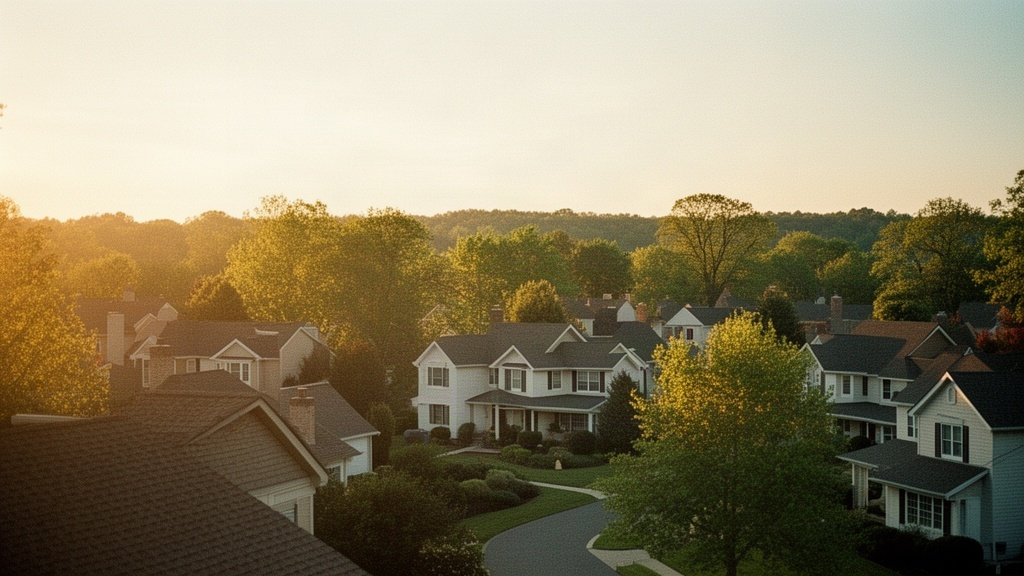
Mason grew rapidly through the 1980s and 1990s as developers built large planned communities on what had been farmland. That era of development produced the subdivision-heavy landscape that defines much of the city today: cul-de-sacs, community pools, tennis courts, and HOA-governed common areas. The result is a housing stock that skews toward single-family homes built between 1985 and 2005, with newer construction filling in on the city's western and northern edges. Kings Island, the Cedar Fair amusement park on Kings Mills Road, is one of Mason's most recognizable landmarks and sits just south of the city limits, anchoring the area's identity as a destination as much as a bedroom community.
Housing Stock at a Glance
The typical Mason home is a two-story colonial or transitional-style single-family house on a lot between 0.2 and 0.5 acres. Three- and four-bedroom layouts are the most common. Attached and detached condominiums exist in pockets throughout the city, particularly along Mason-Montgomery Road and near the Deerfield Township border. True ranch-style homes are less common but do appear in older subdivisions closer to Mason's historic downtown on Reading Road. Townhomes and paired villas have become more prevalent in newer developments built after 2015.
2. Home Prices in Mason, Ohio Right Now
As of September 2026, Mason home prices reflect a market that has appreciated steadily over the past several years while showing some moderation in pace compared to the peak activity of 2021 and 2022. Buyers and sellers both benefit from understanding where prices cluster, because Mason is not a single-price market. The range is genuinely wide, from entry-level condos under $300,000 to custom homes exceeding $1.5 million in the city's most established subdivisions.
Where the Median Sits in September 2026
The median sale price for single-family homes in Mason currently sits in the low-to-mid $500,000s, though individual neighborhoods push that figure meaningfully higher or lower. According to tracking data from sources like NeighborhoodScout's Mason, OH real estate appreciation report, Mason has historically outpaced the national average for home value appreciation, which is a meaningful data point for buyers evaluating long-term value. Condos and townhomes generally trade between $280,000 and $420,000 depending on size, finishes, and HOA structure.
Price Ranges by Property Type
Entry-level single-family homes in Mason, typically older ranches or smaller colonials in subdivisions near downtown Mason or along Reading Road, start around $330,000 to $380,000. The largest share of transactions happens in the $420,000 to $650,000 range, which covers most three- and four-bedroom homes in established planned communities. Homes above $700,000 are concentrated in subdivisions like Fairways of Landen, Wynstone, and parts of the Deerfield Township border area. Properties above $900,000 typically sit on larger lots, carry significant square footage, and often feature custom finishes or backing to golf course or wooded green space. For a deeper look at that upper tier, the guide to higher-end properties in Mason's real estate market covers pricing, timing, and what to expect at that price point.
3. Neighborhoods and Communities Worth Understanding
Mason's real estate market is shaped by its neighborhoods more than almost any other variable. Two homes with identical square footage can be priced $100,000 apart based entirely on which subdivision they sit in, what HOA amenities are included, and how recently the community was built. Understanding the major community types helps buyers narrow their search and helps sellers price accurately.
Landen and the Planned Community Belt
Landen is one of the most recognized addresses in the Mason area, a large master-planned community that straddles the Mason and Deerfield Township boundary along Landen Farm Road and Socialville-Foster Road. Homes here are predominantly two-story colonials and transitional-style houses built in the 1980s and 1990s, with lot sizes ranging from roughly 0.2 to 0.4 acres. The community includes multiple pool complexes, tennis courts, and miles of walking paths. HOA fees in Landen typically run between $600 and $900 per year for the base association, though some sub-communities within Landen carry additional fees. For a full breakdown of what those fees cover and what the rules entail, the article on HOA fees and rules in Mason's planned communities is worth reading before you make an offer in any HOA community.
Homes in Landen currently trade in a wide band from the low $400,000s for smaller, original-condition properties to the mid-$600,000s for fully updated homes with premium lot positions. Buyers often find that Landen offers more square footage per dollar than newer developments, though renovation costs should be factored into any offer on a home that has not been updated since original construction.
Deerfield Township Addresses
A meaningful portion of homes that carry Mason mailing addresses are technically located in Deerfield Township, an unincorporated area of Warren County that surrounds much of Mason's incorporated city limits. This matters for buyers because Deerfield Township properties fall under Warren County jurisdiction rather than the City of Mason for zoning and certain services, though they are served by the Mason City School District. Subdivisions like Deerfield, Wynstone, and The Fairways sit in this zone. Prices in Deerfield Township communities generally align closely with Mason proper, ranging from the mid-$400,000s to well over $800,000 depending on the subdivision and lot.
Newer Developments and Infill Pockets
Mason's newer construction activity has been concentrated along the city's western edge near Western Row Road and on scattered infill parcels throughout the city. Builders including Fischer Homes and Drees Homes have been active in this corridor, delivering homes with open floor plans, larger primary suites, and three-car garages that older subdivisions rarely offer. New construction in Mason currently prices from the low $500,000s for smaller plans to $800,000 and above for larger custom or semi-custom builds. The article on new construction neighborhoods and developments in Mason in 2026 goes deeper on active communities, builder incentives, and what to watch for in a new-build contract.
Mason's historic downtown area near Reading Road and Church Street also contains a small number of older homes on larger lots, some dating to the early 1900s. These properties are less common on the market and attract buyers specifically interested in character architecture, walkability to the downtown core, and lot sizes that newer subdivisions rarely match.
4. Market Conditions and What They Mean for Buyers and Sellers
Understanding current conditions is what separates a well-timed transaction from a costly one, whether you are buying or selling. Mason's market in September 2026 is more balanced than it was during the frenzy of 2021 and 2022, but it has not shifted into buyer's market territory. Inventory remains constrained relative to demand, which continues to support prices even as the pace of appreciation has slowed.
Inventory Levels and Competition
Active listings in Mason typically run well below a six-month supply, the threshold that traditionally defines a balanced market. In practice, this means that well-priced, well-presented homes in desirable subdivisions still attract multiple offers within the first week of listing. Homes that are overpriced or need significant work tend to sit longer and may require price reductions before going under contract. The gap between correctly priced and incorrectly priced homes is wider now than it was two years ago, which makes accurate list pricing more important than ever for sellers.
Days on Market and Offer Dynamics
The median days on market for Mason homes currently sits in the low-to-mid teens for move-in-ready properties priced at or below market value. Homes that need updating or are priced above comparable sales often spend four to eight weeks on market before sellers adjust. For a granular look at current days-on-market figures and whether homes are selling over asking price this month, the dedicated article on average days on market for Mason homes provides the most current breakdown.
Buyers in Mason should be prepared to move quickly on homes that check their boxes. Pre-approval letters from a lender, not just pre-qualification, are expected before any offer is taken seriously. Escalation clauses and limited inspection contingencies have become common tools in competitive situations, though the degree of competition varies significantly by price band and specific subdivision.
How Mason Compares to the Broader Cincinnati Market
Mason consistently trades at a premium compared to the broader Cincinnati metro median, reflecting its corporate employment base, the concentration of amenities along the SR-741 and Mason-Montgomery Road corridors, and the draw of the Mason City School District. The Cincinnati metro market as a whole has been described as unpredictable in recent years, with pockets of intense competition sitting alongside neighborhoods where listings linger. Mason tends to fall on the competitive end of that spectrum, particularly in the $400,000 to $650,000 range where the most buyers are active.
Buyers relocating from higher-cost metros like Columbus, Chicago, or the coasts often find Mason's price-per-square-foot figures attractive by comparison. A 3,000-square-foot home with a finished basement, three-car garage, and community pool access that would cost $900,000 or more in many suburban markets outside Ohio is available in Mason in the $550,000 to $700,000 range, depending on age and condition.
5. Timing: When to Buy or Sell in Mason
Timing in Mason's real estate market follows recognizable seasonal patterns, though those patterns have become less pronounced since 2020 as year-round demand has remained elevated. Knowing when inventory peaks, when competition is fiercest, and when sellers are more likely to negotiate gives buyers and sellers a genuine edge.
Spring and Summer Patterns
March through July is consistently the most active period in Mason's housing market. Listing volume rises as sellers who waited through winter bring homes to market, and buyer demand surges as households try to close and move before the new school year. This is when multiple-offer situations are most common, when over-asking-price sales happen most frequently, and when days on market hit their seasonal lows. Sellers who list in late March or April tend to capture the largest pool of active buyers. Buyers who enter the market in this window need to be fully prepared: financing in order, a clear sense of their priorities, and the ability to make decisions quickly.
Fall and Winter Opportunities
September through February brings lower listing volume and, generally, less buyer competition. Sellers who list in fall often do so because of genuine motivation: job relocations, estate sales, or life changes that do not align with the spring calendar. That motivation can translate into more negotiating room on price, closing costs, or repairs. Buyers who can be flexible about move-in timing sometimes find their best opportunities in October and November, when a home that sat unsold through August becomes a negotiation rather than a bidding war.
Winter in Mason also tends to produce cleaner transactions. Fewer competing buyers means inspection contingencies are more likely to be accepted, financing timelines are easier to meet, and lenders, title companies, and inspectors have more availability. For buyers who are not locked into a specific move-in date, the November-to-February window is worth serious consideration.
What Timing Actually Changes
Timing affects competition and negotiating leverage more than it affects price in most cases. Mason's underlying demand is consistent enough that waiting for a price collapse in any season is unlikely to be a productive strategy. What changes with the season is how many other buyers you are competing against and how motivated sellers are likely to be. Those two variables together determine whether you pay asking price, above it, or below it, and whether you get the inspection contingency, the closing cost credit, or the appliances included.
For sellers, the calculus is similar. Spring maximizes exposure and typically produces the strongest sale prices for move-in-ready homes. But a well-priced, well-presented home sells in any month in Mason. The cost of waiting six months for the spring market, in carrying costs, mortgage payments, and opportunity cost, often exceeds whatever premium the spring timing might add. The article on selling a home in Mason, Ohio walks through the full pricing and timeline picture for sellers at every stage of the process.
FAQ
What is the typical home price in Mason, Ohio right now?
As of September 2026, the median sale price for single-family homes in Mason sits in the low-to-mid $500,000s, though the actual range is much wider. Entry-level colonials and ranches in older subdivisions start around $330,000 to $380,000, while updated homes in communities like Landen or Wynstone regularly sell in the $550,000 to $700,000 range. Custom or larger homes in premium locations can exceed $1 million. Condos and townhomes generally trade between $280,000 and $420,000 depending on size and HOA structure. The best way to get an accurate picture for a specific neighborhood or home type is to review recent comparable sales with a local agent who tracks the Mason market closely.
Is Mason, Ohio a buyer's market or a seller's market in 2026?
Mason's market in 2026 leans toward sellers, though it is more balanced than the extreme conditions of 2021 and 2022. Active inventory remains below the six-month supply threshold that defines a balanced market, which means well-priced homes in desirable subdivisions still attract multiple offers. However, overpriced or condition-challenged homes are sitting longer and requiring price reductions, which gives buyers more leverage in specific situations. Buyers who are fully prepared with financing and a clear sense of their priorities are in a much stronger position than those who are still getting organized. The market rewards preparation on both sides of the transaction.
What are the main neighborhoods to know about when buying in Mason, Ohio?
The most prominent communities include Landen, a large master-planned area straddling Mason and Deerfield Township with pools, tennis courts, and walking paths; Wynstone and The Fairways, which are established Deerfield Township subdivisions with larger lots and higher price points; and newer developments along the Western Row Road corridor where builders like Fischer and Drees have been active. Mason also has a small historic downtown near Reading Road with older homes on larger lots. Each community has its own HOA structure, fee level, and architectural character, so it is worth spending time in each area before narrowing your search. A local agent familiar with Mason's specific subdivisions can help you understand the differences in a way that online listings cannot.