← Back to Blog
Market Trends
Mason, Ohio Has the Best Reputation Real Estate Market Guide: Prices, Neighborhoods and Timing
By Javaria Usmani, YOOO
Plum Tree Realty
September 8, 2026 · 10 min read
Mason, Ohio has earned a strong reputation as one of the most active real estate markets in the greater Cincinnati region, and if you are buying, selling, or relocating here in September 2026, you need current numbers and local context before you make a move. This guide covers what homes actually cost right now, what makes each part of Mason distinct, and how to time your transaction so you are not leaving money on the table.
1. What the Mason, Ohio Real Estate Market Looks Like Right Now
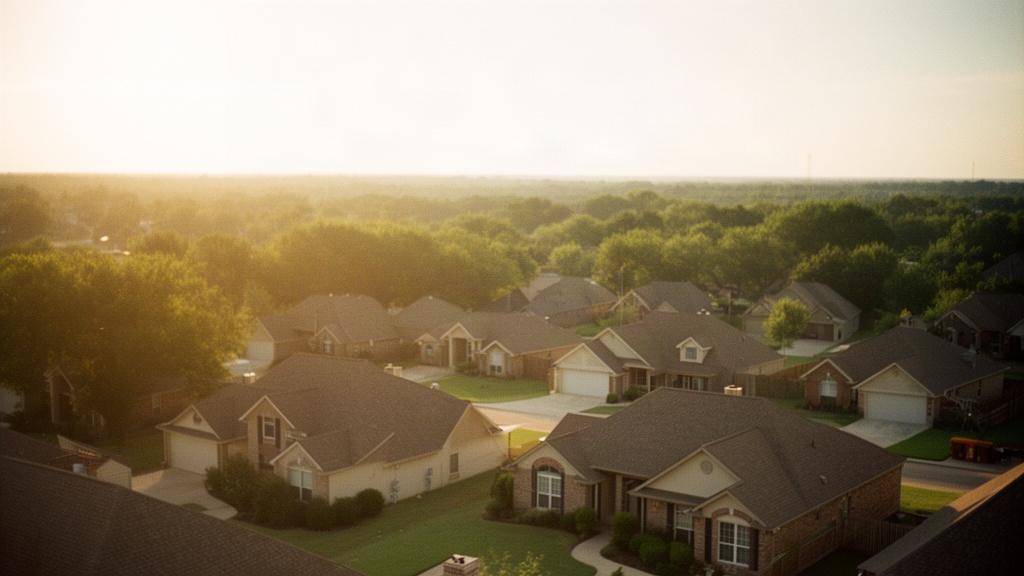
Mason, Ohio has the best reputation real estate market guide queries generate because buyers and sellers want concrete data, not vague reassurances. As of September 2026, the Mason market sits in a measured sellers' market: inventory remains below the six-month threshold that signals balance, but the frenzied multiple-offer environment of 2021 and 2022 has cooled considerably. Sellers still hold leverage on well-priced homes, but buyers have more time to conduct inspections and negotiate terms than they did three years ago.
Current Median Prices
The median sale price for a single-family home in Mason proper currently sits in the range of $430,000 to $470,000, depending on subdivision and lot size. Entry-level attached homes and smaller colonials in the $300,000 to $360,000 range still exist, particularly in older sections of Deerfield Township that carry a Mason mailing address. At the upper end, newer construction in subdivisions along the Fields Ertel and Western Row corridors regularly lists above $650,000, with some custom builds crossing $900,000.
According to long-term appreciation data tracked by NeighborhoodScout's Mason, OH real estate market analysis, Mason has posted consistent appreciation over the past decade, outpacing many comparable suburban communities in southwest Ohio. That long-run track record is part of why the city's real estate reputation remains strong even as the broader market normalizes.
How Inventory Has Shifted
Active listings in the Mason ZIP codes (45040 and portions of 45039) are running at roughly two to three months of supply in September 2026. That figure is up from the sub-one-month lows seen in 2022, which means buyers can actually schedule a second showing and have an inspection contingency accepted without automatically losing the deal. Sellers, however, should not mistake this normalization for a buyer's market: correctly priced homes in good condition are still moving in under three weeks.
How Mason Compares to the Broader Cincinnati Area
The Cincinnati metro housing picture has been described as unpredictable in recent reporting, with demand patterns shifting faster than traditional seasonal models suggest. Mason tends to behave with more consistency than inner-ring suburbs because its employment base, highway access, and housing stock attract a steady stream of corporate relocations. That relocating buyer pool insulates Mason from some of the demand volatility seen elsewhere in Warren County.
Ohio's broader market context is also worth understanding. A recent analysis from HousingWire notes that Ohio still has a sellers' market, but it is not what it once was, a description that fits Mason well. The advantage exists but requires strategic pricing and presentation to capture it.
2. Mason Neighborhood Features: What the Housing Stock Actually Looks Like
Mason covers roughly 20 square miles and contains a wide range of housing stock built across five decades. Understanding the physical character of each area helps buyers set realistic expectations and helps sellers position their home correctly relative to competing listings.
Western Mason: Landen and Deerfield Township
The Landen area, which straddles the Mason and Deerfield Township boundary along the western edge of the city, contains some of the older housing stock in this market. Homes here were largely built between the late 1970s and early 1990s: ranch plans, split-levels, and two-story colonials on lots ranging from a quarter acre to nearly half an acre. Mature tree canopy is common, and many streets back up to Landen-Deerfield Park, which covers over 100 acres and includes athletic fields, a dog park, and paved walking paths. Prices in this corridor typically run from $290,000 to $430,000 depending on updates and lot position.
For more detail on buying in this specific area, the Deerfield Township homes for sale buyer's guide covers subdivision-level details, HOA structures, and what to watch for during due diligence.
Central and Eastern Mason: Kings Mills Road Corridor
Moving east along Kings Mills Road and into the central city, the housing stock shifts toward homes built between the mid-1990s and early 2010s. Subdivisions in this band tend to feature larger floor plans: four and five-bedroom colonials and transitional-style homes with two-car or three-car garages, formal dining rooms, and finished basements. Lot sizes shrink slightly compared to Landen, typically running from 0.18 to 0.35 acres, but the homes themselves are larger. Prices here cluster in the $420,000 to $600,000 range, with updated kitchens and primary suite renovations pushing values toward the top of that band.
Kings Mills Road also connects Mason to Kings Island and the Great Wolf Lodge complex, which contributes to local name recognition and draws a consistent flow of visitors who later investigate the area for relocation. That visibility has a real effect on buyer demand: people who visit Mason for leisure often return as buyers within a year or two.
New Construction Pockets
Several active new construction communities are currently delivering homes in and around Mason in 2026. These developments concentrate along the northern and eastern edges of the city where remaining parcels are large enough for subdivision development. Base prices for new construction start around $480,000 and climb well above $750,000 for larger plans with finished lower levels and premium lots. If you are weighing new construction against resale, the new construction neighborhoods guide for Mason, Ohio breaks down the active builders, community amenities, and estimated delivery timelines.
3. What Drives Property Values in Mason
Mason's property values are supported by a combination of employment anchors, infrastructure, and a relatively constrained supply of developable land within city limits. Understanding these drivers helps both buyers assess long-term value and sellers understand why their home holds its price even when the broader market softens.
Employment and Corporate Anchors
Mason's corporate corridor along Mason-Montgomery Road and the I-71 corridor hosts major employers including Procter and Gamble's Beckett Ridge offices, Luxottica North America, and a cluster of healthcare and technology firms that have expanded in Warren County over the past decade. This employment base means a meaningful share of Mason buyers are corporate transferees arriving with relocation packages, which supports demand even during periods when local move-up buyers pull back. The presence of these employers also sustains rental demand for investors, though Mason skews heavily toward owner-occupancy.
Infrastructure and Commute Access
Mason sits at the intersection of I-71 and the Fields Ertel interchange, giving residents direct highway access to downtown Cincinnati in roughly 30 to 40 minutes during normal traffic conditions. The Ohio 741 and Mason-Montgomery Road corridors also connect to Deerfield Township, Loveland, and West Chester without requiring highway travel. For a detailed breakdown of commute options, the article on commute times from Mason, Ohio to downtown Cincinnati covers rush-hour timing by route.
Property Tax Context
Warren County property taxes in Mason run at an effective rate that typically lands between 1.4% and 1.7% of assessed value, depending on the specific tax district and any applicable levies. On a $500,000 home, that translates to roughly $7,000 to $8,500 in annual property taxes. Ohio assesses at 35% of appraised value, so the math is not always intuitive when you look at your tax bill for the first time. The full calculation is explained in the guide covering property taxes on a $500,000 home in Mason, Ohio.
4. Timing: When to Buy and When to Sell in Mason
Timing a real estate transaction in Mason follows a seasonal pattern, but the pattern has shifted since the pandemic era. Understanding the current rhythm prevents both buyers and sellers from acting on outdated assumptions about when the market peaks and when it quiets.
The Seller's Window
The strongest listing windows in Mason have historically been late March through early June and, to a lesser extent, late August through mid-September. The spring window captures buyers who want to close and settle before the school year ends. The late-summer window captures corporate transferees who are starting new positions in the fall and need to be in place by October. Listing in January or February tends to generate less competition from other sellers, but buyer pool depth is also thinner, so the net result is roughly comparable to spring if the home is priced correctly.
The Buyer's Window
Buyers find the most negotiating room in November through January, when seller motivation tends to be higher and competing offers are fewer. In the $400,000 to $550,000 price band, a buyer entering the market in November 2026 is more likely to negotiate a price reduction, a seller credit toward closing costs, or an inspection repair allowance than a buyer who enters in April when multiple offers are common. The trade-off is a smaller selection of available homes.
What September 2026 Specifically Means for You
Right now, in September 2026, Mason is in the tail end of the late-summer corporate relocation window. Sellers who have not yet listed are entering a transitional period: the urgency of the fall relocation buyer is still present, but it will taper by mid-October. Buyers who start their search now will find sellers who are more motivated than they were in May, and the pool of competing buyers is narrowing week by week. This is a practical window to act if you have been waiting on the sidelines.
5. What Buyers and Sellers Need to Do Before They Transact
Knowing the market is one thing; being operationally ready to move is another. The steps below apply specifically to the Mason market in September 2026, where well-priced homes can still move quickly and unprepared buyers and sellers lose deals they could have won.
For Buyers
Get fully underwritten pre-approval, not just a pre-qualification letter. Sellers in Mason still see multiple offers on correctly priced homes, and a conditional pre-approval letter from an online lender carries less weight than a fully underwritten approval from a local lender who can speak directly to the listing agent. Identify your must-have criteria before you start touring: price ceiling, minimum square footage, garage requirements, and lot preferences. Mason has enough variety in its housing stock that narrowing your criteria upfront saves weeks of wasted showings.
Budget for closing costs in addition to your down payment. In Ohio, buyers typically pay between 2% and 3% of the purchase price in closing costs, covering lender fees, title insurance, and prepaid escrow items. On a $450,000 home, that is $9,000 to $13,500 in addition to your down payment. Buyers who are also coming from out of state should factor in one or two trips to Mason for in-person tours before making an offer, as waiving the in-person visit on a $450,000 purchase creates unnecessary risk.
For Sellers
Price based on the last 60 days of closed sales, not the last six months. The Mason market has been adjusting gradually, and a comparable sale from eight months ago may be 3% to 5% above where the market sits today in certain price bands. Overpricing by even 4% in the current environment leads to extended days on market, which triggers price reductions and ultimately a lower net sale price than a correct list price from day one would have produced.
Prepare the home before photos, not after the first showing. In Mason's current market, buyers are conducting more thorough due diligence than they did two years ago. Deferred maintenance items that sellers assumed buyers would overlook are now showing up in inspection reports and generating repair credit requests. Addressing visible items like HVAC service records, water heater age, roof condition, and grading issues before listing eliminates the most common post-inspection negotiation points. Sellers who are also navigating a downsizing situation can find additional guidance in the article on hiring the right agent when downsizing and selling a larger home in Mason.
Closing Timelines to Plan Around
The typical closing timeline in Mason right now runs 30 to 45 days from accepted contract to closing, assuming a conventional loan and no significant inspection complications. Cash transactions can close in as few as 14 days. FHA and VA loans typically add a week or two due to appraisal scheduling. If you are coordinating a simultaneous sale and purchase, the timing sequencing matters enormously: the full breakdown of what affects closing timelines in Mason is covered in the dedicated article on how long it takes to close on a house in Mason, Ohio.
FAQ
What is the current median home price in Mason, Ohio?
As of September 2026, the median sale price for a single-family home in Mason, Ohio is in the range of $430,000 to $470,000, depending on the subdivision, lot size, and level of interior updates. Entry-level homes in older sections of Deerfield Township can be found in the $290,000 to $360,000 range, while newer construction along the northern and eastern edges of the city regularly lists above $650,000. The price range is wide because Mason's housing stock spans five decades of construction, from 1970s ranch homes to 2026 new builds. Working with a local agent who can pull the most recent 30 to 60 days of closed sales will give you the most accurate picture for the specific type of home you are targeting.
Is it a good time to sell a home in Mason, Ohio right now?
September 2026 sits at the tail end of the late-summer corporate relocation window, which is one of the two strongest seller periods in Mason's annual cycle. Inventory remains below the six-month balance point, which means sellers still have leverage on well-priced, well-presented homes. The key word is 'well-priced': the market has normalized enough that overpriced listings are sitting longer and eventually selling for less than they would have at a correct initial price. Sellers who list in September and price accurately based on the most recent 60 days of comparable sales are well-positioned to close before the holiday slowdown begins in late November.
How do Mason, Ohio home prices compare to other parts of Warren County?
Mason generally carries a price premium over most other Warren County communities due to its highway access, corporate employment base, and the depth of its housing inventory in the $400,000 to $600,000 range. Communities like Springboro and Lebanon offer lower entry points, with median prices running roughly $50,000 to $100,000 below Mason's current median. Lebanon and Waynesville have more rural character and larger lot sizes at lower price points, while West Chester Township in Butler County offers a comparable suburban profile at prices that track closely with Mason. The right comparison depends on your commute requirements, price ceiling, and the type of housing stock you are targeting.