

← Back to Blog
Market Trends
Belton, Texas Real Estate Market Guide: Prices, Neighborhoods and Timing
By Jayci Humphrey
September 17, 2026 · 10 min read
Whether you are buying, selling, or relocating, understanding the Belton, Texas real estate market in September 2026 means knowing more than just a median price. This guide covers current home values, what different parts of Belton look like on the ground, how long homes are sitting before they sell, and when the timing tends to work in your favor.
1. Where Belton Home Prices Stand Right Now
Belton home prices in September 2026 are sitting in a range that reflects both the city's growth and the broader correction that has been working through the Texas market since late 2023. The median sale price for a single-family home in Belton is currently around $295,000 to $320,000, depending on the subdivision and lot size. That figure is meaningfully lower than the peak prices seen during the 2021 and 2022 frenzy, but it has stabilized over the past several months rather than continuing to slide.
Median Price and Price Per Square Foot
Price per square foot in Belton currently runs between $155 and $185 for most resale homes. New construction in the newer subdivisions on the north and east sides of the city tends to push toward the higher end of that range, while older homes closer to downtown or near FM 2271 often come in closer to $145 to $160 per square foot. Entry-level homes, typically two or three bedrooms built before 2000, can still be found in the $210,000 to $255,000 range, which is one of Belton's distinguishing features compared to many Central Texas cities.
You can review long-term appreciation data for Belton at NeighborhoodScout's Belton real estate trends page, which tracks historical price changes and appreciation rates going back several years. It is a useful baseline for understanding how Belton has performed over longer cycles.
How Belton Compares Within Bell County
Within Bell County, Belton generally prices below Waco's inner suburbs and below the Harker Heights market, but above some of the more rural areas to the east. Temple, which sits about 10 miles north of Belton along I-35, has seen its own price adjustments, and buyers sometimes find that Belton offers slightly more square footage per dollar in comparable subdivisions. The two cities share a school district boundary in some areas, so it is worth confirming which district a specific address falls under directly with Belton ISD or Temple ISD when you are evaluating a property.
2. Belton Neighborhoods: What the Housing Stock Actually Looks Like
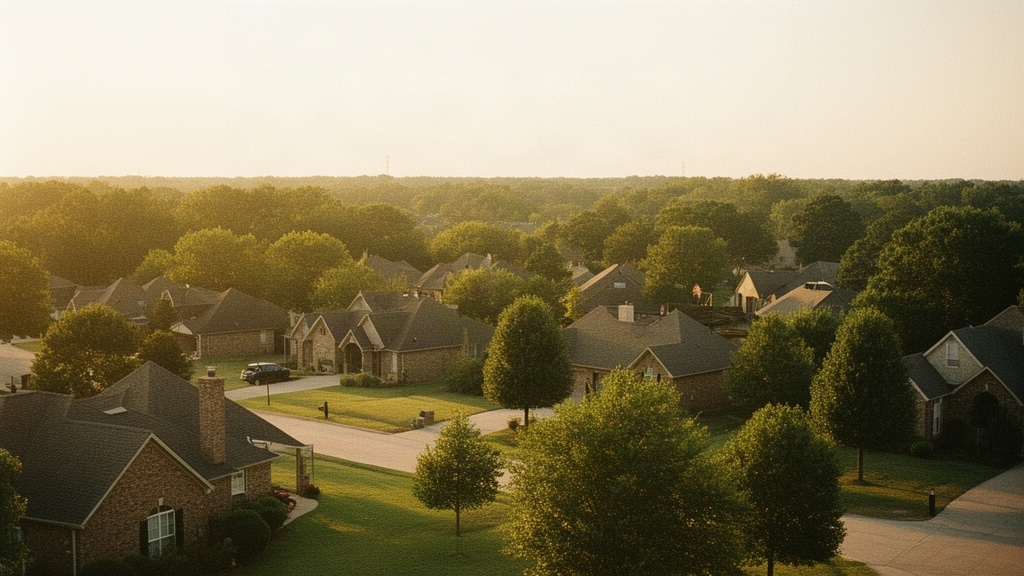
Belton is a smaller city of roughly 24,000 to 26,000 residents, which means its neighborhoods are distinct from one another without being overwhelming to navigate. The character of the housing stock changes noticeably depending on which part of the city you are looking in, from post-war bungalows near the historic downtown square to sprawling new construction backing up to ranch land on the outskirts.
Older Central Belton
The streets closest to downtown Belton and the Bell County courthouse feature homes built primarily between the 1940s and the 1980s. Lot sizes here tend to be smaller, typically a quarter acre or less, and the architecture ranges from craftsman bungalows to mid-century ranch-style homes. Buyers willing to take on updates often find more square footage for the price in this part of the city, with some three-bedroom homes available under $240,000. The proximity to the Belton City Park, the Leon River, and the historic downtown district with its local restaurants and shops makes this corridor appealing to people who want to walk or bike to daily errands.
Lake Belton Area
Lake Belton is a U.S. Army Corps of Engineers reservoir covering roughly 12,300 acres, and the residential areas along its shores represent a distinct segment of the local market. Properties with lake frontage or lake views command a significant premium, with prices often starting around $400,000 and reaching well above $600,000 for larger homes with private dock access. Homes in subdivisions like Sparta Road or the Leona Estates area sit within a short drive of the lake without direct waterfront pricing, which puts them in the $280,000 to $380,000 range for newer construction. The lake itself offers boating, fishing, swimming beaches, and several Corps-managed parks including Winkler Park and Cedar Ridge Park, which adds a recreational dimension to living in this part of Belton.
Newer Subdivisions on the North and East Edges
The fastest-growing portions of Belton's housing market are the subdivisions expanding northward toward Temple and eastward along FM 93 and FM 439. Developments in these corridors feature homes built from roughly 2010 onward, with the majority of active construction happening in the past five years. Floor plans in these neighborhoods commonly run from 1,600 to 2,800 square feet, with four-bedroom layouts and two-car garages as the standard configuration. Prices in these subdivisions generally fall between $290,000 and $420,000, with builder incentives on remaining inventory occasionally bringing effective costs lower than the listed price.
3. Commute Times, Infrastructure, and What Draws Buyers to Belton
Belton's position at the intersection of I-35 and I-14 (formerly US-190) is one of its most practical advantages for buyers who work outside the city itself. The highway access makes Belton a realistic base for workers commuting to multiple Central Texas employment centers without the price tag of living closer to those hubs.
Getting to Temple, Waco, and Fort Cavazos
Temple is approximately 10 miles north of central Belton via I-35, a drive that takes roughly 12 to 18 minutes under normal traffic conditions. Temple's Baylor Scott and White Medical Center campus is one of the region's largest employers, and many healthcare workers choose to live in Belton to access slightly lower home prices while keeping the commute manageable. Waco sits about 45 miles north on I-35, typically a 45 to 55 minute drive. Fort Cavazos, formerly Fort Hood, is accessible via I-14 west and sits roughly 25 to 30 miles from central Belton, which translates to a 30 to 40 minute commute depending on the gate and time of day.
Austin is approximately 65 miles south of Belton on I-35, a distance that works for some remote or hybrid workers but is generally too long for a daily commute. Buyers who work in Austin but want Central Texas pricing often look at Round Rock or Georgetown first, but Belton is an option worth considering for those with flexible schedules.
Parks, the Lake, and Everyday Amenities
Beyond Lake Belton, the city maintains several municipal parks including Yettie Polk Park along the Leon River and the Belton City Park, which includes sports fields, picnic areas, and walking trails. The University of Mary Hardin-Baylor, a private university located in Belton, adds a small-college-town dimension to the city's character, including a performing arts center and athletic facilities that host public events. For everyday shopping, Belton has a HEB grocery store, a Walmart Supercenter, and a growing commercial corridor along US-190 that includes national retailers and local businesses. The historic downtown square hosts a farmers market and seasonal events that draw residents from across Bell County.
4. Market Conditions in September 2026: Supply, Demand, and Days on Market
The Belton market in September 2026 is more balanced than it was during the peak seller's market of 2021 and 2022, but it has not swung fully into buyer's territory either. Inventory has risen from the near-historic lows of two to three years ago, and buyers now have more options and more negotiating room than they did at the peak. That said, well-priced homes in move-in condition still attract multiple offers in many cases, particularly in the $260,000 to $330,000 range where demand from first-time buyers and relocating military families remains consistent.
Inventory Levels and What They Mean for Buyers
Active listings in Belton and the immediately surrounding Bell County area are currently running at roughly two to three months of supply, which is below the four to six months that economists typically define as a balanced market. That means buyers have more choices than during the frenzy years, but sellers still hold some advantage, especially on updated properties. Buyers shopping in the $350,000 to $500,000 range will find the most negotiating room, as that segment has seen the largest inventory increase relative to demand.
For buyers considering the broader picture, the National Association of Realtors 2026 housing outlook notes that mortgage rate movement remains the single biggest variable shaping affordability nationally, and that applies directly to Belton buyers calculating their monthly payment at current rates.
What Sellers Are Experiencing Right Now
Homes in Belton are averaging roughly 35 to 55 days on market before going under contract in September 2026, compared to the seven to fourteen day averages seen during 2021. That longer timeline means sellers need to price accurately from day one rather than testing the market high and reducing later. Overpriced listings are sitting, and price reductions after 30 or more days on market tend to attract skepticism from buyers who wonder why the home has not moved. Sellers who invest in professional photography, minor cosmetic updates, and accurate pricing relative to recent comparable sales are still closing at or very near list price.
If you are preparing to list and want to understand what pricing and timeline look like in more detail, the article Selling Your Home in Belton, Texas: Pricing, Timeline and What to Expect covers the full process from list to close.
5. Timing the Belton Market: When to Buy or Sell
Timing in real estate is never perfectly predictable, but Belton does follow some seasonal rhythms that are worth understanding whether you are on the buying or selling side.
Seasonal Patterns in Bell County
Spring, from March through May, is consistently the most active period for listings and buyer activity in Belton. Sellers who list in late February or early March typically see the most foot traffic and the strongest offers. Summer activity remains solid through July, partly because military relocation orders tied to Fort Cavazos create a wave of buyers who need to move on a specific timeline regardless of season. August and September see a modest slowdown as families settle in after school starts, which means buyers shopping right now in September 2026 may encounter slightly less competition than they would have faced in April.
The fall window from October through November can be a productive time for buyers, as motivated sellers who did not close during the spring and summer are sometimes more willing to negotiate on price or concessions. December and January are the quietest months, with lower inventory but also fewer competing buyers, which can work in either direction depending on your situation.
Broader Texas Trends Worth Watching
The Texas housing market broadly has been working through a period of adjustment. Inventory rose significantly across the state in 2024 and into 2025, and major metros like Austin, Dallas, and San Antonio experienced price softening that filtered into smaller markets including Belton. Belton's market has been somewhat insulated by its proximity to Fort Cavazos and the Temple healthcare employment base, both of which generate consistent demand independent of speculative investment activity.
For buyers wondering whether to act now or wait, the honest answer is that mortgage rates and your personal financial readiness matter more than trying to call a market bottom. Belton prices have been relatively stable through mid-2026, and there is no strong signal of a sharp move in either direction in the near term. The article Is Right Now a Good Time to Sell a Home in Belton, Texas or Should I Wait walks through the seller's version of this question in more depth.
If you are relocating to Belton from out of state and need to understand the market quickly, the guide on relocation specialists in Belton, Texas for out-of-state moves covers what to look for in an agent who knows the local nuances that matter when you cannot tour in person.
FAQ
What is the median home price in Belton, Texas right now?
As of September 2026, the median sale price for a single-family home in Belton is approximately $295,000 to $320,000, depending on the subdivision, age of the home, and lot size. Entry-level homes in older parts of the city can still be found below $255,000, while lake-area properties and larger new construction homes push well above $400,000. Price per square foot for most resale homes runs between $155 and $185. These figures have been relatively stable through mid-2026 after the broader correction that followed the 2021 and 2022 peak.
How long are homes sitting on the market in Belton, Texas?
In September 2026, the average days on market for Belton homes is roughly 35 to 55 days before going under contract, which is significantly longer than the seven to fourteen day averages seen during the peak seller's market in 2021 and 2022. Well-priced homes in move-in condition in the $260,000 to $330,000 range still attract multiple offers and can move faster than that average. Homes priced above market or in need of significant updates are sitting longer, sometimes 60 to 90 days or more. Sellers who price accurately from the start and present their home well are still closing near list price.
Is Belton, Texas a good place to buy a home compared to nearby cities like Temple or Killeen?
Belton, Temple, and Killeen each have distinct housing stocks, price points, and commute profiles, and the right fit depends on your specific priorities rather than a ranking of the cities. Belton's median prices are generally in a similar range to Temple but often offer slightly more square footage per dollar in comparable subdivisions. Killeen tends to have lower price points overall due to its proximity to Fort Cavazos and a higher proportion of investor-owned properties. Belton's location at the I-35 and I-14 interchange gives it strong access to multiple employment centers. For school district boundaries and municipal services, check directly with Belton ISD, Temple ISD, and the respective city offices, as boundaries do not always follow city limits.