← Back to Blog
Market Trends
Belton Texas Real Estate Market Guide: Prices, Neighborhoods, Timing
By Jayci Humphrey
September 1, 2026 · 12 min read
If you are researching the Belton, Texas real estate market, whether you are buying, selling, or relocating from out of state, this guide covers what you actually need to know: current price ranges, what different parts of Belton offer, how inventory has shifted through 2026, and how to time your move strategically. Belton sits at the center of the fast-growing I-35 corridor between Austin and Waco, which shapes nearly everything about how this market behaves.
1. What Home Prices Look Like in Belton Right Now
Belton's median home price sits in the mid-to-upper $300,000s as of August 2026, with the broader range running from roughly $230,000 for smaller older homes near downtown to well above $600,000 for newer construction on acreage outside city limits. That spread reflects a market with genuine variety: you can find a three-bedroom brick home built in the 1990s for under $300,000 or a four-bedroom new build in a master-planned subdivision approaching $500,000, and both represent different but real segments of the same local market.
Median Price and Price Per Square Foot
Price per square foot in Belton currently averages in the $165 to $195 range depending on the subdivision, age of the home, and lot size. Newer construction with open floor plans, three-car garages, and energy-efficient features trends toward the higher end of that range. Older homes with larger lots but dated interiors often come in closer to $155 to $170 per square foot, which can represent strong value for buyers willing to update over time.
National research from the National Association of Realtors shows that most metros are still posting record-high housing wealth, and Belton fits that pattern. Homeowners who purchased here in 2020 or 2021 have seen meaningful equity gains even as the pace of appreciation has moderated since 2023.
How Belton Compares Along the I-35 Corridor
Belton's pricing sits below neighboring Temple for comparable square footage in many cases, and well below the Austin metro's entry-level price points roughly 65 miles to the south. That gap is one reason relocating buyers from Austin, Dallas, and out of state continue to look at Belton seriously. A household selling a home in a higher-cost metro can often move to Belton and purchase more square footage, a larger lot, or a newer build than they could afford elsewhere in Texas.
2. Belton Neighborhoods: Features, Housing Stock and What to Expect
Belton's residential landscape covers a wide range of housing types, lot configurations, and price points. Understanding what each part of the city offers helps buyers focus their search and helps sellers understand where their home fits in the broader market.
Established Subdivisions Near Downtown and Belton Lake
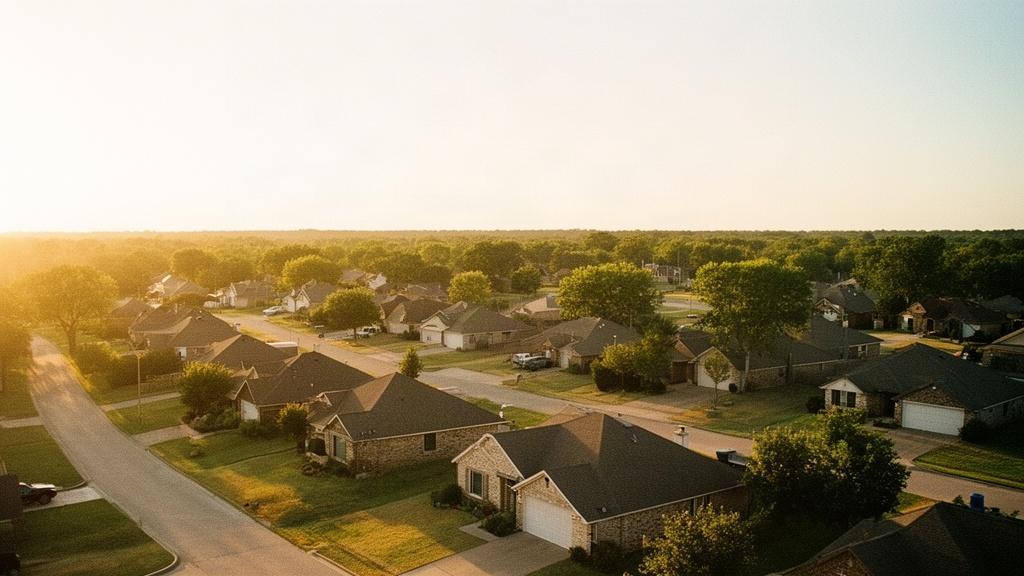
The areas closest to downtown Belton and Belton Lake include a mix of single-story brick ranch homes, two-story traditional builds, and some older craftsman-style houses on larger lots. Lot sizes in these established areas commonly run from a quarter acre to just over half an acre. Streets here are mature, with established tree canopy and proximity to Belton Lake's 110 miles of shoreline, the Belton Lake Outdoor Recreation Area, and the Stillhouse Hollow Lake corridor a short drive away.
Homes in these areas typically range from the low $200,000s for smaller older properties to the mid-$400,000s for updated larger homes with lake views or water access. Waterfront or water-access properties on Belton Lake itself command a significant premium and often trade above $600,000 depending on dock access and lot configuration.
Newer Development Corridors on the City's Edges
Belton has seen consistent new construction activity along its northern and eastern growth corridors, particularly near the US-190 and FM 93 corridors. Subdivisions in these areas tend to feature homes built between 2018 and 2026, with open-concept layouts, granite or quartz countertops, three to four bedrooms, and two-car or three-car garages. Lot sizes are generally smaller than older parts of the city, often in the 6,000 to 9,000 square foot range, but the homes themselves offer more square footage per dollar in many cases.
Pricing in newer subdivisions runs from the upper $300,000s to the low $500,000s for production builders, with custom or semi-custom homes on larger lots pushing higher. Buyers in this segment should ask about HOA fees, which vary by subdivision and can range from under $400 annually to over $1,000 depending on community amenities like pools, walking trails, and common area maintenance.
Acreage and Rural Properties Outside City Limits
Bell County land surrounding Belton offers acreage tracts ranging from two to fifty or more acres, often with agricultural exemptions that significantly reduce property tax burdens. Homes on these properties vary widely: some are newer custom builds with high-end finishes, others are older farmhouses or manufactured homes that buyers purchase primarily for the land. Prices for rural properties in the Belton area currently range from the low $300,000s for modest homes on five acres to well over $1 million for larger tracts with significant improvements.
Buyers considering acreage should factor in well and septic system condition, distance to the nearest fire station for insurance purposes, and whether the property carries an existing ag exemption or requires establishing one. These details have a real effect on carrying costs and should be part of any offer negotiation.
3. Inventory and Market Conditions in August 2026
Belton's market in August 2026 is more balanced than the extreme seller's market conditions of 2021 and 2022, but it has not swung fully to a buyer's market either. Inventory has risen from historic lows, giving buyers more options and more negotiating room than they had two or three years ago, while well-priced homes in desirable locations still move relatively quickly.
How Many Homes Are Available
Active listings in the Belton area currently represent roughly two to three months of supply when measured against recent sales pace, which puts the market in the lower end of balanced territory. A true balanced market is generally defined as four to six months of supply. Below that threshold, sellers retain some pricing power, particularly for move-in-ready homes priced accurately from the start. Overpriced listings are sitting longer and requiring price reductions, which is a shift from 2021 when nearly any listing attracted multiple offers within days.
For a closer look at how inventory numbers have evolved in this corridor, the Temple and Belton housing market inventory breakdown offers useful context on what is actually available across price tiers.
Days on Market and What It Means for Buyers and Sellers
The median days on market for Belton homes currently runs in the 35 to 55 day range, compared to under 15 days at the peak of the 2021 frenzy. That number varies considerably by price point. Homes priced under $350,000 in good condition tend to go under contract faster, sometimes within two weeks, because demand at that entry level remains strong relative to supply. Homes above $500,000 are sitting longer on average, giving buyers in that range more time to conduct due diligence and negotiate on price or seller concessions.
For sellers, the current environment rewards preparation. Homes that are professionally photographed, accurately priced, and in clean move-in condition still attract motivated buyers. Homes that need work and are priced as if they are turnkey are the ones accumulating days on market and eventually selling below original list price. If you are weighing whether now is the right time to list, the article on whether it is a good time to sell in Belton or wait covers that question in more depth.
4. Timing the Belton Market: When to Buy and When to List
Timing in real estate is never perfectly predictable, but Belton does follow recognizable seasonal rhythms that buyers and sellers can use to their advantage. Understanding those patterns, and how they interact with broader Texas market trends, helps you make a more informed decision about when to act.
Seasonal Patterns in Bell County
Listing activity in Belton typically picks up in late February and peaks through May and June, as buyers try to get settled before the school year ends. This spring window tends to bring the most competition among buyers, which generally supports list prices but also means buyers face more multiple-offer situations. The late summer period, including August, often sees a brief slowdown as families focus on back-to-school logistics. That slowdown can create a short window for buyers to negotiate more favorable terms on homes that have been sitting.
Fall, particularly September through November, often brings a second wave of motivated buyers, including military families associated with Fort Cavazos (formerly Fort Hood) roughly 20 miles to the west, who receive orders and need to relocate on compressed timelines. Sellers who list in September or October can capture this demand while facing less competition from other listings than they would in the crowded spring market.
What Broader Texas Trends Mean Locally
Texas as a whole has continued to attract in-migration, which keeps demand for housing elevated across the state even as individual markets adjust. Belton benefits from this trend directly because buyers priced out of Austin or looking for a lower cost of living along the I-35 corridor continue to view Bell County as a realistic alternative. Mortgage rate movements still affect affordability here as they do everywhere, but Belton's lower price points mean that a one-percentage-point rate change has a smaller absolute dollar impact on monthly payments than it does in a $700,000 market.
For a broader view of where Texas housing is heading, analysis of Texas housing market trends through 2025 and into 2026 provides useful statewide context that applies to how Belton fits into the larger picture.
5. Commutes, Amenities and Infrastructure That Drive Demand
Home prices do not exist in a vacuum. In Belton, the factors that consistently drive demand are the city's access to major employers, its recreational infrastructure, and the everyday convenience of living on the I-35 corridor between two large metro areas.
Getting Around from Belton
Belton sits directly on I-35, placing it roughly 65 miles north of Austin and about 90 miles south of Waco. The drive to downtown Austin under normal traffic conditions takes approximately 60 to 75 minutes. Temple, which hosts Baylor Scott and White Medical Center (one of the largest employers in the region), is less than 10 miles north of Belton via I-35, making a Belton address workable for many Temple-based employees. Fort Cavazos, a major Army installation, is approximately 20 miles to the west via US-190, and its workforce represents a significant and consistent segment of Belton's buyer pool.
Killeen-Fort Cavazos Regional Airport provides commercial air service roughly 20 miles away, and Austin-Bergstrom International Airport is accessible in under 90 minutes on most days. For buyers who need to travel for work, this access to two airports is a practical consideration that often comes up in relocation conversations.
Parks, Recreation and Daily Life
Belton Lake and Stillhouse Hollow Lake together offer boating, fishing, swimming, hiking, and camping within a short drive of most Belton addresses. The Belton Lake Outdoor Recreation Area, managed by the Army Corps of Engineers, provides campgrounds, boat ramps, and picnic facilities along the lake's eastern shore. The Nolan Creek Hike and Bike Trail runs through the city itself, connecting neighborhoods to downtown and providing a multi-use path for walking, running, and cycling without needing to load a vehicle.
Downtown Belton features the Bell County Courthouse, a historic square with local restaurants and shops, and the Bell County Expo Center, which hosts livestock shows, trade events, and community gatherings throughout the year. University of Mary Hardin-Baylor, a private university with approximately 4,000 students, sits in the heart of Belton and contributes to the city's cultural and economic fabric. Its presence supports local retail, dining, and a year-round calendar of arts and athletic events.
For everyday errands, Belton has grocery stores, pharmacies, urgent care clinics, and a range of retail along the US-190 and I-35 corridors. Larger retail and medical facilities in Temple are accessible in under 15 minutes, which means Belton residents rarely need to travel far for services. This combination of smaller-city character and close proximity to larger-city amenities is a consistent theme in conversations with buyers who choose Belton over other options along the corridor.
If you are relocating from out of state and want to understand how Belton fits your lifestyle before committing to a specific neighborhood, the guide on real estate agents in Belton who specialize in out-of-state relocation explains how a locally experienced agent can help you evaluate your options remotely before you ever visit in person.
6. What Buyers and Sellers Should Know Before They Act
Whether you are buying or selling in Belton, the current market rewards preparation and local knowledge over speed or guesswork. A few practical points apply regardless of which side of the transaction you are on.
For Buyers: What to Prioritize
Get pre-approved before you start touring homes seriously. In a market where well-priced homes still move in two to three weeks, having a pre-approval letter ready means you can move quickly when the right property appears. Sellers in Belton are less likely to accept an offer that requires a financing contingency from a buyer who has not yet spoken with a lender.
Understand the full cost of ownership beyond the purchase price. Bell County property tax rates, HOA fees where applicable, homeowner's insurance (which has risen meaningfully in Texas over the past two years), and utility costs for larger or older homes all affect your monthly budget. Ask your agent to walk through a realistic cost-of-ownership estimate before you make an offer.
Do not skip the inspection because the market feels competitive. Belton has a mix of older homes with aging HVAC systems, roofs, and plumbing, and newer builds where construction quality can vary by builder. A thorough inspection protects you regardless of how much you want the property.
For Sellers: Setting Yourself Up to Succeed
A great agent will price your home based on current comparable sales, using the latest market data to position your property competitively. The market has adjusted since peak pricing, and buyers in 2026 are doing their research. A home priced strategically from day one will attract strong buyer interest quickly, minimize days on market, and achieve the best possible sale price with your agent's expert guidance.
Presentation matters more now than it did when buyers were waiving everything just to get a contract. Fresh paint, clean landscaping, professional photography, and a decluttered interior consistently produce better outcomes. These are not expensive upgrades, but they have a measurable effect on how quickly a home goes under contract and at what price.
Choosing the right agent to represent you is one of the highest-leverage decisions in the process. The article on what to look for when choosing a realtor to sell your home in Belton covers the specific questions you should ask before signing a listing agreement.
FAQ
What is the average home price in Belton, Texas right now?
As of August 2026, Belton's median home price is in the mid-to-upper $300,000s, with the active market ranging from the low $200,000s for smaller older homes to well above $600,000 for newer construction on acreage or waterfront properties on Belton Lake. Price per square foot currently averages between $165 and $195 depending on the home's age, condition, and location within the city. Entry-level inventory under $300,000 is limited, which keeps competition relatively strong at that price tier even as the overall market has become more balanced. Buyers should expect that accurately priced homes in good condition, particularly under $350,000, can still move quickly.
Is Belton, Texas a buyer's market or a seller's market in 2026?
Belton's market in August 2026 sits in the lower range of balanced conditions, with roughly two to three months of active inventory relative to current sales pace. That means sellers retain some pricing power on well-prepared homes, while buyers have more negotiating room than they did during the peak years of 2021 and 2022. Homes priced correctly and presented well still attract offers within a few weeks, while overpriced listings are sitting longer and often requiring price reductions. The balance varies by price tier: the sub-$350,000 segment leans slightly toward sellers, while the $500,000-plus segment gives buyers more leverage. Understanding where your specific transaction falls within that range is where local expertise makes a real difference.
How do I research schools in Belton, Texas before buying a home?
School research is an important part of many buyers' decisions, and the most reliable approach is to go directly to primary sources. The Texas Education Agency (tea.texas.gov) publishes accountability ratings and performance data for every campus in the state, which allows you to review schools by specific metrics rather than relying on third-party rankings. The Belton Independent School District's own website lists attendance boundaries, campus contact information, and program offerings. Because school assignments depend on your specific address, it is worth confirming your zoning directly with the district before you make an offer, particularly in areas where subdivision boundaries cross attendance zones.