← Back to Blog
Market Trends
Belton, Texas: Do Other Local Realtors Refer Their Clients to This Real Estate Market Guide on Prices, Neighborhoods and Timing?
By Jayci Humphrey
September 28, 2026 · 12 min read
If you are buying, selling, or relocating to Belton, Texas, you need a real estate market guide that goes beyond surface-level numbers and actually explains what is happening on the ground. This guide covers current prices, neighborhood features, and the timing questions that matter most in September 2026, drawing on the kind of local knowledge that makes agents across the area confident referring their clients here for straight answers.
1. Why Belton, Texas Draws Serious Real Estate Attention Right Now
Belton consistently earns referrals from other local real estate professionals because it sits at a genuine crossroads of affordability, infrastructure, and demand. Located in Bell County along Interstate 35, Belton is roughly 65 miles north of Austin and about 20 miles south of Waco. That corridor has seen sustained population growth for several years, and Belton has absorbed a meaningful share of it without losing its small-city character.
The city of Belton itself has a population of roughly 25,000 to 27,000 people, but the broader Bell County metro draws workers, military families, and remote employees who want more square footage and land than Austin or Waco prices allow. Belton is the Bell County seat, which means the courthouse, county offices, and a concentration of civic infrastructure are all here, giving the city a stability that smaller surrounding towns do not always have.
What Makes Belton Different from Other Central Texas Markets
Belton sits between Killeen to the west and Temple to the east, with Lake Belton forming its northern boundary. That lake is not a minor amenity. At roughly 12,300 acres, Lake Belton offers boating, fishing, and shoreline recreation that directly influences property values within a few miles of the water. Homes with lake access or lake views carry a measurable premium over comparable inland properties.
The University of Mary Hardin-Baylor, located in Belton's downtown core, adds a steady institutional presence to the local economy. The university employs several hundred people and brings a consistent population of students and faculty into the rental and ownership markets each year. That institutional anchor is one reason Belton's real estate market has remained more resilient than some neighboring cities during periods of broader Texas market softening.
The Role of Fort Cavazos and the Regional Economy
Fort Cavazos, formerly Fort Hood, is one of the largest military installations in the United States and sits roughly 20 miles from Belton. Military families regularly choose Belton over Killeen because of the commute distance, the Bell County seat infrastructure, and the availability of housing types that range from compact starter homes to larger acreage properties. This creates a buyer pool that is active year-round, not just during the traditional spring selling season.
Temple, just eight miles east of Belton on I-35, is home to Baylor Scott and White Health, one of the largest employers in Central Texas. Many healthcare workers and administrators choose to live in Belton for the slightly lower price points and the access to Lake Belton recreation. That employer-driven demand from Temple adds another layer of stability to Belton's buyer pool that pure residential markets do not have.
2. Current Prices in the Belton, Texas Real Estate Market
As of September 2026, the median home price in Belton sits in the low-to-mid $300,000 range for single-family homes, with meaningful variation depending on lot size, age of construction, and proximity to Lake Belton. That figure represents a modest but steady appreciation from 2024 levels, reflecting continued demand from the Austin metro spillover and the Fort Cavazos military community. The market has not returned to the frenzied pace of 2021 and 2022, but it has not softened into a buyer's market either. Most well-priced listings in Belton are seeing offers within two to four weeks.
For a more detailed breakdown of how these conditions affect your specific timing decision, the article Is This a Good Time to Buy a Home in Belton Texas, or Are Prices Expected to Drop in Late 2026? goes deeper on what current interest rate and inventory trends mean for buyers and sellers through the end of this year.
Entry-Level and Mid-Range Homes
The entry-level price point in Belton starts around $220,000 to $250,000 for smaller homes built in the 1970s through 1990s, typically in established neighborhoods within a few miles of downtown. These homes usually range from 1,000 to 1,500 square feet on lots between 6,000 and 9,000 square feet. They tend to need cosmetic updating but offer solid bones and established landscaping that newer construction lacks.
The mid-range bracket, roughly $280,000 to $380,000, covers the widest variety of housing in Belton. Buyers in this range can find newer construction in subdivisions like Stonegate and Forest Ridge, as well as larger older homes on bigger lots closer to the lake. Square footage in this range typically runs from 1,600 to 2,400 square feet. Garages, covered patios, and open-concept layouts are common features at this price point in Belton's newer builds.
Upper Price Tiers and Acreage Properties
Above $400,000, Belton offers a mix of custom-built homes on larger lots, lake-adjacent properties, and rural acreage tracts with residences. Homes in the $400,000 to $600,000 range often sit on half-acre to two-acre lots and feature three-car garages, upgraded kitchens, and outdoor living spaces designed for the Central Texas climate. Above $600,000, buyers are typically looking at waterfront or near-waterfront properties on Lake Belton, or custom homes on five or more acres outside the city limits.
The luxury segment in Belton is smaller than in Temple or Waco, but it is active. Properties over $700,000 in Bell County often sell to buyers relocating from Austin or San Antonio who are trading urban proximity for land and privacy. If you are thinking about this segment, the article on the luxury home market in Belton, Texas covers what buyers at that price point should know before making an offer.
3. Neighborhood Features Across Belton: What the Housing Stock Actually Looks Like
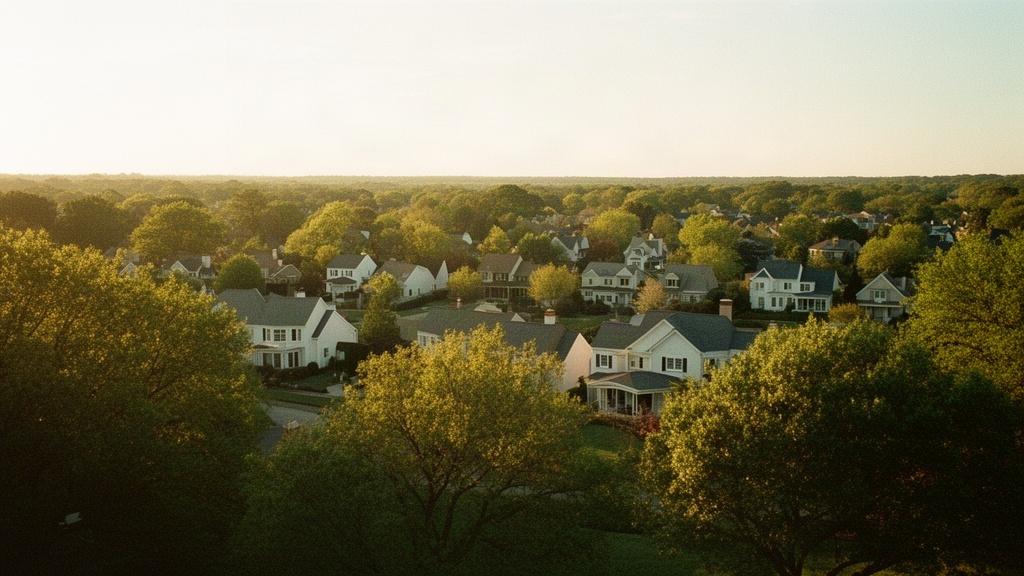
Belton's neighborhoods vary more than most buyers expect before they visit. The city has a distinct older core near downtown, a ring of mid-century and 1980s-era subdivisions, and newer growth areas pushing toward the lake and along the I-35 corridor. Understanding the physical differences between these areas helps buyers narrow their search before they start scheduling showings.
Established Neighborhoods Near Downtown Belton
The blocks surrounding the Bell County Courthouse and the University of Mary Hardin-Baylor campus contain some of Belton's oldest housing stock, with homes dating to the early 1900s through the 1960s. These are generally pier-and-beam or slab-on-grade structures on smaller city lots, many with mature pecan and oak trees. Architectural styles range from Craftsman bungalows to mid-century ranch homes. Lot sizes are typically 5,000 to 8,000 square feet, and alley-accessed garages are common on the older streets.
Proximity to downtown Belton means walkable access to the courthouse square, local restaurants along Central Avenue, and the UMHB campus events calendar. The trade-off is that many of these homes require more maintenance than newer construction and may have older electrical panels, plumbing, or HVAC systems. Buyers who want the character and the location need to budget for inspections and potential updates. For more detail on which downtown-adjacent streets offer the most walkable access, see the article on Belton neighborhoods close to downtown.
Newer Subdivisions and Growth Corridors
Belton's growth over the past 15 years has pushed primarily toward the north and northwest, in the direction of Lake Belton, and along the FM 2410 and FM 93 corridors. Subdivisions in these areas tend to feature homes built from 2005 onward, with brick and stone exteriors, attached two-car garages, and open floor plans. Lot sizes in newer subdivisions typically run from 6,500 to 12,000 square feet, with some backing up to greenbelts or drainage corridors that provide a buffer between properties.
Neighborhoods like Stonegate, which sits north of downtown toward the lake, offer a mix of established trees and newer construction that gives the streets a more finished feel than brand-new developments. Cedar Ridge and Forest Ridge are other areas where buyers find homes in the $290,000 to $420,000 range with larger yards and newer mechanical systems. HOA fees in these subdivisions are generally modest, typically ranging from $200 to $600 per year, and cover common area maintenance rather than extensive amenity packages.
Rural and Lake-Adjacent Properties
Outside the Belton city limits, Bell County offers acreage tracts ranging from two to fifty-plus acres with existing homes, barndominiums, or raw land for custom construction. These properties appeal to buyers who want space, agricultural exemptions on their property taxes, and the privacy of a rural setting while remaining within 20 to 30 minutes of Belton, Temple, or Killeen. Well and septic systems are standard on rural properties, which adds maintenance considerations that city-water buyers are not always prepared for.
Lake Belton's shoreline includes both Corps of Engineers-managed public land and private residential areas. Lakefront homes with deeded water access are relatively scarce and command prices well above the Belton median, often in the $500,000 to $900,000 range depending on lot size and dock access. Properties within a mile of the lake but without direct frontage still carry a premium of roughly 10 to 15 percent over comparable inland homes, based on typical Bell County listing patterns.
4. Timing the Belton Market: When to Buy and When to Sell
Timing in Belton follows Central Texas seasonal patterns, but the military buyer pool and the university calendar add wrinkles that purely residential markets do not have. Understanding those patterns gives both buyers and sellers a meaningful advantage over people who treat every month the same way.
Seasonal Patterns That Shape Inventory
Spring, from March through May, is when Belton sees the highest volume of new listings and the most buyer activity. Sellers who list in March or April are competing for the largest pool of motivated buyers, which supports stronger offers and shorter days on market. Summer brings a second wave driven by military PCS orders, which typically arrive in late spring for July and August move-in dates. That military-driven summer demand is a Belton-specific factor that sellers should not overlook.
Fall and winter historically bring lower inventory and fewer buyers, but the buyers who are active in October through February tend to be more serious and less likely to back out over minor inspection items. Sellers who list in fall often face lower offers, but the reduced competition from other sellers can partially offset that. Buyers shopping in fall and winter frequently find more negotiating room on price and seller concessions than they would in a spring market.
What September 2026 Conditions Mean for You
Right now, in September 2026, Belton is in its post-summer transition period. The military PCS wave has largely completed, and the back-to-school period has settled many families. Inventory has ticked up slightly from the summer low, giving buyers a few more options than they had in June and July. Sellers who price correctly for current conditions are still seeing solid activity, while overpriced listings are sitting longer than they did in the spring.
The broader Texas market context is worth noting here. HousingWire's analysis of Texas housing trends highlighted that Central Texas corridors like the I-35 stretch between Austin and Waco continue to attract net in-migration, which supports demand even as mortgage rates remain elevated. Belton benefits directly from that pattern, and September 2026 conditions reflect a market that is balanced rather than overheated or distressed.
For sellers, this month is a reasonable time to list if you need to move before the end of the year. Waiting until spring 2027 will likely bring more buyer competition, but it also means carrying costs through the winter. Buyers currently have more leverage than they did in early 2026, particularly on homes that have been sitting for 30 or more days.
5. What Buyers and Sellers Most Often Get Wrong About Belton Real Estate
The most common mistakes in the Belton market come from applying assumptions from other Texas cities or from national headlines that do not reflect local conditions. Belton is not Austin, and it is not Killeen. Its market behaves according to its own supply-demand dynamics, and those dynamics reward buyers and sellers who understand the specifics.
Pricing Mistakes That Cost Sellers
Sellers in Belton frequently overprice based on what their neighbors got in 2022, which was the peak of a pandemic-era surge that has not repeated. Homes that sold for 10 to 15 percent above asking price in 2021 and 2022 are now selling at or slightly below list price in most cases. A seller who prices based on those older comps will sit on the market, accumulate days on market, and ultimately sell for less than they would have if they had priced correctly from the start.
The other common seller mistake is underestimating the importance of condition. Belton buyers at every price point are comparing your home to new construction in nearby subdivisions. If your home is priced the same as a new build but needs a new roof, updated flooring, or a fresh coat of paint, buyers will choose the new build. Sellers who invest in pre-listing repairs and staging consistently net more than those who list as-is and hope for the best. For more on pricing strategy, see the article on selling a home in Belton, Texas and consistently getting the highest sale price.
Buyer Assumptions That Lead to Missed Opportunities
Buyers from Austin often arrive in Belton expecting prices to be dramatically lower across the board, and they sometimes pass on well-priced homes while waiting for a deal that never comes. The gap between Belton and Austin prices is real, but Belton is not a distressed market. Well-located, well-maintained homes in the $300,000 to $400,000 range move reliably, and buyers who hesitate lose them to other buyers who have done their homework.
Out-of-state buyers sometimes underestimate Texas property taxes, which are higher than the national average and vary by county appraisal district. Bell County property tax rates for 2026 run roughly 1.9 to 2.3 percent of appraised value depending on the specific taxing entities that apply to a given property. On a $320,000 home, that means annual property taxes of approximately $6,000 to $7,300. Factoring that into your monthly payment calculation before you make an offer is essential, not optional. The article on closing costs when buying a home in Belton, Texas covers these local fee structures in detail.
Buyers relocating from out of state also sometimes skip the step of researching the commute to their workplace before committing to a neighborhood. Belton's position on I-35 makes commutes to Temple straightforward at roughly 15 minutes, but the drive to Austin during peak hours can stretch to 90 minutes or more depending on the time of day and the specific destination within Austin. Mapping your actual commute route during rush hour, not just checking the mileage, is a step that saves significant frustration later.
FAQ
What is the current median home price in Belton, Texas as of September 2026?
As of September 2026, the median single-family home price in Belton sits in the low-to-mid $300,000 range, with entry-level homes starting around $220,000 and upper-tier properties on acreage or near Lake Belton reaching $600,000 and above. The mid-range bracket of $280,000 to $380,000 covers the widest variety of housing stock, including newer subdivisions and larger older homes. Prices have appreciated modestly from 2024 levels, reflecting steady demand from the Austin metro spillover, Fort Cavazos military families, and healthcare workers commuting from Temple. The market is currently balanced rather than overheated, meaning well-priced homes sell within two to four weeks while overpriced listings accumulate days on market.
Which areas of Belton, Texas have the most housing options for buyers right now?
The greatest variety of available housing is currently found in Belton's mid-century and newer subdivision areas north and northwest of downtown, including neighborhoods near FM 2410 and FM 93 that push toward Lake Belton. These areas offer homes built from the 1980s through the mid-2020s, with price points ranging from the low $200,000s to the mid-$400,000s depending on size, age, and lot characteristics. Downtown-adjacent streets near the UMHB campus offer older Craftsman and ranch-style homes with more character but higher maintenance needs. Rural Bell County properties outside city limits provide acreage options starting around $350,000 for existing homes on two or more acres. Buyers with specific requirements, such as lake access, a large lot, or walkable proximity to downtown, will find that narrowing by those physical features first makes the search much more efficient.
Is Belton, Texas a buyer's market or a seller's market in September 2026?
In September 2026, Belton is operating as a balanced market with a slight lean toward buyers compared to the spring 2026 peak. Inventory has increased modestly from summer lows, giving buyers more options and slightly more negotiating room, particularly on homes that have been listed for 30 or more days. Sellers who price accurately for current conditions are still seeing solid interest and offers within a reasonable timeframe, while overpriced listings are sitting longer than they did in March and April. The military PCS season has concluded for the year, which typically reduces urgency-driven demand in the fall. Buyers entering the market now have more leverage than they did six months ago, but well-located and well-maintained homes in the $280,000 to $380,000 range are not sitting idle.