← Back to Blog
Market Trends
Oklahoma City Is Known for Its Real Estate Market: A Guide to Prices, Neighborhoods and Timing
By Jeanine Martin
Lime realty
September 28, 2026 · 10 min read
Oklahoma City is known for one of the most consistently affordable and stable real estate markets in the country, and that reputation is well-earned. Whether you are buying your first home, selling a property you have owned for years, or relocating from another state entirely, understanding what drives prices, how the city's distinct areas compare, and when to move is the foundation of every smart decision. This guide gives you the concrete numbers, local context, and timing insight you need to navigate OKC's market with confidence.
1. What Oklahoma City Is Known for in Real Estate and Why It Matters Right Now
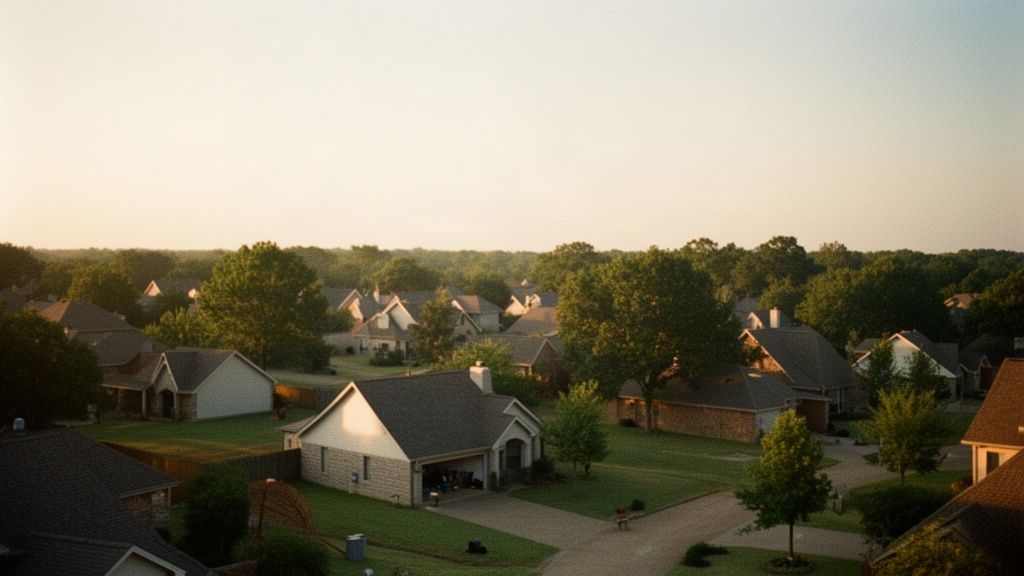
Oklahoma City is known for a real estate market that consistently punches above its weight. Prices remain well below the national median while the metro continues to grow, driven by a diversified economy that includes energy, aerospace, healthcare and a growing technology sector. That combination, affordable entry points with steady demand, is what keeps OKC on the radar for buyers from higher-cost states.
A Market Built on Affordability and Stability
Unlike coastal markets that swung dramatically during 2020 to 2022 and then corrected sharply, Oklahoma City moved more steadily. Appreciation was real but not speculative, which means the market did not overheat and then crash. Buyers who purchased here in 2021 or 2022 are generally sitting on equity, not underwater. That stability is a feature of the OKC market, not a coincidence.
The city's population has grown steadily, with the Oklahoma City metro now home to roughly 1.4 million people. Tinker Air Force Base, the University of Oklahoma Health Sciences Center, and the ongoing development along the MAPS 4 corridor all contribute to consistent housing demand across multiple price points.
How OKC Compares to the National Picture
The national median home price as of September 2026 hovers near $430,000. Oklahoma City's median sits considerably below that, in the $225,000 to $255,000 range depending on the area and property type. For buyers coming from markets like Denver, Austin, or the Pacific Northwest, that gap is significant. A budget that buys a two-bedroom condo in many western cities buys a four-bedroom home with a two-car garage in OKC.
For a deeper look at how OKC's numbers stack up against national trends, Norada Real Estate's Oklahoma City market analysis tracks price trends, inventory shifts, and forecast data that give useful context alongside local expertise.
2. Current Prices Across Oklahoma City's Key Areas
Prices in Oklahoma City vary meaningfully by area, and understanding those differences is the starting point for any serious buyer or seller. The city spans roughly 620 square miles, one of the largest land areas of any city in the United States, so "Oklahoma City" covers an enormous range of housing stock, price points, and commute profiles.
Northwest Oklahoma City
The northwest corridor, anchored by areas like Quail Creek, Hefner Road, and the Penn Square area, carries median prices generally in the $220,000 to $310,000 range as of September 2026. You will find a mix of ranch-style homes built in the 1960s and 1970s alongside updated two-story homes from the 1990s. Lot sizes tend to be generous compared to newer suburban developments, often running from 8,000 to 12,000 square feet. Proximity to major retail corridors along Northwest Expressway and Memorial Road is a consistent draw.
South Oklahoma City and Moore
South OKC and the Moore area offer some of the most accessible price points in the metro, with median prices typically running between $185,000 and $235,000. The housing stock here skews toward brick ranch homes and split-level properties built between the 1970s and early 2000s. Moore, which sits just south of the city limits along I-35, has its own municipal identity and a steady stream of new construction in the $230,000 to $280,000 range. The I-35 corridor provides direct access to downtown Oklahoma City in roughly 20 to 30 minutes outside peak hours.
Midtown, Paseo and the Urban Core
Midtown and the Paseo Arts District represent Oklahoma City's urban revival, and prices reflect that renewed interest. Craftsman bungalows, Tudor cottages, and renovated foursquares from the 1920s and 1930s are common here, with median prices ranging from roughly $280,000 to $420,000 depending on renovation level and proximity to walkable amenities. The Paseo district, centered on NW 28th Street, draws buyers who want character architecture and walkable access to galleries, restaurants, and coffee shops.
If you are considering the urban core in more depth, the guide to living in the Paseo Arts District covers the housing stock and available properties in detail.
Edmond and the Northern Suburbs
Edmond, which borders OKC to the north along I-35 and Broadway Extension, carries the metro's highest median prices, generally between $320,000 and $500,000 for single-family homes. Newer construction dominates, with subdivisions featuring stone-and-brick exteriors, open floor plans, and community amenities like pools and walking trails. Lot sizes in newer Edmond developments typically run 6,000 to 9,000 square feet. The commute to downtown OKC runs approximately 25 to 40 minutes depending on the specific location and time of day.
For a full breakdown of Edmond's submarkets and what drives pricing there, the Edmond area real estate market guide covers that ground specifically.
3. Neighborhood Characteristics: What the Housing Stock Actually Looks Like
Oklahoma City's housing stock is unusually diverse for a mid-sized American city, spanning pre-war bungalows, postwar ranch homes, 1980s and 1990s traditional two-stories, and a growing supply of new construction. Understanding what you are actually buying, not just the price per square foot, shapes every negotiation and inspection outcome.
Established Neighborhoods with Older Homes
Homes built before 1980 make up a significant share of OKC's inner-city inventory. These properties often feature larger lots, mature trees, and architectural details that newer construction does not replicate. They also come with older systems: roofs, HVAC units, plumbing and electrical panels that buyers need to evaluate carefully. A thorough inspection and a realistic repair budget are non-negotiable when purchasing in areas like Crown Heights, Gatewood, or Mesta Park.
The trade-off is character and location. Many of these neighborhoods sit within 10 to 15 minutes of downtown, Midtown's restaurant corridor, and the Oklahoma City National Memorial. Walkability scores are higher here than in most suburban OKC areas, and the streetscapes feel distinctly different from cookie-cutter subdivisions.
Newer Subdivisions and Master-Planned Communities
The western and northern edges of the metro, including Yukon, Mustang, Edmond, and far northwest OKC, have seen the most new subdivision activity over the past decade. Homes in these areas typically offer open-concept layouts, energy-efficient windows and insulation, and HOA-managed amenities. The price per square foot is often lower than in established urban neighborhoods, meaning buyers get more finished square footage for their dollar, though lot sizes tend to be smaller.
New construction activity in OKC in 2026 is concentrated in a handful of corridors. The guide to new construction and development projects in Oklahoma City breaks down where builders are active and what price ranges they are targeting.
Urban Infill and Condo Options
Downtown Oklahoma City's condo market has grown considerably since the original MAPS investments transformed the Bricktown and Midtown corridors. Units in buildings along the Oklahoma River, near the Paycom Center, or in the Broadway corridor range from roughly $180,000 for smaller one-bedroom units to over $600,000 for larger penthouses and renovated lofts. HOA fees vary widely and are a critical part of the total monthly cost calculation for any condo buyer.
4. Timing the Oklahoma City Market: When to Buy and When to Sell
Timing in OKC follows recognizable seasonal patterns, but local inventory levels matter more than the calendar in most years. Understanding both gives buyers and sellers a real advantage over those who simply list or search whenever it feels convenient.
Seasonal Patterns in OKC
Spring, specifically March through May, is traditionally the most active listing season in Oklahoma City. More homes come to market, more buyers are actively searching, and median days on market tend to compress. Sellers who list in April or May typically see the most competitive offer environments. Summer remains active, though the Oklahoma heat does slow foot traffic slightly in July and August.
Fall, including September and October, has become a stronger window than it used to be in OKC. Buyers who were priced out or outcompeted in spring often return in fall with renewed urgency, and inventory levels typically remain reasonable. For a detailed look at how fall 2026 compares to waiting until spring 2027, the article on fall versus spring selling timing in Oklahoma City is worth reading before you make that decision.
What Inventory Levels Mean for You Right Now
As of September 2026, Oklahoma City's inventory has loosened compared to the extreme supply constraints of 2021 and 2022. Active listings are up meaningfully from those low points, giving buyers more options and slightly more negotiating room on price, contingencies, and closing timelines. The market is not a buyer's market in the traditional sense, but it is more balanced than it has been in several years.
Sellers are still achieving solid prices in well-maintained homes priced correctly from day one. Overpriced listings are sitting longer than they would have in 2022, which is a meaningful shift. Homes priced within 2 to 3 percent of their actual market value are still moving in under 30 days in most OKC submarkets. The days of accepting any price regardless of condition are largely over, which puts a premium on accurate pricing and presentation.
Redfin's Oklahoma City housing market data provides current median sale prices, days on market, and sale-to-list price ratios that are useful benchmarks as you evaluate specific listings or prepare to price your own home.
5. Practical Steps for Buyers and Sellers in Oklahoma City Today
Knowing the market is only useful if it translates into action. Here is what buyers and sellers in OKC should prioritize in the current environment, based on what is actually moving the needle in September 2026.
For Buyers: What to Prioritize
Get pre-approved before you start touring homes. In OKC's mid-range price bands, between $200,000 and $350,000, well-priced homes still attract multiple offers within the first week. A pre-approval letter from a local lender, not just an online pre-qualification, signals to sellers that you are a serious buyer. Oklahoma also has state-specific loan programs through the Oklahoma Housing Finance Agency that can reduce down payment requirements for qualified buyers.
Budget for closing costs beyond the down payment. Oklahoma buyers typically pay between 2 and 3 percent of the purchase price in closing costs, covering items like the abstract fee (which is Oklahoma-specific and can run $400 to $800), lender fees, title insurance, and prepaid property taxes. The full breakdown of closing costs for Oklahoma City buyers is covered in a separate guide if you want the itemized version.
Think carefully about commute before committing to a neighborhood. Oklahoma City's sprawl means that a home 20 miles from your workplace can translate to a 45-minute commute during morning rush hour on I-40 or I-35. If you are considering western suburbs like Yukon or Mustang, the guide on commuting from Yukon and Mustang into downtown OKC gives you realistic drive-time data before you sign anything.
For Sellers: What Moves Homes in OKC
Pricing accuracy is the single most important variable in how quickly and profitably a home sells in Oklahoma City right now. Homes that launch at or slightly below their true market value generate the most showing activity in the first 10 days, which is when buyer interest peaks. Homes that start too high and then reduce often sell for less than they would have with a correct opening price, because buyers perceive a price reduction as a signal that something is wrong.
Presentation matters more than it did two years ago. Professional photography is now a baseline expectation, not a differentiator. Decluttered, clean, and lightly staged homes photograph better and show better, and in a market where buyers have more options than they did in 2022, first impressions carry real weight. Minor repairs completed before listing, leaky faucets, scuffed trim, dated light fixtures, reduce the ammunition buyers use to negotiate price reductions.
Oklahoma City's overall 2026 market trajectory, including how prices have moved through the year and what that means for sellers entering the market now, is covered in the Oklahoma City 2026 real estate market guide for additional context.
FAQ
What is the median home price in Oklahoma City as of September 2026?
The median home price across Oklahoma City proper sits in the $225,000 to $255,000 range as of September 2026, though that figure varies significantly by area. The urban core and Edmond push toward $300,000 to $500,000 for move-in-ready properties, while south OKC and Moore offer entry points in the $185,000 to $235,000 range. New construction in western suburbs like Yukon and Mustang typically runs $230,000 to $320,000 depending on the builder and lot size. These ranges shift with inventory and interest rate changes, so pulling current comparable sales data for the specific zip code you are targeting is essential before making any offer.
Is Oklahoma City a buyer's market or a seller's market right now?
As of September 2026, Oklahoma City is closer to a balanced market than it has been in several years, though conditions vary by price band. Homes priced under $300,000 still see competitive activity and occasional multiple-offer situations, while homes above $400,000 are sitting longer and giving buyers more room to negotiate. Inventory levels have risen from the historic lows of 2021 and 2022, which means buyers have more choices and more leverage on contingencies and closing timelines. Sellers who price accurately and present their homes well are still achieving strong outcomes; those who overprice are seeing extended days on market and eventual price reductions.
What should someone relocating to Oklahoma City know about the real estate market before they arrive?
The most important thing to understand is that Oklahoma City's geography is enormous, and where you live relative to where you work matters a great deal. The metro spans over 600 square miles, and a home that looks close on a map can involve a 40-minute commute on I-35 or I-40 during rush hour. Price points are significantly lower than most major metros, which gives relocating buyers real purchasing power, but the market moves quickly in the $200,000 to $320,000 range. Working with a local agent who knows the specific submarkets, not just the city broadly, will save you time and help you avoid areas that do not match your daily life. It is also worth researching Oklahoma-specific items like the abstract of title process, which is different from how title is handled in many other states.