← Back to Blog
Neighborhoods
What Is the Paseo Arts District Area of Oklahoma City Like to Live in and What Kinds of Homes Are Available There
By Jeanine Martin
Lime realty
September 26, 2026 · 12 min read
The Paseo Arts District area of Oklahoma City is one of the most architecturally distinct urban neighborhoods in the state, built around a curving stretch of Spanish Colonial Revival buildings that date back to the 1920s. If you are wondering what it is like to live in the Paseo Arts District and what kinds of homes are available there, this guide covers everything: housing stock, price ranges, what daily life looks like, how the area compares to nearby Midtown, and what buyers and sellers should know heading into the market right now.
1. The Character and Layout of the Paseo Arts District
The Paseo Arts District is a walkable, historic urban neighborhood located roughly two miles north of downtown Oklahoma City. It sits between NW 28th Street and NW 30th Street, centered on the distinctive curved block of Paseo Drive, and is bounded roughly by N Pennsylvania Avenue to the west and N Walker Avenue to the east. The neighborhood is compact, covering only a handful of blocks, but its density of historic architecture and street-level activity makes it feel considerably larger than its footprint suggests.
The Physical Footprint
Paseo Drive itself follows a gentle crescent shape, which is unusual for Oklahoma City's otherwise grid-dominant street layout. That curve was intentional: the neighborhood was developed in the late 1920s and early 1930s as an upscale commercial and residential enclave, and the curved street was designed to evoke a Spanish promenade. Today the district is listed on the National Register of Historic Places, which affects what owners can and cannot do to exterior facades on contributing structures. Buyers considering a home in the Paseo area should ask their agent about any historic overlay restrictions before making an offer.
The residential streets that fan out from Paseo Drive include NW 29th, NW 28th, NW 30th, and several north-south side streets. These blocks transition from commercial storefronts into single-family homes, duplexes, and the occasional small apartment building within a very short walk. You can visit the OKC Districts page for the Paseo Arts District for an overview of the commercial corridor and annual events that shape the neighborhood's public identity.
What Makes the Streetscape Distinctive
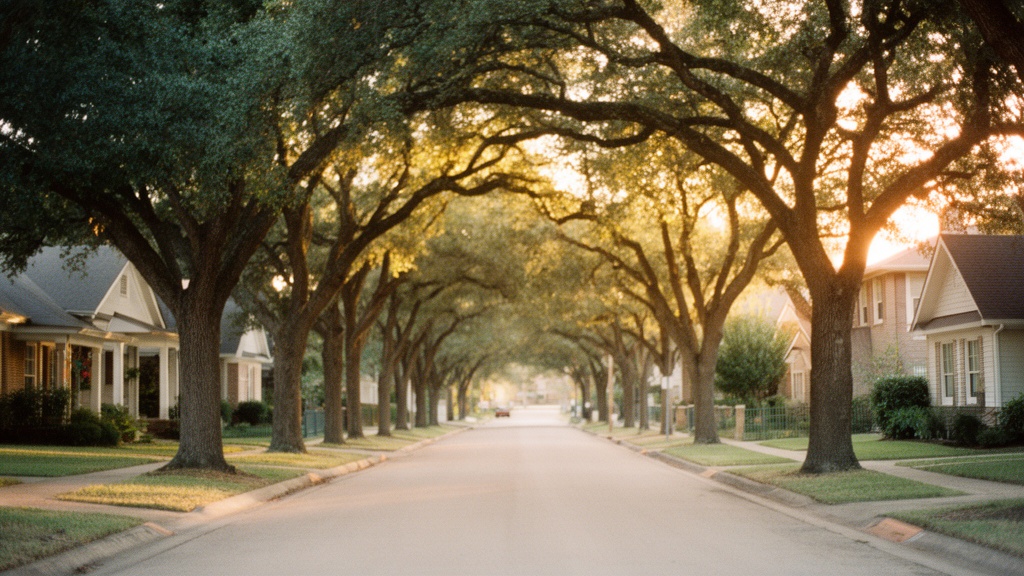
The Spanish Colonial Revival architecture along Paseo Drive is the defining visual element of the district. Cream-colored stucco facades, red clay tile roofs, arched doorways, and wrought-iron details line the commercial strip. Galleries, studios, and locally-owned restaurants occupy most of the ground-floor spaces. The residential blocks immediately surrounding the commercial strip are lined with mature elms and oaks, and the lots tend to be smaller than what you would find in suburban OKC, typically running 50 to 60 feet wide.
The Paseo Arts Festival, held annually over Memorial Day weekend, draws tens of thousands of visitors to the neighborhood each year and is one of the longest-running arts festivals in the state. Living within a few blocks of the festival route means street closures and foot traffic for a few days each May, which is worth understanding before you buy. Most residents treat it as a neighborhood feature rather than an inconvenience, but it is a practical detail worth knowing.
2. What Kinds of Homes Are Available in the Paseo Arts District
The Paseo Arts District area of Oklahoma City offers a mix of bungalows, Craftsman cottages, Spanish Colonial Revival homes, Tudor Revival houses, and a smaller number of infill new-construction properties. Most of the housing stock was built between 1920 and 1950, so buyers should expect the character and quirks that come with century-old construction: original hardwood floors, plaster walls, smaller closets, and detached garages or no garage at all.
Bungalows and Craftsman Cottages
The most common home type in the residential blocks surrounding Paseo Drive is the American Craftsman bungalow. These homes typically run between 900 and 1,600 square feet, with one or one-and-a-half stories, covered front porches, exposed rafter tails, and built-in cabinetry in the living areas. Many have been renovated over the decades, so the condition and level of updating varies considerably from block to block and even house to house. A buyer might find one home with a fully updated kitchen and new electrical panel next door to one with original knob-and-tube wiring and a 1970s bathroom.
Spanish Colonial and Tudor Revival Homes
A smaller but notable share of the residential stock reflects the same Spanish Colonial Revival aesthetic as the commercial corridor. These homes feature stucco exteriors, low-pitched red tile roofs, arched windows, and interior courtyards or patios. They tend to be larger than the bungalows, often running 1,500 to 2,400 square feet, and they command a premium because of their architectural rarity in Oklahoma City. Tudor Revival cottages also appear on the side streets, recognizable by their steeply pitched rooflines, decorative half-timbering, and brick or stone facades.
Homes with contributing historic status in the National Register district carry additional considerations for renovation. The Secretary of the Interior's Standards for Rehabilitation apply to any federally assisted work, and Oklahoma also has a state historic tax credit program that can offset renovation costs. A buyer planning significant updates should consult both a preservation architect and a real estate attorney familiar with Oklahoma historic property law before closing.
Infill and Renovated Properties
Over the past decade, a number of vacant lots and deteriorated structures in and around the Paseo area have been replaced with infill construction. These newer homes tend to be two-story, modern or transitional in style, and range from about 1,400 to 2,200 square feet. They sit on the same narrow lots as the historic homes, so they often have a vertical footprint rather than a sprawling one. If you are interested in what new construction is adding to OKC neighborhoods more broadly, the article on new construction and development projects in Oklahoma City in 2026 covers the citywide picture.
Duplexes and small multi-unit buildings also appear throughout the Paseo area, particularly on the blocks closer to N Pennsylvania Avenue. Some buyers purchase these as owner-occupied investments, living in one unit and renting the other. If that strategy interests you, the investment property guide for Oklahoma City walks through the numbers and considerations specific to OKC.
3. Home Prices and Market Conditions in the Paseo Area
Homes in the Paseo Arts District area sell at a meaningful premium over OKC's citywide median, driven by historic character, walkability, and the neighborhood's strong identity. As of September 2026, single-family homes in the Paseo area are trading in a range from roughly $230,000 for a smaller bungalow needing work to over $550,000 for a fully renovated or architecturally significant property. The median for move-in-ready single-family homes in the immediate Paseo area sits closer to $350,000 to $420,000, depending on size, condition, and whether the home has a garage.
What Buyers Are Paying Right Now
Inventory in the Paseo Arts District is consistently thin. At any given time, there are typically only four to ten single-family homes actively listed in the immediate Paseo area, which means well-priced, well-presented homes move quickly. Days on market for updated homes has been running in the 15 to 30 day range through most of 2026, while properties needing significant renovation can sit for 60 days or more as buyers price in repair costs.
Price per square foot in the Paseo area has been running between $175 and $260 per square foot as of September 2026, with the higher end of that range applying to renovated Spanish Colonial or Tudor Revival homes on the blocks closest to Paseo Drive. Buyers financing with a conventional loan should be aware that some older homes in the district may not meet standard appraisal requirements without repairs, particularly if there are deferred maintenance issues with the roof, foundation, or electrical systems. Getting a thorough inspection before waiving any contingencies is especially important here.
For a full picture of what buyers are paying across OKC right now, the Oklahoma City real estate market guide for buyers and sellers gives broader context on pricing trends, interest rates, and timing.
What Sellers Should Know
Sellers in the Paseo Arts District benefit from a buyer pool that is specifically seeking this type of neighborhood. Buyers who want a historic bungalow within walking distance of galleries and restaurants are not also shopping the suburbs; they are focused on a narrow set of OKC neighborhoods, and Paseo is near the top of that list. That focused demand supports prices even when the broader OKC market softens slightly.
Pricing accurately is still critical. Because the homes are so varied in condition, size, and style, a comparable sales analysis here requires genuine local knowledge. A home priced even 8 to 10 percent above what the comps support will sit, because the buyer pool, while motivated, is also sophisticated. If you are thinking about selling, the article on what consistently sells homes fastest in Oklahoma City covers pricing strategy and presentation in detail.
4. Daily Life, Amenities, and Getting Around
Living in the Paseo Arts District area of Oklahoma City means walkable access to a concentration of independent businesses, art galleries, and restaurants that is rare in a mid-size American city. The neighborhood is not a suburb; it functions more like a small urban village embedded in the larger city grid. That character is a genuine draw for buyers who want to walk to dinner or browse a gallery on a Saturday morning without getting in a car.
Walkable Retail and Dining Along the Paseo
Paseo Drive itself hosts roughly 25 to 30 independently owned businesses, including working artist studios, fine art galleries, a handful of restaurants and cafes, and specialty retail. The mix changes over time as businesses open and close, but the corridor has maintained a consistent identity as an arts destination since the 1970s. Residents within a few blocks can walk to coffee, dinner, and weekend gallery openings without needing a car. The nearest full-service grocery options are a short drive: a Homeland store on NW 23rd Street and a Reasor's on N Pennsylvania Avenue serve the area.
The broader NW 23rd Street corridor, which runs along the southern edge of the Paseo area, adds additional dining and retail options within a short walk or bike ride. This stretch has seen significant reinvestment over the past several years, with new restaurants, bars, and small businesses filling in previously vacant storefronts. The Paseo neighborhood guide on Homes.com offers a useful overview of the commercial landscape and what residents report about day-to-day life in the area.
Parks and Green Space
The Paseo area is not a park-dense neighborhood in the traditional sense, but it is within close reach of several significant green spaces. Wiley Post Park, located about half a mile to the southwest at NW 23rd and N Shartel Avenue, covers several acres and includes picnic areas and open lawn. Bluff Creek Trail and the broader OKC trail network are accessible by bike from the Paseo area. Lake Overholser, one of OKC's larger urban lakes with a trail loop around its perimeter, is approximately five miles to the west.
Commute Times to Downtown OKC
The Paseo Arts District sits approximately two miles north of the Oklahoma City central business district. By car, the commute to downtown runs about 8 to 12 minutes outside of peak hours. During morning rush hour, N Western Avenue and N Pennsylvania Avenue, the two main north-south corridors connecting Paseo to downtown, can add 5 to 10 minutes depending on signal timing and traffic volume. The commute is short by any standard, and many residents bike to downtown using the city's growing network of protected lanes and shared paths.
For those commuting to suburban employment centers, the calculus is different. Reaching the Quail Springs area on the north side takes roughly 20 to 25 minutes by car. Reaching the Yukon or Mustang areas to the west takes 25 to 35 minutes depending on the specific destination. If you are weighing an urban neighborhood like Paseo against a suburban location closer to a western or northern employment hub, the commute guide comparing Yukon and Mustang commutes to downtown OKC gives useful real-world detail on what those drives actually look like.
5. Is the Paseo Arts District Right for Your Next Move
The Paseo Arts District area of Oklahoma City is a specific kind of place, and understanding what it offers and what it does not is essential before committing to a purchase here. It is not a neighborhood that offers large lots, new construction at scale, or quiet residential streets far from commercial activity. What it does offer is architectural character, walkability, a strong sense of place, and proximity to downtown that very few OKC neighborhoods can match.
Comparing Paseo to Nearby Midtown
Paseo and Midtown are the two most frequently compared historic urban neighborhoods in OKC, and they are genuinely different in character. Midtown, centered on the NW 10th Street corridor, has seen more large-scale commercial and mixed-use development over the past decade, with new apartment buildings, hotels, and national restaurant concepts filling in alongside historic structures. Paseo has remained more boutique and residential in feel, with slower-paced redevelopment and a stronger concentration of local independent businesses. Midtown lots tend to be slightly larger, and the housing stock there skews a bit more toward the 1930s and 1940s. For a detailed look at the Midtown buying process, the article on buying a home in Midtown Oklahoma City covers process, costs, and timeline in depth.
What to Watch for as a Buyer
Buyers in the Paseo area should budget for the possibility of deferred maintenance on older homes. Foundation issues are not uncommon in Oklahoma City's expansive clay soils, and homes built in the 1920s and 1930s may have original cast-iron or galvanized steel plumbing that is approaching the end of its useful life. Electrical panels in some homes were last updated in the 1970s or 1980s and may need replacement. None of these issues are dealbreakers, but they need to be priced into any offer and verified by a licensed inspector.
Parking is also worth thinking through before you buy. Many Paseo-area homes have a single detached garage or no off-street parking at all. Street parking is available on residential blocks but can be competitive during the Paseo Arts Festival and other neighborhood events. If you have multiple vehicles or work from home and need reliable parking, confirm the parking situation for any specific property before getting attached to it.
Closing costs in Oklahoma carry some state-specific line items that buyers sometimes overlook. The article on closing costs for buyers in Oklahoma City breaks down what to expect so there are no surprises at the table.
What to Expect as a Seller
Sellers in the Paseo Arts District who price correctly and present their homes well tend to find motivated buyers relatively quickly. The key is understanding that buyers here are doing their homework. They know the neighborhood, they have likely toured multiple homes in the area, and they will notice deferred maintenance. Sellers who address obvious issues before listing, stage thoughtfully to highlight original architectural details, and price based on genuine comparable sales rather than aspiration will see the strongest results.
Photography matters more in the Paseo area than in almost any other OKC neighborhood. The architectural details, original woodwork, tile, and plaster that make these homes special are exactly what buyers are searching for, and professional photography that captures those details will generate more showings than a listing with dark or unflattering photos. This is not a neighborhood where a quick phone-camera shoot will serve a seller well.
FAQ
What are typical home prices in the Paseo Arts District area of Oklahoma City right now?
As of September 2026, single-family homes in the Paseo Arts District area range from roughly $230,000 for a smaller bungalow needing significant work to over $550,000 for a fully renovated or architecturally significant property. The median for move-in-ready homes in the immediate Paseo area sits closer to $350,000 to $420,000. Price per square foot generally runs between $175 and $260, with the higher end applying to renovated Spanish Colonial or Tudor Revival homes on blocks closest to Paseo Drive. Inventory is consistently thin, with only four to ten single-family homes actively listed at any given time, so well-priced properties tend to move in 15 to 30 days.
Are there historic restrictions on homes in the Paseo Arts District?
The Paseo Arts District is listed on the National Register of Historic Places, which means contributing structures in the district are subject to certain exterior modification guidelines, particularly if any federally assisted funding is involved in the renovation. Oklahoma also has a state historic tax credit program that can offset qualifying rehabilitation costs for eligible properties. Buyers planning significant exterior changes or major renovations should consult a preservation architect and a real estate attorney familiar with Oklahoma historic property law before closing. Not every home in the broader Paseo area is a contributing structure, so the specific property's status matters and should be confirmed during due diligence.
How does the Paseo Arts District compare to other historic OKC neighborhoods for buyers?
The Paseo Arts District is more compact and boutique in character than Midtown, with a stronger concentration of independent businesses and a slower pace of large-scale redevelopment. Homes in the Paseo area tend to skew slightly older, with more 1920s and 1930s construction, and lots are generally narrower than what you find in some other historic OKC neighborhoods. The walkability to galleries, restaurants, and the Paseo Drive commercial corridor is a distinguishing feature that few other OKC neighborhoods can replicate at this price point. Buyers who want more square footage or a larger lot for a similar price may find other historic neighborhoods worth exploring, and a local agent can help you compare options based on your specific priorities.