
← Back to Blog
Market Trends
Andover, Massachusetts Real Estate Market Guide: Why Local Realtors Refer Their Clients Here (Prices, Neighborhoods and Timing)
By Jen Mason
Coldwell Banker Realty
September 25, 2026 · 10 min read
There is a reason Andover, Massachusetts keeps coming up when local realtors across the Merrimack Valley and Greater Boston area refer their clients to a specific town. This real estate market guide covers current prices, neighborhood character, and timing considerations so that buyers, sellers, and people relocating can make a fully informed decision about Andover in September 2026.
1. Why Realtors in Surrounding Towns Refer Clients to Andover
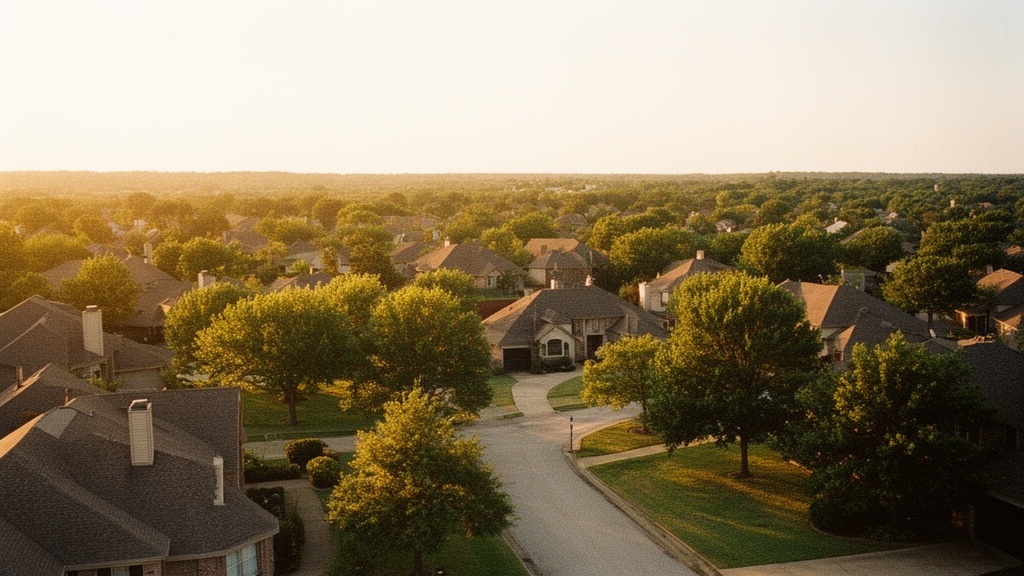
Andover draws referrals from agents working in Lawrence, North Andover, Methuen, and even some Boston-area brokerages because it offers something concrete: a large, well-maintained housing inventory spread across a 32-square-mile town, with direct MBTA commuter rail access to Boston's North Station in roughly 45 to 55 minutes.
What Makes Andover a Referral Destination
Andover sits at the intersection of I-93 and I-495, two of Massachusetts's primary highway corridors. That location puts it within a 30-minute drive of both Lowell and Lawrence to the west, and within a 45-minute drive of downtown Boston without traffic. Clients who are priced out of towns closer to the city, or who need highway access for work in the Route 128 or I-495 tech corridors, frequently land here after a conversation with their original agent.
The town itself has a distinct identity. Andover's downtown, centered on Main Street and Elm Street, has a working town center with independent restaurants, a public library built in 1873, and the Andover Village Improvement Society's historic preservation footprint visible in the architecture. The presence of Phillips Academy, one of the oldest prep schools in the country, shapes the visual character of the central neighborhoods without dominating the residential market.
How Referrals Work Between Agents
When a buyer's agent in another town refers a client to an Andover specialist, a formal referral agreement is typically involved. According to HousingWire's guide to real estate referral fees, the standard referral fee in the industry runs around 25 percent of the receiving agent's commission, paid at closing. This arrangement means the referring agent has a financial incentive to send clients only to agents they genuinely trust to close the transaction and represent the client well.
If you arrived in Andover through a referral, that is worth understanding. Your original agent vetted the local specialist before passing your name along. The local agent is accountable not only to you but also to the professional relationship behind the referral. That dynamic tends to raise the level of service and local knowledge you receive.
2. Andover Real Estate Prices Right Now
As of September 2026, the median single-family home price in Andover sits in the range of $900,000 to $950,000, with active listings spanning from the mid-$500,000s for smaller colonials and ranches to well above $2 million for larger properties on multi-acre lots.
Current Median Price and Price Per Square Foot
Price per square foot in Andover currently runs approximately $350 to $420 for most single-family homes, depending on condition, lot size, and proximity to the town center or commuter rail. Condominiums and townhomes, which make up a smaller share of Andover's inventory than in neighboring Lawrence or Methuen, tend to list in the $400,000 to $650,000 range. Multifamily properties, which are less common given Andover's predominantly single-family zoning, can reach $700,000 to $900,000 depending on the unit count and condition.
For context on what drives these prices, the NAR's consumer pricing guide explains the key factors agents weigh: comparable sales, current inventory levels, property condition, and location within the market. In Andover, lot size and school district boundaries add another layer because the town is served by a single unified district, so buyers pay close attention to which elementary school a specific address feeds into.
How Prices Vary Across the Town
Not all of Andover's 32 square miles price the same. Homes within a half-mile of the Andover MBTA commuter rail station on Essex Street consistently command a premium over comparable homes in the outlying areas of West Andover or the Ballardvale neighborhood near the town's southern border with Wilmington. The premium can run $75,000 to $150,000 for otherwise similar properties, driven entirely by walkable access to the train.
Larger lots in the Reservation Road and Lowell Junction areas of West Andover offer more land for the price, with some properties sitting on two to five acres. These homes tend to be colonial and cape-style construction from the 1960s through the 1990s, with occasional new construction on subdivided parcels. Buyers who need garage space, workshop square footage, or room for a pool find better value per acre in these areas than in the in-town neighborhoods.
3. Andover Neighborhoods: What the Housing Stock Actually Looks Like
Andover's neighborhoods each have a distinct physical character rooted in when they were built and how they connect to the rest of the town. Understanding what the housing stock looks like in each area helps buyers focus their search before they start scheduling showings.
In-Town and Shawsheen Village
The in-town area around Main Street, Elm Street, and Central Street contains some of Andover's oldest residential architecture: Victorians, Greek Revivals, and early 20th-century foursquares on quarter-acre to half-acre lots. Many of these homes have been updated with modern kitchens and systems while retaining original millwork and wide-plank floors. Prices in this corridor start around $750,000 and climb past $1.5 million for the larger properties near Phillips Academy.
Shawsheen Village, developed in the early 1900s by the American Woolen Company, is one of the most architecturally intact planned industrial villages in New England. The residential streets near the old mill buildings feature brick colonials and Tudor-style homes built between 1918 and 1925, most on lots of 6,000 to 10,000 square feet. These homes list in the $550,000 to $800,000 range depending on updates, and they sell quickly because the inventory is limited and the architecture is not replicated elsewhere in town.
West Andover and the Outlying Areas
West Andover is characterized by larger lots, more recent construction, and a quieter, more rural feel than the in-town neighborhoods. Homes here tend to be colonials and contemporaries built between 1975 and 2005, with two-car garages, finished basements, and lot sizes ranging from one to five acres. The area borders Harold Parker State Forest and Harold Parker State Forest Road, which gives residents trail access to hundreds of acres of conservation land without leaving town.
The Ballardvale area near the southern end of Andover, adjacent to the Ballardvale MBTA commuter rail stop, has its own distinct character. Smaller lots, cape-style homes, and some of Andover's most affordable single-family inventory sit here, with prices starting in the mid-$500,000s. The Ballardvale station provides a second commuter rail option for residents in the southern part of town, with service to Boston's North Station on the same Haverhill Line as the main Andover station.
Phillips Academy Corridor
The streets surrounding Phillips Academy, including Chapel Avenue, Salem Street near the campus, and the upper end of Main Street, contain some of the most architecturally significant residential properties in town. Many homes here are large Colonials, Federal-style houses, and Georgians dating to the late 1800s and early 1900s, sitting on lots of half an acre to a full acre within walking distance of the town center. Prices in this corridor typically start at $1.2 million and extend well above $2 million for the largest properties.
For a deeper look at how Andover's neighborhoods compare in terms of housing stock, lot sizes, and proximity to amenities, the relocating to Andover guide on this site covers each area with specific price ranges and commute details.
4. Market Timing: Is September 2026 a Good Moment to Buy or Sell in Andover?
September 2026 is an active period in the Andover market. The summer listing surge has settled, but serious buyers are still active, and sellers who price correctly are seeing strong results before the holiday slowdown typically begins in November.
What Fall Typically Brings to the Andover Market
Fall in Andover brings a more focused buyer pool than spring. The buyers active in September and October tend to have a genuine need to move: job relocations, lease expirations, growing households that have outgrown their current space. That motivation means fewer tire-kickers and more offers. For sellers, this is a meaningful advantage. A well-priced home in good condition in September often generates the same urgency as a spring listing, with less competition from other sellers.
For data on how long homes are currently sitting before going under contract, the article on days on market in Andover this fall has current figures broken down by price range and property type.
Inventory Conditions This Year
Andover's inventory has remained constrained through 2026, consistent with the broader Massachusetts pattern of sellers holding onto properties with low fixed-rate mortgages from prior years. The practical result for buyers is that well-located homes in the $700,000 to $1.1 million range, which represents the largest share of Andover's active market, continue to attract multiple offers when they are priced accurately and presented well. Homes above $1.5 million tend to sit longer, sometimes 30 to 60 days, because the buyer pool is narrower at that price point.
The full picture of how inventory levels have shifted compared to September 2025 is covered in the Andover inventory levels comparison article, which includes month-by-month data for the current year.
What Sellers Should Know Right Now
Sellers who overprice in the current Andover market are experiencing a clear pattern: initial interest, then a plateau, then a price reduction that ultimately results in a lower sale price than they would have achieved with accurate initial pricing. The buyers active right now are well-informed. They have been watching Andover listings for weeks or months, and they notice when a home has been sitting. A home that enters the market at the right price and sells in the first two weeks almost always closes at or above asking. A home that chases the market down after an overpriced start rarely recovers that lost ground.
The relationship between pricing strategy and final sale price in Andover is explored in detail in the article on consistent pricing strategy and highest sale price, which includes local examples of how the two approaches play out at closing.
5. What to Expect During the Andover Buying or Selling Process
Whether you are buying or selling in Andover, understanding the process timeline and cost structure ahead of time removes a significant amount of stress from the transaction.
Typical Transaction Timeline
From accepted offer to closing, most Andover transactions take 45 to 60 days. The sequence runs: accepted offer, home inspection (typically within 7 to 10 days), purchase and sale agreement signed (usually within 14 days of accepted offer), mortgage commitment (30 to 45 days from accepted offer), and then closing. Cash transactions can close in as few as 21 days if both parties are motivated and the title search comes back clean.
Andover's Registry of Deeds is part of the Essex County Southern District, with offices in Salem. Your closing attorney or title company will handle the recording, but it is worth knowing which registry governs your transaction when reviewing title documents. The process is standard Massachusetts real estate procedure, but the local nuances around well and septic inspections matter more in Andover than in more urban markets because a significant portion of properties in the outlying areas are on private well and septic systems rather than town water and sewer.
Costs Buyers and Sellers Should Budget For
Buyers in Andover should plan for closing costs of roughly 2 to 3 percent of the purchase price on top of their down payment. On a $900,000 purchase, that is approximately $18,000 to $27,000 in closing costs covering lender fees, title insurance, attorney fees, prepaid property taxes, and homeowner's insurance escrow. Massachusetts also charges a deed excise tax paid by the seller, currently $4.56 per $1,000 of sale price, which on a $900,000 sale equals roughly $4,100.
Andover's property tax rate as of 2026 runs approximately $13 to $14 per $1,000 of assessed value, which on a home assessed at $900,000 translates to roughly $11,700 to $12,600 annually. That figure is important to build into your monthly budget calculation before you make an offer, particularly if you are comparing Andover to neighboring towns like North Andover or Boxford, which carry different tax rates on similar assessed values.
For a full breakdown of the buying process from pre-approval through closing in Andover, the complete buyer's guide for Andover covers each step with local-specific cost figures.
FAQ
Do other local realtors really refer their clients to Andover, Massachusetts, and why?
Yes, agents working in Lawrence, Methuen, Haverhill, and parts of the Boston metro regularly refer clients to Andover when those clients need commuter rail access, more square footage than their budget allows closer to Boston, or a larger lot than is available in denser towns. The referral is typically formalized with a written referral agreement, and the referring agent receives a percentage of the commission at closing. Andover's combination of direct MBTA service on the Haverhill Line, a large and varied housing inventory, and its position at the I-93 and I-495 interchange makes it a logical answer for a wide range of buyer needs. Agents who refer clients here generally do so because they know the town delivers on what they promised their client.
What price range covers most of the homes for sale in Andover, Massachusetts right now?
As of September 2026, the most active segment of the Andover market sits between $700,000 and $1.1 million for single-family homes. This range covers most of the colonial and cape-style homes built between the 1960s and 1990s across the town's various neighborhoods, including West Andover, Shawsheen Village, and the areas near the Ballardvale commuter rail stop. Homes below $650,000 exist but are limited and tend to be smaller capes or properties needing significant updates. Homes above $1.5 million represent the upper tier and typically feature larger lots, more recent construction, or a location in the in-town or Phillips Academy corridor area. Condominiums and townhomes provide a lower entry point, generally in the $400,000 to $650,000 range.
Is fall 2026 a good time to sell a home in Andover, Massachusetts?
September and October in Andover attract motivated buyers who need to move before the end of the year, which tends to produce serious offers rather than exploratory showings. Inventory remains lower than historical norms in 2026, which means well-priced homes face less competition than they would in a more balanced market. The key variable is pricing: homes that enter the market at an accurate price based on recent comparable sales in Andover consistently outperform homes that start high and reduce later. Sellers who list in September with a clear pricing strategy and strong presentation, including professional photography and a pre-listing inspection, are in a strong position relative to the buyer demand currently active in town. The window before the holiday slowdown, which typically begins in mid-November, is real and worth using.