← Back to Blog
Neighborhoods
What Is Living in Inwood, Manhattan Actually Like Day to Day in Terms of Commute to Midtown and Neighborhood Feel
By Jeniree Figuera
The Corcoran Group
September 25, 2026 · 13 min read
Living in Inwood, Manhattan day to day feels genuinely different from most of the island: wider sidewalks, pre-war co-op buildings, a working waterfront park, and a subway commute to Midtown that clocks in around 35 to 45 minutes on the A train. If you are weighing whether Inwood makes sense as your next home base, this guide covers exactly what to expect, from rush-hour commute realities to housing prices, street-level texture, and what the market looks like in September 2026.
1. The Commute from Inwood to Midtown Manhattan: What the Numbers Actually Show
The commute from Inwood to Midtown runs roughly 35 to 45 minutes door to door on a typical weekday morning. That figure covers the walk to the station, the A train ride, and a short walk at the other end. It is longer than a commute from the Upper West Side or Harlem, but it is a single, direct subway line with no transfers required.
A Train Timing and Frequency
Inwood is served by two A train stations: Inwood-207th Street and Dyckman Street, both on the same line. The A express runs from 207th Street to 59th Street-Columbus Circle in approximately 28 to 32 minutes when you board at the northern terminus, which means you are almost always guaranteed a seat during the morning rush. Because 207th Street is the last stop before the train heads south, trains originate here and pull in empty. That is a meaningful quality-of-life detail that commuters from more central neighborhoods do not have.
From 59th Street, connecting to the rest of Midtown is straightforward: the B, C, D, and 1 trains are all within a few blocks. If your office is closer to Grand Central or the East Side, add another 10 to 15 minutes via the crosstown shuttle or the 6 train. The total door-to-door time from an Inwood apartment to a Midtown East office typically lands between 45 and 55 minutes.
A train frequency during peak hours runs every 5 to 8 minutes on weekdays. Off-peak and late-night service is less frequent, typically every 12 to 20 minutes, which is worth factoring in if you work irregular hours or often stay out late.
Bus and Biking Options
The Bx7 and M100 buses connect Inwood southward along Broadway and Broadway-adjacent corridors, though neither is a practical choice for a daily Midtown commute given the time involved. The buses are more useful for short local trips, reaching the Columbia University Medical Center campus on 168th Street, or getting to the commercial stretch along Dyckman Street without backtracking to the subway.
Cycling is a realistic option for some residents, particularly those with offices in Upper Manhattan or along the Hudson River Greenway. The Greenway runs continuously along the western edge of Manhattan, and Inwood sits at its northern terminus near the Spuyten Duyvil Creek. Biking from Inwood to Midtown along the Greenway covers roughly 12 miles and takes about 50 to 65 minutes at a moderate pace. For warmer months, it is a genuine alternative.
Driving Realities
Driving to Midtown from Inwood during peak hours is not practical for most people. The Henry Hudson Parkway and Broadway both experience heavy congestion between 7:30 and 9:30 a.m. southbound, and the Manhattan Congestion Pricing program that went into effect in 2024 adds a toll for vehicles entering below 60th Street. That toll, currently $9 for passenger vehicles during peak hours as of September 2026, makes driving an expensive daily option on top of parking costs in Midtown, which routinely run $30 to $50 per day in garages. Most Inwood residents who commute to Midtown use the subway.
2. The Day-to-Day Neighborhood Feel in Inwood
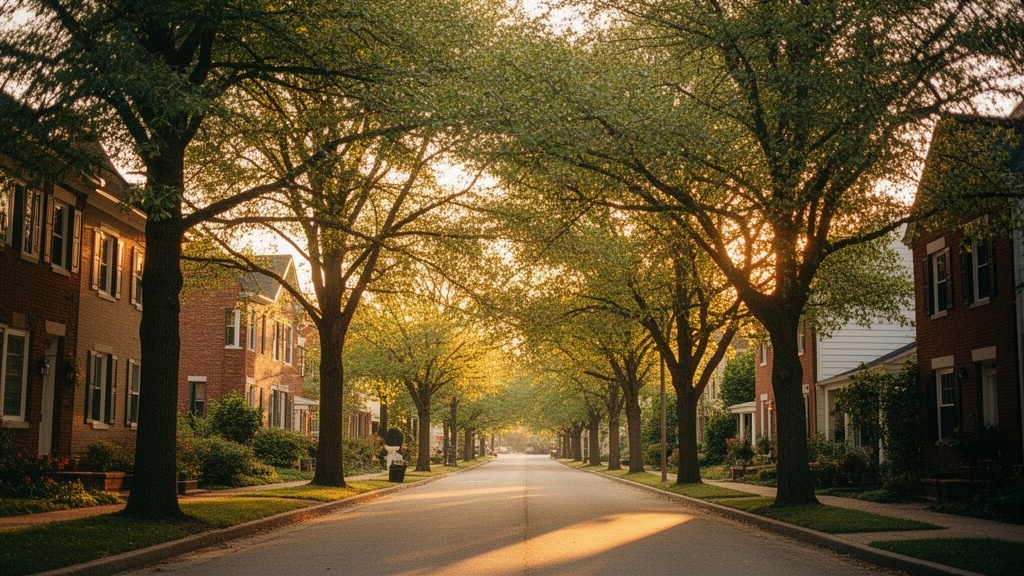
Inwood has a street-level texture that feels more like a small urban town than a Manhattan neighborhood. The blocks are wider, the building heights are lower than in Midtown or the Upper West Side, and the pace is noticeably slower. That is not a value judgment; it is a physical description of what you encounter walking around on a Tuesday morning.
Streets, Architecture, and Scale
The residential blocks in Inwood are dominated by six- to seven-story pre-war apartment buildings, most built between the 1910s and 1940s. Many feature brick facades, ornate lobbies with original tile work, and layouts with larger rooms than you find in post-war construction. The streets running east-west between Broadway and Seaman Avenue, including Isham Street, Dyckman Street, and Academy Street, have a consistent low-rise scale that lets in more sky than most Manhattan blocks.
Inwood Hill Park sits at the western edge of the neighborhood and covers 196 acres, making it the largest remaining natural forest in Manhattan. The park contains the last remaining old-growth forest on the island, with some tulip trees estimated to be several hundred years old. The eastern portion of the neighborhood borders Isham Park, a smaller but well-maintained green space with a lawn, benches, and a community garden plot. Having two parks within walking distance of most Inwood addresses is a concrete, measurable feature of daily life there.
Shopping, Dining, and Everyday Errands
Dyckman Street is Inwood's main commercial corridor and runs east to west across the neighborhood. You will find a mix of Dominican restaurants, bodegas, pharmacies, a Target on 225th Street a short distance north, and a growing number of cafes and wine bars that have opened over the past several years. The Inwood Local and Saggio are two restaurants that have drawn attention from food media. Day-to-day grocery shopping is handled by a C-Town supermarket on Dyckman and a Key Food nearby; neither is a large-format store, so residents who want a Whole Foods or Trader Joe's typically make a trip to the Upper West Side.
Broadway through Inwood has additional retail, including a mix of local hardware stores, nail salons, and clothing shops. The neighborhood does not have the density of restaurants or bars you find in the West Village or Astoria, but it is not sparse either. Most residents describe running daily errands entirely within the neighborhood without needing to leave.
Parks and Outdoor Space
Inwood Hill Park offers hiking trails, kayak launches on the Harlem River Ship Canal, and open meadows used for soccer and picnics. The park connects to the Hudson River Greenway at its southern end, giving cyclists and runners a traffic-free path that extends the length of Manhattan. The Dyckman Fields complex along the waterfront was renovated in the 2010s and includes turf athletic fields with Hudson River views. For residents who prioritize outdoor access, Inwood delivers a level of green space that is rare at this price point anywhere in Manhattan.
The neighborhood also sits adjacent to the Spuyten Duyvil Creek, which separates Manhattan from the Bronx at Inwood's northern tip. The Metro-North Spuyten Duyvil station is just across the creek in the Bronx and is accessible by foot via the pedestrian bridge, adding another transit option for residents commuting to destinations along the Hudson Line.
3. Housing Stock and Prices in Inwood Right Now
Inwood is one of the most affordable neighborhoods for ownership in Manhattan, with median co-op prices running well below what you would pay in the 70s, 80s, or 90s on the West Side. That affordability is the single most cited reason buyers look here, and it is documented consistently across listing platforms. StreetEasy has noted Inwood's status as one of Manhattan's more accessible ownership markets, with prices that reflect the neighborhood's distance from Midtown rather than any deficiency in the housing stock itself.
For more context on how Inwood fits into the broader Manhattan market, see the overview of what buyers need to know when purchasing in New York, which covers the full purchase process including board approvals and financing.
Co-ops: The Dominant Housing Type
Co-ops make up the vast majority of for-sale inventory in Inwood. As of September 2026, studio co-ops in the neighborhood are listed in the $150,000 to $230,000 range. One-bedroom units typically run between $220,000 and $350,000, and two-bedrooms are generally found between $320,000 and $500,000, with larger or renovated units occasionally exceeding that range. These are purchase prices; monthly maintenance fees on top of that tend to run between $700 and $1,400 per month depending on the building and unit size.
The pre-war buildings that dominate the neighborhood often have higher maintenance fees than post-war buildings because older mechanical systems cost more to maintain. However, the underlying purchase prices are low enough that the total monthly carrying cost, mortgage plus maintenance, frequently compares favorably to renting a similar-sized apartment in the neighborhood. If you are weighing co-op costs in detail, the breakdown of what monthly maintenance fees cover in co-ops across the New York area is a useful reference point.
Condos and Rentals
Condo inventory in Inwood is thin. There are a small number of newer condo conversions and purpose-built condo buildings, but they represent a fraction of what is available compared to co-ops. When condos do appear, they tend to price at a premium over comparable co-ops, partly because condos allow subletting and non-citizen buyers without the same board restrictions.
Rental prices in Inwood as of September 2026 run roughly $1,800 to $2,400 per month for a one-bedroom and $2,400 to $3,200 for a two-bedroom, depending on building condition and whether the unit has been renovated. Those figures are significantly below comparable rentals in Washington Heights, Harlem, or the Upper West Side, which makes Inwood an entry point for renters who want Manhattan without the price tag of neighborhoods further south.
What Your Budget Gets You
At $300,000, a buyer in Inwood can realistically find a one-bedroom co-op in a pre-war building with original details, a windowed kitchen, and a live-in super. At $450,000, the options expand to two-bedroom units in well-maintained buildings, sometimes with a separate dining room, which is genuinely rare at that price anywhere on the island. These are not fixer-uppers in distressed buildings; they are standard, livable apartments in buildings that have been operating continuously for decades.
StreetEasy's neighborhood guide for Inwood confirms this pricing pattern and notes the neighborhood's relative value within the Manhattan market. For buyers who want to understand the full cost picture before purchasing, including closing costs and board approval timelines, the guide on how long it takes to close on a co-op in New York City walks through the full timeline from accepted offer to move-in.
4. Inwood Compared to Nearby Manhattan and Bronx Neighborhoods
Understanding Inwood means understanding where it sits in the geography of northern Manhattan and what separates it from the neighborhoods immediately to its south and east. Each of these areas has a distinct housing stock, price range, and transit profile, and the differences are meaningful for buyers trying to decide where to focus their search.
Washington Heights
Washington Heights begins at roughly 155th Street and runs north to Dyckman Street, where Inwood begins. The two neighborhoods share a similar pre-war building stock, but Washington Heights has more commercial density along Broadway and St. Nicholas Avenue, more condo inventory relative to Inwood, and slightly higher prices in renovated units. Commute times from Washington Heights to Midtown on the A or 1 train run 25 to 35 minutes, making it a few minutes faster than Inwood.
Washington Heights also has the Columbia University Irving Medical Center at 168th Street, which brings a significant institutional presence to that part of the neighborhood. Buyers who want to be closer to that campus or to the A/C/1 transfer point at 168th Street sometimes choose Washington Heights over Inwood; buyers who prioritize park access and lower prices often land in Inwood instead.
Marble Hill and the Bronx Border
Marble Hill is technically part of Manhattan in terms of borough designation but is physically connected to the Bronx by land and separated from the rest of Manhattan by the Spuyten Duyvil Creek. It sits immediately north of Inwood and is served by the 1 train and Metro-North. Housing there is a mix of NYCHA developments, older co-ops, and some attached houses, with prices generally below Inwood's co-op market.
The Bronx neighborhoods closest to Inwood, including Riverdale and Kingsbridge, offer a different housing profile: Riverdale has a significant stock of mid-century co-ops and some single-family houses on larger lots, while Kingsbridge has more attached rowhouses and smaller apartment buildings. For a detailed look at what the Bronx market looks like as a whole, the Bronx real estate market guide covers prices, neighborhoods, and timing across the borough.
Price Context Across the Northern Tip
Across the northern tip of Manhattan, Inwood consistently comes in as the most affordable ownership market on the island. A two-bedroom co-op that lists for $400,000 in Inwood would likely price at $550,000 to $700,000 in Washington Heights and $900,000 or more in the Upper West Side, depending on the building and finishes. That price gap is the central fact that drives buyer interest in Inwood and explains why the neighborhood has seen steady demand even as other parts of Manhattan have softened.
5. What to Know Before You Buy or Rent in Inwood
Inwood's co-op market has specific requirements that buyers need to understand before making an offer. The low sticker prices can be misleading if you have not accounted for board requirements, financing restrictions, and the time the approval process adds to a transaction.
Co-op Board Requirements
Most Inwood co-op buildings require buyers to put down at least 20 percent, and some buildings require 25 or even 30 percent. Boards typically review two years of tax returns, recent pay stubs, bank statements, and a full financial package before scheduling an interview. The post-purchase liquidity requirement, meaning the cash you must have left over after closing, varies by building but is commonly one to two years of maintenance fees.
Subletting rules vary significantly from building to building. Some Inwood co-ops allow subletting after two years of ownership; others prohibit it entirely. If subletting flexibility matters to you, that question needs to be asked before you fall in love with a specific unit. Buyers who want the ability to rent out their apartment more freely often look at the limited condo inventory in the neighborhood or consider buildings that have more permissive sublet policies.
What the Market Is Doing in September 2026
In September 2026, Inwood's co-op market is moving at a measured pace. Days on market for co-ops in the neighborhood are running longer than they did in 2021 and 2022, which gives buyers more time to conduct due diligence and negotiate. Sellers who price accurately relative to recent comparable sales are still closing, but overpriced listings are sitting. The inventory level is moderate, meaning buyers have real options without the frantic competition that characterized the pandemic-era market.
Interest rates remain a factor for buyers financing their purchase. At current rates, the monthly mortgage payment on a $300,000 co-op with a 20 percent down payment runs roughly $1,500 to $1,700 per month depending on the rate and term, before maintenance. Combined with maintenance fees, total monthly costs for a one-bedroom in Inwood are generally in the $2,200 to $3,200 range, which remains below what comparable rentals cost in most of Manhattan. For sellers thinking about timing, the full picture of the New York market is covered in the guide on selling a home in New York: pricing, timeline, and what to expect.
Questions to Ask Before You Commit
Before signing a contract on any Inwood co-op, there are several building-specific questions worth raising with your attorney and broker. What is the building's underlying mortgage balance? What percentage of units are owner-occupied versus sublet? Has the building passed its most recent Local Law 11 facade inspection? Is there a capital assessment pending or recently completed? These questions affect both your monthly costs and your ability to finance the purchase, since lenders scrutinize co-op financials carefully.
For buyers relocating to New York from another city or state, Inwood is one of the neighborhoods worth putting on the short list before you settle on a more central location by default. The commute to Midtown is real but manageable, the housing value is measurable, and the neighborhood has enough commercial life and green space to function as a genuine home base rather than just a place to sleep. The guide on relocating to New York: neighborhoods, costs, and timelines covers how to approach that decision systematically.
For additional research on Inwood's housing profile and how it fits into the northern Manhattan market, the Inwood neighborhood guide on Homes.com provides a useful overview of the area's physical characteristics and housing inventory.
FAQ
How long does the commute from Inwood to Midtown Manhattan take on a typical weekday?
Door to door, most Inwood residents reach Midtown in 35 to 45 minutes on the A train. The train itself from 207th Street to 59th Street-Columbus Circle runs about 28 to 32 minutes when running on schedule, and the walk at each end adds the remaining time. If your office is on the East Side near Grand Central, budget closer to 50 to 55 minutes total. One practical advantage is that 207th Street is the A train's northern terminus, so trains pull in empty during the morning rush and you can almost always find a seat.
What is the typical price range for a co-op in Inwood, Manhattan in 2026?
As of September 2026, studio co-ops in Inwood are generally listed between $150,000 and $230,000, one-bedrooms between $220,000 and $350,000, and two-bedrooms between $320,000 and $500,000. Monthly maintenance fees typically add $700 to $1,400 per month depending on the building and unit. These prices make Inwood one of the most affordable ownership markets in Manhattan, though buyers should account for co-op board requirements including down payment minimums of 20 to 30 percent and a full financial review. The total monthly carrying cost, mortgage plus maintenance, often compares favorably to renting a similar unit in the neighborhood.
What is the day-to-day neighborhood feel like in Inwood compared to other parts of Manhattan?
Inwood has a lower-density, slower-paced feel than most Manhattan neighborhoods south of 155th Street. The residential blocks are lined with six- to seven-story pre-war brick buildings, and the main commercial strip along Dyckman Street has a mix of local restaurants, bodegas, pharmacies, and a growing number of cafes and wine bars. Two parks sit within walking distance of most addresses: Inwood Hill Park, a 196-acre forested park with hiking trails and river access, and Isham Park, a smaller green space with a community garden. Everyday errands including groceries, pharmacy, and dry cleaning can be handled within the neighborhood, though residents who want larger grocery chains typically make a trip to Washington Heights or the Upper West Side.