← Back to Blog
Market Trends
The Fort Liberty Corridor of Fayetteville, North Carolina Real Estate Market Guide: Prices, Neighborhoods and Timing
By Jessica Deshotel
October 18, 2026 · 12 min read
The Fort Liberty corridor of Fayetteville, North Carolina real estate market is one of the most active and consistently in-demand segments of Cumberland County, shaped by the rhythms of one of the largest military installations in the United States. Whether you are buying, selling, or relocating to the area, understanding how prices move, which neighborhoods sit closest to the gates, and when to act can make a real difference in your outcome. This guide covers all of it, with current market data, neighborhood details, and timing insights specific to September 2026.
1. What Makes the Fort Liberty Corridor a Distinct Real Estate Market
The Fort Liberty corridor functions as its own real estate micro-market within Fayetteville. The installation, formerly known as Fort Bragg and renamed Fort Liberty in 2023, is home to tens of thousands of active-duty soldiers and their families at any given time. That population creates a steady, year-round pipeline of buyers and renters that does not exist in most American cities of comparable size.
The Military Mission Shapes Demand Year-Round
Unlike civilian-driven markets that slow sharply in winter, the Fort Liberty corridor stays active because Permanent Change of Station orders arrive throughout the year. Soldiers receiving orders often have 30 to 90 days to find housing, which compresses their timelines and keeps demand from going soft even in traditionally slow months. Sellers in this corridor benefit from a buyer pool that is motivated by necessity as much as preference.
The corridor also draws civilian defense contractors, federal employees, and support-industry workers who prefer to live close to the installation. That mix of military and civilian demand gives the market a durability that insulates it somewhat from the broader North Carolina market swings that affect Raleigh or Charlotte.
How the Corridor Is Defined Geographically
The Fort Liberty corridor is not an official boundary but rather a practical one. It encompasses the residential neighborhoods and commercial strips that run along the major arteries connecting Fayetteville to the installation's main gates: Yadkin Road and Gruber Road to the east, Reilly Road and Cliffdale Road to the west and northwest, Ramsey Street running north toward the Bragg Boulevard gate, and the southern approaches along Hope Mills Road and Raeford Road. Within this zone, most homes sit within a 5 to 15 minute drive of a gate, which is a meaningful feature for active-duty households.
2. Current Prices in the Fort Liberty Corridor of Fayetteville, NC
Prices across the Fort Liberty corridor range widely depending on age of construction, lot size, and proximity to specific gates. As of September 2026, the corridor encompasses some of the most affordable single-family inventory in Cumberland County alongside newer construction that pushes well above the county median. Buyers who understand that range can find real value; sellers who price without that context often leave money on the table or sit too long.
Median Home Prices Right Now
The Cumberland County median sale price is tracking in the low-to-mid $200,000s as of September 2026, consistent with the trajectory reported earlier in the year. Within the corridor specifically, entry-level homes in older subdivisions near the Yadkin Road and Gruber Road gates typically close in the $170,000 to $220,000 range. Newer construction in the Cliffdale and Westover areas routinely lists between $260,000 and $340,000, with some larger builds on corner lots or cul-de-sacs reaching $380,000 or higher. According to reporting on Fayetteville's housing and rental market, Cumberland County has remained one of the more affordable metro-adjacent markets in North Carolina, which continues to draw both in-state and out-of-state buyers.
Price Ranges by Housing Type
Ranch-style homes from the 1970s and 1980s make up a large share of the older corridor inventory. These homes typically run 1,200 to 1,800 square feet on lots of a quarter acre or more and are priced between $160,000 and $230,000 depending on updates. Two-story colonials and traditional builds from the 1990s and early 2000s in subdivisions like Westover Hills and Reilly Hills generally fall in the $200,000 to $280,000 range. Newer planned communities built after 2015, including sections of the Cliffdale corridor closer to Raeford Road, offer open floor plans with 2,000 to 3,000 square feet and list from $280,000 to $370,000.
How Prices Have Shifted in 2026
Q1 2026 data showed the Fayetteville market holding steady after the rapid appreciation of 2022 and 2023. Price growth has moderated rather than reversed, with most corridor homes appreciating in the low single digits year over year. Interest rates remain the primary lever: when rates dip even slightly, buyer activity in the corridor picks up quickly because VA loan eligibility makes many military buyers particularly rate-sensitive. Sellers who priced aggressively in early 2026 and sat on the market are now adjusting, which creates negotiating room for buyers who are ready to move.
3. Neighborhoods Along the Fort Liberty Corridor: What Each One Offers
Each section of the corridor has a distinct character in terms of housing stock, lot size, commute distance to the gates, and nearby amenities. Understanding those differences helps buyers narrow their search and helps sellers position their home against the right competition.
Cliffdale and Westover Area
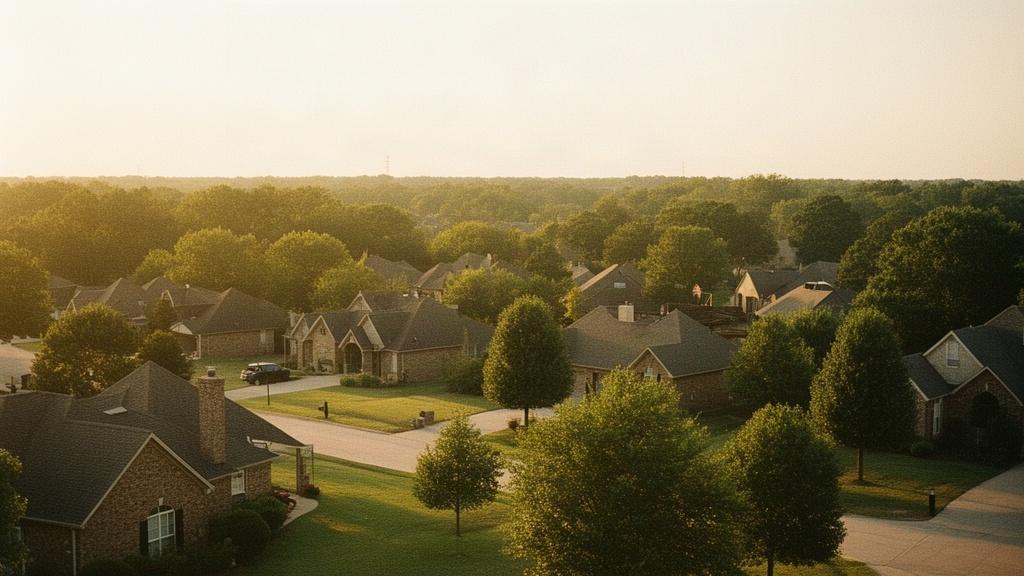
The Cliffdale Road and Westover corridor runs northwest of downtown Fayetteville toward the Reilly Road gate. This stretch includes some of the most established suburban neighborhoods in the corridor, with mature tree canopies, larger lots averaging a third of an acre, and a mix of brick ranch homes and two-story builds. Cross Creek Mall and the Cliffdale Road commercial strip put grocery stores, restaurants, and retailers within a 5 to 10 minute drive. Commute time to the Reilly Road gate typically runs 8 to 14 minutes from most addresses in this area.
Newer construction has filled in several lots along the Raeford Road extension, adding townhomes and smaller single-family builds in the $250,000 to $310,000 range. Clarkton Park and Arnette Park are both accessible from this part of the corridor, offering walking trails and athletic fields within a short drive.
Ramsey Street and Stoney Point Road Corridor
Ramsey Street runs north from downtown Fayetteville toward the Bragg Boulevard gate, one of the installation's busiest entry points. The residential neighborhoods branching off Ramsey Street and Stoney Point Road include a range of mid-century brick homes and updated colonials on half-acre lots. Prices here tend to run slightly lower than the Cliffdale area, with most single-family homes closing between $165,000 and $245,000. The trade-off is a longer drive to newer retail but a shorter commute to the Bragg Boulevard gate, which is often 6 to 12 minutes from most addresses.
Stoney Point Road itself has seen steady infill development over the past several years, with new subdivisions adding inventory in the $220,000 to $290,000 range. Veterans Park, a large municipal green space with athletic fields and a community center, sits just off this corridor and is a frequently cited amenity by buyers who tour homes in this area.
Hope Mills Road and South Fayetteville
The southern end of the corridor follows Hope Mills Road toward the town of Hope Mills, which sits about 8 miles from downtown Fayetteville. This stretch offers some of the largest lots in the corridor, with many properties sitting on a half acre to a full acre. Homes here range from older brick ranches priced in the $150,000 to $200,000 range to newer construction closer to Hope Mills Road's intersection with Raeford Road, where prices climb to $280,000 and above. Commute distance to the nearest gate, typically the Reilly Road or Yadkin Road entrances, runs 15 to 25 minutes depending on traffic.
Hope Mills Lake is a notable landmark in this area, a reservoir surrounded by a town park with a beach area, picnic shelters, and a walking path. Buyers who want more outdoor space and larger lots while remaining within a reasonable drive of Fort Liberty often focus their search along this southern section of the corridor.
Yadkin Road and the Eastern Approaches
Yadkin Road and Gruber Road define the eastern edge of the corridor, running directly to Fort Liberty's eastern gates. This section has some of the shortest gate-to-home commutes in the entire corridor, often under 10 minutes, which drives consistent demand. Housing stock here skews toward smaller ranches and split-levels from the 1970s through 1990s, with prices typically between $155,000 and $230,000. Lots are generally a quarter acre or smaller, and the area has a denser, more established neighborhood feel compared to the newer subdivisions to the west.
Investors have been active in this part of the corridor for years because rental demand from soldiers who prefer off-post housing remains strong. Buyers looking for a primary residence should be aware that they will be competing with investors who can move quickly, which makes pre-approval and a clear offer strategy important.
4. Timing the Fort Liberty Corridor Market: When to Buy or Sell
Timing in the Fort Liberty corridor is driven more by military PCS cycles than by the seasonal patterns that govern most civilian markets. Knowing when those cycles peak and trough gives buyers and sellers a real advantage.
PCS Season and Its Effect on Inventory
The heaviest PCS activity runs from May through August, when the military moves the largest number of families to coincide with the school calendar. During those months, the corridor sees its highest volume of both listings and buyer activity. Homes that are priced correctly and show well can receive multiple offers within the first week. Sellers who list in April or early May position themselves to capture that peak demand before competing inventory arrives.
A secondary PCS wave often arrives in January and February, when mid-year orders are issued. That winter wave is smaller but meaningful, and it tends to produce motivated buyers with tight timelines. Sellers who list in late December or early January can sometimes command stronger offers than they would expect from a winter market because competition from other sellers is low while buyer urgency is high.
What September 2026 Looks Like for Buyers and Sellers
September 2026 sits in the post-peak window, after the summer PCS rush has settled. Inventory levels are slightly higher than they were in June and July because some sellers who listed during peak season have not yet closed. That means buyers right now have more options and slightly more negotiating leverage than they did three months ago. Days on market for corridor homes has ticked up from the 10 to 20 day range seen in peak season to closer to 25 to 40 days for homes that are not priced sharply.
For sellers, the post-summer period is still a viable time to list, particularly for homes that are move-in ready and priced at or slightly below recent comparable sales. Buyers who receive late-summer or fall PCS orders are still actively searching, and the winter secondary wave will begin building by November. Sellers who wait until spring 2027 will face more competition from other listings but also more buyer demand, so the right timing depends on individual circumstances rather than one universal answer.
For a broader view of what has been driving the Fayetteville market this year, this breakdown of Q1 2026 housing trends in Cumberland County provides useful context on inventory levels, median prices, and days on market from earlier in the year.
5. Practical Guidance for Buyers and Sellers in This Market
The Fort Liberty corridor has specific dynamics that make generic real estate advice less useful than corridor-specific knowledge. Here is what buyers and sellers need to understand before they act.
VA Loan Considerations in This Corridor
A large share of buyers in the Fort Liberty corridor use VA home loans, which require no down payment and no private mortgage insurance for eligible veterans and active-duty service members. That changes the math for buyers significantly: a $250,000 home purchased with a VA loan requires no cash down, whereas a conventional buyer would need $8,750 to $50,000 depending on the loan type. Sellers should understand that VA offers are not weaker than conventional offers; they simply require the home to meet VA appraisal standards, which means major deferred maintenance can become a sticking point. Sellers who address visible repairs before listing attract more VA buyers and reduce the chance of a deal falling apart after inspection.
Buyers using VA financing should get their Certificate of Eligibility confirmed and work with a lender experienced in VA loans before they start touring homes. Pre-approval letters from VA-experienced lenders carry more weight with corridor sellers than a generic pre-qualification letter because those sellers have seen VA deals close smoothly before.
What Sellers Need to Know About Pricing to Military Buyers
Military buyers in the corridor are often working within a Basic Allowance for Housing budget, which sets a ceiling on what they can practically spend each month. As of 2026, the BAH rate for an E-5 with dependents assigned to Fort Liberty is in the range that supports a mortgage on a home priced in the $220,000 to $270,000 range, depending on interest rates and property taxes. Sellers pricing above that range are targeting a narrower buyer pool of higher-ranking officers, civilian contractors, or dual-income households. That is not a problem, but it means the marketing strategy and days-on-market expectations should reflect a smaller audience.
Sellers should also be prepared for buyers who are purchasing remotely. A soldier receiving PCS orders to Fort Liberty from a post in Germany or Hawaii cannot always fly in for a showing. High-quality photos, video walkthroughs, and a listing agent who can answer detailed questions by phone or video call are not optional in this market; they are the difference between getting an offer and being passed over.
Steps to Take Before You Make a Move
Buyers relocating to Fayetteville should confirm their financing type and maximum budget before identifying target neighborhoods, since the price range will determine which section of the corridor makes the most sense. From there, mapping commute times from specific addresses to the relevant gate during morning hours, not just Google Maps estimates, gives a realistic picture of daily life. Buyers who are new to the area and want a thorough walkthrough of the process can find useful context in the homes for sale in Fayetteville, NC guide published on this site.
Sellers should pull comparable sales from the past 90 days within a half-mile radius before setting a list price. Corridor comps move quickly and can shift meaningfully between PCS peaks and off-season lulls. A price that was accurate in June may be 5 to 8 percent above market by September if the comparable homes that closed in summer had the benefit of peak-season bidding. Working with an agent who tracks corridor-specific data rather than county-wide averages is important for getting this right. For sellers weighing their options, the article on what to ask a real estate agent before hiring them to sell your home is a practical starting point.
First-time buyers who feel uncertain about the process in a military-heavy market can also review the guidance on which Fayetteville agents specialize in first-time buyers, which covers what to look for in an agent and how to prepare for the corridor's fast-moving inventory.
FAQ
How close are Fort Liberty corridor neighborhoods to the installation's gates?
Commute times vary by section of the corridor. Neighborhoods along Yadkin Road and Gruber Road on the eastern side typically sit 6 to 12 minutes from the Yadkin Road gate, which is the shortest commute in the corridor. The Cliffdale and Westover area runs about 8 to 14 minutes to the Reilly Road gate. The southern stretches along Hope Mills Road can be 15 to 25 minutes depending on the specific address and the gate used. Buyers should test the actual drive during morning hours before committing to a neighborhood, since traffic patterns near the gates can add 5 to 10 minutes during peak entry times.
Is the Fort Liberty corridor a good market to invest in rental property?
Rental demand in the corridor is consistent because a portion of active-duty soldiers choose off-post housing over barracks or on-post family housing at any given time. The Yadkin Road and Gruber Road section on the eastern side has historically seen the most investor activity due to its proximity to the eastern gates. Rental rates for a three-bedroom single-family home in the corridor generally fall in the $1,300 to $1,800 per month range as of September 2026, depending on condition and location. Investors should factor in the military-specific rental cycle: turnover tends to cluster around PCS season, which means vacancies in late summer can be filled quickly if the property is priced and marketed correctly. Consulting a local agent who works in this specific corridor is the most reliable way to evaluate whether a specific property's numbers work.
What should out-of-state buyers know before purchasing in the Fort Liberty corridor remotely?
Remote purchases are common in this corridor because many buyers are receiving PCS orders from posts overseas or across the country and cannot visit Fayetteville before making an offer. The most important steps are confirming VA loan eligibility and getting a full pre-approval before searching, not just a pre-qualification. Buyers should request detailed video walkthroughs of any home they are seriously considering, and they should ask their agent to flag any visible deferred maintenance that could create issues during a VA appraisal. Choosing an agent who is experienced with remote transactions and can communicate clearly by phone and video is critical. The agent should also be able to attend the inspection on the buyer's behalf and relay findings with photos and a written summary so the buyer can make informed decisions without being on the ground.