← Back to Blog
Neighborhoods
What Is It Actually Like to Live in the Haymount Neighborhood in Fayetteville NC
By Jessica Deshotel
September 11, 2026 · 10 min read
If you have been researching what it is actually like to live in the Haymount neighborhood in Fayetteville NC, you have probably noticed that most descriptions stop at 'historic charm' and leave it there. This guide goes further, covering the housing stock, price ranges, commute times, walkability, local amenities, and what day-to-day life in Haymount genuinely looks like so you can decide whether it fits your situation.
1. A Quick Orientation to Haymount
Haymount is one of Fayetteville's older established neighborhoods, sitting on a ridge on the western side of the city. It is bounded roughly by Morganton Road to the south, Bragg Boulevard to the east, and the older residential streets that give way to Cumberland Road to the north and west.
Where Haymount Sits in Fayetteville
The neighborhood is roughly three miles from downtown Fayetteville's Hay Street corridor and about seven miles from the main gates of Fort Liberty. That positioning puts residents close to the city's core without sitting directly in it. Haymount Avenue itself runs through the heart of the area, lined with mature trees and a mix of residential and small commercial properties.
The neighborhood developed primarily between the 1920s and the 1960s, which explains the density of craftsman bungalows, colonial revivals, and mid-century ranches you see throughout. You can read more background on the area's character in this overview of Haymount's history and appeal, which covers some of the architectural and community details that make the neighborhood distinctive within Fayetteville.
The Street Grid and Physical Character
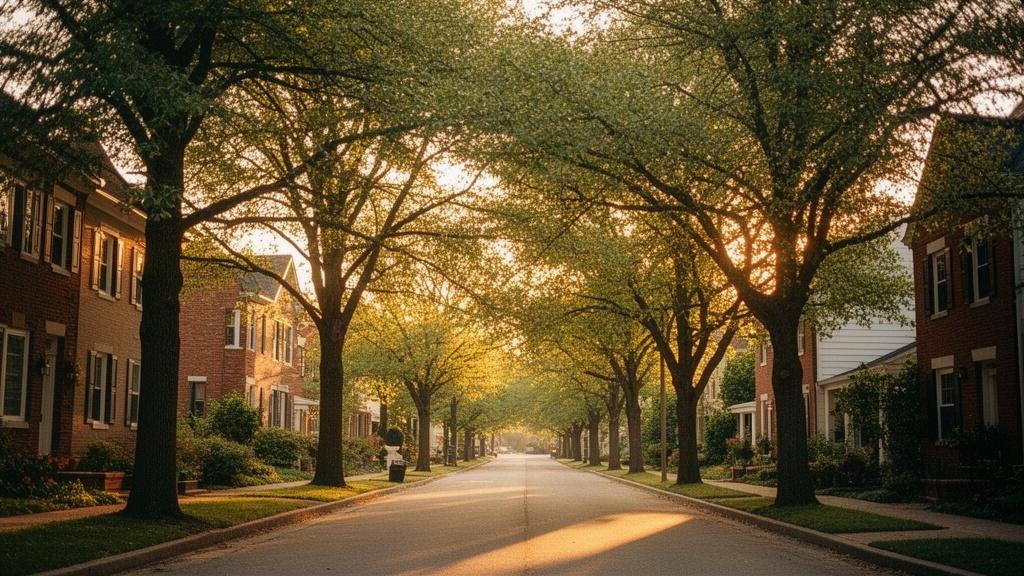
Haymount's street layout is older and more irregular than the subdivisions built in Fayetteville after 1980. Streets curve with the ridge topography, lots vary considerably in size, and sidewalks are present on most blocks. The canopy of oak and magnolia trees along the main residential streets is one of the more visually distinct features of the area, especially compared to newer construction zones elsewhere in Cumberland County.
The neighborhood has a mix of owner-occupied homes and rental properties, with ownership rates generally higher on the interior streets. Blocks closer to Bragg Boulevard tend to have more commercial activity, while the quieter residential streets deeper into the neighborhood feel more removed from that traffic.
2. The Housing Stock in Haymount
Haymount's housing stock is defined by its age and architectural variety. Most homes were built between roughly 1920 and 1965, which means buyers are looking at construction methods and materials that differ significantly from anything built after 1990.
Architectural Styles and Lot Sizes
Craftsman bungalows are the most common style, typically one to one-and-a-half stories with front porches, exposed rafter tails, and tapered columns. Colonial revival homes show up frequently on the larger lots, usually two stories with symmetrical facades and brick or wood siding. Mid-century ranch homes, built mostly in the 1950s and early 1960s, round out the mix with single-story layouts and attached carports rather than garages.
Lot sizes in Haymount run from around 6,000 square feet on the smaller end to a quarter-acre or more on the larger interior parcels. This is notably different from newer Fayetteville subdivisions where lots are often more uniform. The variation means some homes have generous yards while others sit closer to their neighbors.
What the Homes Actually Look Like Inside
Interior layouts reflect the era of construction. Original hardwood floors are common throughout the bungalows and colonials, and many homes retain original trim work, built-in cabinetry, and plaster walls. Square footage typically runs between 1,200 and 2,400 square feet, with three-bedroom floor plans being the most prevalent.
Updated kitchens and bathrooms vary widely from home to home. Some Haymount homes have been fully renovated with modern fixtures while keeping original character details intact. Others remain largely original, which can appeal to buyers who want to customize but requires realistic budgeting for updates. Buyers interested in older homes with original features should also budget for potential electrical, plumbing, and HVAC work that is common in properties of this age.
3. Home Prices and Market Conditions in Haymount Right Now
As of September 2026, Haymount sits in a price range that reflects both the neighborhood's character and the broader Fayetteville market. Homes here tend to price higher per square foot than many newer subdivisions in the outer parts of Fayetteville, largely because of lot sizes, architectural detail, and proximity to the city core.
Current Price Ranges as of September 2026
Entry-level Haymount homes, typically smaller bungalows needing updates, are currently listing in the low-to-mid $200,000s. Renovated or move-in-ready properties, particularly the larger colonial revivals and updated craftsman homes, are ranging from the upper $200,000s into the $350,000 to $420,000 range depending on condition, square footage, and lot size. The most substantial homes on the largest lots, especially those with full renovations, have listed above $450,000.
Inventory in Haymount is typically tighter than in newer suburban areas of Fayetteville. Because the neighborhood is fully built out with no new construction, every listing is a resale. That means buyers sometimes wait weeks or months for the right property to come available, and well-priced homes in good condition can move quickly.
How Haymount Compares to Broader Fayetteville Pricing
Fayetteville's overall median home price as of September 2026 sits in the mid-to-upper $200,000s, depending on the area and property type. Haymount's price per square foot often runs above that citywide median, reflecting the premium buyers place on the older housing stock and the neighborhood's established character. Buyers comparing Haymount to newer construction in areas like the Cross Creek corridor or the Fort Liberty corridor will generally find that new builds offer more square footage at similar price points but without the lot maturity, architectural detail, or central location.
For a broader view of how Haymount fits into Fayetteville's housing landscape, the Homes for Sale in Fayetteville, NC Guide on this site covers citywide pricing, neighborhood comparisons, and what buyers need to know before making an offer.
4. Daily Life: Commutes, Walkability, and Getting Around
Living in Haymount means you are close to a lot of Fayetteville without being in the middle of its busiest corridors. That central-ish position shapes the daily commute and errand experience in ways that differ from living in the outer ring of Cumberland County.
Distance to Fort Liberty and Downtown Fayetteville
Fort Liberty's Bragg Boulevard gate is approximately six to seven miles from the center of Haymount, a drive that typically takes 15 to 20 minutes in normal traffic conditions. Bragg Boulevard itself runs along the eastern edge of the neighborhood, which makes the gate access relatively direct without requiring highway travel. Morning traffic on Bragg Boulevard can add time during peak hours, particularly between 6:30 and 8:00 a.m.
Downtown Fayetteville's Hay Street district is about three miles east of Haymount, a 10 to 12 minute drive under normal conditions. The Fayetteville Area Transportation System (CATS) operates bus routes through the area, providing an alternative for residents who prefer not to drive for every trip.
Walkability and Nearby Errands
Haymount is more walkable than most of Fayetteville, though it is not a fully pedestrian-oriented neighborhood in the way that some urban areas are. Sidewalks cover most of the main residential streets, and several small businesses, a pharmacy, and food options are within walking distance on Haymount Avenue and the surrounding blocks. Most residents still drive for major grocery shopping, with Harris Teeter and other grocery options accessible within two to four miles.
The neighborhood's grid and sidewalk coverage also make it practical for walking and cycling as daily activity rather than just recreation. This is a meaningful distinction from newer Fayetteville subdivisions where cul-de-sac layouts and the absence of sidewalks make walking less practical.
5. Parks, Green Space, and Local Amenities
Outdoor space and local amenities are a genuine part of daily life in Haymount, not just a selling point. The neighborhood has direct access to one of Fayetteville's most used parks and is close enough to downtown to reach a range of restaurants, shops, and cultural venues without a long drive.
Mazarick Park and Outdoor Options
Mazarick Park sits directly adjacent to Haymount and is one of the more developed parks in Fayetteville's system. The park covers roughly 42 acres and includes paved walking and jogging paths, a disc golf course, a playground, picnic shelters, and open lawn areas. Cape Fear River Trail access points are also reachable within a short drive, connecting to a longer multi-use path system along the river.
The proximity of Mazarick Park to the neighborhood's residential streets means many Haymount residents use it as an extension of their yard for morning walks and weekend activity. The park is city-maintained and generally well-used year-round given Fayetteville's mild winters.
Dining, Coffee, and Local Businesses Near Haymount
Haymount Avenue and the surrounding commercial pockets have a mix of locally owned restaurants, coffee shops, and small retail businesses. This is not a dense commercial district, but it has enough within walking or a very short driving distance to handle casual dining and everyday needs. The broader Morganton Road corridor, a few minutes south, adds grocery stores, pharmacies, and national chain restaurants to the mix.
Downtown Fayetteville's Hay Street and the surrounding blocks, about three miles away, expand the options considerably. The Airborne and Special Operations Museum on Bragg Boulevard is a short drive from the neighborhood. The Crown Complex arena, the Fayetteville Woodpeckers stadium, and the Cape Fear Botanical Garden are all reachable in under 15 minutes from Haymount.
6. What to Know Before You Buy or Sell in Haymount
Whether you are buying into Haymount or selling a home there, the older housing stock and the specific dynamics of a fully built-out neighborhood create considerations that differ from newer parts of Fayetteville.
Older Homes and What That Means for Buyers
Buying an older Haymount home requires a thorough inspection and realistic expectations about deferred maintenance. Homes built before 1978 may have lead paint or asbestos-containing materials that need to be disclosed and addressed. Electrical panels from the mid-20th century, original cast-iron plumbing, and older HVAC systems are common in homes that have not been fully updated. None of these are deal-breakers, but buyers should factor them into their offer and budget.
Financing can also be a consideration. Some loan programs have specific requirements around the condition of older homes, particularly for FHA and VA financing. Working with a lender familiar with Fayetteville's older housing stock before you make an offer helps avoid surprises during underwriting. If you are a first-time buyer navigating this process, the First-Time Homebuyer Agents in Fayetteville, NC resource on this site covers what to look for in an agent who understands these nuances.
Buyers should also research schools independently. Cumberland County Schools serves the Haymount area, and the North Carolina Department of Public Instruction publishes current enrollment, performance, and program data for each school at ncpublicschools.gov. That is the most accurate source for making your own assessment.
Selling a Haymount Home in the Current Market
Sellers in Haymount benefit from limited comparable inventory since no new homes are being built in the neighborhood. That scarcity can support pricing, but it also means buyers scrutinize condition carefully because they are paying a premium for the neighborhood's character. Homes that are priced accurately and presented well tend to generate strong interest; overpriced listings in a tight inventory market can still sit if buyers feel the condition does not justify the ask.
Pre-listing preparation matters more in Haymount than in newer subdivisions where buyers expect a certain baseline of condition. Addressing visible deferred maintenance, refreshing paint, and ensuring mechanical systems are in documented working order can meaningfully affect both the offer price and the smoothness of the inspection process. For guidance on how to choose the right agent for this process, the Which Real Estate Agent Should I Hire to Sell My House in Fayetteville, North Carolina article covers what to look for and what questions to ask.
Haymount homes with original features intact, such as hardwood floors, original trim, and period architectural details, often appeal to buyers specifically seeking that character. Marketing that highlights those details accurately tends to attract buyers who value them, which can reduce time on market compared to generic listings that treat the home as simply a three-bedroom house.
FAQ
Is Haymount a walkable neighborhood compared to the rest of Fayetteville?
Haymount is among the more walkable areas in Fayetteville, with sidewalks on most residential streets and small businesses accessible on foot along Haymount Avenue. Most residents still drive for major grocery shopping and larger errands, but the street layout and sidewalk coverage make walking and cycling practical for daily activity. This is a meaningful difference from many newer Fayetteville subdivisions that were built around car access only. Mazarick Park, directly adjacent to the neighborhood, adds to the on-foot access to green space.
How long is the commute from Haymount to Fort Liberty?
The drive from Haymount to Fort Liberty's Bragg Boulevard gate is approximately six to seven miles and typically takes 15 to 20 minutes under normal traffic conditions. Bragg Boulevard runs along the eastern edge of Haymount, making the route relatively direct. Morning peak hours between roughly 6:30 and 8:00 a.m. can add time, particularly on Bragg Boulevard approaching the gate. Residents heading to other Fort Liberty entrances may have slightly different drive times depending on the specific gate.
What should buyers know about the condition of older Haymount homes?
Most Haymount homes were built between the 1920s and 1960s, which means buyers should budget for the possibility of older electrical panels, cast-iron plumbing, and HVAC systems that may need updating. Homes built before 1978 require lead paint disclosure under federal law, and some may contain asbestos-containing materials in insulation or flooring. A thorough inspection by a licensed inspector familiar with older construction is important before finalizing any purchase. Buyers using FHA or VA financing should also confirm with their lender that the home's condition meets program requirements before making an offer, as some older properties require repairs as a condition of loan approval.