

← Back to Blog
Buying
Investment Property Guide for Charlton, MA: What Buyers Need to Know Before They Commit
By John Capistran, Licensed Realtor
ERA Key Realty Serivces · DRE# 9633917
September 3, 2026 · 12 min read
This investment property guide for Charlton, MA covers everything a serious buyer needs before placing an offer: current price ranges, the types of properties that generate income here, financing considerations specific to Massachusetts, and the local factors that shape long-term returns. Charlton sits at the geographic center of the state, roughly 15 miles southwest of Worcester along the I-90 corridor, and that position creates a rental and resale dynamic that is genuinely different from what you find in the suburbs closer to Boston.
1. Why Charlton Attracts Real Estate Investors in 2026
Charlton draws investors because it offers rural land, established neighborhoods, and highway access in a single package, at prices that have not yet caught up to the Worcester metro average. That gap is narrowing, but it still exists in September 2026, which is why this market continues to attract buyers who were priced out of Worcester proper or the towns immediately surrounding it.
Location and Infrastructure
Charlton's position along I-90 (the Massachusetts Turnpike) and Route 20 is the single most important factor for investors evaluating rental demand. Worcester is about 15 miles to the northeast, reachable in roughly 20 minutes without traffic. Springfield is about 55 miles west. That puts Charlton within reasonable commuting distance of two of the state's largest employment centers, which matters when you are trying to attract long-term tenants. The Route 20 corridor through town also connects to Sturbridge, which draws tourism traffic year-round through Old Sturbridge Village and the surrounding lodging and retail economy.
The town itself covers about 44 square miles, making it one of the larger towns by land area in Worcester County. That size means properties vary significantly in character depending on where they sit: parcels near Route 20 and the town center have more commercial activity nearby, while properties deeper into the rural sections of town are quieter and sit on larger lots. Investors need to understand which part of Charlton they are buying into, because the tenant pool and resale market differ between those areas.
Price Points Relative to the Region
The Boston metro has received significant national attention for its housing demand, with the Greater Boston area recognized among the country's most active housing markets. The National Association of Realtors highlighted the Boston-Cambridge-Newton metro as one of the top housing hot spots, driven by job growth and constrained inventory. Charlton sits far enough from that core to offer lower entry prices, while still benefiting from the broader Massachusetts employment base that keeps rental demand steady throughout the state.
For context on the broader investment climate, the NAR's Real Estate and Economic Outlook has consistently pointed to secondary markets outside major metros as areas where investors can find more favorable price-to-rent ratios. Charlton fits that profile: it is not a primary metro market, but it is not isolated either, and that balance is exactly what income-focused buyers look for.
2. Types of Investment Properties Available in Charlton
Charlton's inventory spans single-family homes, small multi-family buildings, and raw land, each with a different risk and return profile. Understanding which category fits your goals and your financing before you start touring properties will save you significant time in this market.
Single-Family Rentals
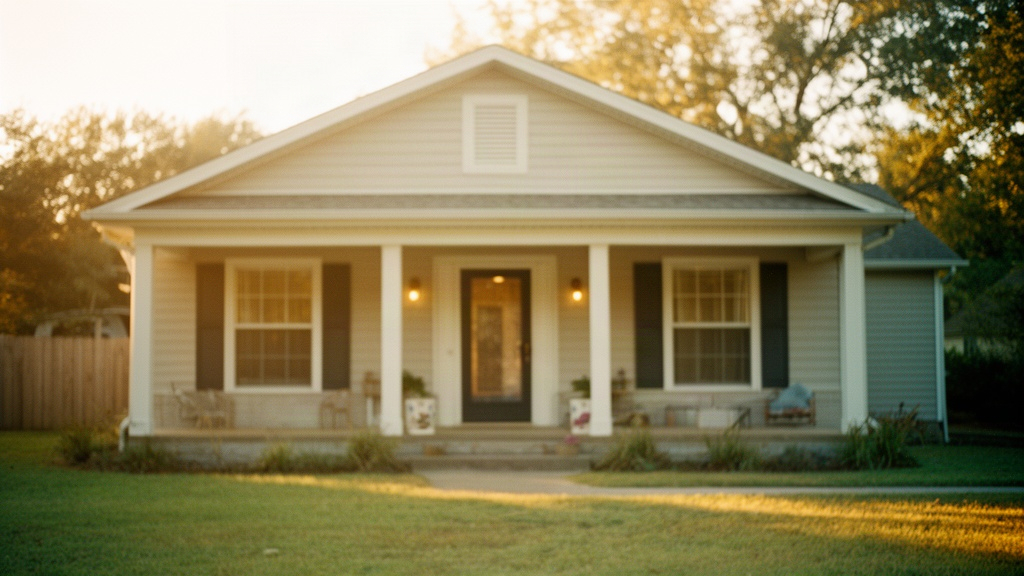
Single-family homes make up the majority of Charlton's housing stock. The town has a mix of Cape Cods and colonials built from the 1950s through the 1980s, newer construction on larger lots from the 1990s and 2000s, and a smaller number of older farmhouses and antique homes on multi-acre parcels. For investors, the 1970s and 1980s ranches and raised ranches in the $300,000 to $380,000 range represent the most common entry point. These homes typically have three bedrooms, one or two baths, and a basement, and they rent for enough to generate positive cash flow when financed with a reasonable down payment.
Newer colonials in the $450,000 to $550,000 range are harder to make cash-flow positive at current interest rates, but they attract longer-term tenants and tend to require less maintenance in the early years of ownership. The calculus on those properties depends heavily on your financing terms and how much you value appreciation potential versus monthly income.
Multi-Family and Mixed-Use
True multi-family properties are less common in Charlton than in Worcester or Southbridge, but they do come to market. When they appear, they are usually two-family homes rather than larger apartment buildings, reflecting the town's predominantly residential character. Two-families in Charlton have sold in the $350,000 to $480,000 range in recent transactions, depending on condition and location relative to Route 20. The Route 20 corridor, which runs through the more commercially active part of town near the Charlton City area, also has occasional mixed-use buildings where a ground-floor commercial space sits below a residential unit. These are rare but worth watching if your investment strategy includes commercial tenants.
Land and Undeveloped Parcels
Charlton has a meaningful supply of buildable land, which is a separate investment category that some buyers overlook. Parcels range from single building lots under two acres to larger tracts of 10, 20, or even 50-plus acres. Land investment in Charlton requires a clear understanding of the town's zoning bylaws, Title 5 septic requirements, and whether a parcel has an approved perc test on file. For more detail on how land transactions work in this market, the guide on land and rural property specialists in Charlton is a useful companion read.
3. Understanding the Numbers: Prices, Rents, and Returns
The numbers in Charlton currently support a reasonable return for investors who buy correctly, but the margins are tighter than they were two or three years ago. Understanding the local price and rent environment before you model a deal is non-negotiable.
Current Price Ranges
As of September 2026, the median sale price for single-family homes in Charlton sits in the low-to-mid $400,000s, with significant variation by property type and condition. Entry-level investment properties, typically older ranches and capes that need cosmetic updating, are available in the $290,000 to $360,000 range. Move-in-ready homes with updated kitchens and mechanicals trade closer to $400,000 to $470,000. Properties on larger lots, two or more acres, or with outbuildings command premiums that can push prices above $500,000. For a broader look at where prices have moved this year, the Charlton real estate market guide covers the full picture.
Rental Rate Benchmarks
Charlton is not a high-density rental market, so comparable rental data is thinner than what you would find in Worcester. That said, three-bedroom single-family rentals in the area have been leasing in the $2,000 to $2,600 per month range depending on condition, lot size, and proximity to Route 20. Four-bedroom homes on larger lots push toward $2,700 to $3,100. Two-family units, where each side has two to three bedrooms, can generate combined gross rents in the $3,800 to $4,600 range. These figures are estimates based on the broader Worcester County rental market and local activity; always verify current rents by pulling active listings in the area before you finalize your underwriting.
Estimating Your Return
A rough gross rent multiplier (GRM) calculation gives you a quick read on whether a deal is worth pursuing further. Divide the purchase price by the annual gross rent: a $340,000 property renting for $2,200 per month ($26,400 annually) produces a GRM of about 12.9. In the current Massachusetts market, GRMs in the 11 to 14 range are common for smaller towns outside the primary metro. That is not a final underwriting number; it does not account for vacancy, taxes, insurance, maintenance, or management. But it tells you quickly whether the gross income is even in the right neighborhood before you spend time on a deeper analysis.
Charlton's property tax rate has historically been moderate relative to Worcester County averages, which helps net operating income. Confirm the current fiscal year rate directly with the Charlton Assessor's office, since rates adjust annually. Factor in that most Charlton properties use private wells and septic systems rather than municipal water and sewer, which eliminates those utility bills but creates maintenance obligations that city-property investors sometimes underestimate.
4. Financing an Investment Property in Charlton, MA
Financing an investment property follows different rules than financing a primary residence, and Massachusetts adds a few layers that out-of-state investors sometimes miss. Getting your financing structure right before you make an offer is critical in a market where sellers are not waiting around.
Conventional Investment Loans
Most Charlton investment property purchases are financed with conventional loans requiring 20 to 25 percent down for a single-family rental, or 25 percent down for a two-family. Interest rates on investment property loans typically run 0.5 to 0.75 percentage points higher than owner-occupied rates, which directly affects your monthly cash flow. On a $380,000 purchase with 20 percent down ($76,000), you are financing $304,000. At current rate levels, your principal and interest payment alone will be in the $1,900 to $2,100 range depending on the exact rate you lock. Add taxes, insurance, and a vacancy reserve, and your break-even rent target becomes clear quickly.
Local and Regional Lenders
Local and regional banks and credit unions with Massachusetts portfolios sometimes offer investment property products that national lenders do not. Portfolio lenders can be more flexible on debt-to-income ratios for experienced investors, and some will count projected rental income toward qualification at a higher percentage than Fannie Mae guidelines allow. If you are buying your second or third investment property and your personal income alone does not support the full debt load, a portfolio lender may be the path that makes the deal work. Ask your agent for referrals to lenders who are active in the Worcester County investment market.
Massachusetts-Specific Considerations
Massachusetts has a transfer tax (excise stamp) of $4.56 per thousand dollars of sale price, paid by the seller in most transactions, but investors should understand it when modeling resale costs. The state also has a short-term capital gains tax rate that applies to property sold within one year of purchase, which is a meaningful deterrent to quick flips. If your strategy involves buying, renovating, and selling within 12 months, factor that tax exposure into your profit model before you commit. For holds longer than one year, Massachusetts capital gains treatment is more favorable.
5. Due Diligence: What to Investigate Before You Buy
Due diligence on a Charlton investment property goes beyond the standard home inspection. The rural character of the town means most properties have private well and septic systems, which require specific testing and evaluation that urban investors sometimes skip to their later regret.
Well, Septic, and Utility Systems
A Title 5 septic inspection is required by Massachusetts law when a property is sold, so you will receive that report as part of the transaction. Read it carefully. A system that passes Title 5 is not necessarily a new system; it means the system functioned adequately at the time of inspection. Ask the age of the system and when it was last pumped. A 30-year-old system that barely passed Title 5 is a liability you will carry as a landlord. Well water should be tested for coliform bacteria, nitrates, and arsenic at minimum; arsenic is a documented concern in parts of central Massachusetts, including Worcester County. Budget $400 to $600 for a comprehensive water test.
Zoning and Permitted Uses
Charlton's zoning bylaws govern what you can do with a property, and the rules are not always intuitive for investors used to urban markets. If you plan to add an accessory dwelling unit (ADU) to increase rental income, confirm with the Charlton Building Department whether the specific parcel and zoning district allow it. Massachusetts passed legislation encouraging ADU development, but local implementation varies. If you are buying land to subdivide, the Planning Board process and required lot frontage minimums are the key constraints to understand before you commit to a price.
Property Condition and Deferred Maintenance
Older homes in Charlton, particularly those built before 1978, may have lead paint and asbestos-containing materials that create disclosure and remediation obligations under Massachusetts law. As a landlord, you are required to comply with the state's lead paint law if a child under six will reside in the property. Get a lead paint inspection from a licensed Massachusetts inspector if the property was built before 1978 and you plan to rent to families. Separately, oil heating systems are common in older Charlton homes; confirm the age and condition of the tank, and check whether an underground storage tank (UST) was ever used and removed, since residual contamination is a real liability.
6. Common Mistakes Charlton Investors Make
Most mistakes in this market come from applying assumptions that work in denser urban markets without adjusting for Charlton's rural character and thinner comparable data. Here are the patterns that come up most often.
Overestimating rental demand. Charlton is not Worcester. The rental pool is smaller, and vacancies can run longer than investors expect when coming from a denser market. Price your rent to lease quickly rather than holding out for top dollar; a month of vacancy on a $2,200-per-month property costs you $2,200, which wipes out several months of incremental rent gains.
Underestimating maintenance on rural properties. A property on two acres with a well, septic, oil heat, and a long gravel driveway has materially higher ongoing maintenance costs than a city property of the same square footage. Budget at least 1.5 percent of purchase price annually for maintenance and capital reserves on older rural properties, not the 1 percent rule of thumb that circulates in general investing guides.
Skipping local market research. National investing frameworks give you a starting point, but Charlton's market has its own rhythms. The current supply and demand balance in Charlton directly affects how aggressively you need to move when a good investment property appears, and how much negotiating room you realistically have on price.
Ignoring the exit strategy. Every investment property should have a plausible exit. In Charlton, your exit options are selling to another investor, selling to an owner-occupant, or converting the property to a different use. Understand which of those is most likely for the specific property you are buying, and what that buyer pool looks like. A three-bedroom ranch on a half-acre near Route 20 has a wide owner-occupant buyer pool. A four-bedroom colonial on eight acres has a narrower one. That affects both your hold period flexibility and your resale timeline.
Not working with an agent who knows this specific market. Investment property decisions in a smaller town like Charlton hinge on hyper-local knowledge: which roads flood, which areas have the most rental turnover, which parcels have known septic issues, and where future development is likely. That information does not live in a spreadsheet. It comes from an agent who has been working this market consistently. John Capistran of ERA Key Realty Services has that depth of local knowledge and works with buyers at every stage of the investment process, from initial property evaluation through closing.
FAQ
Is Charlton, MA a good market for rental property investment right now?
Charlton offers a combination of lower entry prices relative to the Worcester metro, steady rental demand driven by its position along the I-90 corridor, and a housing stock that includes both affordable older homes and newer construction. As of September 2026, the market remains competitive for well-priced properties, which means investors need to move decisively when a good opportunity appears. The margins are tighter than they were a few years ago due to higher interest rates, so careful underwriting is essential before committing to any purchase. Properties that need cosmetic work but have sound mechanicals and a good septic system tend to offer the best combination of entry price and rental income potential in this market.
What types of investment properties are most available in Charlton, MA?
Single-family homes make up the largest share of available investment properties in Charlton, ranging from older ranches and capes in the $290,000 to $380,000 range to newer colonials priced above $450,000. Two-family homes appear occasionally and can generate combined rents that improve cash flow compared to single-family rentals. Buildable land and rural parcels are also available and represent a separate investment category for buyers interested in development or long-term land holds. True apartment buildings and larger multi-family properties are rare in Charlton given the town's predominantly residential and rural character.
What due diligence is most important when buying an investment property in Charlton, MA?
The most critical due diligence items specific to Charlton are the Title 5 septic inspection, a comprehensive well water test (including arsenic, given documented concerns in parts of Worcester County), and a review of the property's zoning classification and permitted uses. For homes built before 1978, a lead paint inspection is important if you plan to rent to tenants with young children, as Massachusetts has strict landlord obligations under the state lead paint law. Investors should also confirm the age and condition of the heating system, the presence of any underground oil storage tanks, and whether the property's lot size and frontage meet current zoning requirements for the intended use.