← Back to Blog
Market Trends
Coral Gables, Florida Real Estate Market Guide: Prices, Neighborhoods and Timing
By John Doe
September 29, 2026 · 12 min read
This Coral Gables, Florida real estate market guide covers what prices look like right now in September 2026, how the city's distinct neighborhoods differ from one another, and when buyers and sellers tend to see the most activity. Whether you are relocating to Miami, purchasing your first home in the area, or preparing to list, the numbers and local context here will help you make a more informed decision.
1. What Makes Coral Gables Its Own Market Within Miami-Dade
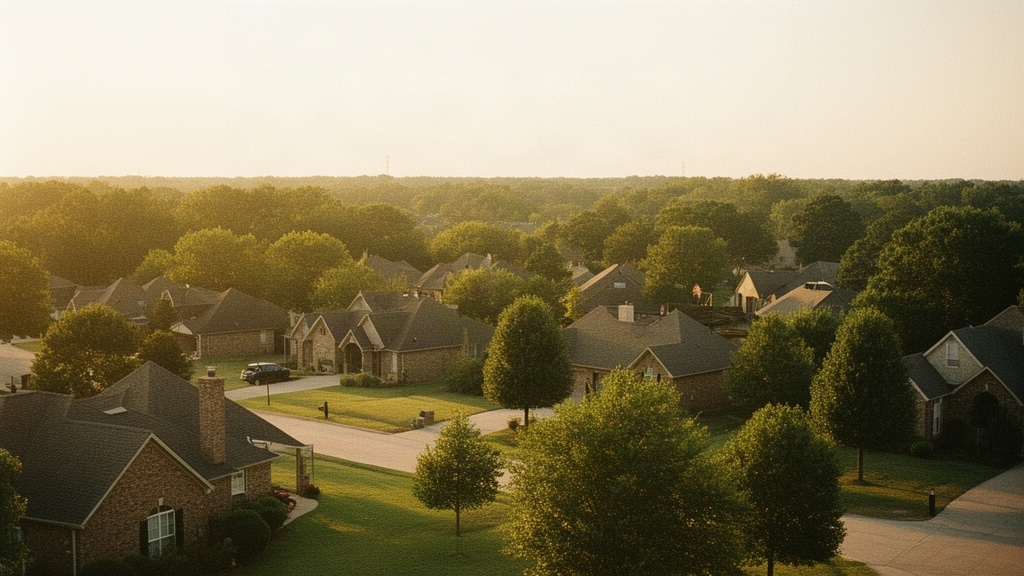
Coral Gables operates as a self-governing municipality, not just a neighborhood of Miami. That distinction matters enormously for real estate buyers. The city has its own planning department, its own design review board, and strict architectural standards that have been in place since developer George Merrick laid out the streets in the 1920s. Those controls limit what can be built and how existing structures can be altered, which keeps the physical character of the city unusually consistent.
City Structure and Zoning
The city covers roughly 13 square miles and is bordered by South Miami to the north, Pinecrest to the south, the Biscayne Bay waterfront to the east, and unincorporated Miami-Dade to the west. Zoning is tightly managed: single-family residential areas dominate the interior, while the Miracle Mile corridor and Ponce de Leon Boulevard anchor commercial activity. New high-rise development is restricted to specific zones near the downtown core, which is why the skyline here looks nothing like Brickell.
That zoning structure creates a housing market that behaves differently from the rest of Miami-Dade. Supply is constrained by design, not just by demand, which puts consistent upward pressure on prices for single-family homes in particular. Buyers relocating from cities like New York or Chicago sometimes underestimate how quickly well-priced homes move here.
The Mediterranean Revival Legacy
Merrick modeled Coral Gables on Spanish and Italian Mediterranean architecture, and the city has enforced that vision ever since. The result is a stock of homes with barrel-tile roofs, stucco exteriors, arched doorways, and mature tree canopies lining streets named after Spanish provinces. The Venetian Pool, a public swimming facility carved from a coral rock quarry in 1923, sits in the middle of a residential block and gives some sense of how thoroughly the original design vision was embedded into the city's fabric.
That architectural consistency is one reason a Forbes feature noted that a Coral Gables block earned recognition as the nation's priciest street. Read the Forbes piece on Coral Gables pricing for context on how the city's design legacy translates into property values at the top of the market.
2. Coral Gables Real Estate Prices Right Now
As of September 2026, the Coral Gables market remains one of the most expensive submarkets in all of Miami-Dade County. Median prices have held firm through 2026 despite broader national softening, largely because local inventory stays tight and demand from international buyers and domestic relocators has not meaningfully slowed.
Single-Family Home Prices in September 2026
The median sale price for a single-family home in Coral Gables currently sits in the range of $2.1 million to $2.4 million, depending on the specific pocket of the city. Entry-level single-family homes, meaning smaller cottages and bungalows on the northern edges of the city near South Miami Avenue, start around $1.1 million to $1.4 million. Mid-range homes on standard lots of 7,500 to 10,000 square feet in the interior neighborhoods trade between $1.8 million and $3.5 million. Waterfront and estate properties on Biscayne Bay or along the canal systems in Cocoplum and Snapper Creek routinely exceed $5 million, with trophy listings reaching $15 million or more.
Price per square foot for single-family homes currently ranges from roughly $700 per square foot on the lower end to over $1,500 per square foot for renovated waterfront properties. A 3,000-square-foot home in the Old Spanish Village area that has been updated with a modern kitchen and a pool will typically list between $2.2 million and $2.8 million in the current market.
Condo and Townhome Prices
Condos in Coral Gables are concentrated near the Miracle Mile and Ponce de Leon corridors, and in a handful of mid-rise buildings along Salzedo Street and Alhambra Circle. The median condo price currently runs between $450,000 and $750,000 for a two-bedroom unit. Larger three-bedroom condos in newer buildings with amenities like concierge service and rooftop pools are priced from $900,000 to $1.4 million. Townhomes, which are less common here than in other parts of Miami-Dade, typically fall between $850,000 and $1.5 million depending on size and proximity to the downtown core.
How Coral Gables Compares to Nearby Markets
Buyers who are also considering Coconut Grove will find single-family prices in a similar range, though Coconut Grove has more waterfront product at the upper end. Pinecrest, directly to the south, offers larger lots and more square footage per dollar, with median single-family prices currently running about 15 to 20 percent below Coral Gables for comparable structure sizes. For a sense of how the broader Miami condo market compares, the average home price in Brickell reflects a different price dynamic driven by high-rise density rather than single-family scarcity.
3. Neighborhood Breakdown: What You Get Where in Coral Gables
Coral Gables is not a single uniform market. The city contains several distinct pockets that differ by price point, lot size, proximity to water, and the age and style of the housing stock. Understanding those differences is essential before making an offer.
Old Spanish Village and the Downtown Core
The area immediately surrounding Miracle Mile and Giralda Avenue is the commercial and cultural center of the city. Restaurants, galleries, the Actors' Playhouse at the Miracle Theatre, and the Coral Gables Museum are all within walking distance of one another. Residential streets in the Old Spanish Village section, which runs roughly between Salzedo and LeJeune Road and between Alhambra Circle and Coral Way, contain some of the most intact 1920s and 1930s Mediterranean Revival housing stock in South Florida. Lots here are typically 5,000 to 8,500 square feet, and homes range from 1,400 to 3,500 square feet of living space.
Commute access is a practical advantage of this location. The Douglas Road Metrorail station is about a 10-minute walk from the center of this area, putting downtown Miami roughly 20 minutes away by rail. The University of Miami's Coral Gables campus is a 5-minute drive south on Ponce de Leon Boulevard.
Cocoplum and Snapper Creek
Cocoplum is a gated waterfront community in the southeastern corner of Coral Gables, developed primarily in the 1980s and 1990s. Homes here sit on deep-water canals with direct access to Biscayne Bay, and dock permits allow for vessels up to 60 feet or more depending on the lot. The housing stock is predominantly two-story Mediterranean-style homes built between 1985 and 2005, ranging from 3,500 to over 8,000 square feet. Prices in Cocoplum currently start around $3.5 million for non-waterfront interior lots and climb to $8 million or more for canal-front properties.
Snapper Creek, adjacent to Cocoplum along the southern boundary of the city, offers a similar waterfront profile with somewhat larger lots. Many Snapper Creek homes were built in the 1970s and 1980s and have been substantially renovated. The community has its own tennis club and marina. Prices here currently range from approximately $4 million to $12 million.
South Gables and Coral Bay
The South Gables area, which runs south of Bird Road toward the Pinecrest border, contains larger lots than the downtown core, often 10,000 to 20,000 square feet, with homes from the 1940s through the 1970s that have been progressively updated. This is where buyers who want more land relative to structure size tend to look. Prices here currently range from about $1.3 million to $3 million depending on lot size and renovation level.
Coral Bay, a small enclave near the Matheson Hammock Park waterfront, offers bay views and proximity to one of Miami-Dade's most visited parks. Matheson Hammock has a man-made atoll pool, a marina, and miles of walking trails through native hammock forest. Homes in Coral Bay are scarce and trade infrequently, which keeps prices elevated relative to lot size.
4. Market Conditions: Inventory, Days on Market, and What Drives Prices
Coral Gables currently has roughly 2.5 to 3.5 months of single-family inventory, which keeps it in seller-favorable territory. A balanced market typically has 5 to 6 months of supply, so buyers in most price ranges should expect competition on well-priced listings.
Current Inventory Levels
Inventory in the $1.1 million to $2.5 million range is the tightest, with homes in that band averaging 30 to 55 days on market before going under contract. Above $4 million, inventory is more available and days on market extend to 90 to 180 days, reflecting a smaller buyer pool and longer negotiation timelines. The condo market has slightly more supply, with inventory at about 4 to 5 months in most buildings, giving condo buyers a bit more negotiating room than single-family buyers.
Detailed mid-year analysis from the David Siddons Group provides a useful look at how Coral Gables single-family trends have evolved through 2026. Their 2026 market trends report on Coral Gables single-family homes breaks down absorption rates and price-per-square-foot movement in useful detail for buyers doing their homework.
What Moves Prices Up or Down in Coral Gables
Several factors consistently affect where a Coral Gables home lands on the price spectrum. Waterfront access and canal navigability are the single largest premium drivers, adding 40 to 80 percent to comparable non-water properties. Pool presence matters more here than in many other Miami-Dade markets because of the city's older housing stock; a home without a pool sells at a measurable discount in the $1.5 million to $3 million range. Roof age is a critical factor given Florida's insurance market: a home with a roof older than 15 years will face buyer resistance and may require a seller credit to close.
Buyers should also factor in flood zone designation when evaluating any Coral Gables property near the bay or the canal systems. Properties in FEMA AE zones carry mandatory flood insurance requirements that can add $8,000 to $25,000 per year to carrying costs depending on the structure's elevation certificate. This is a significant line item that affects affordability calculations.
5. Timing the Market: When to Buy or Sell in Coral Gables
Coral Gables follows Miami-Dade's seasonal rhythm but with some important local variations. The city draws a significant share of buyers from Latin America and Europe, which means the peak buying season here extends slightly later into spring than in other parts of the country.
Seasonal Patterns Specific to Coral Gables
Listing activity typically picks up in October and November as snowbirds and international buyers arrive in South Florida for the winter season. The highest volume of transactions closes between January and April. New listings hit the market most heavily in February and March, giving buyers the widest selection during those months. Activity slows noticeably from July through September, which is the current moment in the market: hurricane season is active, humidity is at its peak, and many international buyers are not yet in town.
What Buyers Should Know About Timing
Right now, in September 2026, buyers have a brief window of reduced competition before the fall market accelerates. Sellers who have listings sitting from the summer are more likely to negotiate on price or terms than they will be in December or January when fresh buyer demand arrives. If you are targeting the $1.5 million to $3 million single-family range, this month and October represent the most favorable negotiating environment you will see until next summer.
Buyers relocating from out of state should plan at least two dedicated property tours of 3 to 4 days each rather than trying to make a decision on a single visit. The difference between a home on a quiet interior street and one backing to a commercial corridor on Ponce de Leon is not always obvious on a listing sheet, and Coral Gables streets vary considerably in traffic noise and tree coverage.
What Sellers Should Know About Timing
Sellers targeting maximum exposure should plan to list between late October and mid-February. Homes listed in that window see the most showing activity and the shortest days on market. Sellers who list in the summer, as some did in 2026, often face longer hold times and occasional price reductions before finding a buyer. If your home is in the $4 million-plus range, allow 90 to 120 days of marketing time regardless of season, since the buyer pool at that level is global and moves on its own timeline.
6. Costs Beyond the Purchase Price
The sticker price of a Coral Gables home is only part of the financial picture. Annual carrying costs here are among the highest in Miami-Dade, and buyers who do not account for them fully often find their monthly budget tighter than expected after closing.
Property Taxes in Coral Gables
Coral Gables sits within Miami-Dade County and is subject to the county millage rate plus the city's own millage. The combined effective rate for non-homesteaded properties (which most buyers will face in their first year) currently runs approximately 1.9 to 2.1 percent of assessed value. On a $2.2 million purchase, that translates to roughly $41,800 to $46,200 in annual property taxes before any exemptions. Homestead exemption, available after your first January 1 of occupancy, reduces the assessed value by $50,000 and caps future assessment increases at 3 percent per year. For a detailed breakdown of how Miami-Dade property taxes are calculated on a specific price point, see this guide to property taxes on a $750,000 home in Miami-Dade County, which walks through the millage structure in plain terms.
HOA Fees and Special Assessments
Not all Coral Gables homes are in HOAs, but gated communities like Cocoplum and Snapper Creek carry significant monthly dues. Cocoplum HOA fees currently run between $1,200 and $1,800 per month depending on the section of the community. Those fees cover guard-gated security, common area landscaping, tennis facilities, and marina access. Buyers in non-gated sections of the city have no mandatory HOA, though some streets have voluntary civic associations.
Condo buyers need to review the reserve fund status of any building carefully. Florida's new reserve funding requirements, which took effect in 2025 following the Surfside legislation, mean that some older Coral Gables condo buildings are levying special assessments to catch up on deferred structural reserves. Ask for the most recent reserve study and the minutes from the last three board meetings before making an offer on any condo.
Insurance Costs
Homeowners insurance in Coral Gables varies sharply based on roof age, construction type, and flood zone designation. A well-maintained 2,500-square-foot home with a newer roof and a wind mitigation certificate can be insured for $8,000 to $14,000 per year in wind and homeowners coverage. Add flood insurance for properties in AE zones and the total annual insurance cost can reach $20,000 to $35,000 on a mid-range home. Buyers should request a wind mitigation inspection and a 4-point inspection before closing to understand exactly what they are inheriting.
If you are also considering new condo construction in other parts of Miami as part of your search, the pipeline of new developments in Wynwood and Edgewater offers a useful contrast to the older, more established Coral Gables condo market.
FAQ
Is Coral Gables real estate a good investment right now in September 2026?
Coral Gables has shown consistent price appreciation over the past decade because supply is structurally constrained by the city's own zoning and design review rules. Right now in September 2026, the market is in a mild seasonal lull, which means buyers have slightly more negotiating room than they will in the January-to-April peak. The long-term fundamentals, including the University of Miami's presence, the city's walkable downtown, and its position as a Latin American business hub, continue to support demand. Whether a specific property is a sound investment depends on the price paid, the condition of the structure, insurance costs, and how long you plan to hold it. A local agent with transaction history in Coral Gables can help you evaluate any specific address against recent comparable sales.
What is the difference between buying in Coral Gables versus Coconut Grove?
Both cities are self-governing municipalities within Miami-Dade with strong architectural identities and mature tree canopies, but they differ in housing stock and price structure. Coral Gables is dominated by Mediterranean Revival architecture from the 1920s through the 1960s, with newer construction concentrated in gated waterfront communities like Cocoplum. Coconut Grove has a more eclectic mix of styles including Caribbean cottages, mid-century moderns, and contemporary new builds, with a stronger concentration of bayfront estates. Coral Gables tends to have more inventory in the $1.5 million to $3.5 million range, while Coconut Grove's non-waterfront single-family market skews slightly lower. Both markets have tight inventory and active buyer demand from international purchasers.
How long does it take to close on a home in Coral Gables?
A standard financed purchase in Coral Gables typically takes 30 to 45 days from contract to closing, assuming the buyer's financing is pre-approved and the inspection period does not surface major issues. Cash purchases can close in as few as 10 to 21 days, which is one reason cash offers carry significant weight in a competitive market. Condo purchases can take longer if the building requires lender approval or if the buyer's lender needs to review the building's financials and reserve study. Delays most commonly arise from title issues on older properties, insurance binding complications, and, for international buyers, wire transfer timing. Working with a local title company that handles Coral Gables transactions regularly helps keep timelines on track.