← Back to Blog
Market Trends
Menifee, California Real Estate Market Guide: Prices, Neighborhoods and Timing
By Joseph Marengo
DRE# 02254551
September 27, 2026 · 11 min read
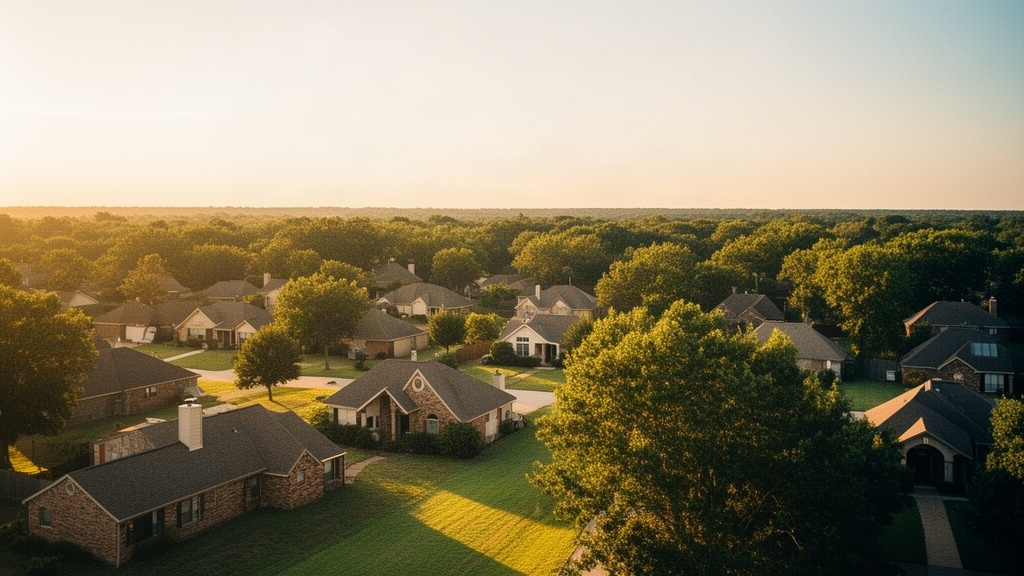
This Menifee, California real estate market guide covers what buyers, sellers, and relocating households need to know right now: where prices stand in September 2026, what the city's distinct neighborhoods actually look like on the ground, and how to read the market calendar so your timing works in your favor. Menifee has grown from a quiet inland community into one of Riverside County's most active housing markets, and the details matter if you want to make a confident move.
1. Where Menifee Home Prices Stand Right Now
The Menifee market is currently priced in the mid-to-upper $500,000s for a median single-family home, with meaningful variation depending on community, lot size, and build year. Tracking live data through sources like Redfin's Menifee housing market page gives you a real-time read on median sale price, price per square foot, and how quickly homes are moving off the market.
Median Sale Price and Price Per Square Foot
As of September 2026, the median sale price for a single-family home in Menifee sits near $565,000, up roughly 4 to 5 percent from September 2025. Price per square foot has settled around $255 to $275 depending on the submarket, which is notably lower than coastal Riverside County cities like Temecula (closer to $310 per square foot) and significantly below Orange County benchmarks. That spread explains why so many buyers from the Inland Empire's western edge are landing in Menifee rather than pushing further south.
Entry-level homes in Menifee, typically older single-story builds in the Sun City corridor, start in the low $400,000s. Newer construction in master-planned communities like Audie Murphy Ranch or The Crossings at Menifee Lakes runs from the high $500,000s into the low $700,000s for four-bedroom layouts with three-car garages. Premium lots backing to the Menifee Lakes golf course or with mountain views toward the San Jacinto range can push past $800,000.
How Menifee Compares Within Riverside County
Within Riverside County, Menifee occupies a distinct price tier. Murrieta and Temecula to the south carry medians roughly $40,000 to $70,000 higher. Perris and Hemet to the north run $80,000 to $120,000 lower. Menifee sits squarely in the middle, which has kept demand steady across multiple rate environments.
The city incorporated in 2008 and has added substantial commercial and residential infrastructure since then, which means the housing stock spans from 1970s tract homes to brand-new builds completed in 2025 and 2026. That range gives buyers at almost every budget a realistic path into the market.
2. Menifee's Major Neighborhoods: What Each Area Looks Like
Menifee covers about 52 square miles and contains several distinct communities, each with its own housing character, price range, and proximity to retail, parks, and commute corridors. Understanding the differences helps you narrow your search before you ever step into a car.
Sun City
Sun City is the oldest and most established part of Menifee, developed primarily from the late 1960s through the 1980s. Homes here are mostly single-story, ranging from about 1,100 to 1,800 square feet, on lots that average 6,000 to 8,000 square feet. Prices in Sun City currently run from the low $400,000s to the mid $500,000s, making it one of the more accessible entry points in the city.
The area sits along Bradley Road and McCall Boulevard, with the Menifee Town Center shopping corridor nearby. Paloma Valley High School is located in this part of the city. The Sun City Community Association maintains common areas and amenity facilities for residents who belong to it.
Romoland and Homeland
Romoland and Homeland occupy the northern and eastern edges of the city, where lot sizes tend to be larger and the landscape is more open. You will find a mix of older manufactured homes, ranch-style properties on half-acre to full-acre lots, and some newer infill construction. Prices here generally run from the high $300,000s to the mid $500,000s, depending heavily on lot size and whether the structure is site-built or manufactured.
The area has direct access to Highway 74 and is within a few miles of the I-215 interchange at Newport Road, which is the main north-south artery connecting Menifee to San Bernardino and San Diego counties. Romoland is also home to the Menifee Valley Airport, a general aviation facility that adds an unusual amenity to the northeast corner of the city.
Heritage Lake and Audie Murphy Ranch
Heritage Lake is a master-planned community built primarily between 2003 and 2012, centered on a 10-acre private lake with a beach area, fishing dock, and clubhouse. Homes range from about 1,600 to 3,200 square feet, with prices currently spanning the mid $500,000s to the low $700,000s. HOA fees apply and cover lake access, the community pool complex, and maintained common areas.
Audie Murphy Ranch sits directly south of Heritage Lake along Goetz Road and Antelope Road. It is one of the newer master-planned communities in Menifee, with most construction completed between 2015 and 2023. Floor plans here run large, often 2,200 to 3,800 square feet, and the community includes multiple pool facilities, sports courts, and miles of maintained walking paths. Prices in Audie Murphy Ranch currently start around $620,000 and reach into the low $800,000s for the larger corner lots.
Menifee Lakes and The Crossings
Menifee Lakes is built around the 18-hole Menifee Lakes Country Club, a semi-private golf course along Menifee Road. Homes in this area include both single-story and two-story layouts from 1,400 to 2,800 square feet, with prices generally from the mid $500,000s to the low $700,000s. Golf course and lake-view lots carry a premium of roughly $30,000 to $60,000 over comparable interior lots.
The Crossings at Menifee Lakes is a newer section within the broader Menifee Lakes area, featuring homes built from 2018 onward. These properties tend to have more contemporary open-plan layouts, larger primary suites, and energy-efficient construction that reduces utility costs compared to older stock. The Crossings is about two miles from the Menifee Town Center and roughly four miles from the I-215 at Scott Road.
3. What Is Driving the Menifee Market in 2026
Several structural factors are keeping demand in Menifee elevated even as broader California housing markets have cooled in some segments. Understanding these drivers helps both buyers and sellers set realistic expectations.
Population Growth and New Construction
Menifee's population has grown from roughly 77,000 at incorporation in 2008 to an estimated 115,000 to 120,000 residents in 2026. That growth rate, roughly 50 percent over 18 years, is among the highest for any incorporated city in Southern California. New residential permits have remained active, with several hundred units added annually across master-planned and infill projects.
New construction has a dual effect on the market. It adds supply, which moderates price growth. But it also attracts buyers who want modern floor plans and energy features, which pulls demand into the city and supports resale values in nearby established communities.
Commute Access and Infrastructure
The I-215 runs directly through the city, connecting Menifee to Murrieta and Temecula in about 15 to 20 minutes and to the San Bernardino corridor in roughly 35 to 45 minutes under normal conditions. The Metrolink Perris Valley Line station in Perris, about 12 miles north, gives commuters a rail option into Riverside and Los Angeles Union Station, with a transfer at Riverside-Downtown.
The city has also invested heavily in retail and medical infrastructure. The Menifee Town Center along McCall Boulevard includes a Costco, Target, and a growing restaurant and services corridor. Loma Linda University Health opened a hospital campus in Murrieta about eight miles south, and several urgent care and specialty medical facilities have opened in Menifee itself over the past three years.
Inventory Levels and Days on Market
Active inventory in Menifee as of September 2026 sits at roughly 1.8 to 2.2 months of supply, which is below the 3-month threshold that typically signals a balanced market. That means sellers still hold a moderate advantage, though the multiple-offer frenzy of 2021 and 2022 has not returned. Median days on market for well-priced homes is currently 18 to 28 days, up from the 7 to 12-day pace seen at the peak but still moving briskly by historical standards.
For deeper data on absorption rates, list-to-sale price ratios, and monthly sales volume, PropertyShark's Menifee market trends page publishes monthly updates broken down by property type and price tier.
4. Timing Your Buy or Sale in Menifee
Timing in the Menifee market follows some of the same seasonal rhythms as the rest of Southern California, but with a few local wrinkles worth knowing. Getting the calendar right can mean fewer competing offers as a buyer, or a faster sale at a stronger price as a seller.
Best Months to List a Home
March through June is historically the strongest listing window in Menifee. Buyer activity picks up in late February as the school-year calendar starts driving relocation decisions, and the Inland Empire heat has not yet become a deterrent to weekend showings. Homes listed in this window typically sell faster and closer to asking price than those listed in August or September.
September, the current month, is actually a secondary listing opportunity. Summer heat has passed, the school year has settled, and buyers who did not find a home in spring are still actively searching. Inventory tends to thin in October and November, so a well-prepared September listing faces less competition than it might in the crowded spring window.
Best Windows to Buy
Buyers tend to find the most negotiating room in November through January, when listings that did not sell in the fall sit on the market and seller motivation increases. In Menifee specifically, the holiday slowdown is pronounced because many sellers who list in November genuinely need to move, which creates more room for price reductions and seller concessions.
August and early September, right now, can also present opportunities. Homes that did not sell during the spring peak are often repriced heading into fall, and sellers who need to close before the new school year begins may be willing to negotiate. If you are actively searching, this is a window worth moving on rather than waiting for.
How Rate Shifts Affect Menifee Specifically
Because Menifee's median price sits in the conforming loan range, most buyers here are using conventional 30-year financing rather than jumbo products. That means the market is highly sensitive to 30-year fixed rate movements. A half-point rate drop translates to roughly $150 to $180 per month on a $550,000 loan, which is enough to push a meaningful number of fence-sitters into active buyers.
When rates dip, Menifee tends to see faster price appreciation than coastal markets because the buyer pool here is more rate-constrained. Buyers who lock in during a rate dip gain on two fronts: lower monthly payments and a purchase price that has not yet reflected the new wave of demand.
5. Practical Steps Before You Buy or Sell in Menifee
Whether you are buying your first home in Menifee or selling a property you have owned for years, the preparation steps are different and both matter. Skipping steps early in the process is the most common reason deals fall apart or take longer than expected.
Steps for Buyers
Get a full underwritten pre-approval, not just a pre-qualification letter. In the current Menifee market, listing agents and sellers treat pre-qualifications as weak signals. A fully underwritten approval from a lender who has reviewed your tax returns, W-2s, and assets puts your offer in a different category.
Research HOA fees before you fall in love with a property. Communities like Heritage Lake, Audie Murphy Ranch, and The Crossings all carry HOA dues, and some have multiple layers including a master HOA and a sub-association. Combined dues can range from $80 per month to over $300 per month, which affects your qualifying debt-to-income ratio and your actual monthly budget.
Also factor in Mello-Roos and CFD assessments. Many Menifee neighborhoods, particularly those built after 2000, sit within Community Facilities Districts that levy additional annual taxes to fund infrastructure. These can add anywhere from $1,200 to over $4,000 per year to your tax bill on top of the base property tax rate. Joseph Marengo can pull the specific CFD disclosures for any property you are considering so there are no surprises at closing.
For a deeper walkthrough of the purchase process in this market, the complete buyer's guide for Menifee homes covers offer strategy, inspection timelines, and what to expect from escrow in Riverside County.
Steps for Sellers
Price your home to the current market, not the market from 18 months ago. Menifee sellers who anchor to 2022 peak prices are seeing extended days on market and eventual price reductions that net less than a correctly priced listing would have from day one. A comparative market analysis from someone who knows the specific submarket, not just the city overall, is essential.
Prepare for buyer scrutiny on deferred maintenance. With days on market now averaging 18 to 28 days rather than 7, buyers have time to conduct thorough inspections and negotiate on findings. Addressing obvious items, roof condition, HVAC age, water heater, before listing reduces the chance of a renegotiation or cancellation after inspection.
Professional photography and video are non-negotiable in this market. The majority of Menifee buyers begin their search online, and listings with high-quality visual content generate significantly more showing requests than those with phone photos. Drone footage is particularly effective for showcasing lot size, mountain views, and community amenities that distinguish Menifee properties from each other.
FAQ
Is Menifee, California a good place to buy a home right now?
The Menifee real estate market in September 2026 has a median single-family home price near $565,000 and roughly 1.8 to 2.2 months of active inventory, which still favors sellers modestly but gives buyers more room to negotiate than the market offered in 2021 and 2022. New construction continues to add supply, which moderates price spikes. Whether the timing is right depends on your personal financial situation, your financing terms, and which specific community fits your needs. Consulting a local agent who tracks Menifee's individual submarkets, not just city-wide averages, will give you the most accurate read on whether a specific property is priced fairly.
What are Mello-Roos taxes in Menifee and how much do they cost?
Mello-Roos, formally called Community Facilities District (CFD) assessments, are special taxes levied on properties in newer Menifee developments to repay bonds that funded roads, utilities, parks, and schools built as part of those communities. They are separate from and in addition to your base property tax rate of roughly 1.1 percent. In Menifee, CFD assessments on newer homes typically range from about $1,200 to over $4,000 per year, depending on the specific district and the assessed value formula used. These assessments are disclosed in the Natural Hazard Disclosure report and the preliminary title report during escrow, so a good agent will flag them before you make an offer. Over a 30-year ownership period, the cumulative cost is significant and should factor into your total cost comparison between properties.
How long does it take to sell a home in Menifee in 2026?
As of September 2026, well-priced homes in Menifee are spending an average of 18 to 28 days on the market before going under contract, which is longer than the 7 to 12-day peak pace of 2021 and 2022 but still relatively brisk by historical standards. Homes that are overpriced relative to recent comparable sales in their specific community are sitting longer, sometimes 45 to 60 days or more, before sellers adjust the price. Properties in move-in condition with professional photography and accurate pricing in communities like Heritage Lake, Audie Murphy Ranch, and The Crossings tend to move at the faster end of that range. Homes in Sun City that need cosmetic updates or have deferred maintenance tend to take longer and attract more investor-oriented offers.