
← Back to Blog
Neighborhoods
The Browne's Addition Neighborhood of Spokane, Washington Real Estate Market Guide: Prices, Neighborhoods and Timing
By Julie Herrmann, REALTOR® | Mortgage Broker
Kelly Right Real Estate, LLC · NMLS# 1563583
September 24, 2026 · 11 min read
Browne's Addition is one of Spokane's oldest and most architecturally distinct neighborhoods, sitting just west of downtown along the Spokane River bluff, and right now in September 2026 it is drawing serious attention from buyers who want character-rich housing close to the city core. This guide covers the Browne's Addition neighborhood of Spokane, Washington real estate market: current prices, what the housing stock actually looks like, how the market is moving, and what timing decisions buyers and sellers face today.
1. What Makes Browne's Addition Distinct in Spokane's Real Estate Landscape
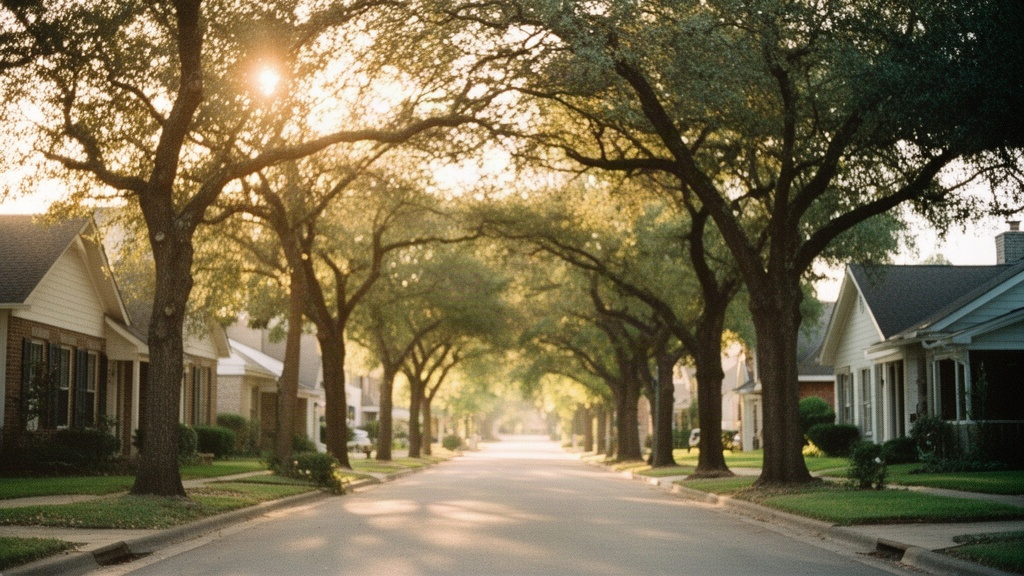
Browne's Addition stands apart from every other Spokane neighborhood because of its age, its density of historic architecture, and its geography. No other part of Spokane packs this many Queen Anne Victorians, Craftsman bungalows, Colonial Revival homes, and early-twentieth-century apartment buildings into a walkable grid of roughly fifteen square blocks. The neighborhood sits on a bluff above the Spokane River, directly west of downtown, giving many homes elevated views of the river canyon and the basalt rimrock that defines the city's terrain.
Location and Physical Character
The neighborhood is bounded roughly by Sunset Boulevard to the west, I-90 to the south, Maple Street to the east, and the Spokane River bluff to the north. Coeur d'Alene Park sits near the center of the neighborhood and serves as its civic anchor, a formal Victorian-era park with mature trees, a fountain, and a bandstand that has been there since the 1890s. Pacific Avenue and West First Avenue are the main commercial corridors, lined with restaurants, coffee shops, and small retail that serve residents without requiring a car trip.
Walking distance to downtown Spokane is a genuine selling point here. The Spokane Convention Center, the Spokane Arena, and the core of the central business district are roughly a mile to a mile and a half east, a fifteen to twenty minute walk or a five minute drive. The Centennial Trail, which runs along the river, is accessible from the neighborhood's northern edge and connects west toward Nine Mile Falls and east through Riverfront Park and beyond.
The Housing Stock Up Close
Most homes in Browne's Addition were built between 1888 and 1930, making this one of the oldest residential concentrations in all of Spokane, Washington. The neighborhood is listed on the National Register of Historic Places as a historic district, which means many properties carry both the appeal and the responsibility of preservation. Lot sizes tend to be modest by Spokane standards, typically 4,000 to 7,000 square feet, and the homes themselves range from compact two-bedroom bungalows around 900 square feet to substantial three-story Victorians exceeding 3,500 square feet. Multi-unit buildings, including duplexes, triplexes, and small apartment structures from the early twentieth century, are woven throughout the grid alongside single-family homes.
For more context on Browne's Addition's physical layout and nearby amenities, Homes.com's local guide to the neighborhood provides a useful overview of what is physically in and around the area.
2. Browne's Addition Real Estate Prices in September 2026
In September 2026, single-family homes in Browne's Addition are trading in a wide range depending on size, condition, and whether the property has been updated or retains original finishes. Entry-level bungalows and smaller Craftsman homes in need of cosmetic work are coming to market in the $280,000 to $360,000 range. Mid-tier homes that have been updated but are not fully renovated are landing between $380,000 and $520,000. The upper end of the market, fully restored Victorians and larger Colonial Revival homes with river views or premium corner lots, is reaching $600,000 to $850,000 or more in some cases.
Current Median Price Range
The median sale price for single-family homes in Browne's Addition is running approximately $415,000 to $440,000 in September 2026. That places the neighborhood above the citywide Spokane median, which has been hovering in the $320,000 to $340,000 range this year, reflecting the premium buyers pay for historic character, walkability, and proximity to downtown. For broader citywide context, the average home price guide for Spokane covers those figures in detail.
Price per square foot in Browne's Addition currently runs between $210 and $290 for updated single-family homes, compared to a citywide average closer to $185 to $210. The premium is real and consistent. Buyers who have been searching across Spokane's west side neighborhoods, including Peaceful Valley, Cannon Hill, and Rockwood, often find that Browne's Addition commands a noticeable premium per square foot because of the historic designation and the walkable urban setting.
How Prices Compare Across Property Types
Multi-unit properties in Browne's Addition behave differently from the single-family market. Duplexes and triplexes are trading in the $420,000 to $650,000 range depending on unit size and condition, and they attract both owner-occupants who want to offset their mortgage with rental income and investors looking for urban infill assets. Condos and upper-floor flats in converted historic buildings are a smaller slice of the market, typically priced from $195,000 to $320,000, and they tend to move quickly when they appear because inventory is thin.
If you are weighing a multi-unit purchase in Browne's Addition as an investment, the broader investment property guide for Spokane, Washington covers cap rates, financing structures, and what to underwrite in the current rate environment.
3. Market Conditions and Timing in Browne's Addition
The Browne's Addition market in September 2026 is tighter than the broader Spokane market, with fewer homes coming to market and buyers competing for a limited pool of listings. Washington state as a whole has seen inventory pressures this year, and Browne's Addition reflects that dynamic in a concentrated way because the neighborhood has a fixed geographic boundary and a finite number of homes.
Inventory and Days on Market
In a typical month in Browne's Addition, between four and eight single-family homes are actively listed, which is a thin supply for a neighborhood of this size. Well-priced, move-in-ready homes are going under contract in twelve to twenty-five days. Homes that need significant work, or that are priced above what the condition justifies, are sitting longer, sometimes sixty to ninety days, before sellers adjust. The gap between a correctly priced home and an overpriced one is visible in the data.
For a broader look at how days on market are trending across Spokane right now, the article on how long homes sit on market in Spokane gives useful context for comparing Browne's Addition to other parts of the city.
What Sellers Are Seeing Right Now
Sellers in Browne's Addition who price accurately and present their homes well are still achieving strong results in September 2026. List-to-sale price ratios on well-prepared homes are running close to 98 to 101 percent, meaning sellers are largely getting what they ask and occasionally receiving offers above list on homes with strong curb appeal and updated kitchens or baths. The historic character of the homes is a genuine draw, but sellers need to be transparent about deferred maintenance items, because buyers are scrutinizing inspection reports carefully in this market.
Washington's housing market has seen notable inventory shifts this year. A recent analysis by HousingWire on Washington state inventory trends noted a 13 percent statewide inventory drop alongside rising price cut activity, a combination that signals sellers need to be strategic rather than simply relying on low supply to carry their price.
What Buyers Are Competing Against
Buyers in Browne's Addition are competing against a mix of local move-up buyers, people relocating to Spokane from Seattle and the Puget Sound region, and investors looking for urban rental assets. The relocation buyer pool has been a consistent factor in Spokane's west-side urban neighborhoods for several years, and Browne's Addition's walkability and historic character make it a frequent target for buyers arriving from higher-cost Pacific Northwest cities. Financing is largely conventional, with some cash purchases appearing at the upper end of the market.
4. The Browne's Addition Micro-Neighborhoods: Blocks That Behave Differently
Browne's Addition is compact, but it is not uniform. Different blocks within the neighborhood have meaningfully different price points, noise levels, and property types, and understanding those distinctions helps buyers target their search and helps sellers position their home accurately.
The Coeur d'Alene Park Corridor
The blocks immediately surrounding Coeur d'Alene Park, particularly along West Second Avenue, West Third Avenue, and the cross streets of Chestnut and Hemlock, carry the highest concentration of intact historic single-family homes. These blocks are the most photographed part of the neighborhood and the ones that appear most frequently in architectural preservation discussions. Homes here tend to command the upper end of the price range, with well-restored properties pushing toward and beyond $600,000. Lot coverage is high and yards are modest, but the streetscape is cohesive and the park is steps away.
The Cliff Drive and Riverside Edges
The northern edge of Browne's Addition along Cliff Drive and West Riverside Avenue sits directly on the bluff above the Spokane River, and homes here carry river and canyon views that add a measurable premium. Properties on these streets are some of the most sought-after in the neighborhood precisely because the view is irreplaceable. The tradeoff is that some of these homes are on steeper lots with challenging access and aging infrastructure. Buyers should budget for thorough inspections, particularly around foundations, drainage, and sewer lines on hillside properties.
The Interior Residential Blocks
The interior blocks south of the park corridor and away from the bluff edge are where buyers find more price flexibility. These blocks mix single-family homes with duplexes, converted apartments, and occasional commercial uses along Pacific Avenue. Homes here are often less pristine than the park corridor properties, with more deferred maintenance visible, but they represent the entry point into the neighborhood for buyers whose budget tops out below $380,000. The trade-off is proximity to Pacific Avenue traffic and a somewhat more varied streetscape.
5. Practical Guidance for Buyers and Sellers in Browne's Addition
Whether you are buying or selling in Browne's Addition, the historic nature of the housing stock and the neighborhood's tight inventory create specific considerations that do not apply in newer Spokane subdivisions. Understanding those specifics before you act saves time and money on both sides of the transaction.
Buyer Considerations
Get pre-approved before you start touring in Browne's Addition. Desirable homes move in under three weeks, and sellers in this neighborhood are not inclined to wait for a buyer who is still sorting out financing. Conventional loans work well here, but if you are looking at a home built before 1978, be prepared for lead paint disclosures and potential remediation conversations. FHA and VA loans can be used in Browne's Addition, but the appraisal process on older homes can occasionally flag deferred maintenance items that require repair before closing.
Historic designation matters for what you can do with the property. The Browne's Addition Historic District has design review requirements for exterior changes visible from public right-of-way. That means replacing windows, adding a dormer, or changing siding materials requires review through the City of Spokane's historic preservation office. This is not a barrier to ownership, but it is a process buyers should understand before they plan a renovation. Budget for longer permitting timelines and work with contractors experienced in historic rehabilitation.
If you are relocating to Spokane and Browne's Addition is on your list, the broader relocation guide for Spokane covers how the neighborhood fits within Spokane's overall geography and what the relocation process looks like from outside the area.
Seller Considerations
Pricing is the single most important decision a Browne's Addition seller makes in September 2026. The neighborhood's appeal is real, but buyers are informed and they are comparing your home to recent sales on comparable blocks. A home priced five to ten percent above what the condition and location support will sit and accumulate days on market, which then triggers the perception that something is wrong. Correct pricing from day one produces better outcomes than chasing the market down from an aspirational number.
Presentation matters enormously in a historic neighborhood. Professional photography that captures original woodwork, built-ins, stained glass, and period details generates meaningfully more online engagement than standard listing photos. Buyers looking at Browne's Addition are often specifically seeking those features, and listing photos that highlight them attract the right pool of buyers. Address any deferred maintenance you can reasonably tackle before listing, particularly on the exterior, because first impressions in a walkable neighborhood are formed before a buyer ever steps inside.
Renovation and Condition Realities
Renovation costs in Browne's Addition run higher than in newer Spokane neighborhoods because of the age of the homes and the historic review requirements for exterior work. A full kitchen renovation in a 1910 Craftsman bungalow, done properly with period-appropriate materials, can run $45,000 to $75,000 depending on scope. Electrical and plumbing updates are often necessary in homes that have not been touched since the 1960s or 1970s, and those costs are largely invisible to buyers until an inspection surfaces them. Buyers should budget a minimum of $15,000 to $30,000 in reserves for a home that has not had significant updates in the past fifteen years, even if it presents well.
If you are buying in Browne's Addition as a first-time buyer, the first-time home buyer guide for Spokane covers the full purchase process, what to expect at inspection, and how to structure an offer in a competitive market.
FAQ
What is the average home price in Browne's Addition, Spokane in September 2026?
The median sale price for single-family homes in Browne's Addition is running approximately $415,000 to $440,000 in September 2026, which is above the citywide Spokane median of roughly $320,000 to $340,000. Entry-level bungalows needing work start around $280,000, while fully restored Victorians and homes with river views can reach $600,000 to $850,000 or more. Price per square foot for updated homes is generally between $210 and $290, reflecting the premium buyers pay for the historic character and walkable urban location. Multi-unit properties like duplexes and triplexes trade in their own range, typically $420,000 to $650,000 depending on unit size and condition.
How long does it take to buy a home in Browne's Addition, Spokane?
Well-priced, move-in-ready homes in Browne's Addition are going under contract in twelve to twenty-five days in September 2026, so buyers need to be pre-approved and ready to move quickly. Homes needing significant work or priced above condition-adjusted market value are sitting sixty to ninety days before sellers adjust. From accepted offer to closing, the typical timeline is thirty to forty-five days for a conventional purchase, though historic designation can add time if repair items surface in inspection that require city review before work can proceed. Buyers should plan for thorough inspections on older homes and budget time for any permitting that renovation work may require.
Does the Browne's Addition historic designation affect what I can do with a home I buy there?
Yes, the Browne's Addition Historic District has design review requirements administered through the City of Spokane's historic preservation office that apply to exterior changes visible from public right-of-way. Replacing windows with non-period materials, changing siding, adding exterior additions, or altering rooflines all require review and approval before work can begin. Interior renovations are generally not subject to historic review, so buyers have more freedom inside the home. The process adds time to renovation projects but does not prohibit updates; it shapes how those updates must be executed. Working with a contractor experienced in historic rehabilitation makes the process significantly smoother.