← Back to Blog
Market Trends
What New Housing Developments and Construction Projects Are Happening in Spokane in 2026
By Julie Herrmann, REALTOR® | Mortgage Broker
Kelly Right Real Estate, LLC · NMLS# 1563583
October 7, 2026 · 11 min read
Spokane's construction pipeline in 2026 is one of the most active it has been in over a decade, with new housing developments ranging from downtown infill projects to large suburban subdivisions reshaping the city's edges. If you are wondering what new housing developments or construction projects are happening in Spokane in 2026, this guide breaks down where building activity is concentrated, what types of homes are coming to market, and what it all means for buyers and sellers navigating the current landscape.
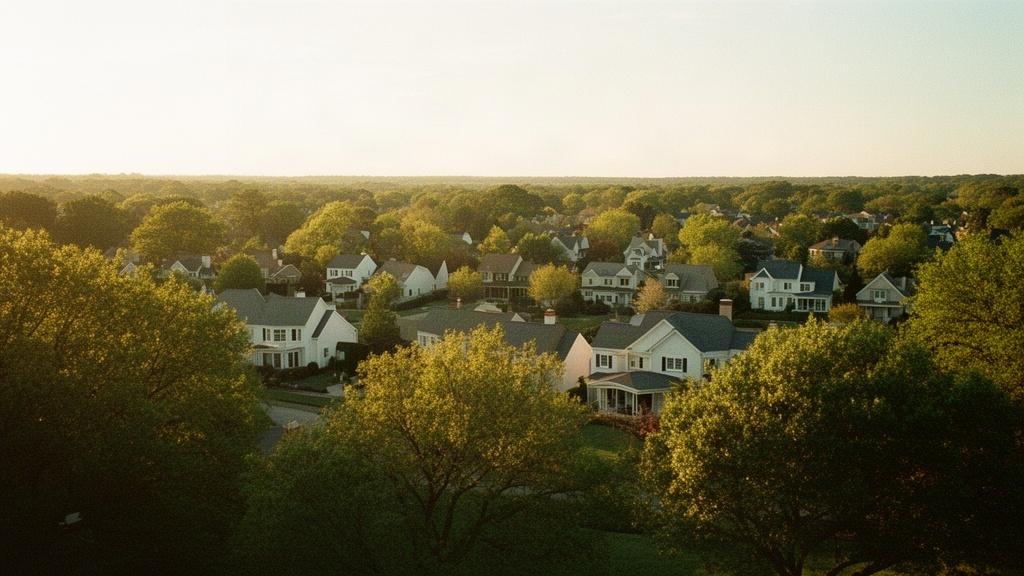
1. The Overall Construction Picture in Spokane Right Now
Spokane's construction activity in 2026 is holding at a high but measured pace. After several years of aggressive permitting and groundbreaking, the market has shifted into what local industry observers are calling a stabilization phase, meaning builders are completing projects already underway while being more selective about breaking new ground. According to the Spokane Journal of Business, 2026 construction activity is expected to stabilize and roughly match 2025 output, which was itself a strong year for the region. That is not a slowdown so much as a leveling off after a period of rapid expansion.
How Active Is the Market?
Spokane County has been issuing residential building permits at a pace that keeps the city among the more active mid-size metros in the Pacific Northwest. Single-family permits, multifamily units, and mixed-use projects are all moving through the pipeline simultaneously. The city's planning department has also continued to process infill applications at a higher rate than in previous years, reflecting the push to add density inside established neighborhoods rather than always expanding outward.
What the Stabilization Trend Means for Buyers
A stabilizing construction market is not bad news for buyers. It means builders are finishing homes they started rather than leaving projects in limbo, which translates into more move-in-ready inventory hitting the market through late 2026 and into 2027. It also means builders are more likely to negotiate on upgrades, lot premiums, and closing cost contributions than they were during the peak of the supply shortage two years ago. For anyone comparing a new build to a resale home, understanding this dynamic is worth factoring into your decision.
2. Where New Housing Development Is Concentrated in Spokane in 2026
New construction in Spokane is not happening in one single pocket. Growth is spread across several corridors, each with its own character, price point, and proximity to the city core. Here is where the most significant activity is concentrated right now.
West Plains and Airway Heights Corridor
The West Plains area, stretching from the city's western edge toward Airway Heights and Medical Lake, has become one of the most active zones for new single-family subdivision development in the Spokane region. Large parcels of relatively flat land, lower raw land costs compared to closer-in neighborhoods, and proximity to Fairchild Air Force Base have drawn multiple regional and national builders to the area. Subdivisions here are typically offering homes in the 1,600 to 2,400 square foot range on lots between 6,000 and 10,000 square feet. The drive from Airway Heights to downtown Spokane runs roughly 15 to 20 minutes along Interstate 90 under normal traffic conditions.
Several master-planned phases are currently under construction west of the Spokane city limits, with infrastructure like roads, water lines, and parks being built out ahead of individual home starts. Buyers who get in early in these phases sometimes have the option to select lot positions, exterior elevations, and interior finish packages before a home is framed.
North Spokane and Mead Area
North Spokane and the communities just beyond the city boundary toward Mead and Colbert have seen steady subdivision activity throughout 2026. This corridor benefits from access to the Division Street and Nevada Street arterials, which connect north Spokane to the downtown core in roughly 20 to 30 minutes depending on the specific location. New construction here tends to sit on slightly larger lots than the West Plains, often in the quarter-acre to half-acre range, and builders have been targeting the move-up buyer segment with homes featuring three to four bedrooms, attached garages, and open floor plans.
The Mead area in particular has attracted buyers who want newer construction with more yard space. Homes in active north Spokane subdivisions are being built on streets that connect to existing neighborhoods, so the infrastructure around them is already established rather than being built from scratch.
East Spokane and the Valley Fringe
The eastern edge of Spokane, where the city transitions into Spokane Valley, has seen a mix of new construction types in 2026. Some builders are filling in remaining parcels within established Valley neighborhoods, while others are working on new phases of larger developments along the Trent Avenue and Sprague Avenue corridors. Spokane Valley itself has its own active permit pipeline, with projects near the Mirabeau area and further east toward Liberty Lake continuing to add inventory. Liberty Lake in particular has attracted buyers looking for newer homes within a walkable town center concept, with the lake itself and Spokane River Centennial Trail providing outdoor access.
Downtown and Near-Urban Infill
Downtown Spokane and the neighborhoods immediately surrounding it, including Browne's Addition, Perry District, and the area around Gonzaga University, are seeing a different kind of construction activity in 2026. Rather than large subdivisions, the growth here comes in the form of multifamily apartment buildings, mixed-use structures with ground-floor retail and upper-floor residential units, and smaller infill projects on individual lots. The city's updated zoning codes have made it easier to build more units on smaller parcels in these neighborhoods, which has encouraged developers to bring projects forward that would have been difficult to pencil out under older rules.
Several mixed-use projects near the University District, which spans the area around Washington State University's Spokane campus and Gonzaga, are currently in various stages of construction. These projects are adding both market-rate and income-restricted units to a part of the city that has historically had limited new residential supply.
3. Types of New Construction Happening Across Spokane
Not all new construction in Spokane looks the same. The 2026 pipeline includes several distinct product types, and understanding the differences helps buyers and sellers know what to expect when they encounter a new build listing.
Single-Family Subdivisions
Traditional single-family subdivisions remain the dominant form of new construction in Spokane's suburban corridors. These are planned communities where a builder or group of builders purchases a large parcel, installs roads and utilities, then constructs homes in phases. Buyers typically choose from a set of floor plans and a menu of finish options. Construction timelines in Spokane right now are running roughly four to eight months from contract to close for most production builders, though custom or semi-custom builds can take longer depending on the scope of work and the availability of subcontractors.
According to the Avey Construction Group's 2026 Spokane outlook, housing demand in Spokane continues to outpace available resale inventory in several price brackets, which is one reason builders have been able to sustain activity even as financing costs remain elevated. The demand is real and it is being driven by both local household formation and in-migration from higher-cost West Coast markets.
Multifamily and Mixed-Use Projects
Multifamily construction, including apartment complexes, townhome communities, and mixed-use buildings, is adding a significant number of units to Spokane's housing stock in 2026. Several projects in the 50 to 200 unit range are under construction or recently completed in and around downtown, the South Perry neighborhood, and along the North Monroe corridor. Townhome communities, which offer attached single-family style living at price points below detached homes, have also appeared in both the Valley and in north Spokane as builders respond to demand from buyers who want new construction but cannot stretch to a full single-family price.
Accessory Dwelling Units and Infill Lots
Accessory dwelling units, commonly called ADUs, have become a notable part of Spokane's construction activity in 2026. Changes to city code over the past few years made it easier and less expensive to permit detached or attached ADUs on existing residential lots, and homeowners across the city have responded. These small secondary structures, typically between 400 and 900 square feet, are being added to backyards in established neighborhoods from the South Hill to the North Side. For buyers, a property with an existing or permitted ADU adds flexibility; for sellers, it can be a meaningful differentiator in a competitive listing.
4. Price Ranges and What New Construction Costs in Spokane in 2026
New construction pricing in Spokane varies considerably depending on location, size, builder, and finish level. Here is a practical breakdown of what buyers are encountering across the market right now.
Entry-Level and Mid-Range New Builds
The most affordable new single-family homes in the Spokane metro in September 2026 are generally found in the West Plains corridor and in some north Spokane subdivisions, where base prices for production homes start in the low to mid $300,000s for smaller floor plans. A typical entry-level new build in these areas runs around 1,400 to 1,700 square feet, with three bedrooms, two bathrooms, an attached two-car garage, and a standard finish package. Buyers who add upgrades through the builder's design center can push the final price into the $380,000 to $430,000 range fairly quickly, so it is important to understand what is included in the base price versus what costs extra.
Mid-range new construction, which covers homes in the $400,000 to $550,000 range, is the most active price band in the Spokane new build market right now. These homes typically offer 1,800 to 2,600 square feet, four bedrooms, and upgraded finishes including quartz countertops, luxury vinyl plank flooring, and larger primary suites. This segment is seeing the most competition among buyers, particularly in north Spokane and the Valley.
Move-Up and Custom Home Pricing
Move-up new construction in Spokane, homes priced from roughly $550,000 to $800,000, tends to be concentrated in areas with larger lots, more prominent views, or premium locations closer to amenities like Manito Park, the Spokane River, or the Centennial Trail. Custom and semi-custom builds, where a buyer works directly with a builder on a specific lot with a fully tailored floor plan, are commanding prices from $700,000 upward depending on square footage, site conditions, and finish selections. True custom homes in Spokane's more established neighborhoods or on acreage outside the city can exceed $1 million, though that segment remains a small share of overall activity.
5. What New Construction Means If You Are Buying or Selling in Spokane
Understanding the new construction pipeline matters whether you are buying your first home, upgrading, or selling a property that now competes with brand-new inventory nearby. Here is how the current development activity affects both sides of a transaction.
Buying New vs. Buying Resale
New construction comes with advantages that resale homes cannot match: builder warranties, modern energy codes that reduce utility costs, and the ability to choose finishes. But new builds also carry trade-offs. Lots in new subdivisions are often smaller than lots in established Spokane neighborhoods. Landscaping, fencing, and window coverings are rarely included. And if you are buying a home that has not yet been built, you are committing to a price today for a home you will not occupy for several months, during which time market conditions can shift.
One thing many buyers do not realize is that having your own buyer's agent when purchasing from a builder costs you nothing and gives you an advocate who is not employed by the builder. The builder's sales representative works for the builder, not for you. An independent agent can review the purchase contract, flag terms that are not in your favor, and help you negotiate on price, incentives, or upgrades.
If you are weighing new construction against an existing home, the complete buyer's guide for the Spokane market covers the full picture of what buyers are navigating right now, including resale inventory, offer strategies, and financing considerations.
How Sellers Are Responding to New Inventory
Sellers in neighborhoods adjacent to active new construction need to be aware that buyers now have a comparison point. A resale home priced at $450,000 in a north Spokane neighborhood will be evaluated against new builds at similar price points in nearby subdivisions. If the resale home has a larger lot, mature trees, an established yard, and proximity to amenities that new subdivisions lack, those are genuine selling points worth emphasizing. If it has dated finishes or deferred maintenance, pricing needs to reflect that competition honestly.
Sellers who understand what new construction is offering in their price range can position their home more strategically. Updating key finishes, addressing maintenance items before listing, and pricing accurately relative to both resale comps and new build alternatives gives a home the best chance of attracting serious buyers. For a broader look at what buyers are currently searching for in Spokane, the Spokane homes for sale buyer's guide offers additional context on current demand.
Spokane continues to draw attention from buyers relocating from Seattle, Portland, and the Bay Area who are looking for lower home prices without sacrificing city amenities. The NAR has flagged markets like Spokane as worth watching for exactly this reason, noting in its 2026 home buying hot spots report that mid-size inland metros with active construction pipelines are absorbing significant demand from coastal transplants. That dynamic is very much present in Spokane right now.
FAQ
What are the most active areas for new home construction in Spokane in 2026?
The West Plains and Airway Heights corridor, north Spokane toward Mead and Colbert, and the eastern edge of the city near Spokane Valley and Liberty Lake are the most active zones for new single-family subdivision development in 2026. Downtown and near-urban neighborhoods like the Perry District and the University District are seeing more multifamily and mixed-use construction rather than traditional subdivisions. Each area has different lot sizes, price points, and commute distances to downtown Spokane, so the right fit depends on what a buyer prioritizes. Visiting active sales offices in each corridor and comparing base prices, included features, and lot sizes is the most reliable way to evaluate your options.
How long does it take to build a new home in Spokane right now?
For production builders working from pre-set floor plans in active Spokane subdivisions, construction timelines in September 2026 are generally running four to eight months from signed contract to closing, assuming no significant supply chain disruptions. Semi-custom builds, where a buyer makes more extensive modifications to a standard plan, can run eight to twelve months. True custom homes built to a buyer's unique specifications on a privately purchased lot can take twelve to eighteen months or longer depending on design complexity, permit timing, and subcontractor availability. Buyers should ask each builder for a written construction schedule with milestone dates and understand what contract provisions apply if timelines extend.
Can I use a real estate agent when buying a new construction home in Spokane?
Yes, and doing so costs the buyer nothing in most cases because the builder pays the buyer's agent commission as part of their standard sales budget. Having an independent agent represent you when buying from a builder is strongly advisable because the builder's on-site sales staff represents the builder's interests, not yours. An agent who knows the Spokane new construction market can help you compare builders, review purchase contracts before you sign, negotiate on upgrades or lot premiums, and flag terms that may not be in your favor. They can also help you understand how a new build compares to resale options in the same price range, which is a comparison worth making carefully before committing to a construction timeline.