← Back to Blog
Market Trends
Spokane, Washington Real Estate Market Guide: Prices, Neighborhoods and Timing — What Realtors Tell Their Own Friends
By Julie Herrmann, REALTOR® | Mortgage Broker
Kelly Right Real Estate, LLC · NMLS# 1563583
September 29, 2026 · 10 min read
When people find out a friend or family member is a real estate agent, the first question they ask is almost always the same: 'What would you actually do if you were me?' This Spokane, Washington real estate market guide answers exactly that, covering prices, neighborhoods and timing the way a knowledgeable local agent would explain it to someone they genuinely care about, without the sales spin.
1. What the Spokane Market Actually Looks Like Right Now
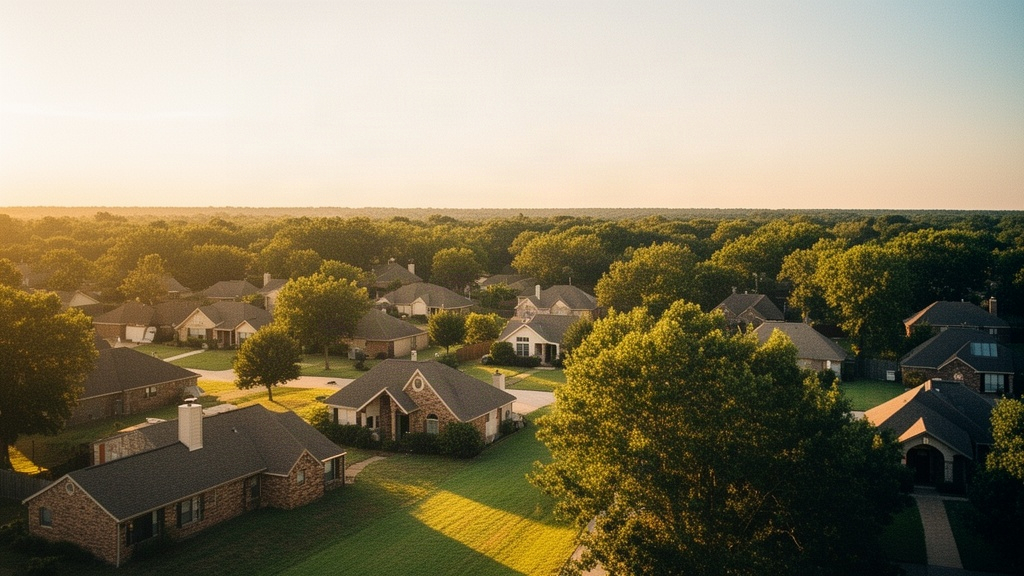
Spokane is a mid-sized city of roughly 230,000 people in eastern Washington, sitting about 280 miles east of Seattle along the Spokane River. The National Association of Realtors identified Spokane as one of the top western markets for housing opportunity in 2026, citing its relative affordability compared to coastal cities and its strong local employment base.
Where Prices Stand in September 2026
The median sale price for a single-family home in Spokane County sits at approximately $385,000 as of September 2026. That figure has held relatively steady compared to early 2026, when prices briefly touched $395,000 before softening slightly as mortgage rates remained elevated. Entry-level homes in the $280,000 to $330,000 range are the most competitive segment, often drawing multiple offers within the first week of listing.
The upper end of the market, homes priced above $600,000, has seen longer days on market compared to 2024 and early 2025. That means buyers shopping in the $600,000 to $900,000 range in Spokane currently have more negotiating room than they did two years ago. For a deeper look at the luxury segment specifically, see the Luxury Home Market in Spokane guide on this site.
What Inventory Levels Mean for You
Active listings in Spokane County are running about 15 to 20 percent below what a fully balanced market would look like. That means sellers still hold a structural advantage in most price bands, but the frenzy of 2021 and 2022 is gone. Homes are sitting on the market for an average of 28 to 35 days before going under contract, depending on the neighborhood and price point. That is enough time for a prepared buyer to do proper due diligence without feeling rushed into a bad decision.
Washington state as a whole has experienced a notable inventory contraction this year. HousingWire has reported a 13 percent inventory drop statewide alongside rising price cuts in some segments, which reflects the same push-and-pull dynamic playing out in Spokane: fewer homes available, but sellers increasingly willing to negotiate on price or concessions to get deals closed.
2. How Spokane's Neighborhoods Differ in Price and Character
Spokane is not a one-size city. Prices, lot sizes, commute distances, and housing styles vary significantly depending on which part of town you are looking at. Understanding those differences is the first thing a knowledgeable local agent explains to anyone they care about before that person starts touring homes.
North Spokane and the Five Mile Area
North Spokane stretches from the edge of downtown up through the Five Mile Prairie and toward the Mead area. Median prices here typically run between $340,000 and $420,000, with a wide range depending on whether you are looking at a 1960s ranch on a flat lot or a newer two-story built in the 2000s on the Prairie with views of the valley below. Lot sizes tend to be more generous than what you find in the central neighborhoods, and the area has direct access to Wandermere Golf Course and the trails around Palisades Park.
Commute times from Five Mile Prairie to downtown Spokane run about 15 to 25 minutes depending on traffic on Nevada Street or Francis Avenue. The area also sits close to the North Side Fred Meyer, multiple medical offices along the Division Street corridor, and the Spokane Community College campus.
South Hill and the Manito Corridor
South Hill is one of Spokane's most established residential areas, anchored by Manito Park and its formal gardens, duck pond, and rose garden. Homes closest to Manito Park, particularly on the tree-lined streets of 18th through 29th Avenues, tend to be Craftsman bungalows and Tudor-style homes built between 1910 and 1940. Prices in that corridor commonly range from $450,000 to $650,000 for well-maintained originals, and higher for fully renovated examples.
Further south toward 57th Avenue and beyond, the housing stock shifts to mid-century ranches and 1980s and 1990s two-stories, where prices more commonly fall in the $320,000 to $430,000 range. The South Hill area is covered in depth in the South Hill Spokane real estate market guide if you want granular neighborhood-level data.
West Central and Browne's Addition
Browne's Addition sits just west of downtown and is one of Spokane's oldest intact residential neighborhoods. The housing stock includes Victorian and Queen Anne homes from the 1880s and 1890s, many of which have been carefully restored. Prices here range broadly, from around $280,000 for a smaller fixer to over $700,000 for a fully restored historic home on one of the larger lots near Coeur d'Alene Park. The neighborhood is walkable to the Spokane River Centennial Trail and to several independent restaurants and coffee shops along Pacific Avenue.
If you are weighing Browne's Addition against the Perry District further east, the Browne's Addition vs. Perry District comparison breaks down the differences in housing stock, price points, and walkability in detail.
Spokane Valley and the East Side
Spokane Valley is a separate city of about 105,000 people immediately east of Spokane, connected by I-90. Median prices in Spokane Valley run slightly below the city of Spokane, typically in the $340,000 to $380,000 range for a three-bedroom single-family home. The housing stock is predominantly post-war ranches, 1970s and 1980s split-levels, and newer construction subdivisions near Mirabeau Point Park and the Spokane Valley Mall area.
The commute from Spokane Valley to downtown Spokane typically runs 20 to 35 minutes by car depending on the specific origin point and time of day. For a full breakdown of routes and realistic travel times, the Spokane Valley to downtown Spokane commute guide is worth reading before you decide where to focus your search.
3. What Realtors Actually Tell Friends About Timing
Timing questions are where agents give their friends very different advice than what you see in generic market commentary. The honest answer is that timing the Spokane market perfectly is nearly impossible, and trying to do so usually costs more than it saves. What matters more is your personal financial readiness and how long you plan to hold the property.
Buying in a Constrained Market
September and October in Spokane tend to bring a modest inventory bump as sellers who listed in summer but did not sell either reduce prices or re-list with fresh motivation. That creates a window where buyers face slightly less competition than they did in May through July, and where sellers are often more open to covering closing costs or accepting inspection contingencies that would have been rejected in peak spring season.
The question of whether to buy now or wait until spring 2027 comes down to your specific situation. The article on fall versus spring timing in Spokane walks through the trade-offs in detail, including what historically happens to Spokane prices and competition levels between November and March.
Selling: When the Numbers Favor You
For sellers, the Spokane market still favors listing in late March through June, when buyer activity peaks and homes in move-in condition regularly attract offers above asking price. The window from late September through November is workable but typically produces fewer showings and slightly longer days on market. That said, sellers listing in fall face less competition from other sellers, which can partially offset the slower buyer pool.
One thing agents tell their friends that rarely appears in public advice: do not over-improve before selling. In Spokane's mid-range market, a full kitchen renovation rarely returns its full cost at sale. Fresh paint, clean landscaping, updated light fixtures, and a pre-listing inspection tend to generate better returns per dollar spent than major structural or cosmetic overhauls.
4. The Numbers Behind the Decision: Costs, Rates and Real Math
Price and timing matter, but the monthly payment and upfront costs are what determine whether a purchase actually makes sense for your budget. Here is how those numbers break down in Spokane right now.
Purchase Price vs. Monthly Cost
At a $385,000 purchase price with 10 percent down and a 30-year fixed mortgage at approximately 6.75 percent, the principal and interest payment comes to roughly $2,245 per month. Add Spokane County property taxes, which average around $3,200 to $4,000 annually on a home in that price range, and homeowner's insurance of roughly $1,200 to $1,500 per year, and the total monthly housing cost lands in the $2,600 to $2,800 range before any HOA fees.
At a $320,000 price point with 5 percent down, the same rate produces a principal and interest payment of about $2,000 per month, with PMI adding another $100 to $150 until you reach 20 percent equity. That is the math that makes Spokane genuinely accessible compared to Seattle, where a comparable home would carry a price tag two to three times higher.
Closing Costs and What to Budget
Buyers in Spokane should budget 2 to 3 percent of the purchase price in closing costs on top of their down payment. On a $385,000 home, that means $7,700 to $11,550 in closing costs covering lender fees, title insurance, escrow, prepaid property taxes, and homeowner's insurance. Washington state does not have a state income tax, but it does have an excise tax on the sale that falls on the seller, not the buyer, so buyers do not need to budget for that.
In the current Spokane market, it is not unusual for buyers to negotiate seller-paid closing cost contributions, particularly on homes that have been sitting for more than three weeks. A seller contribution of $5,000 to $8,000 toward closing costs is a realistic ask in many transactions right now. For a full breakdown of what each line item covers, the Spokane buyer closing costs guide is a practical resource.
5. The Honest Advice Most Agents Only Give People They Know
There is a category of market knowledge that experienced local agents share freely with people they trust but that rarely makes it into public-facing content. This section covers the most useful pieces of that knowledge for Spokane specifically.
What to Prioritize in Your Search
Location within Spokane matters more than square footage in most cases. A 1,400 square foot home on a quiet street two blocks from Manito Park will hold its value more reliably over ten years than a 2,000 square foot home on a busy arterial in a less walkable part of the city. The reason is simple: you can renovate a home, but you cannot move it.
Proximity to the Centennial Trail, Riverside State Park, and the Spokane River corridor consistently correlates with stronger long-term price appreciation in Spokane. Homes within a half mile of trail access sell faster and at higher price-per-square-foot ratios than comparable homes further from the trail system. That pattern has held through multiple market cycles.
If you are relocating to Spokane from another city, the Spokane relocation guide covers the practical logistics of moving to the area, including what to expect from the buying process when you are shopping remotely.
Red Flags Worth Knowing Before You Offer
Spokane has a significant share of older housing stock, with many homes built before 1960. That means lead paint and asbestos-containing materials are genuinely common, particularly in homes with original insulation, floor tiles, or roofing materials. A thorough inspection by a licensed Spokane inspector who understands older construction is not optional; it is the single most important step you can take before removing contingencies.
Basement moisture is another issue specific to Spokane's geology. The basalt and clay soils in parts of the South Hill and North Side can create drainage challenges, particularly in homes where grading has shifted over decades. Ask your inspector specifically about the foundation, sump pump history, and any evidence of past water intrusion. A dry basement in August can look very different in March after snowmelt.
Finally, Spokane's wildfire smoke season, which typically runs from late July through September, is worth factoring into your HVAC evaluation. Homes with central air and a high-quality filtration system are meaningfully more comfortable during smoke events than homes without. That is a practical consideration that affects livability in ways that do not always show up in a listing description.
FAQ
What do Spokane real estate agents tell their own friends about whether to buy or rent right now?
The honest answer most agents give people they know is that buying makes more financial sense in Spokane than renting if you plan to stay at least five years. Average rents for a three-bedroom home in Spokane currently run between $1,700 and $2,200 per month, while a mortgage on a comparable purchased home at today's prices and rates lands in a similar range once you account for the equity you are building. The key variable is time horizon: if you are uncertain about staying in Spokane for at least four to five years, renting gives you flexibility that is genuinely worth paying for. If you are committed to the area, the math tilts clearly toward buying in most price bands.
Which Spokane neighborhoods tend to hold their value best over time?
Historically, Spokane neighborhoods closest to Manito Park, the Centennial Trail, and the South Hill's established tree canopy have shown the most consistent price appreciation over multiple market cycles. Browne's Addition has also demonstrated strong long-term value retention due to its walkability, historic architecture, and proximity to downtown and the river. That said, value retention depends on the specific block, the condition of the home, and broader market forces that no one can predict with certainty. For neighborhood-specific data, reviewing recent comparable sales with a local agent is the most reliable approach. You can also research Washington state's property records through the Spokane County Assessor's office for historical sale data on specific addresses.
How much should I realistically offer below asking price on a Spokane home in September 2026?
There is no universal answer, but the current Spokane market supports different strategies depending on how long a home has been listed. Homes listed within the past two weeks and priced accurately for their condition are still drawing offers at or near asking price in most segments. Homes that have been on the market for 30 days or more are increasingly seeing accepted offers 2 to 5 percent below list price, sometimes with seller concessions on top of that. The best approach is to look at what comparable homes have actually sold for in the past 60 days, not just what they were listed at, and to anchor your offer to those closed sale prices. A local agent with access to the full MLS data can pull that analysis for any specific property you are considering.