← Back to Blog
Neighborhoods
Living in South Hill Spokane: What It's Actually Like
By Julie Herrmann, REALTOR® | Mortgage Broker
Kelly Right Real Estate, LLC · NMLS# 1563583
September 6, 2026 · 11 min read
If you are researching what it is like to live in the South Hill neighborhood of Spokane, you probably want more than a list of zip codes and school names. South Hill is one of Spokane's largest and most geographically distinct residential areas, sitting on a basalt plateau south of downtown, and daily life there looks and feels meaningfully different from most other parts of the city. This guide covers housing stock, price ranges, commute realities, parks, shopping, and everything else that shapes the day-to-day experience of living on the South Hill.
1. The Geography and Layout of South Hill
South Hill sits on a broad basalt plateau elevated roughly 200 to 300 feet above the Spokane River valley floor. That elevation is not just a geographic footnote. It shapes the views, the road grades, the weather patterns, and the character of the entire area. When locals talk about living on the South Hill, they are describing a physically distinct part of the city with its own rhythm.
Where South Hill Sits in Spokane
The neighborhood is bounded roughly by the Spokane River gorge and Latah Creek to the north and west, by the city limits as they push toward Moran Prairie and Hangman Valley to the south, and by the Spokane Valley corridor to the east. The northern edge, known as the South Hill Rim, offers some of the most dramatic views in Spokane, looking directly across at the downtown skyline and the river canyon below.
South Hill is not a single subdivision or a tightly defined census tract. It is a large, loosely organized residential plateau that contains dozens of distinct pockets, from the tree-lined streets near Manito Park to the newer cul-de-sac developments closer to the southern city limits. Understanding that range matters when you are evaluating what it is like to live in the South Hill neighborhood of Spokane, because the experience varies considerably depending on exactly where you land.
How the Neighborhood Is Organized
The main commercial and pedestrian spine runs along Grand Boulevard and the surrounding streets near Manito Park, roughly centered around the 18th Avenue to 29th Avenue corridor. Farther south, along 57th Avenue and beyond, the character shifts toward newer residential development with wider lots, larger garages, and more recently built homes. The two ends of South Hill feel noticeably different in terms of architecture, density, and street life.
2. Housing Stock and Architecture on South Hill
South Hill has one of the most architecturally varied housing inventories in Spokane. You will find Craftsman bungalows built in the 1910s and 1920s sitting a few blocks from 1970s ranch-styles, and both of those sitting a few miles from brand-new construction. The age and style of homes shifts dramatically as you move from north to south across the plateau.
Older Homes Near the Rim
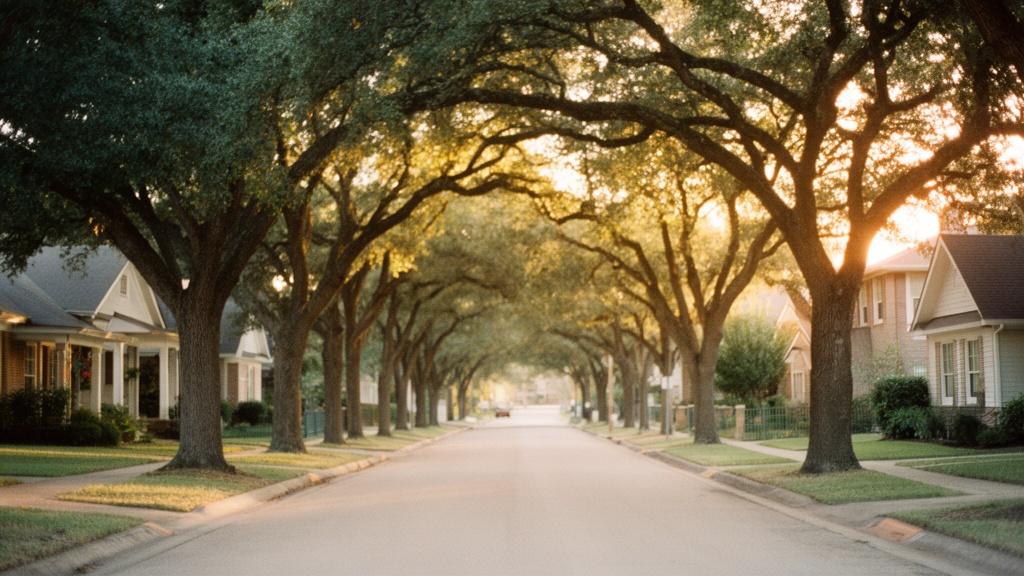
The northern portions of South Hill, particularly the blocks surrounding Manito Park and the streets running along the Rim, contain a high concentration of pre-World War II homes. Many of these are large two-story Craftsman and Colonial Revival houses on tree-canopied lots between 6,000 and 10,000 square feet. Original hardwood floors, built-in cabinetry, and covered front porches are common features. These homes often require updating but carry architectural detail that newer construction rarely replicates.
The mid-century stock, concentrated roughly between 29th and 44th Avenues, tends toward smaller ranch-style homes built between the 1950s and 1970s. These are typically single-story, with attached garages, concrete driveways, and lots in the 7,000 to 9,000 square foot range. Many have been updated over the years with new kitchens, vinyl windows, and expanded decks.
Newer Construction Farther South
South of 44th Avenue and especially south of 57th, the housing stock transitions to planned subdivisions built primarily from the 1990s through the present. These homes are larger in square footage, often ranging from 1,800 to 3,500 square feet, with open-concept floor plans, three-car garages, and energy-efficient construction. The lots tend to be slightly smaller relative to the house size, and the streets follow the curvilinear patterns typical of late-20th-century suburban planning.
What Lot Sizes Look Like
Lot sizes across South Hill generally run from about 5,000 square feet on the smaller end in denser northern pockets to a quarter acre or slightly more in the newer southern subdivisions. True acreage lots are rare within the core of South Hill but do appear along the western and southern fringes where the plateau gives way to more rural terrain near Hangman Valley and Latah Creek.
3. Home Prices on South Hill Right Now
South Hill carries some of the higher price points in Spokane, though the range is wide enough that buyers at several budget levels can find something here. As of September 2026, median home prices on South Hill are running in the mid-to-upper $400,000s, with the most in-demand blocks near Manito Park and the Rim frequently seeing listings in the $550,000 to $800,000 range. Newer construction in the southern subdivisions typically starts around $450,000 and climbs past $700,000 for larger builds with premium finishes.
Current Price Ranges
- Entry-level South Hill homes: Smaller ranch-style and mid-century homes in the $320,000 to $420,000 range, typically south of 29th Avenue, often with original kitchens and bathrooms that buyers update after purchase.
- Mid-range South Hill homes: Updated Craftsman and ranch homes, plus newer construction in southern subdivisions, generally priced from $430,000 to $600,000 as of September 2026.
- Upper-tier South Hill homes: Large historic homes near the Rim and Manito Park, and premium new builds south of 57th Avenue, typically listed from $625,000 to over $1,000,000.
What Your Budget Gets You
At around $450,000, buyers on South Hill can typically expect a three-bedroom home with at least 1,400 square feet, a garage, and a usable yard. At $600,000 and above, the expectation shifts toward updated finishes, more square footage, and proximity to the park and Rim views. For buyers comparing South Hill to other Spokane neighborhoods, it generally prices above the North Side and the Valley but below the most exclusive pockets of the Spokane area's larger estate properties.
If you want a fuller picture of how South Hill prices compare to the broader Spokane market, the Spokane buyer's guide on this site breaks down citywide market conditions and what buyers are navigating right now.
4. Getting Around: Commutes and Daily Errands
Living on South Hill means living on a plateau, and that has real implications for how you get around every day. Most residents drive, and the road network is built around that assumption. The main arterials, including Grand Boulevard, Regal Street, and Southeast Boulevard, carry the bulk of north-south traffic as they descend toward downtown and the valley.
Driving to Downtown Spokane
From the northern end of South Hill, near 18th Avenue, driving to the Spokane city center takes roughly 10 to 15 minutes under normal conditions. From the southern end near 57th Avenue or beyond, that same trip runs closer to 20 to 30 minutes depending on traffic. Interstate 90 is accessible via the South Hill via Thor/Freya interchange and the Maple/Walnut exit, making connections to the Spokane Valley and to Coeur d'Alene, Idaho straightforward for commuters heading east.
One thing worth knowing: the streets descending from the Rim into downtown can be steep and occasionally icy in winter. South Hill residents who commute daily in January and February learn quickly which routes are maintained most reliably and which ones require patience after a snowstorm.
Public Transit Options
Spokane Transit Authority operates several bus routes on South Hill, with lines running along Regal Street, Grand Boulevard, and Southeast Boulevard connecting to the downtown transit center. Service is more frequent on the northern end of South Hill than on the southern end, where coverage thins out in the newer subdivisions. For residents who prefer not to drive every trip, proximity to a main arterial matters more on South Hill than in denser urban neighborhoods.
Everyday Errands and Shopping
South Hill is well-served for everyday shopping. The South Hill Mall area near 57th and Regal anchors a large commercial corridor with a Fred Meyer, Target, Costco, and dozens of smaller retailers and restaurants. Grocery options are distributed across the plateau, including a Rosauers on 29th Avenue, a Yoke's Fresh Market, and a Natural Grocers for shoppers prioritizing organic and specialty items. Most South Hill residents can reach a grocery store within five to ten minutes by car.
5. Parks, Trails, and Outdoor Life on South Hill
Outdoor access is one of the most concrete benefits of living in the South Hill neighborhood of Spokane. The plateau holds several significant parks and connects to trail networks that residents use year-round for walking, running, and cycling.
Manito Park
Manito Park is the centerpiece of South Hill's outdoor life and one of Spokane's most visited public spaces. The park covers approximately 90 acres and contains the Duncan Garden, a formal rose garden with more than 1,500 plantings, a Japanese garden with a koi pond and traditional stone lanterns, a greenhouse conservatory open year-round, Gaiser Conservatory, and Manito Pond. The park draws residents and visitors throughout all four seasons, from summer picnics on the lawn to winter walks through the bare-limbed formal garden beds.
Living within walking distance of Manito Park, roughly the blocks between 17th and 25th Avenues along Grand Boulevard and Bernard Street, is something South Hill buyers frequently prioritize. Homes in that immediate radius tend to carry a price premium that reflects the walkability to the park.
The South Hill Trail Network
The South Hill Trail connects to a broader network of paved and unpaved paths that wind along the Rim and down toward Latah Creek. The Rimrock Trail along the northern edge of the plateau gives hikers and trail runners elevated views of the Spokane River canyon and the city below. The trail is accessible from several points along the Rim, and the terrain is rugged enough to feel genuinely natural despite being within city limits.
Other Green Spaces
Beyond Manito, South Hill contains several smaller neighborhood parks including Comstock Park, which has a public swimming pool, tennis courts, and open lawn space. Latah Creek itself, running along the western edge of the plateau, provides a natural riparian corridor with informal access points. For residents who want quick access to larger wilderness, the Dishman Hills Natural Area is roughly 15 minutes east, and the trails of the Palouse begin within 30 to 40 minutes south of the South Hill.
6. The Day-to-Day Feel of Living on South Hill
Beyond the housing and the parks, what does it actually feel like to live in the South Hill neighborhood of Spokane day to day? The answer depends on which part of South Hill you are in, but some things are consistent across the plateau: mature street trees in the older sections, a strong culture of walking dogs and pushing strollers through the park, and a commercial scene that leans toward locally-owned businesses rather than chains.
Restaurants and Coffee Shops
The dining and coffee scene on South Hill is concentrated along a few key corridors. The area around 29th Avenue and Grand Boulevard has a cluster of independently-owned restaurants and cafes. Rockwood Bakery on South Grand is a longtime neighborhood fixture. Cafes like Vessel Coffee and the nearby Atticus Coffee locations draw a regular crowd of residents who work from home or want a neighborhood place to land for a few hours. The dining options thin out south of 44th, where the commercial strips shift toward chains and fast-casual spots near the mall.
Community Character
South Hill has an active neighborhood council structure, and the area around Manito Park in particular has a long tradition of community engagement around park programming, street improvements, and historic preservation. The Manito-Cannon Hill Neighborhood Council is one of the more active in Spokane's neighborhood council system. Residents in the older northern sections tend to be engaged with the physical character of their streets and often advocate for tree canopy preservation and sidewalk maintenance.
For a broader look at what the Spokane housing market looks like right now as you weigh South Hill against other parts of the city, the homes for sale in Spokane buyer's guide covers inventory levels, competition, and what to expect when making an offer.
Things Worth Knowing Before You Move
A few practical realities that do not always show up in neighborhood descriptions. First, South Hill gets more snow accumulation than the valley floor and downtown because of its elevation, and it can also hold ice longer on shaded residential streets. Second, the plateau does not have a single walkable commercial district the way some Spokane neighborhoods do; the closest thing is the stretch near Manito Park, and even that requires a car for most residents south of 30th. Third, water and sewer infrastructure age varies considerably between the northern historic sections and the newer southern subdivisions, which can affect inspection findings and maintenance costs.
For additional context on what buyers should research before committing to a specific block or section of South Hill, the South Hill neighborhood guide at True Northwest Group offers a useful overview of the area's layout and real estate inventory.
On the question of schools, Spokane Public Schools serves most of South Hill, and the Washington State Office of Superintendent of Public Instruction publishes detailed performance and enrollment data for each school at ospi.wednet.edu. That is the most reliable place to research school information directly, since personal priorities vary considerably and the data is updated regularly.
FAQ
Is South Hill in Spokane a walkable neighborhood?
Walkability on South Hill depends heavily on where exactly you live. The blocks immediately surrounding Manito Park, roughly 17th to 29th Avenues along Grand Boulevard and Bernard Street, have sidewalks, tree canopy, and enough nearby coffee shops and small businesses to support a car-light lifestyle for some errands. South of 35th Avenue, walkability decreases significantly as the commercial strips thin out and distances between destinations grow. Most South Hill residents rely on a car for the majority of their daily trips, particularly for grocery runs and commuting.
How do home prices on South Hill compare to the rest of Spokane?
South Hill generally carries higher median prices than much of Spokane, reflecting its established housing stock, park access, and views. As of September 2026, median prices on South Hill are running in the mid-to-upper $400,000s, compared to citywide medians that sit somewhat lower depending on the area. The northern sections near Manito Park and the Rim are the priciest, while the mid-plateau ranch-home corridors offer more accessible entry points. Buyers on a tighter budget often find more options in Spokane's North Side or East Central neighborhoods, though those areas have their own distinct characteristics worth researching separately.
What is winter like on South Hill in Spokane?
South Hill winters are real Spokane winters, and the elevation adds a layer of complexity that flat-ground residents do not always deal with. The plateau typically receives more snowfall accumulation than downtown or the valley, and shaded residential streets can stay icy for days after a storm. The main arterials like Regal and Grand are plowed and treated promptly, but side streets and the steep descents toward the Rim require more caution. Most South Hill residents keep a set of all-season or winter tires and budget for occasional delays during the December through February stretch. The upside is that the same elevation that creates ice also delivers clear, sunny winter days with panoramic views across the snow-covered city.