← Back to Blog
Buying
Investment Property Guide for Lafayette, Indiana: What Every Investor Needs to Know
By Karina Hernandez
Trueblood Real Estate
September 4, 2026 · 10 min read
If you are looking at investment property in Lafayette, Indiana, you have landed in a market that rewards careful research. This investment property guide for Lafayette, Indiana covers everything from current price ranges and rental dynamics to financing structures, property taxes, and the specific neighborhoods where inventory is most active. Whether you are buying your first rental or adding a fifth door to your portfolio, the details here are grounded in what is actually happening in Tippecanoe County right now in September 2026.
1. Why Lafayette's Real Estate Market Attracts Investors
Lafayette, Indiana draws real estate investors for a straightforward reason: the local economy produces consistent rental demand across multiple tenant pools, and purchase prices remain low enough that cash flow is achievable without taking on outsized risk.
A University Town Economy With Year-Round Demand
Purdue University sits roughly two miles from downtown Lafayette, across the Wabash River in West Lafayette. The university enrolls more than 50,000 students and employs thousands of faculty and staff, which creates a rental base that does not disappear when one industry has a bad quarter. Manufacturing also plays a major role: Subaru of Indiana Automotive in nearby Lafayette employs roughly 6,000 workers, and Caterpillar, Wabash National, and several precision manufacturers maintain significant operations in Tippecanoe County. That combination of institutional and industrial employment keeps vacancy rates lower than in many comparable Midwest markets.
According to research published by Childers Commercial Real Estate, Lafayette's long-term investment fundamentals are supported by population growth in Tippecanoe County that has outpaced the Indiana statewide average over the past decade, which tends to put upward pressure on both rents and property values over time.
Price Points That Still Make the Numbers Work
Median home prices in Lafayette proper currently sit in the low-to-mid $200,000s, with West Lafayette running higher due to proximity to campus and the Purdue Research Park corridor. For a detailed look at where prices stand right now, see the breakdown in What Are Home Prices Like in Lafayette Indiana Right Now in September 2026. The key point for investors is that entry costs are low enough that a 20 to 25 percent down payment on a typical Lafayette rental property is a manageable figure compared to coastal or even Chicago-area markets.
2. Types of Investment Properties Available in Lafayette
Lafayette's housing stock is varied enough that investors can choose a strategy that fits their capital, risk tolerance, and management preferences. The three categories that appear most frequently in investor transactions here are single-family rentals, small multifamily buildings, and properties positioned to serve the university-adjacent rental market.
Single-Family Rentals
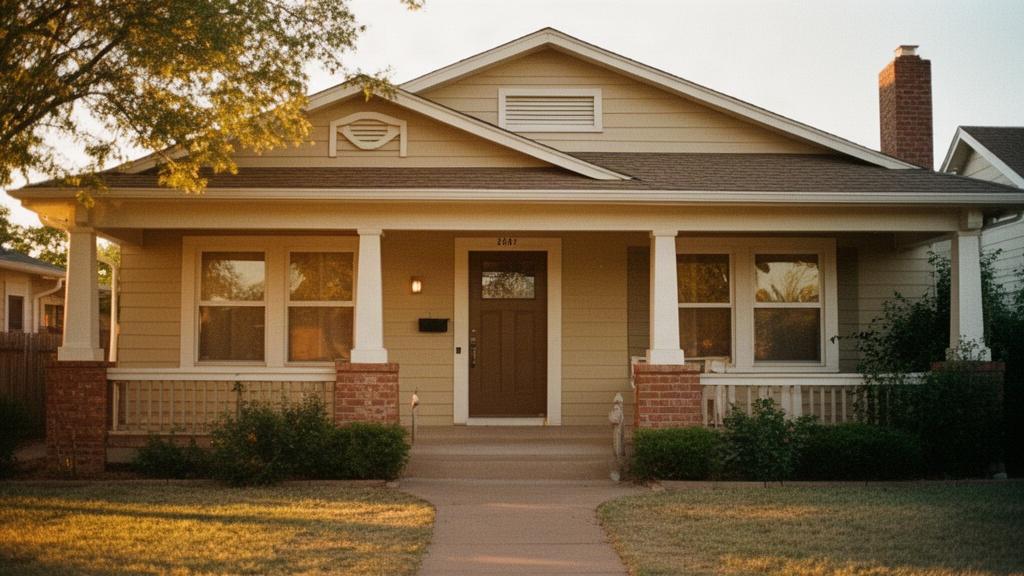
Single-family homes are the most liquid investment property type in Lafayette. You can sell to either another investor or an owner-occupant when you are ready to exit, which gives you more options than a multifamily building. The city's older residential streets, particularly in areas like Ellsworth, Happy Hollow, and the blocks surrounding Columbian Park, contain brick bungalows and Craftsman-era homes built between 1910 and 1960. These properties often need updating but carry lower purchase prices and tend to attract long-term tenants who prefer a house over an apartment.
Newer construction in developments on Lafayette's north and south sides, such as areas near State Road 26 East and the Creasy Lane corridor, attracts tenants who want newer mechanicals and open floor plans. These properties carry higher purchase prices, typically in the $240,000 to $320,000 range, but require less immediate capital expenditure on repairs.
Small Multifamily Properties
Duplexes, triplexes, and four-unit buildings are present throughout Lafayette's older residential grid, particularly in the blocks north and south of downtown. A duplex in Lafayette currently trades in roughly the $180,000 to $260,000 range depending on condition and location, while four-unit buildings can be found in the $300,000 to $420,000 range. The appeal is simple: multiple rent checks from one roof, one insurance policy, and one property tax bill. The trade-off is that management complexity increases with unit count, and older multifamily stock in Lafayette often has deferred maintenance on electrical panels, plumbing stacks, and flat roof sections.
Student-Adjacent Housing Near Purdue
Properties within walking or biking distance of Purdue's campus in West Lafayette command a premium on both purchase price and rent per bedroom. A three-bedroom house near campus can rent for $1,800 to $2,400 per month, often with leases signed by individual students who each pay their share. The higher rent potential comes with a different management rhythm: leases tend to turn over in May or August, and properties need to be ready for new tenants quickly. Investors who manage this cycle well often achieve strong gross yields, but the operational demands are higher than with a long-term professional tenant.
3. Understanding the Lafayette Rental Market
Knowing what rents are achievable is the foundation of any investment property analysis. In Lafayette, rents vary significantly by property type, condition, and proximity to employment centers and campus.
Current Rent Ranges by Property Type
As of September 2026, these are the approximate rent ranges investors are seeing across Lafayette and West Lafayette for standard market-rate units in average to good condition:
- One-bedroom apartments or units: $750 to $1,050 per month in Lafayette; $950 to $1,300 per month in West Lafayette near campus.
- Two-bedroom single-family or unit: $950 to $1,350 per month across most of Lafayette.
- Three-bedroom single-family home: $1,200 to $1,700 per month in Lafayette; $1,800 to $2,400 per month in West Lafayette student-adjacent areas.
- Four-bedroom homes: $1,500 to $2,100 per month in Lafayette; higher near Purdue depending on finish level.
These figures reflect asking rents on currently listed units and recently signed leases. Rents have moved upward modestly over the past two years as new apartment construction has not fully kept pace with household formation in the county. That gap between supply and demand is part of what keeps vacancy rates relatively contained.
Vacancy Trends and Seasonality
Lafayette's rental vacancy rate runs lower than the national average for similarly sized Midwest cities, largely because of the university's enrollment stability. The market does have a seasonal rhythm: properties near campus see the highest leasing activity between January and April as students secure housing for the following academic year. Non-student rentals in Lafayette proper tend to turn over in the spring and summer, consistent with the broader Midwest pattern. Investors who time acquisitions to close in late fall or winter often find less competition and more motivated sellers, while still being able to market the property before peak leasing season.
4. Financing an Investment Property in Lafayette
Financing an investment property in Lafayette follows federal lending guidelines, but local lenders often have a better feel for appraised values and rental income documentation in Tippecanoe County. Understanding the structure before you make an offer puts you in a stronger negotiating position.
Conventional Investment Loans
Most investors purchasing a single-family rental or a one-to-four-unit property in Lafayette use a conventional loan. Fannie Mae and Freddie Mac guidelines require a minimum 15 percent down payment for a single-unit investment property and 25 percent for a two-to-four-unit building. In practice, most lenders prefer 20 to 25 percent down to keep the loan within standard guidelines and avoid pricing risk add-ons. Credit score requirements are stricter than for a primary residence: most lenders want a 680 minimum, and rates improve meaningfully at 720 and above. At Lafayette's current price points, a 20 percent down payment on a $220,000 single-family rental is $44,000, which is achievable for many investors compared to higher-cost markets.
Local and Regional Lenders Worth Knowing About
Several community banks and credit unions serve Tippecanoe County and understand the Lafayette rental market in ways that national lenders sometimes do not. Lenders familiar with the local market are more likely to accept rental income documentation from Purdue-area leases, understand the appraisal comps in older Lafayette neighborhoods, and move through underwriting on a timeline that works for competitive offers. Karina Hernandez can connect you with lenders she has worked with on investment transactions in Lafayette, which saves you the time of sorting through options on your own.
Down Payment and Reserve Requirements
Beyond the down payment, most lenders require documented cash reserves equal to six months of principal, interest, taxes, and insurance (PITI) for each investment property in your portfolio. On a $200,000 Lafayette rental with a $160,000 loan at current rates, that reserve requirement could be $6,000 to $9,000 depending on your tax and insurance costs. Budget for this separately from your down payment and closing costs, which in Indiana typically run 2 to 3 percent of the purchase price for buyers.
5. Property Taxes and Operating Costs in Tippecanoe County
Property taxes in Indiana are assessed at the county level, and Tippecanoe County's effective rates are among the more moderate in the state. However, investment properties do not qualify for the homestead deduction, which means your tax bill as a landlord will be higher than what an owner-occupant pays on the same assessed value.
How Property Taxes Are Calculated for Non-Owner-Occupied Properties
Indiana assesses property at market value, then applies deductions before calculating your tax bill. Owner-occupants can claim the homestead deduction, which reduces assessed value by $48,000 plus an additional percentage cap. Rental properties receive no homestead deduction, so the full assessed value is taxed. On a property assessed at $200,000, a non-owner-occupant in Tippecanoe County can expect to pay roughly $2,400 to $3,200 annually depending on the specific tax district. For a detailed breakdown of how these numbers work at a specific price point, see the article on How Much Are Property Taxes on a $300,000 Home in Lafayette, Indiana, which walks through the Tippecanoe County calculation step by step.
Other Ongoing Costs to Budget
Property taxes are just one line item in a landlord's operating budget. A realistic operating cost model for a Lafayette rental property should also account for landlord insurance (typically $800 to $1,400 per year for a single-family home), property management fees if you hire a local manager (generally 8 to 10 percent of collected rent in this market), routine maintenance (most experienced investors budget 1 percent of property value per year), and capital expenditure reserves for larger items like roofs, furnaces, and water heaters. Older Lafayette housing stock, particularly homes built before 1970, can have higher capital expenditure needs in the first few years of ownership.
6. How to Evaluate a Deal in Lafayette's Current Market
A property that looks attractive on the surface can underperform if the numbers are not stress-tested before closing. Two metrics most Lafayette investors use to screen deals quickly are the capitalization rate and the cash-on-cash return.
Running the Numbers: Cap Rate and Cash-on-Cash Return
The cap rate divides net operating income (gross rent minus all operating expenses, before debt service) by the purchase price. In Lafayette right now, a well-priced single-family rental in average condition might produce a cap rate in the 5.5 to 7.5 percent range depending on purchase price, rent level, and operating costs. Properties near Purdue with higher rents but also higher purchase prices tend to cluster at the lower end of that range. Cash-on-cash return measures your actual annual cash flow against the cash you invested (down payment plus closing costs plus any immediate repairs). Many investors in this market target a cash-on-cash return of 6 to 10 percent, though deals at the high end of that range require either a below-market purchase price or above-average rent for the area.
For a broader look at where the Lafayette market stands heading into late 2026, the Lafayette Indiana Real Estate Market Trends article covers current days-on-market, list-to-sale price ratios, and inventory levels that affect how aggressively you need to move on a deal.
For a deeper look at the mechanics of Lafayette real estate investing, this comprehensive local investing resource from Lafayette IN Property Management Inc. covers landlord responsibilities, tenant screening, and local property management considerations that every investor should understand before their first purchase.
What to Watch for During Inspection
Lafayette's older housing stock has specific inspection concerns that differ from newer construction markets. Homes built before 1978 may contain lead paint, which triggers additional disclosure requirements and can affect financing. Knob-and-tube wiring and cast-iron drain lines are common in pre-1950 homes throughout Lafayette's central neighborhoods. Basement moisture is a recurring issue in properties near the Wabash River floodplain, particularly in lower-lying streets. A thorough inspection by a licensed Indiana home inspector is non-negotiable, and investors should budget for a sewer scope on any property over 40 years old.
Knowing which inspection findings are deal-breakers versus negotiating points is where local experience matters most. Karina Hernandez has worked through investment property transactions across Lafayette and can help you interpret inspection results in the context of what repairs actually cost in this market, not what a national cost estimator suggests.
FAQ
Is Lafayette, Indiana a good market for investment property right now?
Lafayette's combination of a large university, diverse manufacturing employment, and moderate home prices creates conditions that many investors find attractive in September 2026. Rental demand is supported by Purdue University's enrollment, Subaru of Indiana Automotive's workforce, and ongoing population growth in Tippecanoe County. Purchase prices in Lafayette proper remain in a range where cash flow is achievable with a standard 20 to 25 percent down payment. That said, every investment depends on the specific property, the price paid, and how well operating costs are managed, so running detailed numbers on each deal is essential before committing.
What type of investment property performs best in Lafayette, Indiana?
There is no single answer, because performance depends on your strategy, capital, and willingness to manage the property. Single-family rentals in Lafayette's established neighborhoods offer the most liquidity and the broadest tenant pool. Small multifamily properties (duplexes and four-plexes) can produce stronger gross yields but require more active management. Properties near Purdue in West Lafayette can achieve high rent-per-bedroom figures but operate on an academic-year leasing cycle that requires more hands-on coordination. Investors who are new to the Lafayette market often start with a single-family rental in Lafayette proper to learn the market before moving into more complex property types.
Do I need a real estate agent to buy an investment property in Lafayette, Indiana?
You are not legally required to use an agent, but working with a local agent who has investment property experience in Lafayette gives you meaningful advantages. A knowledgeable agent can identify off-market opportunities, flag properties with deferred maintenance that will hurt your returns, connect you with local lenders and inspectors who understand investment transactions, and negotiate on your behalf in a market where seller expectations can vary widely by neighborhood. In Indiana, the seller typically covers buyer's agent compensation as part of the transaction, so using an experienced local agent generally costs you nothing out of pocket while adding significant value to the process.