
← Back to Blog
Selling
Downsizing in Niagara Falls: Options, Costs and Timing You Need to Know
By Karnpal Singh
September 25, 2026 · 12 min read
Downsizing in Niagara Falls is best known as a straightforward swap of a larger home for a smaller one, but the real process involves layered decisions about housing type, transaction costs, market timing, and what you actually want your daily life to look like. This guide breaks down every piece of that puzzle using current Niagara Falls market data, specific neighbourhood housing stock, and the real numbers involved so you can plan with confidence rather than guesswork.
1. What Downsizing in Niagara Falls Actually Means in 2026
Downsizing in Niagara Falls is best known as a lifestyle shift, not just a square-footage reduction. Most people arriving at this decision are coming out of a four-bedroom detached home on a lot that requires regular maintenance, and they want something smaller, simpler, and more manageable without leaving the city they know. The good news is that Niagara Falls has a genuinely varied inventory of smaller housing types at price points that make the math work for most people who own a larger home in the area.
The broader Niagara region is seeing what many observers have called a wave of downsizing activity, driven by a large cohort of homeowners who bought in the 1980s and 1990s and now hold significant equity. A useful overview of how this plays out across Ontario is available in this real-world downsizing account from a Vaughan couple who relocated to Niagara, which covers the emotional and financial realities that most planning guides leave out.
The Housing Stock Available to Downsizers
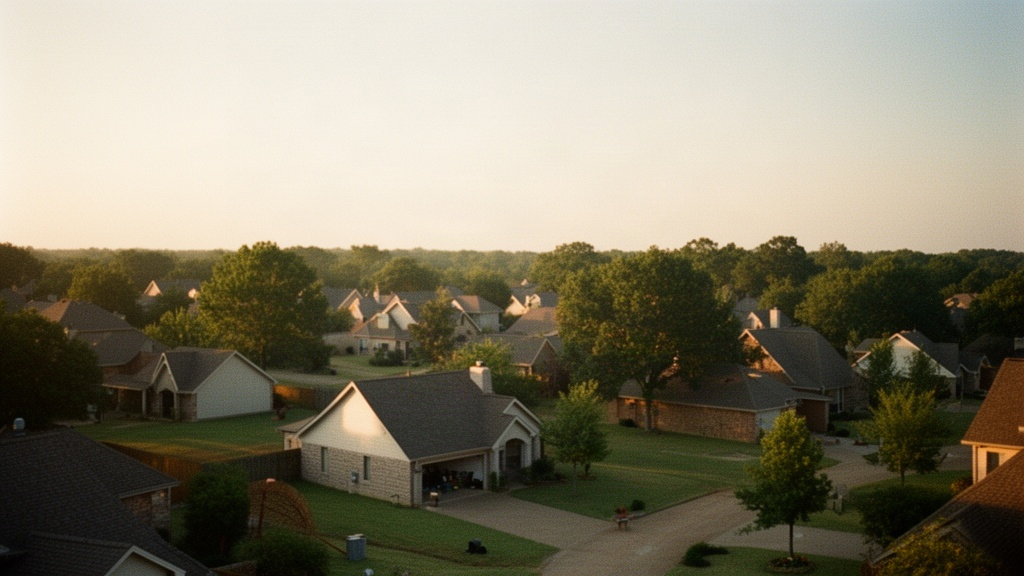
Niagara Falls has a dense supply of post-war bungalows, particularly in the Drummond Road corridor and the Stamford area, that were built between the 1950s and 1970s on 40 to 60 foot lots. These homes typically run between 900 and 1,400 square feet, sit on manageable lots, and are priced well below the city's detached average. There is also a growing condominium segment, concentrated near the tourist core and along Morrison Street, that offers true maintenance-free living. Freehold townhomes have been added through several new developments on the city's west and south sides, giving downsizers a middle-ground option between a condo and a detached home.
What the Price Gap Looks Like Right Now
As of September 2026, the median detached home price in Niagara Falls sits in the low-to-mid $600,000s, depending on the street and condition. A two-bedroom bungalow in the Drummond or Stamford area is currently trading in the $430,000 to $530,000 range. A one-bedroom or two-bedroom condominium in the city runs roughly $350,000 to $500,000 depending on the building, floor, and finishes. A freehold townhome lands in the $480,000 to $580,000 range. That price gap between your current home and your next one is the equity release that makes downsizing financially meaningful, and in Niagara Falls right now, that gap is real and substantial for most four-bedroom homeowners.
For a broader picture of where Niagara Falls prices sit across all property types, the Niagara Falls Ontario real estate market guide on this site covers current medians, days on market, and inventory levels in detail.
2. Your Housing Options When Downsizing in Niagara Falls
There is no single right answer to what you should buy when downsizing in Niagara Falls. The right choice depends on how much outdoor space you want to maintain, whether you want a mortgage-free outcome, and how important a private garage or driveway is to your daily routine. Each of the three main options below has a distinct profile.
Bungalows and Smaller Detached Homes
A post-war bungalow gives you single-level living, a private lot, and a driveway, all without the scale of a larger detached home. The Drummond Road corridor has a particularly dense supply of these, with brick-exterior homes built between the 1950s and 1970s that have been updated to varying degrees. Lots are typically 40 to 50 feet wide and 100 to 120 feet deep. That is enough yard for a garden but not so much that maintenance becomes a burden. Property taxes on a bungalow in this price range run approximately $4,500 to $5,500 per year in Niagara Falls, which is notably lower than comparable properties in St. Catharines or Hamilton.
The trade-off with a bungalow is that you still own a lot and a structure, so you remain responsible for the roof, driveway, HVAC, and exterior. For people who want to retain some outdoor space and are comfortable with that level of ownership, a bungalow is often the most financially efficient downsizing move in Niagara Falls because the equity release is large and the ongoing costs remain predictable.
Condominiums and Stacked Townhomes
Condominiums offer the closest thing to maintenance-free living available in Niagara Falls. The exterior, roof, parking lot, and common areas are managed by the condo corporation. You pay a monthly condominium fee that covers those costs, and in Niagara Falls that fee currently runs between $350 and $650 per month for most mid-rise and low-rise buildings, depending on the amenities included and the age of the building's reserve fund.
The condominium supply in Niagara Falls is concentrated in a few pockets: the Morrison Street and Dorchester Road area has several low-rise buildings from the 1980s and 1990s, and there are newer mid-rise buildings closer to the tourist core. Before committing to any condo purchase, reviewing the status certificate is non-negotiable. That document tells you the financial health of the reserve fund, any pending special assessments, and the rules of the corporation. A lawyer experienced in Ontario condominium law should review it before you firm up an offer.
Adult Lifestyle Communities and Freehold Towns
Freehold townhomes built in the last ten years occupy a useful middle ground for downsizers. You own the structure and a small lot outright, so there is no monthly condominium fee, but the footprint is compact enough that maintenance is manageable. Several townhome developments have been built on the south and west sides of Niagara Falls, including areas near Lundy's Lane and the Chippawa corridor, with interiors typically running 1,100 to 1,500 square feet across two storeys. Attached garage parking is standard in most of these builds.
Some newer developments in the broader Niagara Falls area include common-element condominium structures where the road and shared landscaping are maintained collectively but the homes themselves are freehold. These carry a smaller monthly common-element fee, often in the $100 to $200 range, rather than a full condo fee. It is worth understanding exactly what ownership structure you are buying into before signing, because the legal and financial obligations differ meaningfully.
3. The Real Costs of Downsizing in Niagara Falls
Most people underestimate the transaction costs on both sides of a downsizing move. You are selling one property and buying another, which means you are paying costs twice. Running those numbers before you decide to move is essential, because the net equity you walk away with is what funds the next chapter. Here is how the cost picture breaks down in Niagara Falls.
Selling Costs on Your Current Home
When you sell a home in Niagara Falls, the primary costs are real estate commission, legal fees, and any pre-listing preparation work. Real estate commission in Ontario is negotiable and varies by agent and service level, but a common range is 3.5% to 5% of the sale price, split between the listing agent and the buyer's agent. On a $650,000 sale, that works out to roughly $22,750 to $32,500, plus HST on the commission amount. Legal fees for the seller typically run $1,200 to $1,800 in the Niagara region. If your home needs painting, staging, or minor repairs before listing, budget an additional $2,000 to $8,000 depending on the condition.
If you still carry a mortgage on your current home, check your mortgage contract for prepayment penalties before you list. Fixed-rate mortgages broken before their term ends can carry an interest rate differential penalty that adds thousands to your selling costs. Variable-rate mortgages typically carry a three-month interest penalty. Your lender can give you the exact figure.
The full breakdown of what it costs to sell in this market is covered in the selling a home in Niagara Falls guide on this site, including how to price your home competitively and what to expect at each stage of the process.
Buying Costs on Your Next Home
Ontario land transfer tax is the largest single cost when buying your replacement property. On a $480,000 bungalow purchase, the Ontario land transfer tax works out to approximately $6,475. On a $500,000 condo, it is approximately $6,975. There is no municipal land transfer tax in Niagara Falls, unlike Toronto, which keeps the buyer-side cost lower than in many Ontario cities. Legal fees for the buyer run $1,500 to $2,200, and a home inspection on a detached or semi-detached property costs $400 to $600.
If you are buying a condominium, add the cost of a status certificate review by your lawyer, typically $200 to $400 on top of standard legal fees. Title insurance is standard practice in Ontario and runs $200 to $400 for a residential purchase. For a detailed breakdown of what closing costs look like on a specific price point, the land transfer tax guide for a $650,000 purchase in Niagara Falls on this site walks through the exact calculation.
The Moving and Transition Budget
Moving costs within Niagara Falls or from a nearby city typically run $1,500 to $4,000 for a full-service move, depending on volume and distance. Downsizing almost always involves decluttering, which means costs for storage, donation pickup, estate sale services, or junk removal. Budget $500 to $2,000 for that process, more if you are clearing a home that has been lived in for twenty or thirty years. New window coverings, light fixtures, or appliances for a smaller space can add another $3,000 to $10,000 depending on your preferences. The total transition budget, beyond the transaction costs, commonly runs $5,000 to $15,000.
4. Timing Your Downsizing Move in Niagara Falls
Timing a downsizing transaction in Niagara Falls involves two separate decisions: when to list your current home, and whether to sell before you buy or buy before you sell. Getting both right reduces stress and protects your financial outcome. Getting either wrong can mean carrying two properties at once or being forced into a purchase under pressure.
When to List Your Larger Home
The Niagara Falls market in September 2026 is operating with more inventory than it held in 2023 and 2024, which means buyers have more choices and sellers need to price precisely to attract offers. Detached homes in the $550,000 to $750,000 range are currently taking an average of 30 to 55 days to sell, depending on condition, location, and pricing accuracy. Spring, meaning March through May, historically sees the highest buyer activity in Niagara Falls. September and October also produce solid results as buyers who paused over summer return to the market. The slowest months are January and February, when fewer buyers are actively searching.
Listing in a slower month is not necessarily a mistake if your home is priced correctly, but you should set realistic expectations about the timeline. For a current read on how long homes are actually sitting on the market in Niagara Falls right now, the guide to selling timelines in Niagara Falls on this site has the current data.
Whether to Sell First or Buy First
In the current Niagara Falls market, selling first is the lower-risk strategy for most downsizers. You know exactly how much equity you have to work with, you are not carrying two mortgages, and you negotiate your purchase from a position of certainty. The risk is that you may need a short-term rental or bridge arrangement between closing dates if you cannot align them. Short-term furnished rentals are available in Niagara Falls, and many sellers negotiate a 60 to 90 day closing with the buyer to give themselves time to find and close on their next home.
Buying first makes sense only if you have strong financial flexibility, meaning you can carry both properties for several months without strain, or if you find an exceptional property that you cannot afford to let go. Bridge financing is available from most major lenders in Ontario to cover the gap between your purchase closing date and your sale closing date, but it carries an interest cost and requires that your sale be firm before most lenders will approve it. Talk to your mortgage broker about your specific numbers before making this call.
5. Neighbourhoods and Housing Pockets Worth Knowing
Niagara Falls has distinct pockets of housing stock that appeal to downsizers for different reasons. Understanding what each area physically offers helps you narrow your search before you start booking showings. The right area for you depends on your priorities around lot size, walkability, proximity to amenities, and commute if you are still working part-time.
Stamford and Drummond Road Corridor
The Stamford area, centred roughly around Portage Road and Mountain Road, contains a large supply of bungalows and side-split detached homes built between the 1950s and 1980s. Lot sizes here are typically 50 to 65 feet wide, with mature tree cover and established streetscapes. The area is close to Stamford Centre, which has grocery, pharmacy, and medical services within a short drive or walk. Drummond Road runs north to south through a similar housing stock, with prices generally ranging from $430,000 to $560,000 for bungalows in average to updated condition as of September 2026.
Lundy's Lane and West End
The Lundy's Lane corridor stretches west from the tourist core and transitions into residential streets with a mix of bungalows, raised bungalows, and newer infill townhomes. This area has good access to Montrose Road commercial services, the QEW via several interchanges, and the Niagara Square shopping area. Bungalows along the residential streets off Lundy's Lane typically price in the $440,000 to $540,000 range. The west end also has some of the newer freehold townhome developments that have been built over the last decade, offering more contemporary layouts and energy-efficient construction.
Chippawa and the River Road Area
Chippawa sits at the southern end of Niagara Falls along the Niagara River, roughly 10 kilometres from the city's downtown core. The area has a village-like character with smaller detached homes, some waterfront and near-waterfront properties, and access to Chippawa Creek Road and the Niagara Parkway trail system. Homes here are generally priced between $480,000 and $650,000 depending on proximity to the river and lot size. The pace is quieter and the density lower than the Stamford or Drummond areas, which appeals to people who want a more suburban feel with natural surroundings.
For a detailed look at property taxes across these Niagara Falls neighbourhoods and how they compare to other Niagara region cities, the property tax comparison guide for Niagara Falls on this site has the current rates and a side-by-side comparison.
FAQ
How much equity can I realistically free up by downsizing in Niagara Falls?
The answer depends on what you sell and what you buy, but a realistic example illustrates the range. If you sell a four-bedroom detached home for $650,000 and buy a two-bedroom bungalow for $490,000, the gross price difference is $160,000. After selling costs of roughly $28,000 to $35,000 and buying costs of approximately $10,000 to $12,000, your net equity release lands somewhere between $113,000 and $122,000 before any remaining mortgage balance on your current home. If your current home is mortgage-free, that full amount is available to you. Running these numbers with your specific figures, before you list, gives you a clear financial picture to plan around.
Do I need to pay capital gains tax when I downsize from my principal residence in Ontario?
If the home you are selling has been your principal residence for every year you have owned it, the sale is fully exempt from capital gains tax under the Canada Revenue Agency's principal residence exemption. You still need to report the sale on your tax return in the year it closes, even if no tax is owing. If you have used any part of the home for a business or rental purpose, a portion of the gain may be taxable, and you should speak with an accountant before you list. The principal residence exemption is one of the most significant tax advantages available to Canadian homeowners and it applies regardless of how much your home has appreciated.
Is it possible to downsize in Niagara Falls and come out mortgage-free?
For many long-time Niagara Falls homeowners, yes. If you own a detached home worth $600,000 or more without a mortgage, and you purchase a bungalow or condominium in the $400,000 to $500,000 range, the net proceeds after transaction costs on both sides will typically cover the purchase price outright. The key variables are your current home's sale price, the purchase price of your next property, and the total transaction costs on both sides, which commonly run $35,000 to $50,000 combined. Running a detailed net-proceeds calculation with a real estate professional before you commit gives you the clearest picture of whether a mortgage-free outcome is within reach for your specific situation.