
← Back to Blog
Neighborhoods
Niagara Falls Neighbourhoods: A Factual Guide to Housing, Amenities, and What Each Area Offers
By Karnpal Singh
September 20, 2026 · 10 min read
If you are researching neighbourhoods in Niagara Falls, Canada, the most useful starting point is understanding what each area physically offers: housing stock, price ranges, lot sizes, transit access, and nearby amenities. This guide breaks down the main neighbourhoods across Niagara Falls, Ontario with concrete details so you can compare them on your own terms and make a decision that fits your life.
1. How Niagara Falls, Ontario Is Laid Out
Niagara Falls, Ontario spans roughly 212 square kilometres and sits on the western bank of the Niagara River, directly across from Niagara Falls, New York. The city is not just the tourist strip along Clifton Hill. It contains established residential neighbourhoods, older industrial pockets, newer subdivision developments, and rural stretches toward the south and west.
The Queen Elizabeth Way connects Niagara Falls to Hamilton in roughly 45 to 55 minutes and to Toronto in about 80 to 90 minutes depending on traffic. Highway 420 and the Rainbow Bridge provide cross-border access to the United States. GO Transit service between Niagara Falls and Union Station in Toronto runs on a regular schedule, making the city accessible for those who commute by rail.
The City's Geography and Growth Corridors
Niagara Falls is divided informally into its northern residential areas near the escarpment, its central tourist and commercial zone, and its southern communities closer to Fort Erie. The Montrose Road and Lundy's Lane corridors have seen consistent residential development over the past two decades. Newer subdivisions in the north end and around Forestview and Garner Road have added significant detached housing inventory to the market.
How Prices Vary Across the City
As of September 2026, detached homes in Niagara Falls, Ontario are selling across a wide range depending on the neighbourhood, age of the home, and lot size. Entry-level detached homes in older parts of the city start around $450,000 to $530,000. Newer builds in the north end and Stamford area regularly list between $680,000 and $900,000. Townhouses and semi-detached properties typically fall between $420,000 and $620,000 city-wide.
2. A Neighbourhood-by-Neighbourhood Breakdown
Understanding the neighbourhoods in Niagara Falls means looking at what is physically there: the housing stock, the street layout, the nearby green space, and the proximity to services. Every area has a distinct character, and the right fit depends entirely on what you need. For a broader overview of the city's residential areas, the Niagara Falls Neighbourhood Guide on NiagaraHomes.com is a useful companion resource.
Stamford
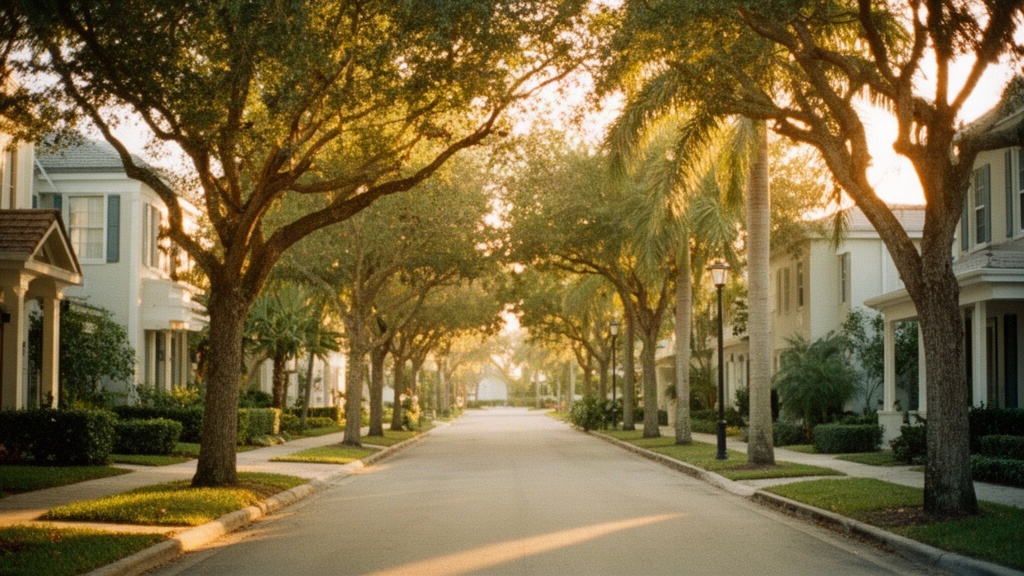
Stamford sits in the north-central part of Niagara Falls and is one of the city's most established residential areas. Housing here is a mix of post-war bungalows built in the 1950s and 1960s, two-storey brick homes from the 1970s and 1980s, and infill construction from the 2000s onward. Lot sizes tend to be generous, often 50 by 120 feet or larger, with mature tree cover on many streets.
Stamford Centre itself along Drummond Road has retail, restaurants, and service businesses within walking distance of many residential streets. Firemen's Park and Ker Park are both within the neighbourhood, offering green space, sports fields, and walking paths. Detached homes in Stamford currently list between $510,000 and $780,000 depending on condition and size.
Chippawa
Chippawa is a historic village community in the southern part of Niagara Falls, bordered by the Welland River to the north and the Niagara Parkway to the east. The housing stock here includes century homes and older cottages alongside newer infill builds and small subdivisions. Lot sizes vary considerably: some riverfront properties sit on large irregular lots while interior streets have more standard 40 to 60 foot frontages.
The Niagara Parkway running through Chippawa gives residents direct access to the recreational trail system that stretches north toward the Falls and south toward Fort Erie. Willoughby Historical Museum is located nearby, and the area is close to the Chippawa Creek Conservation Area. Prices in Chippawa for detached homes currently range from roughly $470,000 to $700,000, with waterfront or Parkway-adjacent properties commanding premiums above that.
Crowland and Humberstone
Crowland and Humberstone occupy the southwestern section of the city and contain some of the most affordable housing inventory in Niagara Falls. Homes here are predominantly detached bungalows and two-storeys from the 1940s through the 1970s, with smaller lot sizes typically in the 35 to 50 foot range. The area has a denser, more urban feel compared to the north end.
Crowland Avenue and Portage Road serve as the main commercial spines, with grocery stores, pharmacies, and local shops accessible without a car for many residents. Entry-level detached homes in this area currently list from approximately $430,000 to $570,000, making it one of the more accessible price points in the city for buyers working with tighter budgets.
Silvertown and the Tourist Core
The area immediately surrounding the tourist corridor, including parts of Silvertown and the streets near Clifton Hill and Victoria Avenue, contains a mix of residential and commercial uses. Older homes in this zone often sit on smaller lots, and the streetscape reflects the area's long history as both a residential and hospitality district. Some properties have been converted to short-term rental use or commercial purposes over the decades.
Queen Victoria Park and the Niagara Falls observation areas are within walking distance of many addresses in this zone. Buyers interested in this area should review the city's zoning bylaws carefully, as permitted uses vary significantly street by street. Residential properties here can range from $400,000 for a smaller older home up to $1 million or more for larger lots with development potential.
Lundy's Lane Corridor
Lundy's Lane is one of the city's primary east-west arteries and the residential streets running off it form a substantial portion of Niagara Falls' mid-city housing inventory. Homes in this corridor date largely from the 1950s through the 1990s, with a mix of bungalows, raised bungalows, and two-storey detached properties. Lot sizes are generally standard suburban dimensions, around 40 to 60 feet wide.
The Lundy's Lane corridor gives residents easy access to Niagara Falls' commercial amenities including big-box retail near Montrose Road, the MacBain Community Centre, and Lundy's Lane Battlefield Park. Detached homes along the residential streets feeding Lundy's Lane currently list between $480,000 and $720,000.
North End and Montrose Road Area
The north end of Niagara Falls, particularly the subdivisions around Montrose Road, Garner Road, and the Forestview and Oldfield Road areas, contains the city's newest housing stock. Homes here are predominantly two-storey detached builds from the 2000s through the 2020s, with attached garages, open-concept layouts, and lot sizes typically between 30 and 50 feet wide. Brick and stone exteriors are common.
This part of the city is close to the Niagara Square shopping area and has straightforward QEW access for commuters heading toward Hamilton or Toronto. New construction and resale homes in the north end currently list between $650,000 and $950,000, with some larger custom builds exceeding $1 million. This is the highest price tier in the city for standard residential properties.
3. What to Look for When Comparing Neighbourhoods
Comparing neighbourhoods in Niagara Falls comes down to matching the physical characteristics of each area to your specific needs. Price is one factor, but housing age, lot size, density, and commute access all affect how a neighbourhood actually functions day to day.
Housing Age and Condition
Older homes in Niagara Falls, particularly those built before 1980, may have original electrical panels, knob-and-tube wiring, galvanized plumbing, or older insulation. A home inspection is essential for any purchase, but especially in Crowland, Humberstone, and parts of Stamford where the housing stock is older. Budget for potential updates when calculating your total cost of ownership.
Newer homes in the north end subdivisions typically come with builder warranties still in effect and updated mechanical systems, but they also carry higher purchase prices and smaller lots with less mature landscaping. Neither profile is inherently better. It depends on your priorities around price, maintenance, and space.
Lot Size and Density
Lot size affects everything from outdoor space to parking to future renovation potential. Stamford and Chippawa tend to have larger lots with more separation between homes. The north end subdivisions have narrower lots with homes closer together. Crowland and Humberstone sit in between, with modest but functional yard sizes on most residential streets.
Commute Times and Transit Access
Niagara Falls Transit operates bus routes throughout the city, with more frequent service in the central and northern areas and less frequent coverage in Chippawa and the rural south. The GO Train station on Bridge Street connects to the regional rail network. For drivers, the QEW on-ramps near Montrose Road and McLeod Road are the two main access points for highway travel.
Driving from the north end to downtown Niagara Falls takes roughly 10 to 15 minutes. Driving from Chippawa to the city centre takes 15 to 20 minutes. If you work in St. Catharines, the drive is typically 25 to 35 minutes via the QEW from most parts of the city.
4. How to Research Schools and Public Services in Each Area
School proximity and quality are personal research items that every buyer should investigate directly using official sources. No real estate agent can or should tell you which school is right for your household. What matters is that you have access to the right data to make that call yourself.
Where to Find School Information
Niagara Falls is served by two publicly funded school boards: the District School Board of Niagara for English public schools, and the Niagara Catholic District School Board for English Catholic schools. French-language education is available through Conseil scolaire Viamonde and Conseil scolaire catholique MonAvenir. Each board publishes school boundary maps on its own website, which you can use to confirm which school a specific address is assigned to.
The Ontario Ministry of Education publishes the Ontario School Information System (OnSIS) data, which includes enrolment figures and program offerings by school. For any questions about curriculum, transportation, or special programs, contacting the relevant school board directly will give you the most accurate and current information.
Municipal Services and Planning Data
The City of Niagara Falls publishes its official plan, zoning maps, and development applications on its municipal website. Before purchasing in any neighbourhood, reviewing the zoning for nearby parcels is worthwhile, particularly in areas near commercial corridors like Lundy's Lane or near the tourist zone, where mixed-use development is more common.
Niagara Region also publishes data on waste collection schedules, water and wastewater service areas, and regional transit routes through its own website. These are practical details that affect daily life and are worth confirming for any specific address before making an offer.
5. Niagara Falls Real Estate Market Conditions in September 2026
The Niagara Falls housing market in September 2026 reflects a broader regional pattern of stabilized prices after the significant corrections seen in 2022 and 2023. Inventory has improved compared to the extreme shortage years of 2020 and 2021, giving buyers more time to evaluate properties and negotiate. Sellers are still achieving reasonable prices, particularly for well-maintained homes in established neighbourhoods.
Current Price Ranges
To give buyers a clear sense of what to budget across different property types in Niagara Falls right now:
- Detached homes, older stock (Crowland, Humberstone): $430,000 to $570,000 as of September 2026.
- Detached homes, mid-city (Stamford, Lundy's Lane corridor): $510,000 to $780,000 as of September 2026.
- Detached homes, newer builds (north end, Montrose Road area): $650,000 to $950,000 as of September 2026.
- Townhouses and semi-detached, city-wide: $420,000 to $620,000 as of September 2026.
- Chippawa detached (non-waterfront): $470,000 to $700,000 as of September 2026.
What Buyers Are Competing For Right Now
Move-in-ready homes in the $500,000 to $700,000 range are seeing the most buyer interest across Niagara Falls this month. Properties that need significant work are sitting on the market longer, which creates opportunity for buyers willing to take on a renovation project. New construction in the north end continues to attract buyers who want modern layouts and lower maintenance in the short term.
For sellers, pricing accurately to current market conditions is more important than ever. Overpriced listings are sitting, while homes priced at or near market value are moving within a few weeks. If you are thinking about listing, working with someone who has current, neighbourhood-specific data for Niagara Falls will give you a significant advantage. You can also explore additional context on the Niagara real estate investment landscape through NiagaraHomes.com's Niagara neighbourhood investment guide, which covers broader regional trends useful for understanding how Niagara Falls fits into the wider market.
FAQ
How do I figure out which neighbourhood in Niagara Falls is right for me?
Start by listing your non-negotiables: budget, commute destination, preferred housing type, and any specific amenities you use regularly. Then map those criteria against the factual details of each area. For example, if you need QEW access and want a newer home, the north end near Montrose Road fits that profile on paper. If you want a larger lot and a more established streetscape at a lower price point, Stamford or Chippawa may be worth a closer look. Visiting each area in person at different times of day gives you a sense of what the streets actually feel like. A local agent who works specifically in Niagara Falls can walk you through current listings in each area so you are comparing real options, not just descriptions.
Are there any areas in Niagara Falls where I can find a home under $500,000?
As of September 2026, detached homes under $500,000 do exist in Niagara Falls, primarily in the Crowland and Humberstone areas in the southwest part of the city, and occasionally in parts of Chippawa and the older Stamford streets. These properties are typically bungalows or smaller two-storeys from the 1950s through 1970s, and many have had partial updates over the years. Buyers in this price range should budget for a thorough home inspection and potential mechanical updates, as homes of this age often have components approaching the end of their service life. Townhouses and semi-detached properties in several areas of the city also fall under $500,000 and can offer a practical middle ground between price and condition.
How do I research schools for a specific address in Niagara Falls, Ontario?
The most reliable approach is to use the school board's own boundary lookup tool. Both the District School Board of Niagara and the Niagara Catholic District School Board have online tools where you can enter a specific address and see which school it is assigned to. From there, you can visit the school's own website or contact the school directly to ask about programs, transportation, and enrollment. The Ontario Ministry of Education also publishes school-level data through its public reporting system, which includes enrolment numbers and program information. These are personal decisions that depend heavily on your household's specific needs, so reviewing the data yourself and speaking with school staff directly will give you a far more useful picture than any third-party ranking.