← Back to Blog
Neighborhoods
The Boston Edison Neighborhood of Detroit Real Estate Market Guide: Prices, Neighborhoods and Timing
By Kay Davis
September 17, 2026 · 11 min read
The Boston Edison neighborhood of Detroit real estate market guide covers everything buyers, sellers, and relocating households need to know about one of the city's most architecturally significant residential districts. This guide breaks down current prices, what the housing stock actually looks like, how the local market moves by season, and what makes Boston Edison distinct from other Detroit neighborhoods worth considering.
1. What Is the Boston Edison Neighborhood?
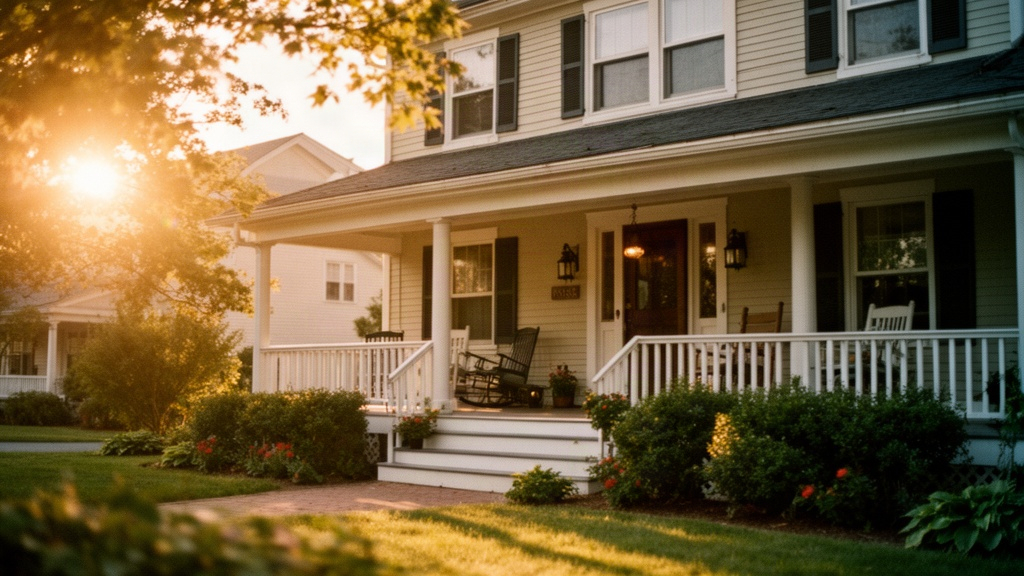
Boston Edison is a historic residential neighborhood on Detroit's near northwest side, roughly bounded by Woodward Avenue to the east, Linwood Street to the west, Chicago Boulevard to the north, and Clairmount Avenue to the south. The district sits about three miles north of downtown Detroit and covers approximately 900 homes spread across several parallel east-west streets: Boston Boulevard, Edison Avenue, Longfellow Street, Tuxedo Street, and Buena Vista Street.
Geographic Boundaries and Street Layout
Boston Boulevard and Edison Avenue are the two signature streets. Both are wide, tree-lined corridors with broad front lawns and deep setbacks from the street, a layout that was intentional when the neighborhood was platted in the early 1900s. The district is walkable to the Rosa Parks Transit Center and sits close to the Woodward Avenue corridor, which connects directly to Midtown and downtown Detroit by bus and by the QLine streetcar.
Commute times from Boston Edison to downtown Detroit run approximately 15 to 25 minutes by car depending on traffic, and 30 to 45 minutes via public transit. The neighborhood is also close to New Center, the area anchored by the Fisher Building and Henry Ford Health's main campus, which is roughly a half-mile south of Boston Boulevard.
The Historic District Designation
Boston Edison was listed on the National Register of Historic Places in 1972, making it one of Detroit's oldest federally recognized historic districts. The designation covers the core residential streets and reflects the architectural cohesion of the area. Homes here were built primarily between 1905 and 1935, which means buyers are looking at structures that are 90 to 120 years old. That history is part of the appeal, but it also shapes what due diligence looks like. If you are considering a historic property purchase anywhere in Detroit, the NAR Consumer Guide on Buying a Historic Property is a practical starting point for understanding what restrictions and incentives apply.
2. Boston Edison Real Estate Prices in September 2026
Prices in Boston Edison sit well above the Detroit citywide median, reflecting the size of the homes, the lot dimensions, and the scarcity of comparable inventory. As of September 2026, homes in Boston Edison are selling in a range of roughly $350,000 to $750,000, with the most active segment of the market concentrated between $400,000 and $575,000.
What Buyers Are Paying Right Now
Entry-level homes in Boston Edison, typically smaller colonials or bungalows on the side streets, start around $280,000 to $360,000 when they need significant renovation. Fully renovated or turnkey properties on Boston Boulevard or Edison Avenue, especially those with original woodwork intact, updated mechanicals, and square footage above 3,000, have been closing in the $550,000 to $750,000 range.
Larger estate-style homes exceeding 5,000 square feet have sold above $800,000 when the condition and renovation quality are exceptional. Those transactions are less frequent, but they establish the ceiling for the district and confirm that buyer appetite for the neighborhood remains strong at the upper end of Detroit's residential market.
How Boston Edison Compares to the Broader Detroit Market
The Detroit citywide median home price has reached $257,000, a figure that reflects strong seller leverage across the city. You can read more about the broader citywide picture in the Detroit, Michigan Real Estate Market Guide. Boston Edison's price range sits roughly 55 to 100 percent above that citywide median, which reflects the neighborhood's larger homes and the premium buyers place on the historic district designation.
Detroit's overall market has been trending toward sellers, with inventory tight relative to demand. According to HousingWire's analysis of Detroit's seller-favored market, the citywide median has climbed to $257,000 as sellers maintain leverage. Boston Edison reflects that same dynamic at a higher price point, with well-priced listings drawing multiple offers when they are correctly positioned.
3. The Housing Stock: What You Are Actually Buying
Boston Edison's housing stock is one of the most architecturally varied collections of early-twentieth-century residential construction in the Midwest. Buyers will find Tudor Revivals, Colonials, Craftsman bungalows, Georgian Revivals, Prairie-style homes, and Italian Renaissance designs, often sitting side by side on the same block.
Architecture and Lot Sizes
Lot sizes on Boston Boulevard and Edison Avenue are notably generous by Detroit standards. Many parcels run 60 to 100 feet wide with depths of 150 feet or more, providing substantial rear yards and significant separation between homes. Side yards are common, which is unusual for an urban neighborhood this close to a major city center.
Square footage on the primary streets typically ranges from 2,500 to 6,000 square feet, with most homes in the 3,000 to 4,500 range. Side-street properties on Longfellow, Tuxedo, and Buena Vista are smaller, often 1,400 to 2,200 square feet, and were built for a different price point even when the neighborhood was new.
What to Expect Inside
Original interior details are a defining characteristic of Boston Edison homes. Intact properties often feature quarter-sawn oak floors, plaster walls, original leaded glass windows, built-in cabinetry, decorative fireplaces, and period hardware. These elements are a significant part of what buyers are paying for, and they are difficult to replicate authentically.
Mechanicals are the other side of that equation. Homes built in 1910 or 1925 will have systems that have been updated to varying degrees over the decades. Buyers should budget carefully for roof condition, electrical panels, plumbing materials, HVAC age, and foundation integrity. A thorough inspection by someone experienced with pre-1940 Detroit construction is not optional here. Kay Davis's article on home inspections for older Detroit homes walks through exactly what to look for in pre-1950 construction.
Historic Designation and What It Means for Buyers
The National Register listing does not automatically restrict what you can do to your own home. Federal historic designation primarily affects eligibility for tax credits and grant programs, not day-to-day renovation decisions on a privately owned property. However, if a home is also locally designated through the City of Detroit Historic District Commission, exterior changes may require review and approval before work begins.
Buyers who plan to renovate should confirm whether the specific property falls under local historic district oversight and speak with the Detroit Historic District Commission before closing. The upside is that federal Historic Tax Credits can offset a meaningful portion of qualified rehabilitation costs, which makes the economics of a major renovation more manageable for buyers willing to do the paperwork.
4. Market Timing: When to Buy or Sell in Boston Edison
Boston Edison follows Detroit's broader seasonal market rhythm, but with some nuances that reflect its smaller inventory pool. Because fewer than a dozen homes typically trade in this neighborhood in any given quarter, a single well-priced listing can shift the apparent market noticeably.
Seasonal Patterns in This Pocket of Detroit
Spring, specifically March through June, is when the most Boston Edison listings hit the market and when buyer competition is highest. The tree canopy on Boston Boulevard and Edison Avenue is at its most striking in May and June, which genuinely affects how buyers perceive the neighborhood during showings. Sellers who time their listings to coincide with full leaf coverage on those mature elms and oaks tend to generate stronger first impressions.
Fall, from September through October, is a secondary window of activity. Buyers who missed spring listings often return in early fall with renewed urgency before winter. September 2026 is currently an active period, with motivated buyers still in the market and sellers who want to close before the holiday slowdown. For a broader look at how Detroit's fall market typically moves, the guide on selling in Detroit in fall 2026 provides useful context.
Days on Market and List-to-Sale Ratios
Well-priced, move-in-ready Boston Edison homes have been going under contract in 14 to 30 days in 2026. Homes that need significant work, or that are listed above what the current comparable sales support, tend to sit longer, sometimes 60 to 90 days, before a price adjustment brings buyer activity back.
List-to-sale price ratios for turnkey properties have been running at approximately 97 to 102 percent of asking price, meaning correctly priced homes are selling at or slightly above list. Overpriced homes, by contrast, often end up selling below their original list price after reductions, which is a pattern that damages seller net proceeds more than a conservative initial price would have.
5. What Sellers Need to Know Before Listing in Boston Edison
Selling in Boston Edison requires a different approach than selling a standard Detroit bungalow. The buyer pool is smaller, the price points are higher, and the details of the home, both its historic character and its mechanical condition, carry more weight in negotiations.
Pricing Strategy for Historic Homes
Comparable sales in Boston Edison are limited by definition. In a neighborhood where fewer than 40 homes may sell in a full calendar year, finding true apples-to-apples comparables requires looking at square footage, street location (primary boulevard versus side street), renovation quality, and the presence or absence of original architectural details.
Sellers should resist the temptation to price based on a single outlier sale. One exceptionally renovated home selling at $720,000 does not mean a home in similar square footage but with original 1970s updates will achieve the same figure. Buyers at this price point are informed, often working with agents who have pulled every comparable sale in the district, and they will negotiate hard if the condition does not match the price.
Preparing a Pre-1940 Home for Market
Presentation matters enormously in Boston Edison because buyers are paying a premium for character. Sellers should prioritize cleaning and refinishing original hardwood floors, repairing plaster where possible rather than covering it with drywall, restoring or cleaning original hardware, and ensuring that the exterior, including the front porch, masonry, and windows, is in sound condition before listing.
Landscaping and curb appeal carry extra weight on these wide-lot properties. A home with a well-maintained front lawn, trimmed foundation plantings, and a clean driveway photographs and shows better than an identical home with neglected exterior grounds. On Boston Boulevard, where the street itself is already visually striking, a strong curb presentation is the first thing buyers see when they pull up.
Property taxes are another factor sellers should be prepared to discuss. Detroit's assessment and millage structure can be complex, and buyers will ask. The guide on property taxes in Detroit for home purchases covers how assessments work and what buyers should expect after a sale triggers a reassessment.
6. What the Boston Edison Neighborhood of Detroit Real Estate Market Looks Like for Buyers Right Now
Buyers entering the Boston Edison market in September 2026 are competing in a low-inventory environment where the best properties move quickly. Getting pre-approved before touring is not optional at this price point. Sellers in the $400,000 to $600,000 range expect buyers to be financially ready, and listing agents will ask for proof of funds or a pre-approval letter before scheduling private showings.
Financing Considerations for Historic Homes
Standard conventional financing works for most Boston Edison purchases, but buyers considering a home that needs significant rehabilitation should explore FHA 203(k) loans or Fannie Mae HomeStyle renovation loans. These products allow buyers to roll renovation costs into the mortgage, which can make a home that needs $80,000 to $120,000 in work financially viable when it would otherwise be out of reach.
Michigan State Housing Development Authority programs have also been active in Detroit's historic neighborhoods. Buyers should ask their lender specifically about MSHDA down payment assistance and whether the property they are considering qualifies. Some Boston Edison homes may also be eligible for Michigan's Historic Preservation Tax Credit, which provides a 25 percent credit on qualified rehabilitation expenditures for certified historic structures.
Nearby Amenities and Points of Reference
Boston Edison sits within a short drive of several Detroit anchors that matter to daily life. Henry Ford Health's main campus on West Grand Boulevard is approximately one mile south. The New Center area, with the Fisher Building and its retail and office tenants, is walkable from the southern edge of the district. Midtown Detroit, with its concentration of restaurants, cultural institutions, and the Detroit Medical Center, is about two miles south via Woodward Avenue.
Palmer Park, a 296-acre Detroit Parks and Recreation property with a golf course, tennis courts, walking paths, and a historic fieldhouse, sits directly north of the neighborhood. The park is a significant amenity for residents and adds to the green character of the broader area. For buyers comparing Boston Edison to other northwest Detroit districts, it is worth noting that Palmer Park borders both Boston Edison and the Bagley and Palmer Woods neighborhoods immediately to the north and west.
For buyers also considering Midtown, the Midtown Detroit Real Estate Market Guide provides a detailed look at how that market compares in price, housing type, and development activity.
School enrollment options are a separate and detailed topic. Buyers with school-age children should review the dedicated article on public school options in the Boston Edison neighborhood and how enrollment zones work, and verify current enrollment information directly with Detroit Public Schools Community District.
FAQ
What is the typical price range for homes in the Boston Edison neighborhood of Detroit in 2026?
As of September 2026, homes in Boston Edison are selling in a range of approximately $280,000 for smaller side-street properties needing renovation up to $750,000 or more for fully restored primary-boulevard homes with intact original details and updated mechanicals. The most active segment of the market sits between $400,000 and $575,000. Prices vary significantly based on street location, square footage, renovation quality, and whether original architectural elements like hardwood floors, plaster walls, and leaded glass windows are preserved. Because inventory is limited, accurate pricing requires a detailed analysis of recent comparable sales within the district itself.
Does the Boston Edison historic district designation restrict what homeowners can do with their property?
The National Register of Historic Places listing alone does not restrict what a private homeowner can do to their property; it primarily governs eligibility for federal tax credits and grant programs. However, if the specific property is also locally designated through the City of Detroit Historic District Commission, exterior changes may require review and approval before work begins. Buyers should confirm the local designation status of any property they are considering before closing. The upside of historic designation is access to Michigan's 25 percent Historic Preservation Tax Credit for qualified rehabilitation work, which can meaningfully offset the cost of a major renovation on a certified historic structure.
How long does it typically take for a home in Boston Edison to sell once it is listed?
In 2026, well-priced and move-in-ready Boston Edison homes have been going under contract in approximately 14 to 30 days. Homes that require significant work or are listed above what current comparable sales support tend to stay on the market 60 to 90 days before price adjustments bring renewed buyer interest. List-to-sale price ratios for correctly priced properties have been running at 97 to 102 percent of asking price, meaning strong listings are selling at or slightly above list. Because the neighborhood trades fewer than 40 homes per year in a typical year, each listing is a meaningful data point, and overpricing tends to have a more noticeable negative effect here than in higher-volume Detroit markets.