← Back to Blog
Market Trends
O'Fallon, Illinois So Far This Year Real Estate Market Guide: Prices, Neighborhoods and Timing
By Khushi Patel
September 25, 2026 · 11 min read
If you are trying to make sense of the O'Fallon, Illinois real estate market so far this year, this guide pulls together the numbers, neighborhood details, and timing considerations that actually matter for buyers and sellers in September 2026. O'Fallon has continued to draw steady buyer demand from both local move-up buyers and out-of-state relocators, and the picture looks meaningfully different from what it was twelve months ago. Here is what you need to know before you make a move.
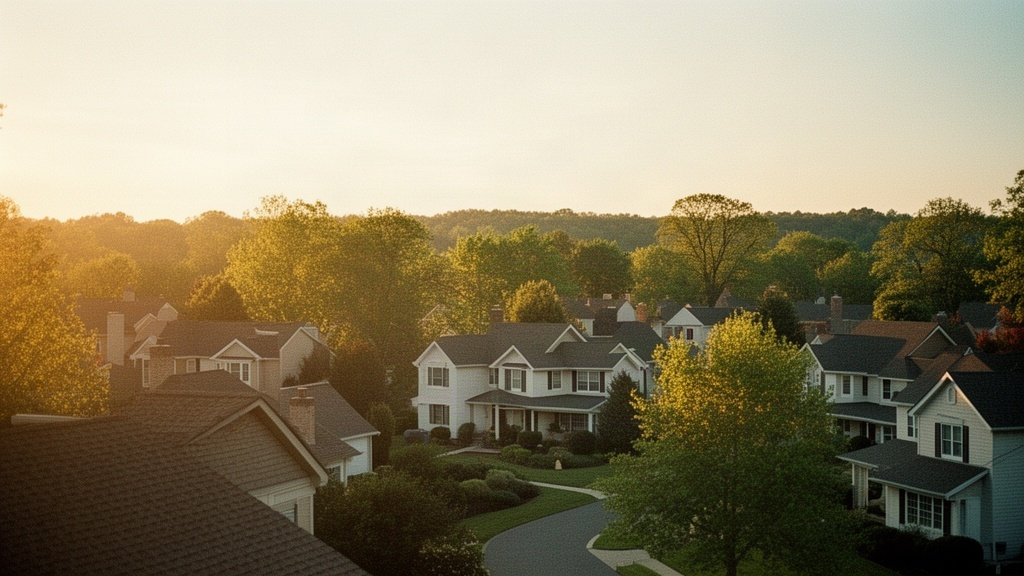
1. Where Home Prices Stand in O'Fallon, Illinois in 2026
Home prices in O'Fallon have climbed steadily through 2026, with the median sale price sitting in the low-to-mid $280,000s as of September 2026. That figure represents a meaningful step up from the mid-$250,000 range that characterized much of late 2024 and early 2025, driven by persistent buyer demand and a housing supply that has not kept pace with the number of people looking to put down roots in St. Clair County.
Median Sale Price and Price Per Square Foot
Price per square foot in O'Fallon currently runs roughly $145 to $175 depending on the subdivision, the age of the home, and the level of finish inside. Entry-level homes, typically ranches and smaller two-stories built in the 1980s and 1990s on the east side of town, are trading in the $190,000 to $240,000 range. Mid-range homes, which make up the largest share of O'Fallon's housing stock, cluster between $260,000 and $360,000. Larger homes in newer subdivisions or on bigger lots regularly push past $400,000.
For broader context on how O'Fallon fits into the statewide picture, Illinois REALTORS market statistics publish monthly data on median prices, sales volume, and days on market across Illinois counties, including St. Clair County. Checking that data alongside local O'Fallon figures gives you a complete view of where this market sits relative to the rest of the state.
How 2026 Compares to 2025
Year-over-year appreciation in O'Fallon has been running in the 6 to 9 percent range through most of 2026, which is above the national average but consistent with the broader Southwest Illinois corridor that includes Shiloh, Belleville, and Swansea. The appreciation has not been uniform across all price points. Homes priced between $250,000 and $320,000 have seen the steepest gains because that bracket attracts the widest pool of buyers, including first-timers, military families from Scott Air Force Base, and relocators from the St. Louis metro area.
Homes above $450,000 have appreciated more slowly, largely because that segment is more sensitive to mortgage rate fluctuations. With rates still elevated compared to the historic lows of 2020 and 2021, buyers at higher price points are more deliberate, and sellers in that range are sometimes adjusting expectations mid-listing.
2. Inventory and Market Pace: What the Numbers Tell You
O'Fallon is currently operating as a seller's market, though the balance has shifted slightly toward buyers compared to the extreme shortage of 2022 and early 2023. Active listings have increased modestly through 2026, but the number of buyers in the market has grown at a similar pace, keeping competition real for well-priced homes.
Days on Market and List-to-Sale Ratios
Homes in O'Fallon that are priced correctly are going under contract in roughly 10 to 21 days as of September 2026. That is a wider range than it sounds: a move-in-ready ranch on a cul-de-sac in a well-known subdivision might see multiple offers in a weekend, while a dated two-story that needs a roof or HVAC work can sit for four to six weeks even in this market. The condition and price point of the specific home matters more than the overall market temperature.
List-to-sale price ratios in O'Fallon are hovering around 98 to 101 percent for well-prepared listings. That means sellers who price accurately are getting very close to their asking price, and some are still receiving offers above list on competitively priced properties. Overpriced homes, however, are sitting longer and eventually selling below their original ask, which pulls their ratio down considerably. Pricing strategy is everything in this market. You can read more about how an agent's track record on list-to-sale ratios affects your outcome in this breakdown of who gets sellers the highest sale price in O'Fallon.
What Low Inventory Means for Buyers and Sellers
Months of supply in O'Fallon currently sits around 1.5 to 2.5 months depending on price tier, well below the 5 to 6 months that would indicate a balanced market. For sellers, that means a genuine pricing advantage and less time sitting on the market. For buyers, it means being pre-approved and ready to move quickly is not optional; it is a baseline requirement. Buyers who have not locked in financing before touring homes are consistently losing out to buyers who have.
3. O'Fallon Neighborhoods: Price Ranges and Housing Stock
O'Fallon spans a wide geographic footprint, and the housing stock, lot sizes, and price ranges vary significantly from one part of town to another. Understanding which areas offer which type of home helps buyers focus their search and helps sellers understand who is likely to make an offer on their specific property. For a deeper look at how individual subdivisions compare, the O'Fallon neighborhood guide on this site covers the physical characteristics of each major area in detail.
Established Subdivisions on the East Side
The eastern portions of O'Fallon, closer to the Belleville border and the older sections of town near downtown O'Fallon, contain the city's most established neighborhoods. Homes here were built primarily between the 1960s and early 1990s. You will find brick ranches, split-levels, and traditional two-stories on lots that typically run a quarter acre or more. Prices in these areas generally fall between $185,000 and $280,000, making them among the most accessible entry points in the city.
Streets near Milburn School Road, Central Park Drive, and the older sections around O'Fallon Township High School tend to have mature tree canopies, larger lots, and homes with original hardwood floors and brick construction that buyers specifically seek out. Many of these homes have been updated over the decades, so condition varies widely block by block. A thorough inspection is particularly important in this part of town.
Newer Construction Corridors Along Route 50 and Beyond
The western and northwestern sections of O'Fallon, particularly along and north of Route 50 toward the Shiloh border, have seen the most new development over the past decade. Subdivisions in this corridor feature homes built from the early 2000s through 2026, with open floor plans, attached two and three-car garages, and modern kitchens. Lot sizes here tend to be smaller than in the older east side, typically running from 8,000 to 12,000 square feet, but the homes themselves are larger, often 1,800 to 3,200 square feet of finished living space.
Price ranges in this corridor run from roughly $280,000 for a 2000s-era three-bedroom to well over $500,000 for a newer custom build with premium finishes. Subdivisions like Reflection Lake, with its community pond and walking trails, sit in this general zone and tend to command a premium because of the amenities and the newer construction. Buyers who want newer mechanicals and warranties on major systems should focus their search here.
Smaller Pockets and Infill Areas
O'Fallon also has several smaller, less-publicized pockets scattered throughout the city that offer good value for buyers willing to look beyond the well-known subdivision names. These include smaller cul-de-sac developments, townhome communities, and occasional infill construction on previously vacant lots. Townhomes in O'Fallon currently trade in the $160,000 to $230,000 range and represent one of the more accessible price points in the market, particularly for buyers who want low exterior maintenance.
O'Fallon's proximity to Scott Air Force Base also means a steady supply of buyers and sellers cycling through the market on military orders, which keeps transaction volume higher than you might expect for a city of roughly 32,000 people. That consistent demand from VA loan buyers has kept the lower end of the market particularly active throughout 2026.
4. Timing the O'Fallon Market: When to Buy and When to Sell in 2026
Timing matters in O'Fallon, but it is rarely the single deciding factor it is made out to be in national headlines. The local seasonal pattern is real and worth understanding, but personal financial readiness and the specific home you are buying or selling will always outweigh a few weeks of market timing.
The Seasonal Pattern in O'Fallon
O'Fallon follows a fairly predictable seasonal rhythm. Listing activity picks up in late February and March, peaks in April through June, and then moderates through the summer. Fall, specifically September through mid-November, brings a secondary wave of activity as buyers who missed out in spring return to the market and sellers who did not list earlier in the year decide to move before winter. This secondary fall market in O'Fallon is real and often underappreciated by sellers who assume spring is the only window.
December and January are the slowest months in O'Fallon by listing count and transaction volume. That slowdown does not mean prices drop significantly; it mostly means fewer homes trade hands. Buyers who search in winter often face less competition, but they also have fewer options to choose from.
What September 2026 Specifically Looks Like
Right now, in September 2026, O'Fallon is in the early stages of its fall market window. New listings that came on in August and early September are still drawing serious buyer attention. Sellers who list a well-prepared home this month can still expect strong showings and competitive offers, particularly in the $240,000 to $340,000 range where demand remains highest. For a more detailed look at whether right now is the right moment for your specific situation, the article on whether September 2026 is a good time to buy in O'Fallon goes deeper on the buyer side of that question.
Mortgage rates as of September 2026 remain a significant factor in affordability calculations. Rates in the mid-to-upper 6 percent range for a 30-year conventional loan mean that buyers are qualifying for less than they would have at 2021 rates, which is one reason why the sub-$300,000 segment remains the most competitive. Buyers stretching toward $400,000 and above have more negotiating room right now than they did two years ago.
5. What Buyers and Sellers Should Do Right Now
Understanding the O'Fallon, Illinois real estate market so far this year is only useful if it leads to a concrete next step. Here is what the current data suggests for each side of the transaction.
Advice for Buyers in the Current Market
Get pre-approved before you tour a single home. In O'Fallon's current market, a seller will not take an offer seriously without a pre-approval letter from a reputable lender, and in multiple-offer situations, a pre-approval from a local or regional lender often carries more weight than one from an online-only lender.
Know your non-negotiables before you start. In a market where good homes move in under two weeks, buyers who spend the first two showings figuring out what they want tend to miss the homes they eventually realize they should have offered on. Decide in advance whether you need a specific number of bedrooms, a minimum garage size, a particular school attendance zone, or proximity to Scott Air Force Base before you start actively searching.
Budget for closing costs and not just the down payment. In O'Fallon, closing costs for buyers typically run 2 to 3 percent of the purchase price on top of the down payment. On a $290,000 home, that is an additional $5,800 to $8,700 that needs to be liquid at closing. Many buyers are surprised by this figure if they have not planned for it in advance.
Research school attendance boundaries independently. If the school district matters to your decision, verify attendance boundaries directly with the relevant district before making an offer. Boundaries can change, and the subdivision name alone does not guarantee which school a home feeds into. The article on O'Fallon school districts and attendance boundaries explains exactly how to look that up using official district data.
Advice for Sellers in the Current Market
Price it right from day one. The O'Fallon market is active, but buyers are not uninformed. Homes that come on 8 to 10 percent above comparable sales are sitting, accumulating days on market, and eventually selling below what a correct initial price would have fetched. A well-supported list price generates more showings in the first week and more competitive offers overall.
Prepare the home before it hits the market. In O'Fallon's current market, buyers still have inspection contingencies and they are using them. Sellers who address obvious deferred maintenance items, fresh interior paint, and clean landscaping before listing consistently see faster offers and fewer post-inspection renegotiations. The cost of pre-listing preparation is almost always recovered in the final sale price.
Understand the full cost of selling before you commit to a number. Between agent commissions, transfer taxes, prorated property taxes, and any seller concessions negotiated at closing, sellers in O'Fallon typically net 7 to 9 percent less than the gross sale price. Running that math before listing prevents surprises at the closing table and helps you plan your next move accurately. For more detail on what drives the fastest and most profitable sales in this market, the guide on what consistently sells homes fastest in O'Fallon is worth reading before you list.
For a broader statewide perspective on how Illinois markets are performing in 2026, Norada Real Estate's Illinois housing market forecast provides useful context on price trends, inventory levels, and demand drivers across the state, which helps O'Fallon buyers and sellers understand whether local conditions are part of a broader pattern or specific to this market.
FAQ
What is the median home price in O'Fallon, Illinois as of September 2026?
The median sale price in O'Fallon is currently in the low-to-mid $280,000s as of September 2026, up from the mid-$250,000 range that defined much of late 2024 and early 2025. Year-over-year appreciation has been running between 6 and 9 percent through 2026, with the strongest gains concentrated in the $250,000 to $320,000 price bracket. Homes above $450,000 have appreciated more slowly due to sensitivity to mortgage rate levels. Price per square foot currently runs approximately $145 to $175 depending on the age, condition, and location of the home within the city.
How long are homes sitting on the market in O'Fallon, Illinois right now?
Correctly priced, move-in-ready homes in O'Fallon are going under contract in roughly 10 to 21 days as of September 2026. Homes that need significant work or that are priced above comparable sales can sit for four to six weeks or longer even in this active market. The list-to-sale price ratio for well-prepared listings is hovering around 98 to 101 percent, meaning sellers who price accurately are getting very close to their asking price. Overpriced homes eventually sell below their original list price, which underscores how important accurate pricing is from day one.
Is September 2026 a good time to sell a home in O'Fallon, Illinois?
September 2026 falls within O'Fallon's secondary fall market window, which runs from roughly September through mid-November and brings a genuine second wave of buyer activity after the spring peak. Sellers who list a well-prepared home this month can still expect strong showings and competitive offers, particularly in the $240,000 to $340,000 range. Inventory remains below the level that would indicate a balanced market, which keeps the advantage tilted toward sellers on correctly priced homes. Waiting until after Thanksgiving significantly reduces buyer traffic, so sellers who are ready should consider moving forward now rather than holding until spring.