← Back to Blog
Neighborhoods
O'Fallon Illinois Neighborhood Guide for Buyers
By Khushi Patel
September 7, 2026 · 10 min read
This O'Fallon Illinois neighborhood guide is built for anyone who wants to understand what this city actually looks like on the ground before making a move. O'Fallon spans more than 20 square miles in St. Clair County, and the housing options, price points, and community features vary considerably from one part of the city to another. Whether you are buying, selling, or relocating from out of state, knowing how the pieces fit together will save you time and help you make a more confident decision.
1. How O'Fallon Is Laid Out and Why It Matters
O'Fallon sits roughly 18 miles east of downtown St. Louis, straddling two major corridors: Illinois Route 50 running east to west, and Interstate 64 cutting through the northern portion of the city. Those two roads do more than move traffic. They effectively organize the city into distinct pockets of development, each with its own character in terms of lot size, home age, and proximity to retail.
The City's Geography at a Glance
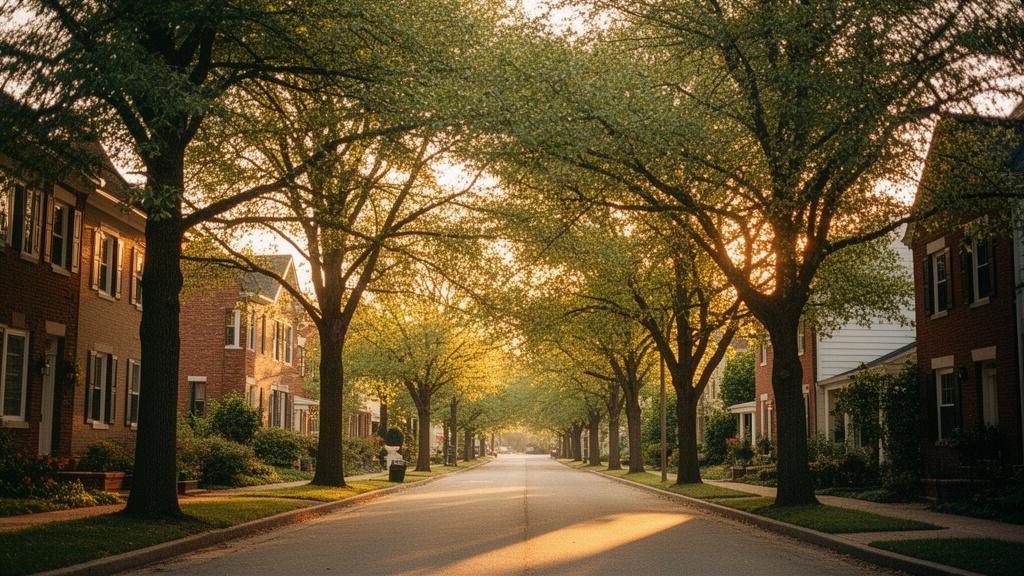
O'Fallon's incorporated boundaries extend into areas that feel quite different from one another. The areas closest to Route 50 and the older downtown core tend to have smaller lots, ranch-style homes built in the 1960s through 1980s, and mature tree canopies. Move north toward I-64 and the Green Mount Road corridor, and the landscape shifts to larger subdivisions platted in the 1990s through 2010s, with two-story colonials, brick-front homes, and cul-de-sac streets. The far eastern and western edges of the city are still seeing new residential development as of September 2026.
How Streets and Corridors Shape the Neighborhoods
Scott-Troy Road and Green Mount Road function as north-south spines connecting the two main east-west corridors. Many of O'Fallon's most established subdivisions sit between those roads, within a few minutes of the city's main commercial strip along Route 50. Hartmann Estates, Reflection Lake, and the neighborhoods surrounding Milburn School Road represent some of the more recognizable named communities. Each has its own homeowner association structure, deed restrictions, and fee schedules, so it is worth confirming those details before you write an offer.
If you want a deeper look at how specific named subdivisions compare, the full O'Fallon neighborhoods breakdown on this site goes through each community's features, typical lot sizes, and what buyers generally encounter during the purchase process.
2. Housing Stock and Price Ranges Across O'Fallon
O'Fallon's housing inventory in September 2026 spans a wide range, from entry-level ranch homes priced in the low $200,000s to custom-built properties in gated or amenity-rich communities that list above $600,000. Understanding which price tier corresponds to which part of the city helps buyers set realistic expectations and helps sellers understand where their home sits in the competitive landscape.
Established Subdivisions and Older Homes
Homes built between roughly 1960 and 1990 make up a meaningful share of O'Fallon's inventory. These properties are typically ranches or split-levels, with lot sizes ranging from 7,000 to 12,000 square feet. Many sit on quiet interior streets in the central and southern portions of the city. Finished basements, updated kitchens, and mature landscaping are common selling points in this segment. Buyers in this tier often find homes in the $210,000 to $320,000 range, depending on condition, square footage, and how recently the mechanicals have been updated.
These older neighborhoods often appeal to buyers who want a larger lot without the premium attached to newer construction. Sellers in this segment should pay close attention to condition-based pricing, because buyers comparing an updated 1975 ranch to a 2005 colonial will weigh the age difference carefully.
Newer Construction and Master-Planned Communities
The subdivisions platted from the mid-1990s onward tend to feature two-story homes with attached two-car garages, open floor plans, and community amenities such as walking trails, ponds, and neighborhood pools. Reflection Lake is one of the most recognized communities in this category, with its namesake lake, walking paths, and a mix of home sizes that range from around 1,600 to over 3,000 square feet. Communities like this typically carry HOA fees that cover common-area maintenance and amenity upkeep, so buyers should factor those monthly costs into their budget calculations.
If you are specifically considering Reflection Lake, there is a dedicated guide to buying a home in Reflection Lake that covers the purchase process, typical costs, and what to expect during your search in that community.
Price Ranges to Expect in September 2026
As of September 2026, the O'Fallon market is showing median sale prices in the mid to upper $300,000s for resale homes, with newer construction commanding premiums that push many listings above $400,000. Townhomes and attached properties, which are less common in O'Fallon than single-family detached homes, generally list in the $180,000 to $260,000 range. The gap between list price and final sale price has narrowed compared to prior years, meaning well-priced homes are selling close to or at asking. For a detailed breakdown of what prices are doing right now, the current O'Fallon home price update has specific figures and trend context.
3. Amenities, Parks, and Daily Life in O'Fallon
One of the most practical questions buyers ask is what daily life actually looks like in a given neighborhood. In O'Fallon, the answer depends partly on which part of the city you land in, but the city as a whole has built out a strong base of parks, retail, and recreation over the past two decades.
Green Space and Recreation
O'Fallon's park system includes more than 30 parks and open spaces maintained by the city and its park district. Milburn Park on the north side of the city is one of the larger facilities, with sports fields, a dog park, a splash pad, and a community center. Renaud Spirit Center on Renaud Drive is the city's main indoor recreation facility, offering a fitness center, aquatic area, and multi-use courts. For buyers who prioritize walkability to outdoor space, neighborhoods near the Kaskaskia Regional Port District greenway and the trail system connecting several subdivisions offer direct access without needing to drive.
The YMCA on Boul Avenue provides another indoor option for fitness and programming. Several subdivisions also have their own private amenities: Reflection Lake's walking path around the pond is one example, and Hartmann Estates has its own set of community features worth reviewing if you are comparing those two areas.
Shopping, Dining, and Everyday Conveniences
Route 50 through O'Fallon carries the bulk of the city's retail corridor, with grocery options including Schnucks, Aldi, and Walmart Supercenter all within a short drive of most neighborhoods. The Regency Park shopping center and the commercial stretch near Greenmount Road add additional dining and service options. O'Fallon's downtown area near First Street has a smaller-scale commercial district with locally owned restaurants and businesses, which gives the city a counterpoint to its larger retail corridors.
Buyers coming from more urban areas sometimes ask whether O'Fallon has enough walkable retail. The honest answer is that most daily errands require a car, though driving distances within the city are short. The longest cross-city drive, from the far eastern edge near Lebanon Road to the western edge near Rieder Road, takes about 12 to 15 minutes under normal conditions.
Commute and Transportation Context
Most residents commute by car, with I-64 being the primary route for those working in St. Louis or at Scott Air Force Base, which borders O'Fallon to the south. The drive from central O'Fallon to downtown St. Louis runs 25 to 35 minutes in off-peak conditions and can stretch to 45 to 55 minutes during morning rush hour. Metro-East Transit bus service connects parts of O'Fallon to the Swansea MetroLink station, from which riders can reach downtown St. Louis by light rail. For a full breakdown of commute options and realistic timing, the dedicated article on commuting from O'Fallon to downtown St. Louis covers each route in detail.
4. What to Research Before You Commit to a Neighborhood
Choosing a specific neighborhood in O'Fallon involves more than comparing square footage and list prices. There are practical questions about schools, taxes, HOA obligations, and future development that can meaningfully affect your experience as a homeowner. Knowing where to look for answers before you make an offer puts you in a stronger position.
Schools and Education Resources
O'Fallon sits within multiple school district boundaries, and a home's specific address determines which district it falls under. O'Fallon Township High School District 203 serves the high school level for most of the city, while elementary and middle school attendance depends on whether a home falls within O'Fallon Community Consolidated School District 90 or one of the neighboring districts. Because district boundaries do not always align with subdivision boundaries, buyers should verify the specific attendance zone for any property they are seriously considering. The Illinois State Board of Education website at isbe.net publishes district-level data, report cards, and enrollment information that buyers can review directly.
Decisions about schools are personal and depend on each family's priorities. The National Association of Realtors offers practical guidance on how to handle questions about schools and neighborhoods, including which third-party sources give buyers the most objective information when making this kind of evaluation.
Questions Worth Asking Before You Make an Offer
Beyond schools, there are several practical questions that apply to any neighborhood in this O'Fallon Illinois neighborhood guide. Property taxes in St. Clair County vary by township and special taxing district, so two homes with similar list prices can carry meaningfully different annual tax bills. The O'Fallon property tax breakdown on this site walks through how the rate is calculated and what a buyer on a $350,000 home should expect to pay.
HOA fees are another variable that buyers sometimes underestimate. In O'Fallon, HOA fees in amenity-rich communities can range from $30 per month on the low end to over $150 per month in communities with pools, clubhouses, and maintained common areas. Always request the HOA's current budget, reserve fund statement, and any pending special assessments before closing. If the reserve fund is underfunded relative to the age of the community's shared infrastructure, that is worth factoring into your offer.
Future development near a property is another consideration. The City of O'Fallon publishes its comprehensive plan and zoning map through the city's planning and development department. Checking whether adjacent parcels are zoned for commercial, multi-family, or additional residential use can tell you a lot about what the area might look like in five to ten years.
For a broader checklist of what to investigate before committing to a neighborhood, the National Association of Realtors publishes a useful set of questions to ask about any neighborhood that covers utilities, noise, traffic patterns, and more. It is a practical reference to use alongside any local research you do.
5. What the Current Market Means for Buyers and Sellers in O'Fallon
In September 2026, O'Fallon's real estate market continues to favor sellers in the most in-demand neighborhoods while offering buyers more negotiating room in segments with higher inventory. Understanding those dynamics at the neighborhood level, not just the city level, is where local knowledge makes the biggest difference.
How Neighborhood Location Affects Days on Market
Homes in established, amenity-rich subdivisions with well-maintained streetscapes and strong resale histories tend to move faster than homes in less-defined areas of the city. In O'Fallon, properties in communities like Reflection Lake and Hartmann Estates have historically seen shorter days on market compared to isolated listings on larger rural parcels at the city's edges. That pattern has held through 2026, with well-priced homes in desirable subdivisions going under contract within two to three weeks of listing. The article on how long it takes to sell a home in O'Fallon gives current figures and context for sellers trying to plan their timeline.
Pricing Signals Worth Watching
Sellers in O'Fallon who price accurately from the start are seeing stronger results than those who test the market with an aspirational number and reduce later. Price reductions signal hesitation to buyers and can invite lower offers, even when the home itself is in excellent condition. In a market where buyers are comparing multiple options across several Metro-East communities, including Shiloh, Belleville, and Swansea, a clean pricing strategy in O'Fallon matters more than it did when inventory was extremely tight.
New construction is also a factor buyers and sellers need to account for. Several active subdivisions in O'Fallon are delivering new homes in the $380,000 to $550,000 range, which creates direct competition for resale homes in that price band. Sellers of resale homes need to be clear about what they offer that new construction does not: established landscaping, larger lots, proximity to mature amenities, and in many cases, more square footage per dollar.
For sellers who want to understand what consistently moves homes quickly in this market, the guide on what sells homes fastest in O'Fallon covers the specific features and pricing strategies that have made the biggest difference in 2026.
FAQ
What are the main neighborhoods in O'Fallon, Illinois?
O'Fallon has a mix of older established subdivisions built from the 1960s through the 1980s, mid-generation communities platted in the 1990s and 2000s, and newer construction areas still being developed as of September 2026. Named communities that buyers frequently ask about include Reflection Lake, Hartmann Estates, and the neighborhoods along Milburn School Road and Green Mount Road. Each community has its own lot sizes, HOA structure, and price range, so comparing them side by side requires looking at specific addresses rather than just general area descriptions. A local agent with current MLS access can pull active and recently sold data for any specific subdivision you are considering.
How do I find out which school district a home in O'Fallon falls under?
School district boundaries in O'Fallon do not always follow subdivision lines, so the only reliable way to confirm a home's district is to check the specific address against the district's official boundary maps. O'Fallon Township High School District 203 covers most of the city at the high school level, but elementary and middle school assignments depend on whether the property is within O'Fallon CCSD 90 or an adjacent district. The Illinois State Board of Education website at isbe.net publishes enrollment data, attendance boundaries, and school report cards that buyers can review independently. Your real estate agent can also help you confirm district placement during the search process.
Is O'Fallon, Illinois a good place to buy a home right now?
O'Fallon offers a range of housing options at price points that remain more accessible than many comparable suburban markets near St. Louis, and the city has continued to invest in parks, recreation, and commercial infrastructure through 2026. The market in September 2026 is active, with well-priced homes in established subdivisions moving relatively quickly and new construction adding options at higher price points. Whether it is the right fit for your specific situation depends on your budget, commute needs, and the features you prioritize in a home and neighborhood. Reviewing current listings, visiting neighborhoods in person, and speaking with a local agent who knows the O'Fallon market in detail are the most reliable ways to answer that question for yourself.