
← Back to Blog
Market Trends
What New Housing Developments and Construction Projects Are Happening in Spokane in 2026
By Kimberly Morales Hernandez
CENTURY 21 North Homes Realty
September 28, 2026 · 11 min read
If you have been watching the housing market across Washington state, you may be wondering what new housing developments and construction projects are happening in Spokane in 2026. Spokane is seeing a notable wave of residential construction this year, from dense downtown apartment towers to smaller infill projects on the edges of established neighborhoods. This article breaks down what is being built, where, and what it all means if you are buying, selling, or relocating anywhere in the region.
1. The Big Picture: Spokane's 2026 Construction Landscape
Spokane's construction activity in 2026 is holding steady at levels that match 2025. That might sound modest, but 2025 was itself a strong year for residential permits and project starts in the city. According to the Spokane Journal of Business, the expectation heading into this year was that construction would stabilize rather than contract, which is exactly what has happened. Builders are not pulling back; they are finishing projects started in 2024 and 2025 while breaking ground on new ones.
How Active Is the Market Right Now
As of September 2026, Spokane remains one of the more active construction markets in the Pacific Northwest outside of the major Puget Sound metro. The city's combination of relatively lower land costs compared to the Seattle area, a growing population, and a housing shortage that built up over several years has kept builders motivated. Residential permitting has stayed consistent with prior-year volumes, and several large multi-family projects that were announced in 2024 are now in active construction or nearing completion.
The Spokane metro area covers a significant geography, and new housing development is not concentrated in one spot. Projects are spread across the downtown core, the South Hill, the North Side, and in surrounding communities like Spokane Valley and Liberty Lake. Each of these areas has different housing stock, lot sizes, price points, and proximity to employers and transportation corridors, so where new supply lands matters a great deal for how the overall market absorbs it.
What Is Driving New Construction
Several intersecting forces are behind the wave of new housing development and construction projects happening in Spokane in 2026. Population growth continues to push demand upward. Spokane has attracted residents from higher-cost metros in Washington and Oregon who are looking for more purchasing power, and that migration trend has not reversed. At the same time, the existing housing stock in Spokane skews older: a significant portion of the single-family homes in established neighborhoods were built between the 1920s and the 1970s, which creates both renovation opportunities and a clear gap that new construction can fill.
Interest rates have moderated somewhat compared to the peak years, which has helped both buyer demand and developer financing. Construction costs remain elevated relative to pre-2020 levels, but Spokane's lower land acquisition costs compared to the Puget Sound region give developers enough margin to keep projects viable. The city has also made regulatory adjustments in recent years to encourage infill and higher-density housing, which is reflected in the number of multi-family and mixed-use projects now underway.
2. Downtown Spokane: Over 1,000 New Units in the Core
The most concentrated burst of new housing in Spokane is happening downtown. The Spokane Business Association has announced that more than 1,000 new housing units are slated for the downtown core, representing one of the largest residential expansions the city center has seen in decades. This is not a single project but a collection of developments that together are reshaping what living downtown in Spokane looks like.
What the Downtown Boom Looks Like
Downtown Spokane's residential growth is concentrated in multi-story apartment and condominium buildings, many of which are positioned near the Spokane River corridor, the convention district, and the arts and culture blocks along West Main and Riverside Avenue. These projects are targeting renters and buyers who want walkable access to the restaurants, shops, and employers clustered in the core. The Spokane Arena, the Fox Theater, and Riverfront Park are all within walking distance of the new development zones, which adds to the appeal of the location for people who want an urban lifestyle without Seattle-level price tags.
According to reporting by KREM, the Spokane Business Association's announcement of 1,000 new downtown units signals a deliberate push to increase residential density in the city center. The projects range from adaptive reuse of older commercial buildings to ground-up construction on surface parking lots and underutilized parcels. Spokane's downtown has historically had a lower residential population than comparable mid-size cities, and these projects are designed to change that dynamic.
Mixed-Use and Apartment Development
Several of the downtown projects are mixed-use, meaning they combine ground-floor retail or restaurant space with residential units above. This format has become the preferred model for urban infill in mid-size cities because it activates street-level activity while adding housing supply. For buyers or renters interested in a unit in one of these buildings, it is worth noting that ground-floor commercial tenants can affect noise levels and parking availability, so doing a thorough walkthrough at different times of day is a practical step before committing.
Apartment rents in new downtown Spokane buildings currently range from roughly $1,200 per month for a studio to $2,200 or more for a two-bedroom unit in a newer building with amenities. Condo pricing in the downtown core varies widely depending on the project and floor plan, but new construction condos have been listing in the $275,000 to $500,000 range depending on size and finish level. These figures are substantially below comparable new construction in the Seattle metro, which is part of why Spokane's downtown is attracting buyers who have been priced out of Puget Sound markets.
3. Emerging Projects: Tiny Homes and Alternative Housing
Beyond the large apartment towers, Spokane is also seeing smaller-scale and alternative housing projects take shape in 2026. One of the more closely watched proposals is a tiny home village that was announced earlier this year. These projects represent a different approach to adding housing supply: smaller footprints, lower per-unit costs, and formats that can be deployed on parcels too small or awkwardly shaped for conventional apartment construction.
The Tiny Home Village Proposal
The Spokesman-Review reported in March 2026 that a tiny home village is slated for Spokane, adding to the city's growing inventory of non-traditional housing formats. Tiny home villages typically consist of individual detached units ranging from roughly 200 to 500 square feet, arranged on a shared parcel with communal amenities like laundry facilities, outdoor gathering space, and sometimes a shared kitchen or lounge building.
For buyers, a tiny home village raises specific due diligence questions that differ from a conventional purchase. Ownership structure matters: some tiny home communities operate as land-lease arrangements where you own the unit but not the ground beneath it, while others are structured as condominiums or cooperatives with a share of the underlying land. Financing for tiny homes can also differ from a standard mortgage, so speaking with a lender early in the process is essential if this type of housing interests you.
Why Alternative Housing Matters for Buyers
The growth of alternative housing formats in Spokane reflects a broader shift in how Washington cities are approaching the supply shortage. Tiny homes, accessory dwelling units, and cottage clusters are all tools that cities are using to add units without the capital intensity of a full apartment tower. For buyers on a tighter budget, these formats can represent an entry point into homeownership that would otherwise be out of reach. For sellers, the proliferation of new supply in any format affects how quickly existing homes move and at what price, which is worth factoring into timing decisions.
Spokane's regulatory environment has become more permissive toward accessory dwelling units in recent years, which means many single-family lots in established neighborhoods now allow a second unit to be built. This is creating a new category of buyer: people who purchase a single-family home with the intent to build an ADU in the backyard, either for rental income or for a family member. If you are considering this approach, it is worth confirming zoning and utility capacity for any specific parcel before making an offer.
4. Spokane's Construction Trends and What They Mean for Buyers and Sellers Region-Wide
New housing developments and construction projects in Spokane in 2026 do not exist in isolation from the rest of Washington's housing market. If you are buying or selling in western Washington, including in the Lynnwood area, understanding what is happening in Spokane gives you a fuller picture of where the state's housing supply is growing and why some buyers are choosing to relocate east of the Cascades.
Inventory and Pricing Implications
When new supply enters a market at scale, it generally creates more options for buyers and puts some pressure on sellers to price competitively. In Spokane, the 1,000-plus downtown units represent a meaningful addition to the city's total housing stock. As those units come online through the remainder of 2026 and into 2027, buyers in the downtown core will have more choices than they did a year ago. Sellers of existing condos and townhomes in the same geography will be competing with brand-new product, which typically means buyers will expect either a price concession or a credit for updates on older units.
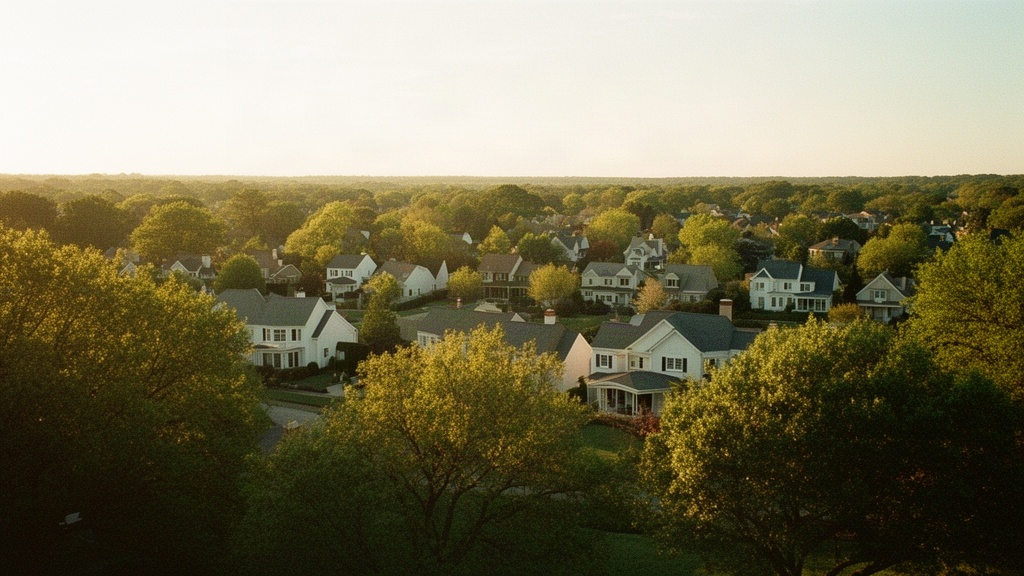
Outside the downtown core, the single-family market in Spokane's established neighborhoods remains tighter on supply. The South Hill's bungalows and craftsman homes from the early twentieth century, the mid-century ranches on the North Side, and the larger lots in areas like Mead and Deer Park are not being replicated by new construction at any significant volume. New single-family construction is happening primarily on the suburban fringe, in subdivisions in Spokane Valley, Liberty Lake, and the areas north of the city toward Colbert and Elk. Those homes tend to sit on smaller lots with newer infrastructure but longer drives to downtown employment centers.
How Lynnwood Buyers Should Think About This
For buyers and sellers based in Lynnwood, Washington, the Spokane construction story matters in a few specific ways. First, some Lynnwood-area residents are actively considering a move to Spokane as a way to access more purchasing power. The median home price in Spokane remains well below what buyers encounter in Snohomish County, and the new supply coming online in 2026 means there are more options at various price points than there were a few years ago. If you are comparing markets, it is worth reading about closing costs for Washington state home buyers, since those costs apply whether you are buying in Lynnwood or Spokane.
Second, understanding Spokane's construction activity helps Lynnwood sellers contextualize their own market. When buyers have more options statewide, including in lower-cost markets, it can affect how urgently they feel they need to act in any one location. Lynnwood's proximity to the light rail system, its position between Seattle and Everett, and its access to employment corridors along I-5 and Highway 99 are all factors that differentiate it from Spokane regardless of what is being built there. Buyers weighing the two markets are making fundamentally different lifestyle and commute trade-offs, not just price comparisons.
Lynnwood's own housing stock includes a mix of mid-century single-family homes, newer townhome developments along the Highway 99 corridor, and condominium buildings that have been updated or built within the last decade. The Alderwood area, the neighborhoods near Lynnwood City Center, and the streets feeding into Scriber Lake Park represent different price tiers and lot configurations. If you are relocating to the area and want to understand how Lynnwood compares to other Washington markets, it helps to have someone who knows the specific streets and submarkets, not just the county-level data.
If you are also weighing property tax obligations as part of your relocation math, the guide on property taxes on an $800,000 home in King County gives a concrete breakdown that is useful for comparing the cost of ownership across different parts of the state.
5. Key Takeaways: What the Data Says About Spokane Construction in 2026
Pulling together what is known about new housing developments and construction projects happening in Spokane in 2026 produces a clear picture. The market is active, supply is growing across multiple formats, and the projects underway span the full range from luxury downtown apartments to entry-level tiny homes. Here is a summary of the most important data points and trends as of September 2026.
- Overall construction volume: 2026 activity is on pace to match 2025, one of Spokane's stronger recent years for residential permits and project starts.
- Downtown unit count: More than 1,000 new residential units are announced or under construction in the downtown core, spread across multiple projects and developers.
- Project formats: New supply includes multi-story apartment towers, mixed-use buildings with ground-floor retail, adaptive reuse of commercial buildings, and a proposed tiny home village.
- New construction condo pricing: Ranges from approximately $275,000 to $500,000 in the downtown core depending on size and finish level, as of September 2026.
- Suburban single-family growth: New single-family subdivisions are concentrated in Spokane Valley, Liberty Lake, and northern areas like Colbert and Elk, generally on smaller lots with newer infrastructure.
- ADU permitting: Spokane's updated zoning rules allow ADUs on many single-family lots, creating a secondary layer of new supply in established neighborhoods.
- Demand driver: Migration from higher-cost western Washington markets continues to support demand in Spokane, keeping absorption rates healthy even as new supply arrives.
For anyone researching what new housing developments and construction projects are happening in Spokane in 2026, the overall conclusion is that the city is adding supply across multiple price points and formats simultaneously. That is a healthier dynamic than a market where all new construction is concentrated at one price tier. Whether you are a first-time buyer looking at a tiny home, a relocating professional considering a downtown condo, or a move-up buyer evaluating a new suburban single-family home, there are more options in Spokane right now than there were two or three years ago.
If you are evaluating Washington state broadly and want to understand how different markets compare, the guide on what makes a good place to live in Washington walks through the factors worth researching before committing to any specific market or neighborhood.
FAQ
How many new housing units are being built in downtown Spokane in 2026?
The Spokane Business Association has announced more than 1,000 new residential units slated for the downtown core as part of what local media have called a 'boomtown' expansion. These units span multiple projects and developers, ranging from ground-up apartment towers to adaptive reuse of existing commercial buildings. The projects are distributed across the downtown grid, with concentrations near the Spokane River corridor and the arts and entertainment blocks. As of September 2026, many of these projects are in active construction or in the final permitting stages. The full pipeline is expected to deliver units through 2026 and into 2027.
Is Spokane's construction activity in 2026 higher or lower than in recent years?
According to the Spokane Journal of Business, 2026 construction activity is expected to stabilize and match 2025 levels rather than decline or accelerate sharply. That means Spokane is sustaining one of its more active recent construction periods rather than experiencing a post-boom correction. The consistency is notable because many markets nationally saw permit volumes drop in 2024 and 2025 as interest rates rose and construction costs remained elevated. Spokane's lower land costs and steady population growth have helped keep its construction pipeline viable. The result is a market where new supply is arriving at a predictable pace rather than in boom-and-bust cycles.
What types of new housing are being built in Spokane in 2026, beyond traditional apartments?
Spokane's 2026 construction landscape includes several formats beyond conventional apartment towers. A tiny home village was announced in early 2026, as reported by the Spokesman-Review, adding a small-footprint option for buyers and renters who want lower per-unit costs. Accessory dwelling units are also proliferating across single-family neighborhoods now that Spokane's zoning rules have become more permissive toward them. Mixed-use buildings that combine ground-floor retail with residential units above are another active format, particularly in the downtown core. Adaptive reuse projects, where older commercial or industrial buildings are converted to residential use, round out the picture and are particularly common in the historic blocks near the city center.