← Back to Blog
Market Trends
What New Housing Developments and Construction Projects Are Happening in Tulsa in 2026
By Kimmie Martin
September 19, 2026 · 10 min read
Tulsa's construction landscape in 2026 is one of the most active it has been in years, with new housing developments and construction projects reshaping neighborhoods from downtown to North Tulsa and beyond. Whether you are buying, selling, or relocating, knowing where new inventory is coming from and what price points it targets helps you make smarter decisions in this market. This article breaks down the major projects underway right now, the funding behind them, and what it all means for buyers and sellers across Tulsa, Oklahoma.
1. The Big Picture: Tulsa's 2026 Construction Boom
Tulsa is seeing one of its most active construction cycles in over a decade. New housing developments and construction projects are happening across nearly every quadrant of the city in 2026, driven by a combination of private investment, public incentives, and a housing supply gap that has been building since before the pandemic. Permit filings in Tulsa County have climbed steadily through the first three quarters of 2026, with both single-family and multifamily starts outpacing 2025 totals.
Why Building Activity Is Up in 2026
Several forces are converging at once. Tulsa's population has grown steadily, fueled in part by remote workers relocating from higher-cost metros. The Tulsa Remote program, which offered cash grants to attract remote workers, drew thousands of new residents over its run and created lasting demand for housing in a city where land costs are still relatively low compared to Dallas, Denver, or Austin. Builders have responded by moving on lots and parcels that sat idle for years.
The city's geography also plays a role. Tulsa sits along the Arkansas River with the IDL (Inner Dispersal Loop) forming a natural downtown boundary, and the BA Expressway, Highway 169, and Highway 75 corridor creating clear growth arteries. Builders know where the infrastructure already exists, and new projects tend to cluster around those corridors.
The $47 Million Housing Impact Fund
One of the most significant drivers of new construction in Tulsa right now is a dedicated public funding mechanism. The City of Tulsa launched a $47 million Housing Impact Fund specifically designed to lower the financial barriers for developers building workforce and affordable housing. According to reporting on the fund's structure, the program offers low-interest loans and gap financing to projects that commit to keeping a portion of units accessible at below-market rents or sale prices. This is not a small pilot program; at $47 million it is one of the largest dedicated housing funds in Oklahoma history.
For buyers and sellers, this matters because it means new inventory is coming online in neighborhoods that have not seen significant construction in years. It also means some of that inventory carries income or purchase-price restrictions, which changes how you compete for it or price against it.
2. Downtown Tulsa: New Residential Projects Reshaping the Core
Downtown Tulsa is in the middle of a residential transformation. For most of the past century, the area inside the IDL was almost entirely commercial and office space. That is changing fast in 2026, with multiple mixed-use and residential-only projects either under construction or recently completed along the corridors connecting the BOK Center, the Gathering Place, and the Blue Dome District.
Mixed-Use Developments and Adaptive Reuse
A significant share of downtown's new housing is coming through adaptive reuse, converting older office towers and warehouses into residential units. Tulsa has a deep inventory of Art Deco-era commercial buildings, and several developers have secured historic tax credits to convert them into loft apartments and condominiums. The result is a housing product that does not look like anything being built in the suburbs: exposed brick, high ceilings, large industrial windows, and walkable access to restaurants along South Boston Avenue and East 1st Street.
New ground-up construction is also happening downtown, particularly near the Tulsa Arts District and along the riverfront. These projects tend to be four-to-six-story buildings with ground-floor retail and residential units above. The goal, as outlined in coverage of downtown housing demand, is to create enough residential density that downtown Tulsa can support the retail, dining, and services that make urban living practical rather than just aspirational.
Price Points and Unit Types Downtown
Downtown Tulsa's new residential inventory skews toward one- and two-bedroom units. Rental apartments in newly completed buildings are pricing in the $1,200 to $2,200 per month range depending on size and floor, while for-sale condominiums in adaptive reuse projects are listing in the $200,000 to $450,000 range as of September 2026. That is a meaningful premium over older downtown condos, but still well below comparable units in peer cities. Buyers considering downtown should understand that HOA fees in these buildings can run $300 to $600 per month given the shared amenities and building maintenance costs.
Parking is a practical consideration downtown. Some newer buildings include structured parking in the price; others do not. If you are evaluating a downtown unit, confirm whether parking is deeded or leased separately, because that affects both your monthly cost and your resale value.
3. North Tulsa: Infill Housing and Community Investment
North Tulsa is experiencing a wave of new construction unlike anything the area has seen in decades. Infill development, which places new homes on vacant lots within an existing neighborhood grid, is the dominant construction type here. The lots already have street access and utility connections, which lowers the infrastructure cost for builders and allows projects to move faster than greenfield suburban development.
What Is Being Built and Where
The George Kaiser Family Foundation, along with several nonprofit and private partners, has been a central force in North Tulsa's housing resurgence. New single-family homes have been completed and are under construction in neighborhoods north of Pine Street and along the Martin Luther King Jr. Boulevard corridor. These are not large tract homes; most are three-bedroom, two-bath houses on standard city lots, built to current energy codes with modern finishes. The GKFF has documented this work in detail, noting that the projects are designed to increase homeownership opportunities and stabilize blocks where vacant lots had accumulated over many years.
Affordability Questions in North Tulsa
New construction in North Tulsa is generating real conversation about who can access it. As reported in September 2026, some newly built homes in North Tulsa are listing at prices that exceed what longtime residents of the area can qualify for under conventional financing. This tension between investment and accessibility is not unique to Tulsa, but it is playing out in real time here. Buyers interested in North Tulsa should research whether specific projects carry any income-based purchase restrictions or down-payment assistance programs, because some do and some do not.
The Tulsa Housing Authority and the Oklahoma Housing Finance Agency both administer programs that can help buyers bridge the gap between new construction pricing and what they can qualify for independently. Asking your agent which programs apply to a specific address is worth doing before you write an offer.
4. Suburban and Outer-Ring Construction: Where the Volume Is
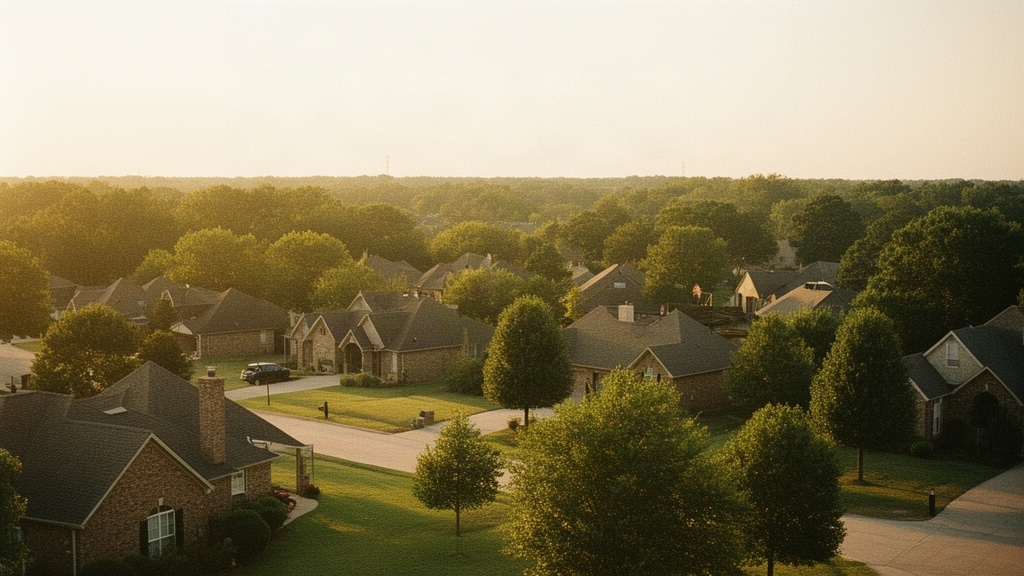
The highest raw volume of new housing construction in the Tulsa metro in 2026 is happening in the outer suburbs. Owasso to the north, Broken Arrow to the southeast, and Bixby to the south are all seeing active tract development with multiple subdivisions under construction simultaneously. These communities offer larger lots, newer infrastructure, and direct highway access to Tulsa's employment centers.
Owasso, Broken Arrow, and Bixby Activity
Owasso sits about 14 miles north of downtown Tulsa via Highway 169 and has been one of the fastest-growing cities in Oklahoma for several years running. New subdivision construction in Owasso in 2026 is concentrated in the areas east of 129th East Avenue, with builders including D.R. Horton, Simmons Homes, and several regional custom builders active on different price tiers. Lot sizes in new Owasso subdivisions typically run from 7,500 square feet to just over a quarter acre.
Broken Arrow, about 12 miles southeast of downtown via the BA Expressway, is also seeing strong new construction activity, particularly in the Rose District's surrounding neighborhoods and in the far southeast reaches of the city near Elm Place. Broken Arrow's street grid is more established than Owasso's, so new construction here often fills in between existing neighborhoods rather than extending the edge outward.
Bixby, roughly 13 miles south of downtown along Highway 75, has attracted significant builder attention because of its proximity to the River Spirit Casino corridor and the growing commercial development along Memorial Drive. New subdivisions in Bixby tend to sit on slightly larger lots than comparable Owasso or Broken Arrow communities, and the area has a mix of production homes and semi-custom builds.
What Suburban New Construction Costs in 2026
Pricing across the suburban new construction market in the Tulsa metro in September 2026 varies considerably by community and builder tier. Entry-level production homes from national builders are starting in the low $200,000s in Owasso and Broken Arrow for homes in the 1,400 to 1,700 square foot range. Mid-range builds with three to four bedrooms and two-car garages are pricing from $280,000 to $380,000. Semi-custom and custom homes on larger lots in Bixby and south Broken Arrow are running $400,000 to $600,000 and above depending on finishes and lot size.
Builder incentives are active right now in several suburban communities. Rate buydowns, closing cost contributions, and included appliance packages are all being offered by production builders trying to move spec inventory before year-end. These incentives can meaningfully reduce your effective cost, but they are typically tied to using the builder's preferred lender, which may or may not offer the best overall loan terms. Comparing the full loan picture, not just the incentive, is important.
5. What New Construction Means for Buyers and Sellers in Tulsa
The wave of new housing developments and construction projects happening in Tulsa in 2026 has real implications for anyone transacting in the market right now. Whether you are buying a resale home or selling one, the new inventory coming online affects your position. Understanding that relationship is part of navigating the Tulsa market effectively.
How New Inventory Affects Existing Home Prices
New construction adds supply, and supply competes with resale inventory. In neighborhoods where builders are active, sellers of existing homes sometimes need to price more carefully because buyers can compare their home directly against a new build with a warranty, modern finishes, and builder incentives. This is especially true in the $250,000 to $400,000 range in Owasso and Broken Arrow, where production builders are most active.
In downtown Tulsa and North Tulsa, the dynamic is different. New construction in those areas is adding product to neighborhoods where resale inventory has historically been thin, so new builds are expanding the buyer pool rather than directly competing with a large stock of existing homes. Sellers in those areas may actually benefit from increased buyer attention as new development makes the neighborhoods more visible.
If you are thinking about buying or selling a resale home in Tulsa and want to understand how nearby new construction affects your specific address, take a look at the broader context in the Tulsa buyer's guide for a grounding in how the overall market is structured.
Tips for Buying New Construction in Tulsa
Buying a newly built home in Tulsa is a different process than buying a resale, and a few practical points are worth knowing before you visit a model home.
First, the builder's sales agent represents the builder, not you. Having your own buyer's agent when purchasing new construction in Tulsa costs you nothing as a buyer (the builder pays the commission) and gives you an advocate who can review the purchase contract, flag upgrade costs that are inflated, and help you negotiate on items the builder does not advertise as negotiable.
Second, get an independent home inspection even on a brand-new build. Oklahoma's construction inspection process does not catch everything, and having a licensed inspector walk the home before your final walkthrough gives you documented leverage if something needs to be corrected before closing.
Third, understand the warranty terms before you sign. Most production builders in the Tulsa market offer a one-year workmanship warranty, a two-year systems warranty covering electrical and plumbing, and a ten-year structural warranty. These vary by builder and are not all created equal. Read the warranty document, not just the marketing summary.
Fourth, factor in what is not included in the base price. Landscaping, window coverings, and sometimes appliances are excluded from many base-price contracts. Upgrades at the design center can add $20,000 to $80,000 to the final cost depending on how many you select. Going in with a clear budget ceiling for upgrades protects you from a purchase price that ends up much higher than the advertised starting price.
FAQ
Where are the most active new housing construction projects in Tulsa right now?
As of September 2026, the highest volume of new housing construction in the Tulsa metro is concentrated in Owasso along the Highway 169 corridor, Broken Arrow in the southeast, and Bixby along Highway 75. Within the city of Tulsa itself, downtown adaptive reuse projects and North Tulsa infill construction are the most active areas. Each of these markets is producing different housing types at different price points, so the right area depends on what you are looking for in terms of home size, price, and proximity to work or amenities.
Does the City of Tulsa's $47 million Housing Impact Fund help home buyers directly?
The Housing Impact Fund is primarily structured to support developers by providing gap financing for projects that include affordable or workforce-priced units. Buyers benefit indirectly because the fund increases the supply of homes priced below market rate. Some projects funded through this mechanism may have income-based purchase restrictions or be paired with down-payment assistance programs administered by the Tulsa Housing Authority or the Oklahoma Housing Finance Agency. If you are interested in a specific new development, your agent can help you determine whether any buyer-facing assistance programs are attached to that project.
Should I buy a new construction home or a resale home in Tulsa in 2026?
There is no single right answer because the two options involve different tradeoffs. New construction in Tulsa in 2026 offers modern finishes, builder warranties, and in some cases attractive financing incentives, but it can also mean longer timelines, upgrade costs that inflate the final price, and locations on the suburban edge of the metro. Resale homes often offer established lots with mature trees, closer-in locations, and faster closings, but may need updates. The best choice depends on your timeline, budget, and priorities. Working with a knowledgeable local agent who understands both sides of the Tulsa market is the most reliable way to compare your specific options accurately.