
← Back to Blog
Market Trends
Keller, Texas Real Estate Market Guide: Prices, Neighborhoods and Timing for Buyers and Sellers
By Lauren DuBose, Licensed Real Estate Sales Agent
Premier Properties Realty Group · TX# 0756267
September 27, 2026 · 11 min read
Whether you are buying, selling, or relocating, having a clear Keller, Texas real estate market guide covering prices, neighborhoods, and timing is the difference between a confident decision and an expensive mistake. Keller sits in the heart of the DFW Metroplex, roughly 20 miles north of downtown Fort Worth along U.S. Highway 377, and its housing market moves differently from neighboring Southlake, Roanoke, and North Richland Hills. This guide breaks down what the market looks like right now in September 2026, what each pocket of the city offers, and when to act.
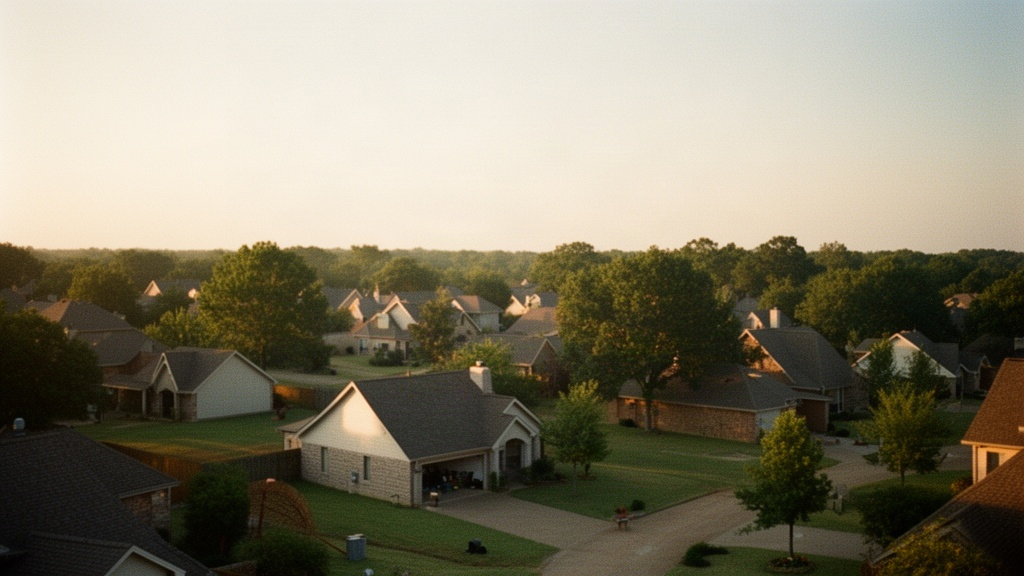
1. What the Keller, Texas Housing Market Looks Like Right Now
Keller's housing market in September 2026 is balanced, leaning slightly toward buyers compared to the tight seller conditions of 2021 through 2023. Inventory has expanded meaningfully over the past 18 months, giving buyers more choices while sellers still benefit from strong underlying demand tied to DFW's continued job growth and Keller's well-established infrastructure.
Current Median Prices and Inventory
As of September 2026, the median sold price for a single-family home in Keller sits in the mid-to-upper $500,000s, with meaningful variation depending on the specific street, lot size, and build year. Entry-level detached homes in older sections of the city, particularly those built in the late 1980s and 1990s, trade closer to the $380,000 to $450,000 range. Larger homes on half-acre or larger lots in newer planned communities regularly clear $700,000 and above.
You can track live price movement and active listing counts directly on Redfin's Keller housing market page, which updates frequently and shows median sale price, months of supply, and the share of homes selling above list price. Cross-referencing that data with what you see on the ground in specific subdivisions gives you a clearer picture than any single number.
Active inventory in Keller currently runs higher than it did in 2022 and 2023, when sub-30-day absorption was common across nearly every price tier. Today, buyers in the $500,000 to $650,000 range have a realistic selection of 15 to 30 active listings at any given time within Keller city limits, a meaningful change from the two or three choices that defined the peak seller market.
How Days on Market Have Shifted
Median days on market in Keller currently sits in the 30 to 50 day range for homes priced correctly at list. Homes that are overpriced by even five percent relative to recent comparables are sitting longer, often 60 to 90 days, before sellers adjust. That gap between well-priced and aspirationally priced homes is one of the defining features of this market phase.
For a deeper look at how these timelines compare to prior years, the article How Long Does It Usually Take to Sell a Home in Keller, Texas in the Current Market breaks down the data by price tier and season, which is useful context whether you are listing or writing an offer.
2. Keller Neighborhoods: What Each Area Offers Buyers
Keller covers roughly 24 square miles and contains a wide range of housing stock, from 1,400-square-foot ranch homes built in the 1970s near the original town center to 5,000-square-foot new construction on wooded lots near the Roanoke border. Understanding what each pocket of the city physically offers helps buyers narrow their search and helps sellers understand who is shopping in their price range.
Old Town Keller and the City Center Corridor
The area surrounding Keller Parkway and the original downtown grid is one of the most architecturally varied sections of the city. You will find 1970s and 1980s brick ranch homes on quarter-acre lots sitting alongside renovated craftsman-style properties and a handful of new infill builds. Lot sizes in this corridor tend to run 8,000 to 12,000 square feet, and many homes have mature trees that newer subdivisions simply cannot replicate.
Price points in Old Town Keller generally range from the high $300,000s to the low $500,000s for move-in-ready homes, though fully renovated properties with updated kitchens and primary suites push higher. The walkability to Keller Town Center, Bear Creek Park, and the Keller Farmers Market on Saturday mornings makes this corridor appealing to buyers who want proximity to daily conveniences without the HOA constraints common in newer subdivisions. For a detailed breakdown of this area, see the article on what the Old Town Keller area is like to live in and what types of homes are there.
Bear Creek and the Western Edges
The western portions of Keller, running toward the Denton County line and the Bear Creek greenbelt corridor, contain a mix of 1990s and early 2000s construction on larger lots. Homes here commonly sit on one-third to one-half acre, with four-bedroom floor plans in the 2,400 to 3,200 square foot range. Many backs up to the creek drainage system, which provides green space separation between properties.
Median prices in this corridor currently fall between $480,000 and $590,000 depending on lot position, finish level, and whether the home has been updated in the last five years. Commute times from this area to Alliance Town Center run about 10 minutes, and the drive to Fort Worth's downtown core is roughly 30 to 35 minutes via I-35W.
Tuscany and the Newer Planned Communities
Tuscany is one of Keller's more recognizable planned communities, featuring stone and brick exteriors, community ponds, and a consistent architectural palette that gives the neighborhood a cohesive look. Homes here were primarily built between 2004 and 2016, with square footage ranging from 2,800 to over 4,500. The community sits in the northeastern quadrant of Keller, with quick access to Keller Parkway and State Highway 114.
Current list prices in Tuscany typically start in the low $600,000s and move into the $800,000s for the larger two-story homes on premium lots. The Tuscany neighborhood real estate market guide covers street-level pricing data and what buyers should know before writing an offer in that community specifically.
Estates and Acreage Pockets Near Roanoke
Along the northern edge of Keller where the city transitions toward Roanoke and Trophy Club, you find some of the largest lots available within Keller city limits. Parcels of one to three acres are not unusual here, and homes often include features like detached garages, horse stalls, workshop buildings, or extended driveways that simply do not fit on standard subdivision lots. Build years in this area span from the mid-1980s through current new construction.
Prices in the acreage pockets start around $650,000 and extend well past $1.2 million for fully updated homes on two or more acres with custom finishes. Buyers considering new construction in this general corridor should also review the article on new construction subdivisions being built in Keller in 2026, since several builder communities are actively selling in this northern tier.
3. Pricing Trends: What Sellers Need to Know
Sellers in Keller right now are operating in a market that rewards precise pricing and penalizes optimism. The homes that are moving quickly in September 2026 are those priced within one to two percent of their nearest comparable sales. Homes that launch five to ten percent above market are generating fewer showings, sitting longer, and ultimately selling for less than they would have at the right price from day one.
Where Prices Have Moved Since Last Year
Year-over-year, Keller home values have held relatively stable, with modest appreciation in the two to four percent range across most price tiers when comparing September 2025 to September 2026. That is a significant deceleration from the 15 to 20 percent annual gains seen during 2021 and 2022, but it reflects a normalization rather than a decline. Sellers who purchased within the last three to five years have still accumulated substantial equity.
The article comparing whether the Keller, Texas housing market has gone up or down compared to last year goes deeper into the year-over-year data by property type and price band, which is useful context for any seller trying to set a realistic list price.
How to Read List Price vs. Sale Price Data
In Keller's current market, the list-to-sale price ratio sits around 97 to 99 percent for homes priced correctly at launch, meaning most sellers are receiving close to their asking price but not the above-list bidding wars that characterized 2022. Homes that require a price reduction before going under contract tend to close at 93 to 95 percent of original list price, a meaningful gap that underscores why starting at the right number matters more than ever.
Zillow's Keller market data page provides a publicly available look at median list and sale prices updated regularly, which sellers can use as a baseline before meeting with an agent for a formal comparative market analysis. You can access that data at Zillow's Keller, TX housing market page.
4. Timing the Keller Market as a Buyer or Seller
Timing matters in Keller, but the seasonal patterns here differ from what national real estate articles describe. DFW's warm climate and the heavy volume of corporate relocations into the region mean that Keller sees buyer activity in months that would be slow in northern markets. Understanding the local rhythm helps both buyers and sellers plan more effectively.
The Seasonal Rhythm in Keller
The busiest listing months in Keller run from late February through early June, when the largest pool of buyers is active and competition among sellers is highest. July and August slow down noticeably due to North Texas heat, though motivated buyers who need to close before a school year or job start date keep activity from disappearing entirely. September, which is where the market sits right now, marks the beginning of a secondary window that often runs through mid-November.
For sellers, listing in September through October means less competition from other sellers while still reaching the buyers who need to move before year-end. Corporate relocation buyers, in particular, are active in this window because many companies execute transfers in the fourth quarter. Keller's proximity to Alliance Airport, Toyota's North American headquarters in Plano, and the Charles Schwab campus in Westlake puts the city within a reasonable commute of several major employer hubs.
What Rising Inventory Means for Your Strategy
For buyers, higher inventory in September 2026 compared to 2022 or 2023 translates into real negotiating room on price, inspection repairs, and closing cost contributions. Buyers who were priced out or outbid during the peak seller market years now have the ability to negotiate contingencies, request repairs, and take a few days to think rather than writing offers sight unseen.
For sellers, rising inventory means presentation and pricing discipline are non-negotiable. A home that is clean, well-staged, and priced at market will still sell in a reasonable timeframe. A home that is cluttered, deferred on maintenance, and priced above comparable sales will sit. The gap between those two outcomes in Keller right now can be 30 to 60 additional days on market and a final sale price that is 20,000 to 40,000 dollars lower than what a well-prepared launch would have produced.
Sellers who want a detailed breakdown of how to position a home for the fastest possible sale should read the article on pricing, timeline, and what to expect when selling a home in Keller, Texas, which covers pre-listing preparation, pricing strategy, and the showing process in detail.
5. What Relocating Buyers Should Know Before Moving to Keller
Keller attracts a significant number of buyers relocating from other states, particularly California, the Pacific Northwest, and the Northeast, drawn by Texas's lack of state income tax, lower overall cost of living compared to coastal metros, and the DFW job market. For out-of-state buyers, Keller's position within Tarrant County places it inside a different tax jurisdiction than Collin County cities like Frisco or McKinney, which affects property tax rates and should be factored into monthly payment calculations.
Property Taxes and Cost of Ownership
Keller homeowners pay property taxes to multiple taxing entities: Tarrant County, the City of Keller, and the Keller Independent School District, among others. The combined effective rate in Keller typically falls in the 2.1 to 2.4 percent range of assessed value, which on a $550,000 home translates to roughly $11,500 to $13,200 per year in property taxes. Buyers relocating from states with lower property tax rates should budget for this carefully, as it represents a meaningful addition to the monthly cost of ownership beyond the mortgage payment.
Commute Geography and Access Points
Keller sits at the intersection of U.S. Highway 377, State Highway 170, and State Highway 114, giving residents multiple route options depending on their destination. The drive to Alliance Town Center, which anchors a large employment and retail corridor, runs 10 to 15 minutes from most of Keller. Fort Worth's downtown is approximately 25 to 35 minutes depending on traffic and the specific route. Dallas's Uptown and downtown districts are 40 to 55 minutes via SH-114 or I-35W.
Buyers who want a broader orientation to what Keller offers before diving into specific neighborhoods should read the full relocating to Keller, Texas guide covering neighborhoods, costs, and timelines, which addresses the relocation process from an out-of-state buyer's perspective.
Parks, Trails, and Physical Amenities
Keller maintains over 700 acres of parkland and more than 30 miles of hike and bike trails that connect many of the city's neighborhoods. Bear Creek Park on Bear Creek Parkway is the largest, offering athletic fields, a splash pad, a fishing pond, and a network of paved trails. Keller Sports Park near the northern edge of the city hosts organized athletic leagues and tournament events throughout the year.
The Keller Town Center development along Keller Parkway provides a walkable cluster of restaurants, retail, and services that serves as the social center of the city. The Saturday Farmers Market at Town Center runs spring through fall and draws vendors from across Tarrant and Denton counties. These physical amenities are part of what sustains buyer demand in Keller even when the broader DFW market cools.
FAQ
What is the current median home price in Keller, Texas?
As of September 2026, the median sold price for a single-family home in Keller is in the mid-to-upper $500,000s, though prices vary significantly by location, lot size, and build year. Entry-level homes in older sections of the city start closer to the high $300,000s, while larger homes in planned communities like Tuscany or on acreage lots in the northern part of the city can exceed $800,000 to $1.2 million. The most accurate way to determine value for a specific property is through a comparative market analysis using recent closed sales within a close geographic radius. Online tools like Redfin and Zillow provide useful baseline data, but they work best as a starting point rather than a definitive valuation.
Is it a buyer's market or a seller's market in Keller, Texas right now?
The Keller market in September 2026 is best described as balanced, with a slight tilt toward buyers compared to the peak seller conditions of 2021 through 2023. Inventory has increased, days on market have lengthened, and buyers now have more negotiating leverage on price, contingencies, and repairs than they did two or three years ago. However, well-priced, well-maintained homes are still selling within 30 to 50 days and achieving close to their list price. Sellers who price accurately and present their home well are not struggling; the challenge falls primarily on those who overprice relative to recent comparables.
When is the best time of year to buy or sell a home in Keller, Texas?
The spring window from late February through early June brings the highest buyer activity and the most competition among sellers in Keller, making it the peak period for listings. A secondary window opens in September and runs through mid-November, when buyer competition among sellers drops but motivated buyers, including corporate relocatees, remain active. For buyers, the summer months of July and August and the winter period from December through January tend to offer the least competition and the most negotiating room, though inventory is also thinner during those periods. The right time to buy or sell ultimately depends on your personal timeline, financial readiness, and the specific property, not just the calendar.