← Back to Blog
Market Trends
Homes for Sale in Austin: Buyer & Seller Guide
By Leila Showery
Compass RE · DRE# 760085
August 25, 2026 · 7 min read
If you are searching for homes for sale in Austin, the market in August 2026 looks meaningfully different than it did even a year ago, and understanding those shifts can save you thousands of dollars and months of frustration. This guide covers current pricing trends, what is happening with inventory, how different parts of the city are moving, and what both buyers and sellers should be doing right now.
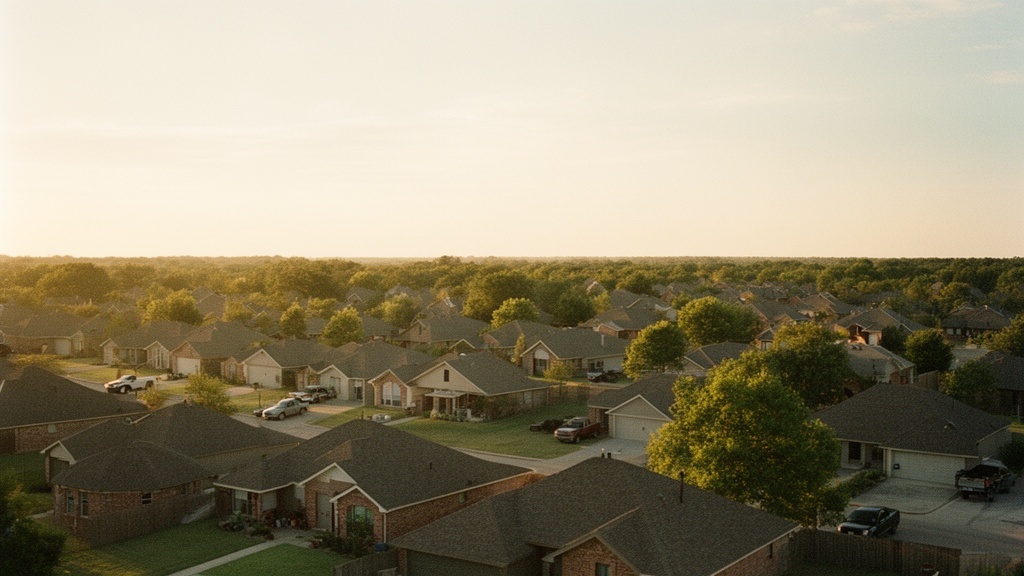
1. The Austin Housing Market in August 2026
Where Prices Stand Today
Austin has been rebalancing since the peak frenzy of the early 2020s, and that correction has created real opportunities. The median home price in the Austin metro currently sits in the low-to-mid $500,000s, though that figure varies considerably depending on how close you are to downtown, the age of the home, and whether you are looking at a condo, townhome, or single-family property. Homes in the 78701 and 78703 zip codes, which cover downtown and Tarrytown respectively, routinely list well above $700,000, while areas farther out along the 183 or in Pflugerville and Manor can bring buyers into the $350,000 to $450,000 range.
The new construction segment is worth watching closely. Builders in Cedar Park, Leander, and Kyle have been competing hard for buyers, offering rate buydowns and closing cost contributions that resale sellers rarely match. As Forbes reported, Austin's property boom has brought bolder new-build luxury into a market that is increasingly balanced, giving shoppers more options at more price points than the city has seen in years.
What Inventory Looks Like
Active listings in the Austin metro are elevated compared to the low points of 2021 and 2022. Buyers who were shut out during the frenzy now have time to tour multiple properties, negotiate inspection repairs, and request seller concessions without automatically losing to a cash offer. The average days on market has stretched to roughly 45 to 60 days for many properties, which is a significant shift from the sub-10-day pace that defined the peak.
That said, well-priced homes in desirable pockets of the city still move quickly. A move-in-ready craftsman bungalow in Crestview or a renovated ranch in Allandale priced correctly can still attract multiple offers within the first week. The market is not slow across the board; it is selective.
2. Buyer Leverage and How to Use It
Price Cuts and Days on Market
Price reductions have become a standard feature of the Austin listing landscape. A substantial share of active listings in the metro have seen at least one price cut before going under contract, which tells you that many sellers initially listed with optimistic expectations and have since adjusted. Buyers who know how to read this pattern can identify motivated sellers and negotiate from a position of strength.
According to HousingWire's analysis of Austin housing trends, Austin's market has increasingly relied on price cuts as homes sit longer, a dynamic that gives informed buyers real negotiating room. Knowing which zip codes have the highest concentration of price-reduced listings is the kind of local intelligence that makes a meaningful difference in your offer strategy.
What Motivated Sellers Mean for You
Seller motivation translates directly into buyer opportunity. When a seller has carried a listing for 60 or 90 days, they are often more open to covering closing costs, accepting a home sale contingency, or agreeing to a longer closing timeline that works with the buyer's schedule. Understanding the seller's situation before you make an offer is one of the most underused advantages in a slower market.
Leila Showery works with buyers across Austin and the surrounding metro to identify exactly this kind of leverage before an offer is written. Knowing how long a home has been on the market, whether the seller has already purchased elsewhere, and what the original list price was gives buyers a clearer picture of what is actually negotiable.
3. Austin Neighborhoods and Housing Stock
Austin is not a single market. The city spans a wide geographic footprint, and the type of home, price range, lot size, and commute profile vary dramatically from one area to the next. Here is a factual breakdown of what buyers will find in the major corridors.
Central Austin and the Urban Core
The neighborhoods closest to downtown, including Hyde Park, Travis Heights, Bouldin Creek, and Clarksville, feature a mix of early 20th-century bungalows, mid-century ranch homes, and newer infill construction on smaller lots. Prices here typically start around $600,000 and climb well past $1 million for renovated or larger properties. Lot sizes are modest, often between 5,000 and 7,500 square feet, and many homes are within walking distance of South Congress Avenue, Barton Springs Pool, or the hike-and-bike trail along Lady Bird Lake.
Condos and townhomes are also a significant part of the central Austin inventory. High-rise units downtown and low-rise townhome communities in areas like Rainey Street and East Sixth Street give buyers options that do not require lawn maintenance and place them within a short commute of major employers on Congress Avenue and in the Domain district.
North and Northwest Austin
The corridor running north along MoPac and 183 through communities like Pflugerville, Round Rock, and Cedar Park offers considerably more square footage per dollar. A buyer who might find a 1,400-square-foot bungalow in Bouldin Creek for $650,000 can often find a 2,400-square-foot two-story home with a two-car garage in Pflugerville for $380,000 to $430,000. The trade-off is commute time: the drive from Pflugerville to downtown Austin typically runs 25 to 40 minutes depending on traffic, while Round Rock sits roughly 20 miles north of the city center.
The Domain area in North Austin has become a significant employment hub, anchored by Apple's campus, which reduces the commute burden for buyers who work there and live in communities like Wells Branch or Milwood. Housing stock in these areas includes a large share of 1990s and 2000s construction, with brick-front two-stories on subdivision lots ranging from 6,000 to 10,000 square feet.
South and East Austin
South Austin, stretching from the Slaughter Lane corridor down toward Kyle and Buda, features a blend of older ranch-style homes, newer subdivisions, and infill townhomes. Kyle and Buda in particular have seen significant new construction activity, with master-planned communities offering 3 to 4 bedroom homes in the $320,000 to $420,000 range. The commute to downtown Austin from Buda runs approximately 30 to 45 minutes via I-35.
East Austin has transformed considerably over the past decade. Neighborhoods like Cherrywood, Govalle, and Mueller feature a mix of older wood-frame homes alongside newer construction and mixed-use developments. Mueller in particular is a planned community built on the former Robert Mueller Municipal Airport site, with walkable streets, a central park, and a mix of single-family homes, townhomes, and apartments.
4. What Sellers Need to Know Right Now
Pricing Strategy Matters More Than Ever
Sellers who price accurately from the start in August 2026 benefit from shorter days on market and avoid the need for reductions that can soften buyer confidence. The data is consistent: homes that are priced correctly from day one spend less time on the market, attract more showings in the first two weeks, and ultimately close closer to list price than homes that chase the market down through a series of cuts.
A comparative market analysis built on the last 90 days of actual closed sales in your specific zip code is the foundation of a sound pricing decision. General metro-wide statistics are a starting point, but the difference between what sold on your block versus what sold three miles away can be $50,000 or more. Leila Showery provides sellers with a detailed, hyperlocal analysis before any listing goes live.
Presentation and Timing
In a market where buyers have choices, presentation separates listings that move from listings that sit. Professional photography, a clean and decluttered interior, and addressing deferred maintenance before listing are not optional extras in the current environment. Buyers who have been touring homes for months develop sharp instincts about what is priced correctly and what has been neglected.
Timing your listing to hit the market on a Thursday or Friday, so it captures weekend showing traffic, remains one of the simplest and most effective strategies available to Austin sellers. Pairing that with a strong digital marketing push across MLS, social platforms, and targeted buyer outreach gives your listing the broadest possible exposure in the critical first 14 days.
FAQ
Is right now a good time to buy homes for sale in Austin?
August 2026 offers buyers in Austin more negotiating room than the city has seen in several years. Inventory is elevated, days on market have stretched out, and a meaningful share of listings have seen at least one price reduction before going under contract. That combination gives buyers the ability to negotiate inspection repairs, request seller-paid closing costs, and take time to evaluate a property without the pressure of waiving contingencies. Whether the timing works for your specific financial situation depends on your income, down payment, and how long you plan to stay in the home, so speaking with a local agent and a lender before making any decisions is the right first step.
What price range should I expect when looking at homes for sale in Austin?
The price range for homes in Austin and the surrounding metro is wide. In central Austin neighborhoods like Hyde Park, Bouldin Creek, and Travis Heights, buyers should expect to start around $600,000 for a modest single-family home and climb well past $1 million for larger or renovated properties. Farther out in communities like Pflugerville, Kyle, Buda, and Cedar Park, buyers can find newer construction homes with more square footage in the $320,000 to $450,000 range. Condos and townhomes in the urban core add another tier, often starting around $350,000 to $500,000 depending on the building, floor, and finishes. A local agent can help you map your budget to the areas where your dollar goes furthest.
How do I research schools and other factors when evaluating homes for sale in Austin?
School assignment in Austin is determined by the attendance zone tied to the property address, and those zones can shift over time. The Texas Education Agency publishes school performance data at tea.texas.gov, and the Austin Independent School District as well as surrounding districts including Round Rock ISD, Pflugerville ISD, and Lake Travis ISD all publish attendance zone maps on their own websites. Buyers should verify the specific school assignments for any address they are seriously considering directly with the relevant district, since boundaries do not always follow neighborhood lines. For other community factors such as local services, parks, and infrastructure, the City of Austin's website and individual municipal sites for suburban cities are good starting points for objective information.