← Back to Blog
Market Trends
The Boerne Road Corridor of San Antonio, Texas Real Estate Market Guide: Prices, Neighborhoods and Timing
By Lisa Reyna
Option One Real Estate
October 2, 2026 · 12 min read
The Boerne Road corridor of San Antonio, Texas stretches northwest along US-87 and FM 3351 through some of the most active real estate submarkets in Bexar County, connecting the city's urban core to the outer edge of the Texas Hill Country. This market guide covers current prices, the distinct neighborhoods along the corridor, and the timing signals that matter most to buyers and sellers in September 2026. Whether you are relocating, upsizing, or looking for land with room to breathe, this corridor deserves a close look.
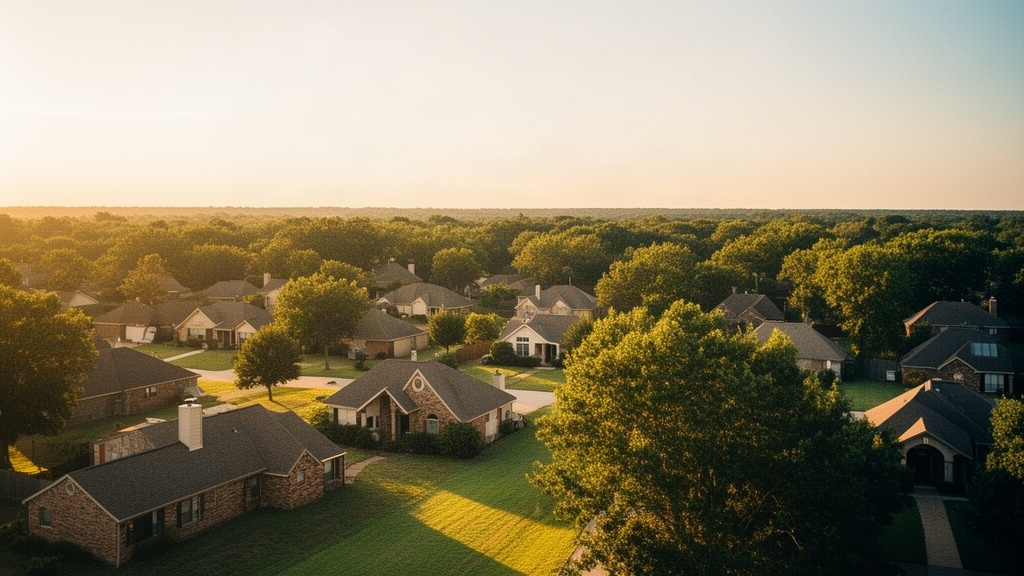
1. What Is the Boerne Road Corridor and Why Does It Matter for San Antonio Real Estate
The Boerne Road corridor runs northwest out of San Antonio along US-87 (Culebra Road and its extension) and intersects with FM 1604, FM 3351, and eventually connects to the I-10 West spine near Leon Valley, Helotes, and Fair Oaks Ranch. It is one of the primary growth axes in Bexar County, and it feeds directly into Kendall County, where the city of Boerne sits roughly 30 miles from downtown San Antonio.
The Physical Corridor
Think of the corridor as a roughly 30-mile band. It starts near Loop 410 on the northwest side of San Antonio, passes through the incorporated city of Leon Valley, cuts through unincorporated Bexar County pockets, enters the city of Helotes, and then crosses into Fair Oaks Ranch before reaching the Kendall County line and the Boerne city limits. The terrain shifts noticeably as you move northwest: flat suburban blocks give way to rolling cedar-covered hills, wider lots, and the limestone creek beds that define the Hill Country edge.
Why This Route Draws Buyers
The corridor attracts buyers for several concrete reasons. It offers a range of price points from the mid-$200,000s in Leon Valley to well over $1 million in Fair Oaks Ranch and Boerne, all within a single commutable arc from San Antonio's major employment centers at the South Texas Medical Center, USAA's campus on IH-10, and Joint Base San Antonio-Lackland. The presence of Fiesta Texas and Six Flags along IH-10, the Alamo Ranch retail district at Culebra and Loop 1604, and the Boerne Main Street commercial district means residents along the corridor have access to significant retail and dining without driving into the urban core.
2. Neighborhoods and Communities Along the Corridor
Each community along the Boerne Road corridor has a distinct character defined by its housing stock, lot sizes, and distance from the city center. Understanding those differences is the first step in narrowing your search.
Leon Valley and Westover Hills
Leon Valley sits at the inner edge of the corridor, roughly 8 to 10 miles from downtown San Antonio via IH-10 or Culebra Road. The housing stock here is predominantly 1960s through 1990s construction: single-story brick ranch homes on quarter-acre lots, with some infill new construction appearing on redeveloped parcels. Prices in Leon Valley as of September 2026 generally run from the high $180,000s for smaller fixer-uppers to the low $300,000s for updated three- and four-bedroom homes. The Westover Hills area, which straddles the Leon Valley and unincorporated Bexar County line near Westover Hills Boulevard, includes some larger custom homes on half-acre and acre lots that push into the $400,000 to $600,000 range.
Leon Valley has its own city government and municipal services, which keeps property taxes structured separately from San Antonio proper. Buyers should request a full tax estimate from their agent before making an offer, since the combined city, county, and school district rates affect monthly carrying costs meaningfully at this price point.
Helotes and the FM 1560 Pocket
Helotes sits approximately 16 miles from downtown San Antonio and has grown considerably since its incorporation. The city's Old Town district along Bandera Road preserves a small-town commercial feel, with local restaurants and the Floore Country Store music venue, which has hosted performers since the 1940s. Residential development in Helotes ranges from established subdivisions built in the 1990s and early 2000s to newer master-planned sections near FM 1560 and Leslie Road. Lot sizes tend to be larger than in Leon Valley, with many properties sitting on a third to a full acre. Prices in Helotes as of September 2026 typically range from the mid-$300,000s to the mid-$500,000s, with custom homes on larger lots exceeding that ceiling.
The FM 1560 pocket east of Helotes, running toward Culebra Road and the Alamo Ranch area, includes newer construction from builders like David Weekley, Perry Homes, and Pulte that was delivered between 2018 and 2024. These subdivisions typically offer four-bedroom homes with two-car garages in the $330,000 to $430,000 range, and they move relatively quickly when priced correctly because the product is consistent and buyers know what they are getting.
Fair Oaks Ranch
Fair Oaks Ranch is an incorporated city straddling the Bexar and Kendall county line, roughly 22 miles from downtown San Antonio via IH-10 West. The community is known for large lots, mature live oak trees, and an equestrian-friendly land-use history. Many properties sit on one to five acres, and the housing stock skews toward custom and semi-custom construction rather than production builder subdivisions. Median home prices in Fair Oaks Ranch have been rising. According to reporting from Community Impact, median prices in the Boerne and Fair Oaks Ranch area increased year over year through mid-2026, with Fair Oaks Ranch medians running in the $550,000 to $750,000 range depending on lot size and finish level.
See the full Community Impact report on median home prices in Boerne and Fair Oaks Ranch for detailed year-over-year comparisons.
Boerne and the Kendall County Line
Boerne sits at the far end of the corridor, about 30 miles northwest of downtown San Antonio, and it functions as both a destination and a commuter city. The historic Main Street district features limestone storefronts, local restaurants, and the Cibolo Nature Center, a 100-acre preserve along Cibolo Creek that runs through the middle of town. Boerne's housing market includes everything from 1,200-square-foot cottages in the $280,000s to new construction estates in master-planned communities like Esperanza and Herff Ranch that can reach $900,000 and beyond. The IH-10 corridor through Boerne has seen consistent commercial and residential growth, and the city's ETJ (extraterritorial jurisdiction) continues to expand as developers bring new sections online.
3. Current Prices and Market Conditions in the Boerne Road Corridor
Prices along the corridor vary significantly by location, but the overall trend as of September 2026 is one of measured stability after the sharper corrections seen in 2024. Inventory is higher than it was during the 2021 and 2022 peak, giving buyers more options without the corridor returning to the oversupply levels that would push prices down materially.
What Homes Are Selling For Right Now
Here is a snapshot of where prices sit across the corridor in September 2026. These figures reflect closed sales data for single-family homes and are approximate ranges rather than precise medians, since each submarket has its own micro-conditions.
- Leon Valley: Roughly $190,000 to $320,000 for existing single-family homes; updated homes with open floor plans sell at the top of that range.
- Helotes and FM 1560 subdivisions: Roughly $310,000 to $520,000, with newer construction in the $350,000 to $440,000 band being the most active segment.
- Fair Oaks Ranch: Roughly $480,000 to $850,000 for established homes on half-acre-plus lots; outliers on multiple acres can exceed $1.2 million.
- Boerne city limits and ETJ: Roughly $280,000 for smaller in-town homes to $950,000 for new construction in gated or master-planned communities; the median for the broader Boerne area sits near $480,000 as of September 2026.
Inventory and Days on Market
Inventory across the corridor is running at roughly three to four months of supply in most price bands, which places these markets in balanced-to-slight-buyer-favor territory. That is a meaningful shift from the sub-one-month conditions of 2021 and 2022, but it does not mean sellers are stuck. Well-priced homes in Helotes and the Boerne IH-10 corridor are still going under contract within two to four weeks. Overpriced listings, particularly in the $500,000 and above range, are sitting longer, with average days on market stretching past 60 days in some pockets of Fair Oaks Ranch and outer Boerne.
How the Corridor Compares to Broader San Antonio Trends
The broader San Antonio metro has experienced the same inventory normalization that has affected Texas's major markets over the past two years. HousingWire's analysis of Texas housing market trends noted that San Antonio, like Dallas, Houston, and Austin, saw elevated supply and softened price growth heading into 2026 as mortgage rates kept some buyers on the sidelines. The Boerne Road corridor has tracked that pattern, but the outer segments near Boerne and Fair Oaks Ranch have shown more price resilience than many inner-loop San Antonio neighborhoods, partly because land scarcity and the Hill Country premium support values.
For a broader view of how the San Antonio metro is performing right now, the San Antonio real estate market guide for September 2026 covers metro-wide data and context that complements what you see at the corridor level.
4. What Buyers Should Know Before Shopping This Corridor
Shopping the Boerne Road corridor requires a different mindset than buying in an established urban neighborhood. The range of property types, the county line crossings, and the commute distances all create variables that buyers need to evaluate carefully before going under contract.
Property Types and Lot Sizes
The corridor offers a wider variety of property types than most San Antonio submarkets. At the Leon Valley end, you find compact brick homes on city-sized lots. Moving northwest, lots expand and homes shift toward larger footprints with more garage space and outdoor living features. By the time you reach Fair Oaks Ranch and Boerne, you are looking at properties that may include wells, septic systems, propane service, and ag exemptions on larger acreage. Each of those features carries its own inspection, maintenance, and insurance considerations that do not apply to a typical subdivision home inside Loop 1604.
Buyers purchasing in Kendall County should also confirm whether a property is served by a municipal utility district (MUD), a private water supply corporation, or a private well, since water source affects both cost and due diligence requirements during the option period. Your agent should pull the property's utility disclosure as part of standard contract review.
Commute Realities
IH-10 West is the primary commute artery for corridor residents heading into San Antonio, and it is one of the most congested stretches of highway in the metro during peak hours. From Boerne to the South Texas Medical Center, a 32-mile trip, expect 45 to 60 minutes during morning rush hour on a typical weekday. From Helotes to downtown San Antonio, roughly 16 miles, the drive runs 25 to 40 minutes in traffic. Leon Valley to downtown is closer to 20 minutes off-peak and 30 to 40 minutes during rush. Buyers who work remotely or have flexible schedules find the outer corridor much more practical than those who need to be at a fixed San Antonio location by 8 a.m. every morning.
What Your Budget Gets You
One of the corridor's strongest selling points is how far a dollar stretches as you move northwest. A $400,000 budget in Leon Valley buys a well-updated three-bedroom home on a standard city lot. That same $400,000 in Helotes gets you a newer four-bedroom home with a two-car garage on a larger lot. In Boerne, $400,000 can still find you a solid three-bedroom home in an established neighborhood, though you may be choosing between square footage and lot size. At $600,000, Fair Oaks Ranch and the Boerne ETJ open up to custom homes on one-acre-plus lots with Hill Country views.
If you are working through the full purchase process for the first time, the guide to buying a home in San Antonio: process, costs and timeline walks through every step from pre-approval to closing, including what to expect when buying in suburban and semi-rural settings like those found along the corridor.
5. Timing the Market on the Boerne Road Corridor
Timing decisions on the Boerne Road corridor follow the same seasonal rhythms as the broader San Antonio market, with some corridor-specific nuances worth knowing. The right moment to buy or sell depends on your price point and how long you are willing to wait for the ideal outcome.
Seasonal Patterns
Spring, from March through May, is historically the most active listing season along the corridor. Buyer activity picks up as families plan moves around the school year, and sellers who list in March and April typically see the strongest offer activity. Summer stays active through July, particularly in the Boerne and Fair Oaks Ranch segments where relocating buyers from out of state often visit during summer scouting trips. Activity slows in August and September as families settle in for the school year, which is exactly where the market sits right now in September 2026. That slowdown creates a window for buyers who are ready to act, since competition is lower and sellers who have been on the market since spring are more open to negotiation.
When to List, When to Offer
For sellers: listing between late February and mid-April captures the peak buyer pool on the corridor. Homes that miss the spring window and sit through summer tend to need a price adjustment to attract fall buyers, so pricing correctly from day one matters more on this corridor than in faster-moving urban markets. If you are considering listing now in September 2026, the article on whether to sell in September 2026 or wait until spring covers that decision in detail with San Antonio-specific data.
For buyers: September through November is a productive window on the corridor. Sellers who have been on the market since spring are more motivated, new listings are fewer, and you face less competition from other buyers. The trade-off is a smaller selection of available homes, but for buyers who have done their research and know what they want, that is a reasonable trade. Mortgage rate movements matter too: a rate drop of even half a point can shift monthly payments enough to change what you can afford on a $450,000 or $600,000 purchase, so staying in close contact with your lender during this window pays off.
Sellers on the corridor who want to maximize their final sale price should also read about pricing strategy and what consistently gets San Antonio sellers the highest sale price, since the same principles apply to corridor properties whether you are in Helotes or Fair Oaks Ranch.
FAQ
Is the Boerne Road corridor a good place to buy right now in September 2026?
The corridor offers more inventory and less buyer competition than it did during the 2021 and 2022 peak, which means buyers have more negotiating room than they have in several years. Prices are relatively stable across most segments, with the Helotes and Boerne areas showing modest year-over-year appreciation while Leon Valley has leveled off. Whether the timing works for you depends heavily on your budget, your commute tolerance, and how long you plan to hold the property. Buyers who are pre-approved and clear on their priorities can find strong value right now, particularly on homes that have been sitting on the market since spring. A local agent who knows the corridor's micro-markets can help you identify which listings have room to negotiate versus which are priced at market.
What is the difference between buying in Helotes versus Boerne along the corridor?
Helotes sits in Bexar County, which means buyers there deal with Bexar County property taxes and utility infrastructure typical of a suburban San Antonio city. Boerne is in Kendall County, which has its own tax rates and where many properties use private water supply corporations or wells rather than municipal water. Boerne also offers a distinct small-city downtown experience with the Cibolo Nature Center and a historic Main Street that Helotes does not have. Price-wise, comparable square footage tends to cost more in Boerne than in Helotes, but Boerne lots are often larger and the Hill Country setting is more pronounced. Buyers choosing between the two should factor in their daily commute distance, since Boerne adds roughly 14 miles and 15 to 20 minutes compared to Helotes on a typical workday drive to central San Antonio.
Do I need a different kind of home inspection for properties in Fair Oaks Ranch or Boerne that have wells and septic systems?
Yes. Standard Texas home inspections cover the structure, mechanical systems, and visible components of a home, but a licensed inspector may not conduct a full well water quality test or a septic system load test unless you specifically request and pay for those services. For properties in Fair Oaks Ranch and outer Boerne with private wells, you should order a water quality test that screens for bacteria, nitrates, and any locally relevant contaminants. For septic systems, a separate septic inspection by a licensed installer or inspector is worth the cost, since repairs or replacements can run $10,000 to $40,000 depending on the system type and lot conditions. Your agent should build enough option period time into your contract to complete all of these inspections before you are committed to proceeding.