← Back to Blog
Buying
Buying a Home in Waverly, Iowa: Process, Costs and Timeline
By Lydia Negan
Structure Real Estate · S# 70285000
September 29, 2026 · 11 min read
Buying a home in Waverly, Iowa involves more moving parts than most people expect, especially if you have not been through the process recently. This guide walks you through every step, from getting your finances in order to handing over keys, with real numbers and local details specific to the Waverly market in September 2026.
1. What the Waverly, Iowa Housing Market Looks Like Right Now
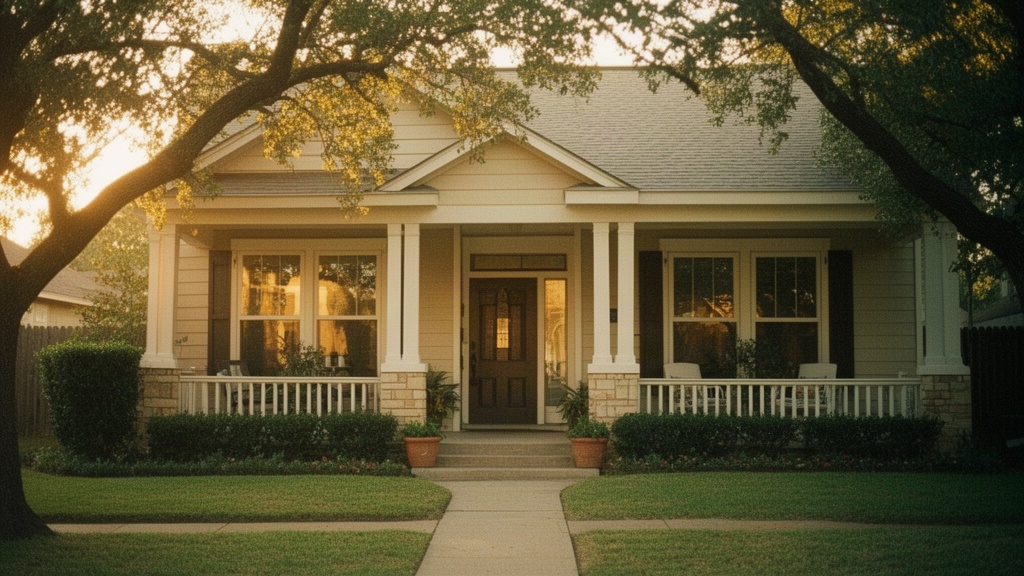
Waverly is a competitive but accessible market. Median sale prices in Waverly have been running in the low-to-mid $200,000s through 2026, with well-maintained single-family homes on the city's established streets drawing strong interest and occasionally multiple offers. The market is not overheated the way larger Iowa metros can get, but it is not slow either.
Current Inventory and Price Ranges
In September 2026, Waverly's active inventory sits on the tighter side relative to buyer demand. Entry-level homes, generally priced from the upper $100,000s to around $220,000, tend to move quickly. Mid-range homes between $220,000 and $320,000 represent the bulk of what trades hands in Waverly and include a mix of ranch-style homes, two-story builds from the 1970s through the 1990s, and updated craftsman-style properties. Homes priced above $350,000 often sit on larger lots, feature newer construction, or include finished basements and three-car garages.
Waverly's housing stock reflects its history as a stable, mid-sized northeast Iowa city of roughly 10,000 residents. You will find brick ranch homes near downtown, two-story colonials in the subdivisions off 4th Street SW, and newer construction closer to the city's western and southern edges. The Cedar River runs through the heart of the city, and homes near Kohlmann Park or along the river corridor carry a premium for their setting.
How Quickly Homes Are Moving
Days on market vary by price point and condition. Move-in-ready homes priced correctly in the $180,000 to $280,000 range are routinely going under contract within one to two weeks. Homes that need cosmetic work or are priced above comparable sales can sit for four to six weeks or longer. For a detailed look at current days-on-market figures, see how long homes are sitting on the market in Waverly this month.
2. Step-by-Step: The Home Buying Process in Waverly
The process of buying a home in Waverly, Iowa follows the same broad framework as purchasing anywhere in the country, but the local details matter. Knowing what lenders, inspectors, and title companies in Bremer County expect will save you time and prevent surprises.
Step 1: Get Pre-Approved
Pre-approval is the foundation of a credible offer. Sellers in Waverly, especially those receiving multiple offers, will not take your offer seriously without a pre-approval letter from a lender. This is different from pre-qualification, which is an informal estimate. Pre-approval requires a full credit pull, income verification, and documentation of your assets. Local lenders familiar with Iowa financing programs, including Iowa Finance Authority options for eligible buyers, can often move faster than national online lenders when it comes to underwriting.
Plan to gather two years of tax returns, recent pay stubs, two to three months of bank statements, and documentation for any other income sources. Self-employed buyers should expect additional scrutiny and may need profit-and-loss statements. The pre-approval process typically takes three to seven business days once you have submitted a complete application.
Step 2: Define Your Search Parameters
Before touring homes, get specific about what you need versus what you want. In Waverly, the practical questions include: Do you need a garage, and if so, how many stalls? Is a finished basement important for additional living space? How close do you need to be to Highway 218 for a commute to Waterloo or Cedar Falls? Do you want to walk to Wartburg College's campus, the YMCA on 4th Street NE, or downtown's shops along Bremer Avenue?
If you are relocating from outside the area, the article on relocating to Waverly, Iowa covers neighborhood characteristics and commute logistics in detail, which can help you narrow your search before you ever step inside a home.
Step 3: Tour Homes and Make an Offer
Once you are pre-approved and your parameters are set, your agent will set up showings as new listings hit the market. In Waverly's current environment, desirable homes sometimes receive offers within the first few days. When you find the right property, your agent will prepare a purchase agreement that includes the offer price, earnest money amount, proposed closing date, and any contingencies.
Earnest money in Waverly typically runs one to two percent of the purchase price, so roughly $2,000 to $5,000 on a $250,000 home. This money is held in escrow and applied to your closing costs or down payment at settlement. If the deal falls apart due to a contingency, such as a failed inspection or financing issue, you generally get it back. If you back out without a valid contingency, you may forfeit it.
Step 4: Inspection, Appraisal and Contingencies
The inspection period is your primary opportunity to understand the true condition of the home. A licensed home inspector will examine the structure, roof, electrical panel, plumbing, HVAC system, and foundation. In Waverly, older homes built before 1980 may have original cast-iron drain lines, knob-and-tube wiring, or aging furnaces that an inspector will flag. Inspection fees in the Waverly area generally run between $350 and $550 depending on home size.
If you are using a conventional or FHA loan, your lender will order an appraisal to confirm the home's value supports the purchase price. Appraisals in northeast Iowa currently take one to three weeks to schedule and complete. If the appraisal comes in below the purchase price, you will need to negotiate with the seller, make up the difference in cash, or exercise your appraisal contingency to exit the contract.
Step 5: Final Walk-Through and Closing
A final walk-through typically happens the day before or the morning of closing. You are confirming the home is in the same condition as when you made your offer, that agreed-upon repairs have been completed, and that nothing has been removed that was supposed to stay, such as appliances or window treatments. Closing in Iowa is handled through a title company, and both parties typically sign separately. You will wire your closing funds in advance and receive the keys once the deed records with Bremer County.
3. Realistic Costs When Buying a Home in Waverly, Iowa
The purchase price is only part of what you will spend. Buyers in Waverly need to budget for several layers of costs, some paid before closing and some rolled into the closing statement.
Upfront and Out-of-Pocket Costs
- Down payment: Conventional loans typically require 3% to 20% down. On a $240,000 home, that is $7,200 at 3% or $48,000 at 20%. FHA loans require 3.5% down with a credit score of 580 or higher. USDA loans, which Waverly qualifies for in some cases based on income and property eligibility, can offer zero down payment options.
- Closing costs: Buyers in Iowa typically pay two to three percent of the loan amount in closing costs. On a $240,000 purchase, that is roughly $4,800 to $7,200. This covers lender origination fees, title insurance, attorney or title company fees, recording fees, and prepaid items like homeowner's insurance and property tax escrow.
- Home inspection: $350 to $550, paid directly to the inspector at the time of service. Radon testing, which is worth considering in Iowa, adds another $100 to $150.
- Appraisal: $500 to $700 in the northeast Iowa market, typically paid upfront or at closing depending on the lender.
- Earnest money deposit: One to two percent of the purchase price, paid when your offer is accepted. This is applied toward your total funds due at closing, not an additional cost.
- Moving costs: Local moves within northeast Iowa typically run $500 to $1,500 depending on volume and distance. Moves from outside the region can run significantly higher.
For a granular breakdown of every line item on the closing disclosure, the article on closing costs and fees when buying a home in Waverly goes through each charge in plain language.
Ongoing Costs After Closing
- Property taxes: Bremer County property taxes on a $240,000 home run approximately $3,500 to $4,500 per year depending on assessed value and applicable credits. Iowa's Homestead Credit reduces the taxable value for owner-occupants. For a full breakdown, see the property taxes guide for Waverly.
- Homeowner's insurance: Expect $1,000 to $1,600 per year for a standard policy on a mid-range Waverly home. Homes near the Cedar River floodplain may require separate flood insurance.
- HOA fees: Most Waverly neighborhoods do not have homeowner associations. A small number of newer subdivisions have nominal annual fees, typically under $300 per year.
- Maintenance reserve: A common rule of thumb is to budget one percent of the home's value per year for maintenance. On a $240,000 home, that is $2,400 annually. Older homes in Waverly may need more in the early years if the inspection revealed deferred items.
The NAR's Consumer Guide: Preparing for Homeownership offers a useful national-level checklist for getting your finances ready before you start the buying process, including how to think about debt-to-income ratios and savings targets.
4. How Long Does the Home Buying Process Take in Waverly?
From the day you start getting pre-approved to the day you receive keys, most Waverly buyers complete the process in 60 to 120 days. The range is wide because search time varies significantly from buyer to buyer.
Timeline From Pre-Approval to Closing
- Pre-approval: 3 to 7 business days once you submit a complete application to your lender.
- Home search: Highly variable. Some buyers find their home in two to three weeks. Others search for two to three months. In a market with limited inventory like Waverly's current one, patience is often required at this stage.
- Offer to accepted contract: One to five days. Sellers in Iowa typically respond within 24 to 48 hours, though this is not legally required.
- Inspection period: Seven to ten days after contract. Scheduling an inspector in Bremer County usually takes three to five business days.
- Appraisal: One to three weeks from when the lender orders it. This is often the longest single step in the post-contract phase.
- Underwriting and clear to close: One to two weeks after the appraisal is received, assuming no major conditions arise.
- Closing day: Typically 30 to 45 days after your offer is accepted, though some buyers negotiate shorter or longer periods based on their circumstances.
What Can Slow Things Down
Several factors can extend the timeline beyond 45 days. A low appraisal that requires renegotiation adds days or weeks. Inspection findings that prompt repair negotiations can stall the process. Lender conditions, such as requests for additional documentation mid-underwriting, are common and can push closing back by a week or more. Title issues, though rare, occasionally surface on older Waverly properties and require legal resolution before closing can proceed.
If you are trying to time your purchase around a specific season, the article on whether fall 2026 or spring is the better time to buy in Waverly breaks down the tradeoffs by season in practical terms.
5. Practical Tips for Navigating the Waverly Market
Knowing the steps and costs is necessary, but succeeding in the Waverly market also requires a few practical strategies that are specific to how this market operates.
Working With a Local Agent
A local agent provides access to homes before they are widely marketed. In a market the size of Waverly, word travels fast among agents. A well-connected local agent often knows about listings coming to market before they appear on public search sites, which gives buyers a meaningful head start. They also know which streets have drainage issues after heavy rain, which blocks back up to commercial properties, and which subdivisions have deed restrictions worth reviewing before you fall in love with a property.
Lydia Negan of Structure Real Estate works specifically in the Waverly market and brings that kind of on-the-ground knowledge to every buyer she works with. Whether you are purchasing your first home or your fifth, having someone who knows the streets, the sellers, and the local contract norms is a genuine advantage.
Financing Considerations Specific to Iowa
Iowa has several state-level programs worth knowing about before you commit to a loan product. The Iowa Finance Authority administers the FirstHome program, which offers below-market interest rates and down payment assistance for income-eligible buyers purchasing in Iowa. Waverly falls within the program's geographic scope. There are also USDA Rural Development loan options available for properties that meet eligibility criteria, which can include some Waverly addresses depending on the specific location and household income.
Ask your lender specifically about Iowa Finance Authority programs and USDA eligibility before assuming a conventional or FHA loan is your only path. Many buyers in smaller Iowa markets leave money on the table by not exploring these options. According to the NAR 2025 Profile of Home Buyers and Sellers, the down payment remains one of the top barriers buyers cite nationally, making state assistance programs particularly valuable in markets like Waverly where they are available.
If you are also weighing what the broader market looks like for the year ahead, the Waverly, Iowa real estate market guide covers price trends, inventory patterns, and timing considerations in one place.
FAQ
Do I need a buyer's agent to purchase a home in Waverly, Iowa?
You are not legally required to use a buyer's agent in Iowa, but it is strongly advisable. A buyer's agent represents your interests exclusively, helps you evaluate pricing relative to recent comparable sales in Waverly, negotiates on your behalf, and guides you through inspection and contract contingencies. In Iowa, the seller has traditionally paid both agents' commissions, though compensation structures have evolved following 2024 industry changes. Ask any agent you interview to explain how they are compensated before you sign a buyer's representation agreement. In a market where local knowledge matters as much as it does in Waverly, having an experienced local agent in your corner costs you little and can save you significantly.
Can I buy a home in Waverly, Iowa with less than 20% down?
Yes, and most buyers in Waverly do. Conventional loans allow as little as 3% down for qualified buyers, FHA loans require 3.5% with a 580 or higher credit score, and USDA loans may offer zero-down options for eligible properties and income levels. The tradeoff for putting less than 20% down on a conventional loan is private mortgage insurance, which adds a monthly premium to your payment until you reach 20% equity. On a $240,000 loan, PMI typically runs $80 to $160 per month depending on your credit score and loan-to-value ratio. It is worth running the numbers on whether a larger down payment or an Iowa Finance Authority assistance program makes more sense for your situation.
What should I know about older homes in Waverly before I buy?
A significant portion of Waverly's housing stock was built between the 1940s and the 1980s, which means buyers should go into inspections with specific questions. Homes from this era may have original cast-iron drain lines that are nearing the end of their service life, older electrical panels that do not support modern loads, asbestos-containing materials in insulation or floor tile, and lead paint on surfaces if built before 1978. None of these issues are necessarily dealbreakers, but they affect your renovation budget and your negotiating position. A thorough inspection by a licensed Iowa home inspector is essential, and asking for a sewer scope on homes built before 1970 is a worthwhile additional expense of roughly $150 to $250. Your agent can help you interpret findings and decide how to proceed.