← Back to Blog
Neighborhoods
The Westover Hills Area of Fort Worth Real Estate Market Guide: Prices, Neighborhoods and Timing
By Madison Mitchell
TK Realty
September 18, 2026 · 12 min read
If you are researching the Westover Hills area of Fort Worth real estate market, this guide covers what you actually need to know: current price ranges, what the housing stock looks like, how this pocket of west Fort Worth compares to surrounding corridors, and how to time a move here in September 2026.
1. Where Westover Hills Sits and What Makes It Distinct
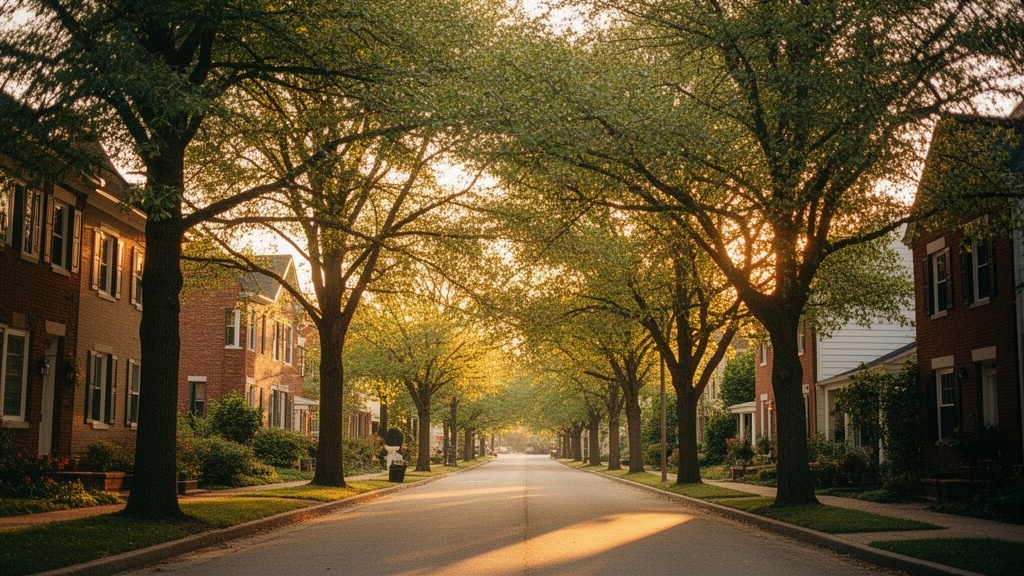
Westover Hills is a small, incorporated municipality entirely surrounded by the City of Fort Worth. It sits west of downtown Fort Worth, bounded roughly by Camp Bowie Boulevard to the north, Roaring Springs Road to the west, Vickery Boulevard to the south, and Hulen Street to the east. The town covers just over one square mile, which makes it one of the most compact incorporated places in Tarrant County.
Because Westover Hills is its own municipality, it has its own town administration, its own property tax rate, and its own zoning rules, all of which are separate from the City of Fort Worth. That distinction matters for buyers and sellers because it affects everything from tax bills to deed restrictions.
Geography and Boundaries
The town sits on a limestone ridge above the Trinity River corridor, which gives many properties elevated views and larger lot footprints than you find in flat suburban subdivisions. Roaring Springs Road marks the western edge and curves along the bluff, making it one of the more scenic residential streets in this part of Fort Worth. Camp Bowie Boulevard, one of Fort Worth's main commercial arteries, runs along the northern boundary and connects the area to the Cultural District in about five minutes by car.
Downtown Fort Worth is roughly six to seven miles east, a drive that typically takes twelve to eighteen minutes outside of peak hours on Interstate 30 or along Camp Bowie. The Kimbell Art Museum, the Modern Art Museum of Fort Worth, and Amon Carter Museum are all within a ten-minute drive, and the Fort Worth Botanic Garden is even closer.
Housing Stock and Architecture
The housing stock in Westover Hills proper skews toward large, custom-built homes constructed primarily between the 1940s and the 1980s. You will find Tudor Revival, Colonial Revival, and mid-century modern designs sitting on lots that commonly run from half an acre to well over an acre. Brick and stone exteriors are the norm. Many homes have been substantially renovated over the past decade, with updated kitchens, added square footage, and modernized mechanical systems, while the street-facing facades retain their original character.
New construction inside Westover Hills itself is rare because the town is almost entirely built out. When a teardown does occur, the replacement home tends to be a large custom build that pushes the price ceiling of the immediate block. This limited supply is a key factor in how prices behave here relative to the broader Fort Worth market.
2. Westover Hills Area Real Estate Prices Right Now
Homes in Westover Hills proper are among the highest-priced residential properties in all of Fort Worth. As of September 2026, most active listings inside the town boundaries are priced between $1.2 million and $4 million, with a handful of estate-sized properties listed above that range. The median sold price for the past twelve months has hovered near $1.6 million, though that figure shifts meaningfully depending on whether a recently renovated home or a dated original hits the market in a given quarter.
For broader context on how Fort Worth's luxury segment has performed, the surge in million-dollar-plus sales across the DFW area has been well documented. According to DFW Urban Realty's analysis of luxury home sales, the number of million-dollar-plus transactions across the metro climbed sharply through 2025, a trend that has continued carrying into 2026 in established west Fort Worth corridors like this one.
Current Price Ranges
- Entry-level Westover Hills: Smaller homes closer to the Vickery Boulevard edge, typically 2,500 to 3,500 square feet, are currently listed in the $1.1 million to $1.5 million range.
- Mid-range Westover Hills: Homes between 3,500 and 5,500 square feet on lots of half an acre or more are pricing from $1.5 million to $2.5 million in September 2026.
- Upper Westover Hills: Fully renovated or custom-built homes exceeding 5,500 square feet, often with pools, guest quarters, and bluff views, are listed from $2.5 million to $5 million and above.
- Adjacent Ridglea and Westcliff: Homes just outside the Westover Hills town boundary in these Fort Worth neighborhoods typically range from $450,000 to $950,000, offering a lower price of entry with similar proximity to Camp Bowie and the Cultural District.
Price Per Square Foot and Lot Sizes
Price per square foot inside Westover Hills has been running between $320 and $520 per square foot for closed sales over the past year, depending heavily on renovation quality and lot position. Homes on the bluff side of Roaring Springs Road, where the lot topography and views are most pronounced, tend to land at the upper end of that range. Lots themselves commonly run from 20,000 square feet to over 60,000 square feet, which is substantially larger than what you find in most Fort Worth neighborhoods at comparable distances from downtown.
How Prices Have Moved
Prices in Westover Hills have been relatively stable through 2026 compared to the broader Fort Worth market. The limited number of annual transactions, typically between fifteen and thirty closed sales per year inside the town, means a single outlier sale can move the reported median significantly. What that low volume also means is that pricing here is less volatile than in higher-turnover Fort Worth zip codes. Buyers should not expect steep discounts in a cooling market, and sellers should not assume automatic appreciation without a competitive renovation or presentation.
For a broader picture of where Fort Worth home prices are trending right now, see the detailed breakdown in What Are Home Prices Doing in Fort Worth Right Now in September 2026, which covers citywide movement and what it means for buyers and sellers across all price points.
3. The Surrounding Neighborhood Corridors You Should Know
Westover Hills proper is small, so buyers who are drawn to this area but need more options or a lower price point often look at the surrounding Fort Worth neighborhoods that share the same general corridor. Understanding how these areas differ in terms of housing stock, lot character, and price is essential before you start touring homes.
Westover Hills Proper vs. Ridglea and Westcliff
Ridglea Hills and Ridglea North sit immediately north and northeast of Westover Hills, separated by Camp Bowie Boulevard. These Fort Worth neighborhoods were developed in the 1950s and 1960s and feature a mix of ranch-style homes, traditional brick two-stories, and some mid-century modern examples. Lot sizes here average 10,000 to 18,000 square feet, smaller than Westover Hills but still generous by Fort Worth standards. Prices in Ridglea Hills currently range from roughly $500,000 to $1.1 million depending on size and condition.
Westcliff, which sits south of Westover Hills along Vickery Boulevard, offers another option. Homes here tend to be smaller and were built primarily in the late 1940s through the 1960s. The price range runs from approximately $350,000 to $700,000, making it one of the more accessible entry points into this west Fort Worth corridor. Many Westcliff homes have been renovated, and the neighborhood's tree-lined streets and proximity to the Hulen retail corridor make it a practical location for anyone who wants to be near Westover Hills without the luxury price tag.
Hulen Corridor and River Oaks Adjacency
Hulen Street forms the eastern boundary of Westover Hills and is one of Fort Worth's busiest commercial corridors, with grocery stores, restaurants, and retail running from I-30 north through the Ridglea area. Homes on the Fort Worth side of Hulen, east of Westover Hills, are priced differently because they carry Fort Worth city taxes rather than the Westover Hills town rate, and they sit in a denser development pattern. Buyers comparing properties on either side of Hulen should factor in those tax and lot-size differences carefully.
River Oaks, a separate city immediately west of Westover Hills along the Trinity River, offers yet another price tier. River Oaks homes are primarily modest post-war construction, with prices currently ranging from $180,000 to $350,000. The proximity to the Trinity River trails and Cobb Park gives this area access to green space and outdoor recreation that buyers in the broader Westover Hills corridor can also use.
4. Market Conditions and Timing in September 2026
The Westover Hills area real estate market in September 2026 is moving at a measured pace, which is typical for a low-inventory, high-price-point enclave. Buyers have slightly more negotiating room than they did during the compressed market of 2021 and 2022, but well-priced, well-presented homes are still attracting serious interest within the first few weeks of listing.
Inventory and Days on Market
Active inventory inside Westover Hills at any given time is thin, often fewer than ten homes listed simultaneously. Days on market for closed sales over the past twelve months has averaged between forty-five and seventy-five days, which is longer than the citywide Fort Worth average but consistent with the luxury segment where buyers take more time for due diligence. Homes that are priced aggressively and staged well are still closing in under thirty days. Overpriced listings, by contrast, can sit for four to six months before sellers adjust.
If you want to see which Fort Worth zip codes are moving fastest right now, the article on which Fort Worth zip codes have homes selling the fastest this month gives a current breakdown that puts the Westover Hills pace in context against the broader city.
When to Buy and When to Sell
For buyers, the fall window from September through November historically brings less competition in Westover Hills than the spring surge. Sellers who need to move a home before year-end are more willing to negotiate on price or terms during this period. That said, the pool of qualified buyers for a $1.5 million-plus home is always smaller than for a $400,000 home, so the seasonal shift is less dramatic here than in other Fort Worth markets.
For sellers, spring listings, particularly those hitting the market in March and April, tend to generate the most showings and the strongest offers in the Westover Hills area. Buyers relocating to Fort Worth from other cities often time their searches to coincide with the end of the school year, and corporate relocation packages tied to Q1 and Q2 job starts bring a wave of well-qualified buyers into the west Fort Worth market each spring. Listing in late January or February to capture that wave before it peaks is a strategy worth discussing with your agent.
For a broader view of current Fort Worth inventory conditions and whether this is still a seller's market citywide, the article on Fort Worth housing inventory levels in 2026 covers the supply-and-demand picture in detail.
5. What to Know Before You Make a Move
Buying or selling in Westover Hills involves a few factors that are specific to this market and easy to overlook if you are used to transacting in standard Fort Worth neighborhoods. Getting these details right before you go under contract can prevent expensive surprises at closing.
Property Taxes and Carrying Costs
Properties inside the incorporated town of Westover Hills pay taxes to both Tarrant County and the Town of Westover Hills, in addition to the applicable school district. The combined effective tax rate for Westover Hills properties is generally in the range of 1.9% to 2.3% of appraised value, depending on the applicable school district and any exemptions the owner qualifies for. On a $2 million home, that translates to roughly $38,000 to $46,000 per year in property taxes before exemptions. Homestead exemptions can reduce the taxable value meaningfully for primary residences.
For a detailed breakdown of how Tarrant County property taxes are calculated, including how appraisal districts set values and how exemptions work, the article on property taxes on a $400,000 home in Tarrant County in 2026 explains the mechanics clearly, and the same framework applies at higher price points.
Commute and Connectivity
Westover Hills is well positioned for access to major Fort Worth employment centers. Downtown Fort Worth is roughly a fifteen-minute drive via I-30 or Camp Bowie during off-peak hours. The Medical District along Montgomery Street is about ten minutes north. Alliance Airport and the industrial and logistics corridor in far north Fort Worth are approximately thirty to thirty-five minutes in normal traffic via I-820 or Loop 820. DFW Airport is accessible in about thirty minutes via I-30 east and TX-360.
Public transit options in this part of Fort Worth are limited. The Trinity Metro bus system has routes along Camp Bowie and Hulen, but the area is primarily car-dependent. Buyers who rely on transit should evaluate specific routes against their actual commute before purchasing.
Due Diligence Checklist for Westover Hills Buyers
- Verify municipality: Confirm whether the specific address falls inside the Town of Westover Hills or within Fort Worth city limits, since this affects your tax rate, zoning rules, and which municipal services apply.
- Review deed restrictions: Westover Hills has its own zoning and deed restrictions that may limit additions, accessory structures, or commercial use. Review these before assuming you can expand or modify the property.
- Foundation and drainage inspection: The limestone and clay soil in this part of Tarrant County can cause foundation movement over time. A structural engineer inspection, separate from a standard home inspection, is worth the cost on any home in this price range.
- Mechanical systems age: Many Westover Hills homes were built decades ago. HVAC systems, plumbing, and electrical panels on older homes should be evaluated carefully, especially on properties that have not been fully renovated.
- Pool and landscaping costs: Lots in Westover Hills are large and heavily landscaped. Budget for ongoing maintenance costs that are higher than what you would pay on a smaller suburban lot.
- School district research: Properties in the Westover Hills area may fall within different attendance zones. Research directly through the Texas Education Agency and the applicable district to verify current attendance boundaries for any specific address.
- Closing costs: At the price points common in Westover Hills, closing costs for buyers can run from $25,000 to $60,000 or more depending on loan type, lender fees, and title costs. The article on buyer closing costs in Fort Worth in 2026 explains every line item.
Anyone researching the Westover Hills area of Fort Worth real estate market should also consult objective third-party sources for information on school attendance zones and district performance (the Texas Education Agency publishes this data at tea.texas.gov), and for municipal services and zoning specifics, contact the Town of Westover Hills directly. These are personal decisions that deserve firsthand research rather than relying on any single source.
FAQ
Is Westover Hills a separate city from Fort Worth?
Yes. Westover Hills is an incorporated municipality with its own town government, separate from the City of Fort Worth. It covers just over one square mile and is entirely surrounded by Fort Worth. This means properties inside Westover Hills pay taxes to the Town of Westover Hills rather than the City of Fort Worth, and they are subject to Westover Hills zoning and deed restrictions rather than Fort Worth city ordinances. Buyers should verify whether a specific address falls inside the town boundary or within Fort Worth before making assumptions about taxes or regulations.
What price range should I expect for homes in the Westover Hills area of Fort Worth?
Inside the Town of Westover Hills proper, prices currently run from approximately $1.1 million for smaller homes at the lower end of the market to $5 million and above for large, fully renovated estate properties. The median sold price over the past twelve months has been near $1.6 million. Buyers who want to be in the same general corridor but at a lower price point often look at adjacent Fort Worth neighborhoods like Ridglea Hills, Westcliff, or the Hulen corridor, where prices range from roughly $350,000 to $1.1 million depending on size and condition.
How long does it take to sell a home in Westover Hills right now?
In September 2026, homes in Westover Hills are averaging between forty-five and seventy-five days on market from list date to closing, which is longer than the Fort Worth citywide average but consistent with the luxury segment where buyers conduct more thorough due diligence before committing. Well-priced homes in strong condition can still close in under thirty days. Homes that are priced above market or need significant updates tend to sit considerably longer. Given the small number of transactions per year, a single well-priced listing that sells quickly can make the overall average look faster than it actually is for the broader inventory.