← Back to Blog
Neighborhoods
What Is It Actually Like to Live in the Oakley Neighborhood of Cincinnati Day to Day
By Maranda Solomon
October 3, 2026 · 10 min read
Wondering what it is actually like to live in the Oakley neighborhood of Cincinnati day to day? Oakley sits roughly four miles northeast of Downtown Cincinnati, and life there feels noticeably different from both the dense urban core and the quieter suburban townships farther out. This article covers the streets, the housing, the commute, the food scene, the parks, and the rhythms that shape a typical week in Oakley so you can decide whether it fits your life.
1. The Physical Layout of Oakley and How the Streets Feel
Oakley is a walkable, grid-style neighborhood. Its main commercial spine is Madison Road, which runs northeast from the Hyde Park border through the center of Oakley and continues toward Norwood. The grid of residential streets fanning off Madison Road is tight and mostly flat, which makes walking and biking genuinely practical rather than aspirational.
The neighborhood covers roughly 1.2 square miles and is bordered by Hyde Park to the south, Norwood to the north and east, and Kennedy Heights and Columbia Township to the northeast. Those borders matter because Oakley sits at a crossroads: you get the walkable energy of an urban neighborhood without paying Hyde Park prices, and you have quick access to I-71 without living directly beside it.
The Core Along Madison Road
Madison Road between Erie Avenue and Brotherton Road is where most of the daily activity concentrates. On a weekday morning you will find people walking dogs, grabbing coffee, and heading to the parking lots that feed the neighborhood's independent shops and restaurants. Sidewalks are continuous and wide enough that foot traffic rarely feels crowded. Street parking is generally available except on weekend evenings when the restaurant blocks fill up.
The commercial strip has a low-rise, neighborhood-scale feel. Buildings are mostly one and two stories, with a handful of newer mixed-use developments that added residential units above ground-floor retail over the past decade. The Oakley Square area near the intersection of Madison and Marburg Avenue functions as an informal town center, with benches, outdoor seating, and enough foot traffic to feel alive without feeling overwhelming.
Side Streets and Residential Pockets
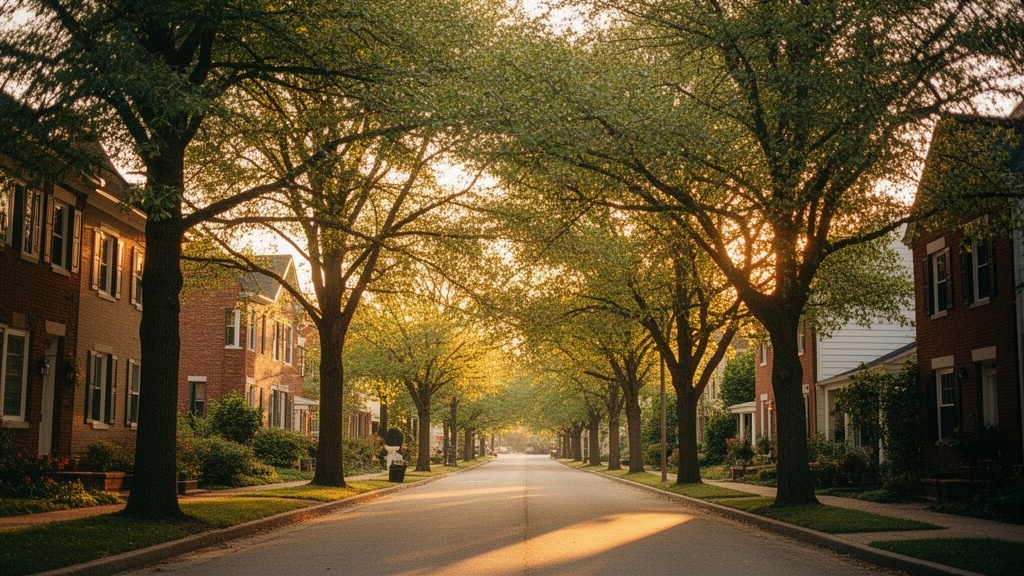
Step one block off Madison Road and the noise drops considerably. Streets like Linwood Avenue, Wasson Road, and Brotherton Road are lined with mature trees, and the lots are relatively modest in size, typically 40 to 60 feet wide. Driveways are short, garages are often detached and tucked behind the house, and front porches are common enough that neighbors actually use them. It is the kind of street where you learn your neighbors' names within the first month.
2. Housing Stock in Oakley: What You Will Actually Find
Oakley's housing stock is older and architecturally varied. Most of the single-family homes were built between 1910 and 1955, which means you get genuine character: brick exteriors, hardwood floors, original woodwork, and layouts that feel different from the open-concept subdivisions built in later decades. That age also means buyers should budget for updates, particularly to electrical panels, plumbing, and roofing.
Bungalows, Tudors and Two-Family Homes
The most common home types in Oakley are Craftsman bungalows, English Tudor cottages, and American Foursquares. You will also find a meaningful number of two-family homes, which is relevant both for buyers who want to owner-occupy one unit and rent the other, and for investors. If you want to explore the investment angle further, the Investment Property Guide for Cincinnati, Ohio covers the numbers and what to know before you buy.
Lot sizes in Oakley run smaller than what you find in Anderson Township or Blue Ash. A typical single-family lot is 4,000 to 6,000 square feet, and backyard space is often modest. That trade-off is intentional for many buyers: less lawn maintenance, more walkability, and a denser neighborhood feel.
Newer Construction and Condo Options
Oakley has seen a noticeable wave of infill development and condo conversions since roughly 2015. Several mixed-use buildings along Madison Road added condominium units above retail, and a few standalone condo projects went up on previously underused parcels. These units tend to run 900 to 1,400 square feet, with open floor plans, modern finishes, and either surface or structured parking included.
Townhomes have also appeared in small clusters, particularly near the Marburg and Madison intersection. These typically offer two or three bedrooms, a rooftop deck or small yard, and attached garages, giving buyers a middle option between a condo and a detached single-family home.
What Prices Look Like Right Now
As of October 2026, Oakley single-family homes are generally trading in the $280,000 to $480,000 range, with condition, lot size, and proximity to Madison Road all affecting where a specific property lands. Well-maintained Tudors and bungalows with updated kitchens and baths tend to move quickly and often see multiple offers. Condos in the newer buildings typically start around $240,000 and can push past $350,000 for larger or better-located units.
For broader context on where Oakley sits within the Cincinnati market right now, the Cincinnati, Ohio Real Estate Market Guide has current pricing data across multiple neighborhoods.
3. Getting Around: The Oakley Commute Day to Day
Oakley's commute to Downtown Cincinnati is straightforward but not instant. By car, most Oakley addresses are 15 to 25 minutes from the Central Business District under normal conditions, with rush-hour times stretching to 30 to 40 minutes on the most congested corridors. The primary routes are Madison Road connecting to I-71 South, or Wasson Road feeding to Columbia Parkway.
Driving to Downtown and Major Employers
The I-71 on-ramp at Ridge Road is roughly a mile from the heart of Oakley, which keeps the freeway accessible without putting residential streets directly in the commuter flow. From that on-ramp, Downtown Cincinnati is about eight miles south. The drive is typically smooth outside of the 7:30 to 9:00 a.m. and 4:30 to 6:30 p.m. windows. Kenwood Road to the north puts Oakley about 10 minutes from the Kenwood Towne Centre employment corridor and the medical offices clustered near Montgomery Road.
Oakley is also well-positioned for people working in Blue Ash, which is roughly 20 to 25 minutes north via I-71 and Reed Hartman Highway. The University of Cincinnati campus is about 15 minutes west via Madison Road and Martin Luther King Drive. Cincinnati Children's Hospital Medical Center, one of the metro area's largest employers, is approximately 20 minutes by car.
Public Transit and Biking Options
The Southwest Ohio Regional Transit Authority (SORTA) Metro runs bus service along Madison Road with routes connecting to Downtown. The Route 11 and Route 51 lines serve Oakley, and travel time to Government Square Downtown is typically 35 to 50 minutes depending on stops and time of day. Bus service is frequent enough during peak hours to be a realistic option for commuters who do not need a car at their destination.
Biking within Oakley and to adjacent neighborhoods is practical on flat terrain. The Wasson Way Trail, a paved multi-use path that runs through the neighborhood, connects Oakley to Hyde Park and points west, and is gradually being extended eastward toward Newtown. For longer commutes, most residents drive or take the bus, but the trail makes car-free errands and weekend rides genuinely feasible.
4. Food, Coffee, Shopping and Daily Errands in Oakley
Oakley's day-to-day retail and dining scene is one of its most tangible strengths. Madison Road between Erie Avenue and Brotherton Road holds a dense concentration of independent restaurants, coffee shops, and local retailers that makes it possible to handle most daily needs without leaving the neighborhood. For a broader overview of what makes Oakley's commercial strip tick, the Movoto Oakley Neighborhood Guide offers a useful summary of the area's character.
Restaurants and Coffee Shops on Madison Road
Oakley has a genuine restaurant row. Zip's Cafe on Madison Road has been a neighborhood anchor for decades, a no-frills bar and burger spot that draws a consistent crowd. Boca on the north end of the commercial strip serves upscale Latin-inspired food and is one of the more well-known dinner destinations in the neighborhood. Primavista, technically just across the border in Price Hill but often associated with the Oakley dining circuit, is a short drive away.
Coffee options include a branch of Deeper Roots Coffee, one of Cincinnati's most respected local roasters, which operates a shop on Madison Road. On a weekday morning the line is real but moves fast, and the space has enough seating to work from for an hour or two. There are also several smaller cafes and a handful of bakeries within walking distance for most Oakley addresses.
Grocery and Everyday Retail
Oakley has a Kroger on Madison Road that serves as the primary grocery option for most residents. It is a full-size store with a pharmacy, and parking is generally available even during evening hours. Whole Foods in Hyde Park is about 10 minutes south on Madison Road for residents who prefer it. A Trader Joe's operates in Rookwood Commons, which is a short drive or a manageable bike ride from most Oakley addresses.
Rookwood Commons and Rookwood Exchange, the two outdoor shopping centers at the southern edge of Oakley near I-71, add significant retail depth. Target, HomeGoods, Best Buy, and a range of restaurants are all accessible within a five-minute drive from anywhere in Oakley. This cluster of retail means most residents rarely need to travel far for everyday purchases.
5. Parks, Green Space and Weekend Life in Oakley
Oakley is close to some of Cincinnati's best outdoor spaces, even if the neighborhood itself is relatively dense. The combination of the Wasson Way Trail running through the neighborhood and Ault Park sitting just to the southeast gives residents meaningful access to green space without a long drive.
Ault Park and the Little Miami Corridor
Ault Park is a 224-acre Cincinnati Parks property located at the eastern edge of Hyde Park, roughly a 10-minute drive from most Oakley addresses. The park has a formal pavilion built in 1930, miles of walking and hiking trails through wooded ravines, a rose garden, and overlooks above the Little Miami River valley. It hosts the Cincinnati Symphony's free outdoor concerts in summer and draws consistent foot traffic on weekends year-round.
The Little Miami Scenic Trail, accessible from several points east of Oakley, is a 78-mile paved trail that runs northeast toward Loveland and beyond. Cyclists and runners use it heavily on weekends. Getting to the trail from Oakley takes about 15 minutes by bike or car, making it a realistic option for weekend recreation rather than just an occasional outing.
Fitness, Recreation and Community Events
Within Oakley itself, Oakley Recreation Center offers a gym, fitness classes, and programming for various age groups. The Wasson Way Trail doubles as a fitness corridor: on any weekday morning you will see runners and cyclists using it before work. Several yoga studios and a CrossFit gym operate along or near Madison Road.
Oakley hosts a summer farmers market on weekends, typically running from May through October, which brings local produce vendors, food trucks, and artisan sellers to the Madison Road corridor. The neighborhood also has an active civic association that organizes seasonal events, cleanups, and advocacy for local planning issues. That organizational layer means Oakley has a community infrastructure that many Cincinnati neighborhoods of similar size do not.
6. What the Market Looks Like If You Are Buying or Selling in Oakley
Oakley is a competitive market with limited inventory relative to demand. In October 2026, well-priced homes in Oakley are typically going under contract within one to two weeks, and multiple-offer situations are common on updated properties below $400,000. Days on market stretch longer for homes that need significant work or are priced above the neighborhood's ceiling.
Sellers in Oakley benefit from the neighborhood's consistent demand, but pricing still matters. Overpricing by even 5% can push a home past the window where it attracts strong offers, and price reductions tend to generate skepticism from buyers in a market this tight. If you are thinking about selling, the article on what sells homes fastest in Cincinnati covers pricing strategy and timeline in detail.
For buyers, the key challenge in Oakley is speed and preparation. Having a pre-approval letter in hand before you start touring is non-negotiable in this market. Buyers who are also weighing the timing question of whether to move now or wait should read the breakdown of fall 2026 versus spring 2027 in Cincinnati for a clear comparison.
The Hersey Group's Cincinnati neighborhood spotlight on Oakley offers additional context on what has driven the area's sustained demand over the past several years. You can read it at herseygroup.com for a complementary perspective on the neighborhood's trajectory.
If you are relocating to Cincinnati and comparing Oakley to other options, the full Relocating to Cincinnati guide walks through neighborhoods, costs, and timelines side by side.
FAQ
Is Oakley a walkable neighborhood in Cincinnati?
Oakley is one of Cincinnati's more walkable urban neighborhoods. The Madison Road commercial corridor puts groceries, coffee, restaurants, and retail within a 10-minute walk of most residential addresses. The Wasson Way Trail runs through the neighborhood and connects to Hyde Park to the west. That said, a car is still useful for commuting to most major employment centers and for reaching parks like Ault Park or the Little Miami Trail, which are a short drive rather than walking distance.
What kind of homes are in Oakley and what do they cost in 2026?
Oakley's housing stock is primarily pre-World War II single-family homes, including Craftsman bungalows, English Tudor cottages, and American Foursquares, along with a growing number of condos and townhomes built over the past decade. As of October 2026, single-family homes generally trade between $280,000 and $480,000 depending on condition, size, and location within the neighborhood. Condos in newer mixed-use buildings typically start around $240,000. Two-family homes are also present and attract both owner-occupants and investors. Most updated homes in strong locations go under contract within one to two weeks.
How does the day-to-day feel of Oakley compare to Hyde Park or Norwood?
Oakley sits between Hyde Park and Norwood geographically and shares characteristics with both without being identical to either. Hyde Park has a slightly more formal, quieter residential character and higher average price points, while Norwood has a more industrial history and lower price points with a different commercial mix. Oakley's Madison Road strip is more active and restaurant-dense than most of Norwood's commercial areas, and the housing stock is more varied than Hyde Park's. Oakley also has more new construction and condo development than either neighbor, giving buyers a broader range of product types to consider.