
← Back to Blog
Market Trends
What Is the Average Home Price in Bellevue, Washington Right Now in September 2026
By Marianna Caba
Coldwell Banker Bain
September 9, 2026 · 10 min read
If you are asking what the average home price in Bellevue, Washington is right now in September 2026, the short answer is that the median sale price sits in the range of $1.55 million to $1.65 million, depending on property type and the specific part of the city. This article breaks down where prices stand today, how they have shifted over the past year, what drives the numbers in different Bellevue neighborhoods, and what buyers and sellers should realistically expect heading into the fall market.
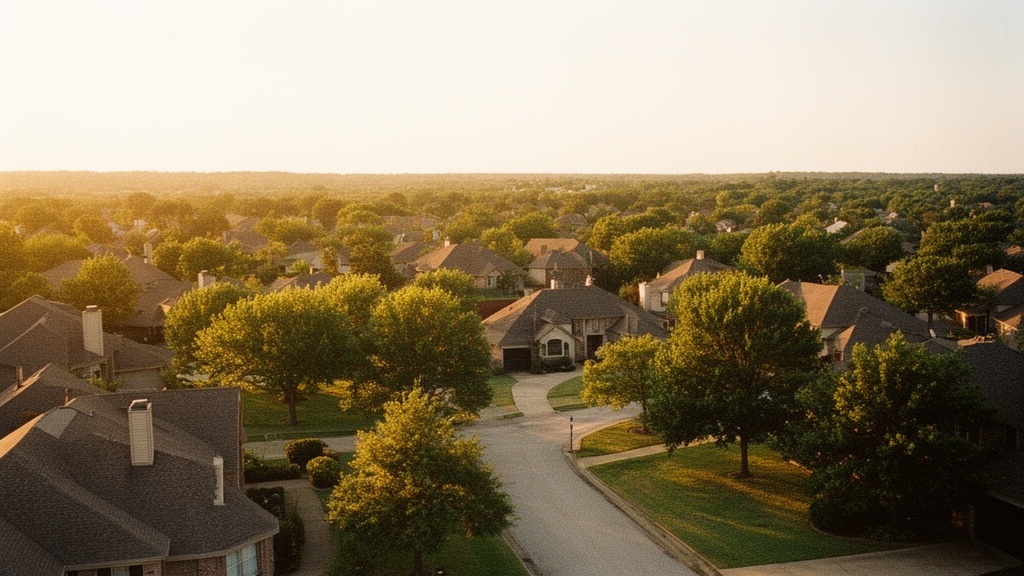
1. Where Bellevue Home Prices Stand in September 2026
The median sale price in Bellevue, Washington is approximately $1.58 million as of September 2026. That figure covers all residential property types combined, including single-family homes, townhomes, and condominiums. When you isolate single-family detached homes, the median climbs closer to $1.85 million, reflecting the city's persistent shortage of move-in-ready houses on large lots.
The Headline Numbers
To give you a clear picture, here are the core price benchmarks for Bellevue in September 2026. The median sale price across all property types is roughly $1.58 million. The median for single-family detached homes is approximately $1.85 million. Condominiums and attached units have a median closer to $750,000 to $850,000, depending on building, floor, and amenities. The average list price, which skews higher than median because of the luxury segment, is running near $2.1 million for single-family homes.
For context, the Bellevue housing market report from NFM Lending notes that Bellevue has consistently ranked among the highest-priced residential markets in the Pacific Northwest, with price growth driven by constrained supply and sustained corporate hiring in the region. That pattern has continued through 2026.
How Prices Have Moved Over the Past Year
Year-over-year price appreciation in Bellevue has moderated compared to the sharp spikes seen in 2021 and 2022, but the market has not softened. From September 2025 to September 2026, median prices for single-family homes increased by roughly 5 to 7 percent. That is a steadier pace than the double-digit jumps of prior years, but it still represents meaningful appreciation in a market where the baseline is already well above $1.5 million.
Condo prices have moved more modestly, up around 3 to 4 percent year over year, partly because new inventory in the downtown Bellevue high-rise corridor has given buyers more choices in that segment. Days on market for single-family homes in desirable pockets of the city still often run under 14 days, signaling that well-priced properties continue to attract multiple offers.
2. What the Average Home Price Looks Like Across Bellevue Neighborhoods
Bellevue is not a single uniform market. Prices shift significantly depending on which part of the city you are looking at, the age of the housing stock, lot size, and proximity to major corridors like I-405, SR-520, and the downtown core. Here is a factual breakdown of what buyers are seeing across different areas right now.
West Bellevue and Downtown
West Bellevue neighborhoods such as Medina, Clyde Hill, and Yarrow Point sit adjacent to Lake Washington and represent the upper tier of the Bellevue market. Median prices in these areas regularly exceed $3.5 million, with lakefront or lake-view properties trading well above $5 million. Lot sizes in this corridor tend to run from 10,000 square feet up to a full acre or more, and much of the housing stock consists of custom-built homes constructed after 2000, though some mid-century ranches and Colonials from the 1960s and 1970s also trade here, often purchased for teardown or major renovation.
Downtown Bellevue is a different story. The area around Bellevue Square, the Spring District, and the new light rail stations along the East Link extension is dominated by high-rise and mid-rise condominiums. One-bedroom units in buildings like Elara or One Lincoln Tower typically list between $550,000 and $800,000. Two-bedroom units with city or Cascade Mountain views range from $900,000 to $1.4 million. Penthouse-level units in premium buildings can exceed $3 million.
East Bellevue and the Eastgate Area
East Bellevue, including neighborhoods near Lake Hills, Eastgate, and the Factoria area, offers a different price point that tends to attract buyers who need more square footage for their budget. Single-family homes here typically range from $1.1 million to $1.6 million, with many properties built between the 1970s and 1990s on lots of 7,000 to 10,000 square feet. The housing stock includes split-levels, ramblers, and traditional two-story homes. Proximity to I-90 makes commutes to Seattle around 20 to 30 minutes by car under normal conditions, and the Eastgate Park and Ride connects residents to regional transit.
South Bellevue and Somerset
Somerset is one of Bellevue's hillside neighborhoods, sitting at elevation with views of Lake Washington and the Seattle skyline on clear days. Homes here were largely built in the 1970s through the early 1990s and range from about 2,000 to 3,500 square feet. Prices in Somerset typically fall between $1.6 million and $2.4 million. The neighborhood is served by Coal Creek Parkway and is roughly 8 to 12 miles from downtown Bellevue, translating to a 15 to 25 minute drive depending on time of day.
The broader South Bellevue area, including Newport Hills and Factoria, offers some of the city's more accessible entry points, with single-family homes occasionally appearing in the $950,000 to $1.2 million range, though properties at that level move quickly and often receive competing offers within the first week of listing.
North Bellevue: Bridle Trails and Crossroads
North Bellevue includes the Bridle Trails area, which borders Kirkland, and the Crossroads neighborhood closer to SR-520. Bridle Trails is known for its equestrian zoning, large wooded lots, and custom homes, with prices generally ranging from $2 million to $3.5 million. Crossroads, by contrast, has a more urban feel with a mix of apartments, townhomes, and older single-family homes. Single-family properties in Crossroads can be found in the $1.1 million to $1.5 million range, making it one of the more accessible single-family pockets within Bellevue city limits.
3. What Is Driving Bellevue Home Prices Right Now
Several structural factors explain why the average home price in Bellevue, Washington remains elevated in September 2026. Understanding these forces helps both buyers and sellers make more informed decisions rather than reacting purely to headline numbers.
Limited Inventory and High Demand
Active listings in Bellevue remain well below what would constitute a balanced market. As of September 2026, the city is sitting at roughly 1.5 to 2 months of supply for single-family homes, compared to the 4 to 6 months that typically signals equilibrium between buyers and sellers. That imbalance keeps upward pressure on prices even as mortgage rates have moderated from their 2023 peaks.
Bellevue's geography also constrains supply. The city is bounded by Lake Washington to the west, Lake Sammamish to the east, and Kirkland and Redmond to the north. There is simply not much undeveloped land left within city limits, which means new construction is largely infill development, teardown rebuilds, or high-density projects near transit nodes.
The Tech Sector Effect
Microsoft's headquarters in nearby Redmond, Amazon's continued presence in both Seattle and Bellevue, and a growing cluster of technology companies in the Spring District and downtown Bellevue office towers sustain a buyer pool with incomes well above national averages. Many of these buyers are purchasing with significant down payments, sometimes all cash, which compresses the role that mortgage rate fluctuations play in cooling the market. When rates rose sharply in 2022 and 2023, Bellevue's price correction was shallower than most major metros precisely because of this cash-rich buyer segment.
New Construction and Condo Supply
The downtown Bellevue high-rise pipeline has added several hundred new condo and apartment units over the past two years, which has given the attached-home segment slightly more breathing room. This is one reason condo price growth has been more modest than single-family appreciation. For buyers who want to enter the Bellevue market at a lower price point, newer condo buildings near the East Link light rail stations offer a practical option, with some units priced below $700,000 and walkable access to downtown Bellevue's retail, restaurants, and the Bellevue Arts Museum.
4. Price Per Square Foot and What It Tells You
Price per square foot is one of the most useful tools for comparing properties across Bellevue's varied neighborhoods. It strips away the noise of total price and lets you evaluate whether a specific home is priced in line with comparable sales nearby.
Single-Family Homes vs. Condos
For single-family detached homes in Bellevue, the median price per square foot as of September 2026 is approximately $650 to $750, though West Bellevue and lakefront properties routinely exceed $1,000 per square foot. Homes in East Bellevue and Crossroads tend to land in the $550 to $650 per square foot range, reflecting both the age of the housing stock and the distance from the waterfront. Newly built or fully renovated homes in any Bellevue neighborhood command a premium of 10 to 20 percent above comparable older inventory.
Condominiums in downtown Bellevue average around $700 to $900 per square foot in newer buildings with amenities such as concierge service, fitness centers, and rooftop decks. Older condo buildings from the 1980s and 1990s in the Bellevue area trade closer to $500 to $600 per square foot, depending on unit condition and HOA health.
How to Use Price Per Square Foot When Making an Offer
Price per square foot works best as a starting point, not a final answer. A home with a large unfinished basement will show a lower price per finished square foot than the listing suggests. A property on a 12,000-square-foot lot versus a 6,000-square-foot lot in the same neighborhood carries land value that the price-per-foot metric does not fully capture. Your agent should pull recent comparable sales within half a mile and the same school district boundaries to give you a defensible offer range, rather than relying on citywide averages alone.
5. What Buyers and Sellers Should Know About the September 2026 Market
Knowing the average home price in Bellevue, Washington is only part of the picture. How you act on that information depends on whether you are buying, selling, or relocating, and what your timeline looks like heading into the fall season.
For Buyers: What to Expect at Each Price Point
At the $700,000 to $900,000 range, buyers in Bellevue are largely looking at condominiums, older townhomes, or properties that need meaningful updating. Entry-level single-family homes in Bellevue proper are rare below $1 million as of September 2026, and when they appear, they tend to generate significant competition.
In the $1.1 million to $1.6 million range, buyers have more options, particularly in East Bellevue, Crossroads, Newport Hills, and parts of South Bellevue. These homes typically offer three to four bedrooms, two-car garages, and established yards. Many were built in the 1980s and 1990s and have had at least one kitchen or bath update.
Above $2 million, buyers are looking at newer construction, significant lot size, or premium locations in Somerset, Bridle Trails, or West Bellevue. At this level, the market is more patient. Homes can sit for 30 to 60 days before finding the right buyer, which gives purchasers more room to negotiate on price or terms compared to the sub-$1.5 million segment.
If you are planning to buy in Bellevue, the Bellevue buyer's guide on this site walks through the full purchase process, from getting pre-approved to closing, with details specific to this market.
For Sellers: Pricing Strategy in a High-Value Market
September is historically a solid month to list in Bellevue. Buyer activity that paused over summer vacations tends to pick back up after Labor Day, and motivated buyers who did not find a home in the spring are still actively searching. Inventory typically ticks up in September as well, so sellers who price accurately from day one capture the attention of buyers who have been waiting for new listings.
Overpricing in this market carries a real cost. Homes that sit more than 21 days in Bellevue start to attract questions from buyers about what is wrong with the property. A price reduction after three weeks on market typically yields a lower final sale price than a well-calibrated list price from the start. Sellers should ask their agent for a comparative market analysis that looks at closed sales within the last 60 to 90 days, not older data, since the market has moved enough in 2026 that comps from late 2025 may undervalue your home.
According to a 2026 market overview from Popachan and Co., Bellevue sellers who priced within 2 percent of the final appraised value saw significantly shorter time on market and fewer concession requests compared to homes that were initially priced above market. That pattern holds true across price tiers.
FAQ
What is the average home price in Bellevue, Washington right now in September 2026?
The median sale price across all residential property types in Bellevue is approximately $1.58 million as of September 2026. For single-family detached homes specifically, the median is closer to $1.85 million, while condominiums and attached units have a median in the $750,000 to $850,000 range. Prices vary significantly by neighborhood, with West Bellevue and lakefront areas trading well above $3 million and East Bellevue and Crossroads offering single-family homes in the $1.1 million to $1.6 million range. Year over year, single-family home prices have appreciated roughly 5 to 7 percent from September 2025 to September 2026.
Is Bellevue, Washington a buyer's market or a seller's market in September 2026?
Bellevue remains a seller's market in September 2026, with active inventory sitting at roughly 1.5 to 2 months of supply for single-family homes, well below the 4 to 6 months that signals a balanced market. Well-priced single-family homes in the sub-$1.6 million range still frequently attract multiple offers and sell within two weeks. The condo segment is somewhat more balanced, with newer downtown buildings adding supply and giving buyers more negotiating room. Sellers hold more leverage in the single-family detached segment; buyers have more options and negotiating power in the attached and luxury tiers above $2.5 million.
What is the cheapest way to buy into the Bellevue, Washington real estate market in 2026?
The most accessible entry point into Bellevue real estate in September 2026 is the condominium market, where one-bedroom units in older buildings can be found in the $550,000 to $700,000 range. Newer high-rise units near the East Link light rail stations in downtown Bellevue start around $650,000 for a one-bedroom. For buyers who want a single-family home, the Crossroads neighborhood and parts of East Bellevue near Lake Hills occasionally produce listings in the $1.1 million range, which is among the lowest for detached homes within Bellevue city limits. Working with an experienced local agent who monitors new listings daily is important in these price tiers, as properties at the lower end of the market move quickly.