← Back to Blog
Market Trends
Is Now a Good Time to Buy a Home in Charlotte, North Carolina or Should I Wait?
By Mark Weinberg
August 29, 2026 · 7 min read
If you have been asking yourself whether now is a good time to buy a home in Charlotte, North Carolina or should you wait, you are not alone. Charlotte's housing market has been shifting in ways that make the answer more nuanced than a simple yes or no. This post breaks down what the current data shows, what local conditions look like on the ground, and how to think through the decision based on your own situation.
1. What Charlotte's Housing Market Looks Like Right Now
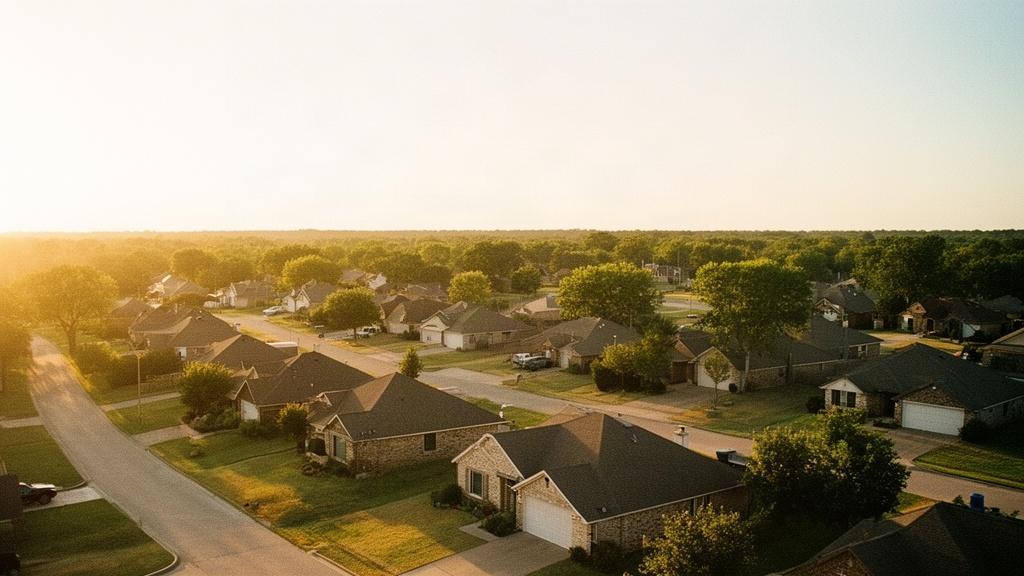
Charlotte's market in August 2026 looks different from the frenzied pace of 2021 and 2022, but it has not become a buyer's free-for-all either. Active listings across Mecklenburg County have increased compared to a year ago, giving buyers more choices than they had during the peak competition years. Homes are still selling, but the average days on market has stretched out, which means buyers have more time to think and negotiate than they once did.
Inventory Has Grown, But Demand Hasn't Gone Away
More supply does not mean the market is soft across the board. Charlotte continues to attract corporate relocations, with major employers anchored in the Uptown financial district, the Ballantyne corporate campus, and the growing tech presence near University City. That steady in-migration keeps demand from collapsing even as inventory rises. Sellers are adjusting expectations, but well-priced homes in desirable corridors are still drawing multiple offers.
Where Prices Stand in August 2026
Median home prices in the Charlotte metro are holding in the mid-to-upper $400,000s as of August 2026, though that figure varies considerably by submarket. Condos and townhomes in NoDa or Plaza Midwood can be found starting in the low $300,000s, while single-family homes in Ballantyne or Weddington regularly push past $600,000. Price appreciation has slowed from the double-digit annual gains seen a few years ago, which is one reason some buyers who have been on the sidelines are reconsidering their timeline.
2. Is Now a Good Time to Buy a Home in Charlotte or Should I Wait?
This is the question that matters most, and the honest answer is that it depends on your financial position, your timeline, and what you are buying. The market conditions in August 2026 offer real advantages for prepared buyers, but waiting could also make sense if your circumstances are not yet aligned. Here is how to think through both sides.
The Case for Buying Now
Negotiating power has returned to the table in a way it simply was not in 2021 or 2022. Buyers are successfully negotiating closing cost contributions, inspection repairs, and price reductions on homes that would have sold over asking with no contingencies just a few years ago. If you have solid credit, a down payment ready, and a stable income, the current environment rewards that preparation in a way the peak market never did.
Charlotte's long-term growth fundamentals remain strong. The city's population has grown steadily for over a decade, infrastructure investment continues along the Blue Line light rail extension toward Ballantyne, and the job market remains diversified across finance, healthcare, and logistics. Buying into a growing market at a moment of lower competition is a different proposition than waiting for prices to drop significantly, which most local economists are not projecting.
The Case for Waiting
Waiting makes sense if your down payment is not yet where it needs to be, or if your credit score is still improving. A stronger financial profile can unlock meaningfully better mortgage terms, and the difference of even half a percentage point on a $450,000 loan adds up to tens of thousands of dollars over the life of the loan. If you are six to twelve months away from a stronger position, the math may favor patience.
Similarly, if you are relocating to Charlotte and have not yet spent time in the city, waiting until you understand the different corridors is worthwhile. The commute from Huntersville to Uptown is a different experience than commuting from Matthews or Steele Creek, and those differences matter when you are choosing where to plant roots.
3. What the Data Says About Charlotte's 2026 Market
Charlotte's Standing Among Major U.S. Markets
Charlotte has drawn national attention in 2026 as one of the more active Sun Belt markets. The National Association of Realtors has highlighted Charlotte among markets with notable buyer opportunities this year, citing the combination of rising inventory and sustained job growth as a setup that benefits prepared buyers. You can read their full analysis in the NAR Housing Hot Spots report for 2026, which puts Charlotte's conditions in context alongside other major metros.
What Mortgage Rates Mean for Your Monthly Payment
Mortgage rates remain the single biggest variable in the buy-now-or-wait calculation. Rates in August 2026 are off their 2023 highs but have not returned to the historic lows of 2020 and 2021. Many buyers are purchasing now with the intention of refinancing if rates drop further, a strategy sometimes called 'marry the house, date the rate.' That approach carries its own risks, so it is worth modeling out multiple rate scenarios with a lender before committing.
HousingWire's coverage of Charlotte's market trajectory offers useful context on how price adjustments and rate movements are interacting locally. Their reporting on whether Charlotte's market is cooling or adjusting is worth reading if you want a broader picture of what national analysts are seeing in the data.
4. Neighborhoods and Price Ranges Worth Knowing
Charlotte is not one housing market; it is a collection of distinct submarkets that behave differently from one another. Understanding where inventory is concentrated, what price points look like, and what the commute experience is from each area will help you make a more informed decision about whether now is the right time to buy in the specific part of Charlotte that fits your needs.
Inside the Beltway: Older Homes, Walkable Streets
Neighborhoods inside I-485, including Dilworth, Plaza Midwood, Cotswold, and Myers Park, feature older housing stock from the 1920s through the 1980s, with bungalows, ranch homes, and traditional two-stories on smaller lots. Prices in these areas generally run from the low $400,000s for smaller bungalows up to well over $1 million for larger renovated homes on premium streets. The proximity to Uptown, the light rail on South Boulevard, and walkable retail corridors along Central Avenue and Park Road are physical features that drive demand in these pockets.
South Charlotte and the Ballantyne Corridor
The stretch of South Charlotte from Pineville through Ballantyne into Weddington and Marvin is dominated by newer construction, planned subdivisions, and larger lot sizes. Homes here typically range from the upper $400,000s to over $900,000 depending on size, lot, and age. The Ballantyne corporate campus anchors significant daytime employment in this corridor, and the planned light rail extension south along South Boulevard is expected to shift commute patterns in coming years. Commute times to Uptown by car run roughly 25 to 40 minutes depending on traffic and exact location.
University City and NoDa
University City, anchored by UNC Charlotte and the LYNX Blue Line's northern terminus at McCullough Station, offers some of the most accessible price points in the Charlotte market. Condos and townhomes near the light rail stations can be found from the mid-$200,000s, with single-family homes ranging broadly from the $300,000s upward. NoDa, Charlotte's arts district just north of Uptown, has seen significant condominium development and offers light rail access at the 36th Street Station, with prices for condos typically starting in the low-to-mid $300,000s.
5. How to Make the Right Call for Your Situation
Run the Numbers Before You Decide
The buy-now-or-wait question is ultimately a personal financial calculation, not a market-timing exercise. Start by getting a current mortgage pre-approval so you know exactly what you qualify for at today's rates. Then model out what a home at your target price point costs monthly, including property taxes, insurance, and HOA fees if applicable. Compare that to your current housing cost and factor in how long you plan to stay in Charlotte. Most financial planners suggest a minimum five-year horizon makes homeownership pencil out over renting in a market like Charlotte.
Work With Someone Who Knows Charlotte's Submarkets
The difference between a good purchase and a great one in Charlotte often comes down to knowing which streets are priced fairly, which subdivisions carry hidden HOA restrictions, and which corridors have infrastructure projects coming that will affect value. That kind of hyperlocal knowledge is not something you can fully get from a national real estate website. Working with an agent who has deep roots in the Charlotte market and can walk you through current absorption rates, recent comparable sales, and neighborhood-level trends gives you a genuine edge in your decision.
Whether the answer to your question of whether now is a good time to buy a home in Charlotte, North Carolina or whether you should wait turns out to be yes or not yet, having accurate local information is what makes the difference. The market in August 2026 offers real opportunities for buyers who are financially ready and realistic about their expectations. It also rewards patience for those who are not quite there yet. The worst move is making a six-figure decision based on incomplete information.
FAQ
Will home prices in Charlotte drop in the next year, making it better to wait?
Most market analysts tracking the Charlotte metro do not project significant price declines through 2026 and into 2027, largely because the underlying demand drivers, corporate relocations, population growth, and limited new construction in infill areas, have not reversed. That said, price appreciation has slowed considerably from the peaks of 2021 and 2022, so buyers are no longer competing against the same urgency. If you are waiting specifically for a large price correction, the data available in August 2026 does not strongly support that outcome in the Charlotte market. The more productive question is whether your personal financial position is strong enough to take advantage of the negotiating leverage that currently exists.
How much do I need for a down payment to buy a home in Charlotte right now?
Down payment requirements in Charlotte depend on the loan type you qualify for. Conventional loans typically require between 3% and 20% down, with private mortgage insurance required if you put down less than 20%. On a $450,000 home, that range runs from roughly $13,500 to $90,000. FHA loans allow as little as 3.5% down for qualifying buyers, and VA loans backed by the Department of Veterans Affairs require no down payment for eligible veterans and active-duty service members. North Carolina also has down payment assistance programs through the NC Housing Finance Agency that are worth exploring if your savings are limited. Speaking with a Charlotte-based lender who knows these programs will give you a clearer picture of what is available to you specifically.
Is it possible to negotiate in Charlotte's current market, or are sellers still holding firm?
Negotiating room in Charlotte in August 2026 varies significantly by price point and submarket. In the $300,000 to $450,000 range, well-priced homes in areas with strong demand are still moving relatively quickly and sellers have less flexibility. In the $500,000 and above range, and particularly in newer construction communities with higher inventory, buyers are successfully negotiating price reductions, closing cost contributions, and repair credits that were nearly impossible to secure two or three years ago. The key is understanding what comparable homes have actually sold for recently, not just what they are listed at, which is exactly the kind of analysis a knowledgeable local agent can provide before you make an offer.