← Back to Blog
Neighborhoods
What is it actually like to live in Seminole Heights Tampa day to day
By Michelle Guzman, Realtor®
Coldwell Banker AquaTerra Realty
September 27, 2026 · 10 min read
Wondering what it is like to live in Seminole Heights Tampa day to day? This neighborhood sits just north of downtown Tampa and has its own distinct rhythm, from the bungalows lining its oak-canopied streets to the independent restaurants that draw people from across the city. This guide covers the housing stock, commute realities, grocery runs, weekend routines, and everything else that shapes daily life here.
1. The Housing Stock and What You Get for Your Money
Seminole Heights is one of Tampa's older residential neighborhoods, and that history shows up in every block. Most of the housing stock dates from the 1920s through the 1950s, which means you are looking at Craftsman bungalows, Florida vernacular cottages, and the occasional Tudor Revival, all on lots that run larger than what you find in many newer subdivisions closer to the water.
Bungalows, Craftsmans, and the Occasional New Build
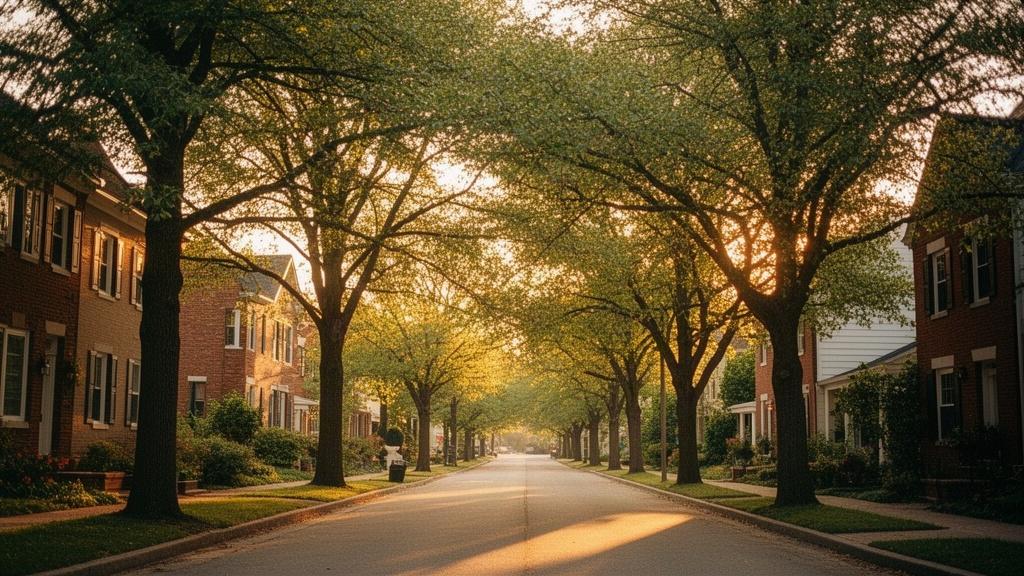
The neighborhood is loosely divided into Old Seminole Heights, Southeast Seminole Heights, and Northeast Seminole Heights, each with slightly different street patterns and lot configurations. Old Seminole Heights, which runs along Central Avenue and Nebraska Avenue, has some of the most intact historic streetscapes in Tampa. You will find wide front porches, original hardwood floors, and mature live oaks whose canopy actually shades the street in a way that newer neighborhoods simply cannot replicate.
New construction does exist here, mostly infill builds on lots where older structures were demolished. These tend to be two-story modern homes with open floor plans, and they sit right next to century-old bungalows. The mix is part of what makes the streetscape interesting, though buyers who want architectural consistency should walk specific blocks before committing.
What Prices Look Like Right Now
As of September 2026, median home prices in Seminole Heights are running in the low-to-mid $400,000s for a renovated bungalow, with unrenovated or smaller homes available in the high $200,000s to low $300,000s. New construction and larger lots push into the $500,000 to $600,000 range. Compared to South Tampa, where median prices are considerably higher, Seminole Heights still offers more square footage per dollar, though the gap has narrowed over the past several years as the neighborhood has attracted sustained buyer interest.
If you are comparing neighborhoods across Tampa, it helps to read up on how prices differ by area. Michelle Guzman's breakdown of average home prices in South Tampa gives useful context for understanding where Seminole Heights sits in the broader Tampa market.
Lot sizes in Seminole Heights typically run from 5,000 to 7,500 square feet, with some corner lots and double lots exceeding that. Most homes have off-street parking via a carport or detached garage, though some of the smallest bungalows rely on street parking. That detail matters more than it sounds when you are living here day to day.
2. What Is It Actually Like to Live in Seminole Heights Tampa Day to Day: The Commute and Getting Around
Getting around is one of the most practical questions anyone asks when considering a move, and Seminole Heights has a clear answer: most residents drive. The neighborhood sits roughly two to three miles north of downtown Tampa, which puts it closer to the urban core than many Tampa neighborhoods, but the city's transit infrastructure still makes a car the default for most daily trips.
Driving to Downtown and Beyond
The drive from Seminole Heights to downtown Tampa takes roughly 10 to 15 minutes outside of peak hours. During morning rush hour on I-275 or Nebraska Avenue, that can stretch to 20 to 25 minutes. Getting to Tampa International Airport takes about 15 to 20 minutes via the Hillsborough Avenue corridor or I-275 north to I-4 west. The University of South Florida campus is about 15 minutes northeast, and Ybor City is roughly 10 minutes southeast.
Florida Avenue and Nebraska Avenue are the two main north-south corridors that residents use to move through and out of the neighborhood. Both have traffic signals and turn lanes, but neither is a highway, so peak-hour backups are real. Residents who work downtown often leave before 7:30 a.m. to avoid the worst of it.
Walking, Biking, and Bus Options
Seminole Heights is more walkable than most Tampa neighborhoods, though it is not a walk-everywhere environment by any measure. The commercial strips along Florida Avenue and Nebraska Avenue put restaurants, coffee shops, and a handful of small retailers within a 10 to 15 minute walk for many residents. Sidewalk coverage is inconsistent on residential streets, which affects how comfortable the walk feels depending on the block.
Hillsborough Area Regional Transit (HART) runs bus routes through the neighborhood, including service along Nebraska Avenue that connects to downtown and USF. Cycling is possible on the quieter residential streets, and some residents commute by bike to downtown, though the lack of protected lanes on major roads is a real consideration. The Riverwalk is accessible by bike from Seminole Heights via surface streets.
3. Food, Coffee, and the Local Restaurant Scene
The restaurant and bar scene along Florida Avenue is one of the most talked-about aspects of living in Seminole Heights Tampa, and it genuinely shapes the day-to-day experience. This stretch has drawn independent operators rather than chains, which gives it a character that residents notice immediately when they move from other parts of Tampa.
Independent Spots That Define the Neighborhood
Ichicoro Ane on Florida Avenue is a ramen spot that regularly has a line out the door on weekend evenings. Rooster and the Till, also on Florida Avenue, runs a rotating menu built around local ingredients and has been a neighborhood anchor for years. Brew Bus Brewing operates out of the neighborhood and draws both residents and visitors. For coffee, Buddy Brew Coffee has a location nearby, and smaller independent cafes dot the side streets.
The food scene here is genuinely local in a way that is harder to find in newer Tampa developments. Residents often describe walking to dinner on a Tuesday as a normal part of their week, which is a different daily rhythm than driving to a strip mall. That said, the options are concentrated on Florida Avenue and Nebraska Avenue; venture more than a few blocks off those corridors and you are back in residential territory with no commercial activity.
For a fuller picture of the neighborhood's layout and amenities, the Seminole Heights neighborhood guide on Homes.com provides a useful overview of what is physically in the area.
Grocery and Errand Logistics
Grocery shopping requires a short drive for most residents. The nearest large-format grocery options include a Publix on Hillsborough Avenue, roughly five minutes by car, and a Walmart Supercenter not far from the neighborhood's eastern edge. Aldi and other discount grocers are accessible within 10 minutes. There is no walkable full-service grocery store within the neighborhood's core boundaries, which is a practical reality that residents adjust to.
For hardware, Target, and big-box errands, residents typically head toward the Fowler Avenue corridor near USF or down toward downtown. Pharmacy options include a CVS on Nebraska Avenue within the neighborhood. Day-to-day errands are manageable, but this is not a neighborhood where you can handle everything on foot.
4. Parks, Green Space, and Outdoor Life
Outdoor access is a genuine strength of living in Seminole Heights Tampa. The Hillsborough River runs along the western edge of the neighborhood, and Rivercrest Park sits directly on its banks, giving residents a riverside green space that most Tampa neighborhoods cannot claim.
Rivercrest Park and the Hillsborough River
Rivercrest Park stretches along River Shore Drive and offers walking paths, picnic areas, and direct river access. Kayakers and paddleboarders launch from here regularly, and the tree canopy along the riverbank makes it one of the more visually distinctive parks in Tampa's inner neighborhoods. The park connects to the Hillsborough River Greenway trail system, which allows cyclists and pedestrians to travel along the river for several miles in either direction.
Residents who live within a few blocks of the river describe using Rivercrest Park as part of their daily routine: morning walks, evening runs, weekend paddle sessions. The river itself is calm enough for recreational paddling for most of the year, and alligator sightings are common, as they are throughout most of Tampa's waterways.
Other Green Space Within Reach
Beyond Rivercrest, the neighborhood has several smaller pocket parks and green spaces scattered through its residential blocks. Lowry Park, which sits just to the northwest and is adjacent to the ZooTampa at Lowry Park campus, adds another green corridor within a short drive or bike ride. ZooTampa itself, located at 1101 W Sligh Avenue, is about a mile and a half from the heart of Seminole Heights, close enough that residents mention it as a weekend destination they use regularly rather than an occasional trip.
Flatwoods Park and Lettuce Lake Regional Park, both in eastern Hillsborough County, are accessible within 20 to 25 minutes by car for residents who want longer trail systems and natural Florida habitat. The proximity to those larger county parks is something residents with dogs or trail-running habits particularly appreciate.
5. The Neighborhood Vibe, Community, and What Residents Talk About
Understanding what it is like to live in Seminole Heights Tampa day to day means understanding the community culture, not just the infrastructure. Seminole Heights has an active neighborhood association, the Greater Seminole Heights Neighborhood Association, which organizes events, advocates for zoning and development decisions, and maintains a visible presence in local civic life. Residents who engage with it describe it as one of the more organized neighborhood groups in Tampa.
What Long-Term Residents Notice
People who have lived here for five or more years tend to describe the neighborhood's evolution as significant. The Florida Avenue corridor has added new restaurants and bars steadily over the past decade, and renovation activity on residential streets has been consistent. The result is a neighborhood where renovated bungalows sit next to homes that have not been touched in 40 years, which creates visible variation in street-level condition from block to block.
The annual Seminole Heights Art and Beer Festival draws thousands of people to the neighborhood each year and is one of the most visible community events in the area. Smaller events, including food truck rallies and neighborhood cleanups, happen regularly throughout the year. The sense of organized community activity is something residents consistently mention when describing what sets the neighborhood apart from other parts of Tampa.
Things Worth Knowing Before You Buy
Flood zone status is a practical concern for buyers in Seminole Heights. Portions of the neighborhood, particularly those closest to the Hillsborough River, sit in FEMA-designated flood zones, which affects insurance costs and lender requirements. Buyers should pull the specific flood zone designation for any property they are considering, as it varies significantly by block and even by parcel.
Older homes come with older systems. Many of the bungalows in Seminole Heights still have original plumbing, older electrical panels, and roofs that are approaching the end of their useful life. Buyers who budget only for the purchase price and skip thorough inspections often encounter significant repair costs in the first few years. A pre-offer inspection or a detailed inspection contingency is worth the time.
For buyers evaluating multiple Tampa neighborhoods at once, Michelle Guzman's Tampa buyer's guide for 2026 covers the broader purchase process and what to expect across different parts of the city.
Noise is another day-to-day reality worth naming. Florida Avenue and Nebraska Avenue carry consistent traffic, and the bar and restaurant activity on Florida Avenue means Friday and Saturday nights are audible for homes within a block or two of the strip. Buyers who prioritize quiet evenings should look at blocks that are set further back from those corridors.
For a broader look at the trade-offs residents weigh when choosing Seminole Heights, Eaton Realty's breakdown of the pros and cons of living in Seminole Heights covers several of these points in additional detail.
FAQ
How far is Seminole Heights from downtown Tampa?
Seminole Heights sits approximately two to three miles north of downtown Tampa, depending on which part of the neighborhood you are measuring from. By car, the drive takes 10 to 15 minutes outside of peak traffic hours and up to 20 to 25 minutes during morning rush hour on Florida Avenue or Nebraska Avenue. Some residents with downtown workplaces commute by bicycle using surface streets, though the route involves sharing lanes with vehicle traffic on the major corridors. HART bus service along Nebraska Avenue also connects the neighborhood to the downtown transit hub.
Are there flood zone concerns for homes in Seminole Heights?
Yes, flood zone status varies significantly within Seminole Heights, and it is one of the most important due-diligence items for buyers. Properties closest to the Hillsborough River are most likely to fall within FEMA-designated Special Flood Hazard Areas, which require flood insurance and can affect mortgage terms. Properties further from the river may be in lower-risk zones or outside mapped flood zones entirely. The FEMA Flood Map Service Center at msc.fema.gov allows buyers to look up the specific flood zone designation for any address before making an offer. A licensed real estate professional familiar with the neighborhood can help you interpret what a given zone designation means for insurance costs.
What is the housing market like in Seminole Heights right now?
As of September 2026, Seminole Heights is an active market with limited inventory, particularly for renovated historic bungalows in move-in condition. Median prices for renovated homes are running in the low-to-mid $400,000s, while unrenovated properties and smaller footprints are available in the high $200,000s to low $300,000s. New construction infill homes push into the $500,000 to $600,000 range. The neighborhood has seen consistent buyer interest over the past several years, which has compressed the gap between Seminole Heights prices and those in higher-priced Tampa submarkets. Homes in good condition and priced accurately tend to move within two to three weeks of listing.