← Back to Blog
Market Trends
Tampa, Florida Real Estate Market Guide: Prices, Neighborhoods and Timing
By Michelle Guzman, Realtor®
Coldwell Banker AquaTerra Realty
September 28, 2026 · 11 min read
If you are trying to make sense of the Tampa, Florida real estate market right now, you are not alone. This guide covers current home prices across Tampa's distinct neighborhoods, what inventory looks like in September 2026, and how to think about timing whether you are buying, selling, or relocating to the area.
1. Where Tampa Home Prices Stand Right Now
Tampa's median home price sits at approximately $415,000 in September 2026, a figure that reflects a market that has cooled meaningfully from its 2022 peak but has not collapsed. Prices are down roughly 5 to 8 percent from the highs of two years ago, and sellers are increasingly willing to negotiate, particularly on homes that have been sitting for more than 30 days.
Citywide Median and Price Tiers
Price tiers in Tampa are wide. Condos and townhomes in areas like Ybor City and parts of the Westshore district start in the $250,000 to $320,000 range. Single-family homes in established neighborhoods like Carrollwood and New Tampa cluster between $380,000 and $550,000. Waterfront properties along Bayshore Boulevard and in the Palma Ceia area routinely exceed $1 million, with some custom builds and renovated bungalows in Hyde Park pushing well past $2 million.
How Prices Vary Across Tampa's Districts
The gap between Tampa's priciest and most accessible submarkets is substantial. South Tampa commands the highest prices per square foot in the city, largely because of lot scarcity and proximity to the water. Meanwhile, areas like Sulphur Springs, Egypt Lake, and parts of East Tampa offer single-family homes in the $220,000 to $320,000 range, giving buyers a path into homeownership at a lower entry point. Understanding which tier fits your budget is the first step in any honest Tampa home search.
For a detailed breakdown of South Tampa pricing specifically, see What Is the Average Home Price in South Tampa Right Now, which covers that submarket in granular detail.
2. Tampa's Key Neighborhoods: What the Housing Stock Looks Like
Tampa is not a single housing market. It is a collection of distinct neighborhoods, each with its own architectural character, lot sizes, price points, and proximity to employment centers and amenities. Knowing the physical differences between these areas helps buyers narrow their search before they ever schedule a showing.
South Tampa and the Bayshore Corridor
South Tampa stretches from the Crosstown Expressway south to the tip of the peninsula, bordered by Tampa Bay to the west and Hillsborough Bay to the east. The housing stock here is a mix of 1920s and 1930s bungalows in the Palma Ceia and Virginia Park areas, post-war ranch homes on streets like Bayshore Boulevard and Swann Avenue, and a growing number of new construction luxury builds that have replaced older teardowns on oversized lots. Lot sizes in South Tampa typically run 50 by 100 feet on interior streets, with waterfront lots commanding significant premiums. The area sits within 3 to 5 miles of downtown Tampa, and Bayshore Boulevard itself, at 4.5 miles long, is one of the longest continuous sidewalks in the United States.
Seminole Heights and Riverside Heights
Seminole Heights sits roughly 3 miles north of downtown along the Hillsborough River. The neighborhood is known for its concentration of Craftsman bungalows, Florida vernacular cottages, and mid-century homes, most built between 1910 and 1960. Lots are typically 50 by 127 feet, and the tree canopy along streets like Central Avenue and Osborne Avenue is dense. Median prices in Seminole Heights currently run between $340,000 and $420,000 for single-family homes, depending on renovation level and proximity to the river. The area has a walkable commercial corridor along North Florida Avenue with independent restaurants, coffee shops, and breweries. Riverside Heights, immediately to the south, features similar architecture with slightly larger lots and direct river access on some streets.
For a closer look at daily life in this part of Tampa, What Is It Actually Like to Live in Seminole Heights Tampa Day to Day covers the neighborhood's walkability, local businesses, and what residents actually experience week to week.
New Tampa and Carrollwood
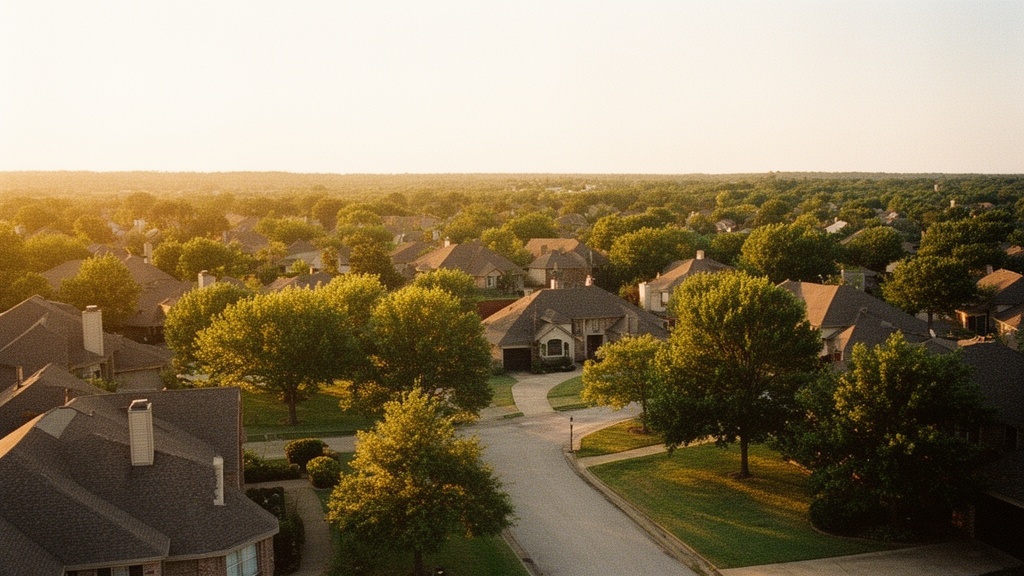
New Tampa and Carrollwood represent Tampa's suburban tier, located roughly 12 to 18 miles north of downtown. New Tampa, developed primarily in the 1990s and 2000s, features planned subdivisions with larger lot sizes, community pools, and homes in the 2,000 to 3,500 square foot range. Median prices here currently sit between $420,000 and $520,000. Carrollwood, developed a decade earlier, has a mix of 1970s and 1980s ranch homes alongside newer construction, with prices generally ranging from $375,000 to $490,000. Both areas are close to I-275 and the Veterans Expressway, making them practical options for commuters heading into downtown or the Westshore employment corridor.
Westshore and the Urban Core
The Westshore district, anchored by Tampa International Airport and the Westshore Business District, is Tampa's densest employment hub. Residential options here lean toward condos and townhomes, with prices ranging from $270,000 for a one-bedroom condo to $550,000 for a newer townhome with a rooftop terrace. The area is undergoing continued development, with several mixed-use projects completed in 2025 and additional phases still under construction as of September 2026. Channel District and Water Street Tampa, just east of downtown, represent the city's most urban residential options, with luxury high-rise condos in the $500,000 to $1.5 million range and direct walkability to Amalie Arena, the Tampa Riverwalk, and the emerging Water Street retail corridor.
3. Market Conditions in September 2026: Inventory, Days on Market, and Price Cuts
Tampa's market has shifted toward buyers compared to 2022 and 2023, but it is not a buyer's market across the board. Inventory is higher, price cuts are more common, and homes are taking longer to sell, but well-priced, well-maintained properties in desirable locations still move within two to three weeks.
What Inventory Levels Mean for Buyers
Active listings across Hillsborough County are running at approximately 3.8 months of supply in September 2026, up from roughly 1.5 months at the peak of the seller's market in early 2022. A balanced market is generally considered to be 5 to 6 months of supply, so Tampa sits in a range that still leans slightly toward sellers on well-located properties, while giving buyers more leverage on homes that have been sitting. Buyers today have time to conduct thorough inspections, negotiate repairs, and in some cases ask for seller concessions toward closing costs, none of which were realistic options two years ago.
Price Reductions and Seller Strategy
Price reductions are a real feature of the current Tampa market. Recent data shows that nearly one in two home listings in Florida have seen price cuts, a trend that Tampa reflects clearly. Broader reporting on this pattern is documented in coverage of Florida and Arizona listing price reductions, which places Tampa within a statewide pattern of sellers adjusting expectations. For buyers, this means list price is increasingly a starting point rather than a ceiling. For sellers, it underscores the importance of pricing correctly from day one rather than testing the market high and chasing it down with reductions.
Homes in New Tampa are currently averaging around 38 days on market, while South Tampa properties priced below $600,000 are moving faster, often in 18 to 25 days. Condos in the Westshore and Channel District areas are sitting longest, with some units exceeding 60 days before going under contract.
4. Timing the Tampa Market: When to Buy and When to Sell
Timing a real estate purchase or sale perfectly is nearly impossible, but understanding Tampa's seasonal rhythms and current rate environment helps buyers and sellers make better decisions about when to act.
Seasonal Patterns in Tampa Real Estate
Tampa's busiest buying season runs from January through April, driven in part by snowbirds making permanent relocation decisions and by corporate relocations that tend to cluster in the first quarter. Inventory typically peaks in spring, giving buyers the widest selection. Summer months slow down as Florida's heat and hurricane season create some hesitation, though serious buyers often find less competition during July and August. September and October sit in a transitional window: the frantic spring competition has faded, but motivated sellers who have not yet closed are often willing to negotiate. For sellers, listing in late January or February historically produces the most showings and the strongest offers.
Interest Rates and Purchasing Power
Mortgage rates have a direct impact on what Tampa buyers can afford. With 30-year fixed rates currently hovering in the 6.4 to 6.8 percent range in September 2026, a buyer financing $380,000 is looking at a principal and interest payment of roughly $2,380 to $2,460 per month before taxes and insurance. That is meaningfully higher than payments from the 3 percent rate era, which is one reason some potential sellers are staying put rather than trading into a higher rate on a new purchase. This rate lock effect has kept some inventory off the market, which partially offsets the increased listings that are coming from motivated sellers.
Buyers relocating to Tampa from higher-cost metros like New York, Boston, or the San Francisco Bay Area often find that even at current rates, Tampa's prices represent a significant value relative to what they left behind. A $480,000 home in Carrollwood with a two-car garage and a pool would cost two to three times as much in many coastal California markets.
If you are comparing commute times from suburban Tampa into the city, the article on commuting from Wesley Chapel to downtown Tampa during rush hour gives a realistic picture of what that drive looks like on a weekday morning in 2026.
5. Costs Beyond the Purchase Price
The purchase price is only one part of the financial picture when buying in Tampa. Florida has no state income tax, which attracts buyers from high-tax states, but there are several ownership costs that are specific to this market and worth understanding before you make an offer.
Closing Costs, Property Taxes, and Flood Insurance
Closing costs in Tampa typically run between 2 and 4 percent of the purchase price for buyers. On a $450,000 home, that means budgeting $9,000 to $18,000 for items like lender fees, title insurance, documentary stamp taxes, and prepaid homeowner's insurance. Florida's documentary stamp tax on the deed is paid by the seller in most counties, but Hillsborough County follows a different convention where it is negotiated. For a full breakdown of what Tampa buyers actually pay at closing, the guide on closing costs for home buyers in Tampa walks through every line item.
Property taxes in Hillsborough County are assessed at roughly 1.0 to 1.2 percent of assessed value for homesteaded properties, though the assessed value can differ from the purchase price depending on prior exemptions and the county appraiser's methodology. On a $500,000 home, annual taxes typically land between $5,000 and $7,500 after the homestead exemption is applied. For a detailed calculation, see the breakdown on property taxes on a $500,000 home in Hillsborough County.
Flood insurance is a cost that surprises many buyers new to Tampa. Large portions of South Tampa, Ballast Point, and properties near the Hillsborough River and Tampa Bay sit in FEMA-designated flood zones, where lenders require flood insurance as a condition of the mortgage. Annual premiums under the National Flood Insurance Program can range from $800 to $4,500 or more depending on the zone designation, the home's elevation certificate, and the structure's age. Buyers should request the flood zone status and any existing elevation certificate from the seller before making an offer, not after.
Homeowner's insurance is also elevated in Tampa relative to the national average due to hurricane exposure. Annual premiums for a single-family home in the $400,000 to $500,000 range currently run between $3,500 and $6,000 depending on roof age, construction type, and proximity to the coast. Wind mitigation inspections can reduce premiums significantly and are worth commissioning on any home built before 2002.
6. What the Broader Florida Data Tells Tampa Buyers and Sellers
Tampa does not exist in isolation. Understanding where the city fits within Florida's broader housing picture helps buyers and sellers calibrate their expectations.
Tampa Versus Other Florida Markets
Among Florida's four major metros, Tampa has seen a more pronounced inventory increase than Miami but a less dramatic price correction than parts of the Jacksonville and Orlando markets. Analysis of where Florida's housing market stands across Miami, Orlando, Tampa, and Jacksonville, as reported by HousingWire's Florida market overview, places Tampa in a middle position: not the tightest market in the state, but not the one experiencing the sharpest corrections either. That positioning makes Tampa a relatively stable environment for both buyers who want to avoid overpaying and sellers who want to avoid a dramatic loss in value.
New Construction and Its Effect on Resale Prices
New construction is a meaningful factor in Tampa's current market, particularly in the northern suburbs. Builders in Wesley Chapel, Wiregrass Ranch, and Land O' Lakes have been offering significant incentives in 2026, including rate buydowns, closing cost contributions, and design center credits, to move inventory. This creates indirect pressure on resale prices in those corridors, because a buyer comparing a 15-year-old resale home against a new build with a 4.9 percent rate buydown has a genuine alternative. Sellers of resale homes in those submarkets need to price competitively and be prepared to offer condition-related concessions.
In South Tampa and Seminole Heights, new construction is far less of a factor because available land is scarce. In those areas, resale homes face less direct competition from builders, and pricing power remains more firmly with sellers of well-maintained properties.
FAQ
Is Tampa a buyer's market or a seller's market right now?
In September 2026, Tampa is best described as a transitional market that leans slightly toward buyers compared to 2022 and 2023, but conditions vary significantly by neighborhood and price point. Inventory across Hillsborough County sits at roughly 3.8 months of supply, which is above the seller's market threshold of under 3 months but still below the 5 to 6 months that defines a true buyer's market. In South Tampa below $600,000, sellers still hold more leverage. In the condo market and in new-construction-heavy suburbs like Wesley Chapel, buyers have considerably more negotiating room. The most accurate answer is that your specific target neighborhood and price range will determine which side of the table has more power.
What are the most important costs to budget for beyond the home price in Tampa?
Beyond the purchase price, Tampa buyers need to account for closing costs of 2 to 4 percent of the loan amount, annual property taxes of roughly 1.0 to 1.2 percent of assessed value after the homestead exemption, homeowner's insurance that currently runs $3,500 to $6,000 per year for a mid-range home, and flood insurance if the property is in a FEMA-designated flood zone. Flood insurance alone can add $800 to $4,500 or more annually depending on the zone and the home's elevation. Buyers relocating from states without hurricane exposure are often caught off guard by the combined insurance cost, so it is worth getting insurance quotes before you finalize your budget.
Which Tampa neighborhoods have the most housing inventory right now?
As of September 2026, the greatest concentration of available inventory is in the condo market in Westshore and Channel District, in new and resale single-family homes in New Tampa and Wesley Chapel, and in mid-range homes in Carrollwood. South Tampa has lower inventory relative to demand, which is one reason prices there have held up better than in other parts of the city. If you are a buyer who prioritizes having options and negotiating leverage, the northern suburbs and the urban condo market currently offer the most choices. If you are a seller in South Tampa with a well-maintained home priced correctly, you are still in a relatively strong position.