
← Back to Blog
Market Trends
Airdrie, Canada Real Estate Market Guide: Prices, Neighborhoods and Timing
By Michelle Hilsabeck
September 9, 2026 · 10 min read
Whether you are buying your first home, selling an established property, or relocating to Airdrie from another city, this Airdrie, Canada real estate market guide covers everything you need to make a confident decision: current prices, what the different areas of the city actually look like on the ground, and how timing affects what you pay or receive.
1. What Makes Airdrie's Market Distinct From Other Alberta Cities
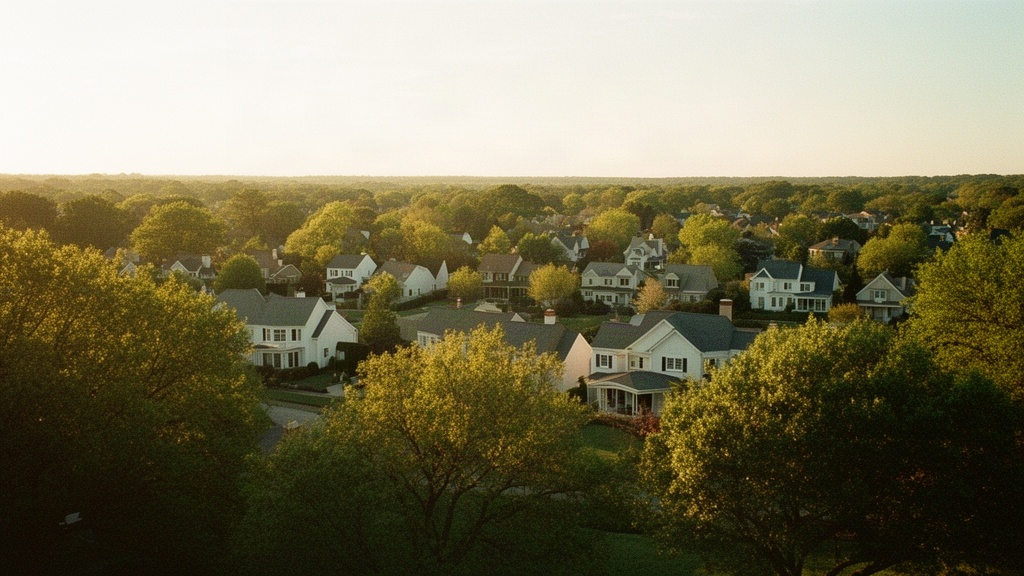
Airdrie is not a suburb in the traditional sense. It is a fully chartered city of roughly 80,000 residents sitting about 30 kilometres north of Calgary's downtown core, with its own commercial corridors, recreation facilities, and a housing market that operates on its own supply and demand dynamics rather than simply mirroring Calgary's.
A City That Grew Fast and Kept Growing
Airdrie has been one of the fastest-growing cities in Canada for over a decade. That growth has direct consequences for housing: new subdivisions continue to open on the city's edges, resale inventory moves quickly when priced correctly, and the range of housing types available has widened considerably. As Discover Airdrie has reported, the population boom is reshaping what gets built, where it gets built, and what buyers are willing to pay for it.
The city's growth also means the housing stock spans a wide age range. You will find 1980s bungalows with mature trees and large lots in the older southwest, side-by-side semi-detached homes from the early 2000s in the central areas, and zero-lot-line townhomes and laned single-family homes in the newest northeast and northwest communities. That variety is one of the defining features of the Airdrie market.
The Calgary Connection
A significant portion of Airdrie homeowners commute to Calgary for work. Deerfoot Trail connects Airdrie to Calgary's north end, and the drive to Calgary's downtown under normal traffic conditions runs roughly 35 to 50 minutes depending on the time of day and which part of the city you are heading to. Crossiron Mills, located just south of Airdrie along Highway 2, provides major retail access without requiring a full Calgary commute.
That commute relationship means Airdrie's market responds to Calgary's employment picture. When Calgary's economy is active and drawing workers, demand in Airdrie tends to strengthen because buyers can get more square footage per dollar in Airdrie than in comparable Calgary communities. When Calgary cools, Airdrie feels it too, though typically with a slight lag.
2. Airdrie Real Estate Prices Right Now
Prices in Airdrie vary considerably by property type, neighbourhood, and age of construction. As of September 2026, the overall benchmark price for a residential property in Airdrie sits in the low-to-mid $500,000 range, though that number tells only part of the story. For a deeper look at exactly where benchmark figures land this month, the average home price breakdown for Airdrie covers the numbers by property type in detail.
Detached Homes
Detached single-family homes are the dominant housing type in Airdrie and make up the majority of resale transactions. Entry-level detached homes, typically smaller laned homes or older bungalows, are generally available in the low-to-mid $400,000 range. Mid-range detached homes with attached garages, four bedrooms, and developed basements sit in the $500,000 to $650,000 range. Larger or newer homes in premium locations or with upgraded finishes can reach $700,000 to $850,000 or higher.
New construction detached homes from builders like Mattamy, Cedarglen, and Morrison Homes are actively selling in Airdrie's newer communities, with base prices typically starting around $550,000 to $600,000 before upgrades, lot premiums, and GST. Buyers comparing new builds to resale should factor in the full cost of window coverings, landscaping, and finished basements, which are rarely included in a new build's base price.
Townhomes and Semi-Detached
Townhomes represent one of the strongest entry points into Airdrie ownership. Attached townhomes with two or three bedrooms and a single attached garage are generally priced from the high $300,000s to the mid $400,000s. Larger end-unit townhomes with double garages and developed basements push into the $450,000 to $520,000 range. Semi-detached homes, which share one wall with a neighbour but have their own attached garage and separate entrances, typically fall between $450,000 and $580,000 depending on size and location.
Condominiums
Airdrie's condo market is smaller than Calgary's but has grown as the city has densified. Apartment-style condos in Airdrie are generally priced from the high $100,000s for older one-bedroom units to the mid $300,000s for newer two-bedroom units with underground parking. Condo fees vary widely by building age and amenities, so buyers should review the condo documents carefully before making an offer. Reserve fund health is a key factor in any condo purchase decision.
3. Airdrie's Neighbourhoods: What the Housing Stock Actually Looks Like
Airdrie's communities each have a distinct physical character shaped by when they were built and who the builder was. Understanding those differences helps buyers focus their search and helps sellers understand how their home compares to the broader inventory. For school-related research, the Alberta Education website and Rocky View Schools district site are the best starting points for objective information.
Established Southwest Communities
The southwest quadrant of Airdrie contains the city's oldest neighbourhoods, including Airdrie's original residential areas like Airdrie Heights, Jensen, and Thorburn. Homes here were built primarily between the 1970s and early 1990s. Lots tend to be larger than in newer communities, typically 5,000 to 7,000 square feet or more, and the streets are lined with mature trees. Bungalows, bi-levels, and two-storey homes from that era dominate the streetscape.
Buyers in these areas often find more square footage per dollar compared to newer communities, though the homes typically require updating kitchens, bathrooms, and mechanical systems. The southwest also offers proximity to Nose Creek Park, the city's main linear park system that runs along Nose Creek through the centre of Airdrie. Genesis Place, Airdrie's large recreation centre on 8th Street SW, is also accessible from these communities.
Northeast and East Airdrie
Communities like Windsong, Ravenswood, and Reunion in the northeast and east represent Airdrie's growth from roughly 2005 to 2018. The housing stock here is predominantly two-storey detached homes with attached double garages, built on lots ranging from 3,500 to 5,000 square feet. Many homes have developed basements, either by the builder or by subsequent owners. Streets are wider, sidewalks are on both sides, and the communities are laid out with internal pathways and ponds.
Windsong in particular features a large central pond, a commercial node at its entrance along 24th Street, and direct access to Airdrie's pathway network. Ravenswood and Reunion are positioned close to the city's northeast commercial areas along Veterans Boulevard, where you will find grocery stores, restaurants, and services without driving to the main retail corridors.
Newer Northwest Developments
The northwest is where much of Airdrie's active new construction is happening right now. Communities like Bayview, Lanark, and the expanding edges of Midtown are delivering a mix of laned homes, front-drive homes, and townhomes on smaller lots. Laned homes typically sit on lots of 2,500 to 3,500 square feet, while front-drive lots run 3,500 to 5,000 square feet. These communities are designed with a more urban grid pattern compared to the curvilinear street layouts of older Airdrie neighbourhoods.
Buyers choosing new construction in the northwest should factor in that amenities like parks, pathways, and nearby schools may still be years away from completion. The northwest is also slightly farther from the Deerfoot Trail interchange than the east side of the city, which can add a few minutes to a Calgary commute during peak hours.
4. Timing the Airdrie Market: When to Buy and When to Sell
Timing matters in any real estate market, but it rarely means waiting for a perfect moment that may never come. What timing really means in Airdrie is understanding when competition is highest, when inventory is thinnest, and how those forces affect the price you pay or receive.
Seasonal Patterns in Airdrie
Airdrie follows Alberta's general seasonal pattern with some local nuances. The spring market, running from roughly March through May, is historically the busiest period for both listings and sales. Buyer competition tends to be highest then, which supports stronger sale prices for sellers but creates more multiple-offer situations for buyers.
Summer in Airdrie sees solid activity through June and July, then typically softens in August as families focus on vacations before the school year. The fall market picks up again in September and October, offering a second window of meaningful activity before the winter slowdown. December and January are the quietest months for listings, which can actually work in a motivated buyer's favour: sellers listing in winter are often more flexible on price and conditions.
What September 2026 Looks Like Right Now
As of September 2026, Airdrie is entering its fall market with inventory levels that have risen compared to the tight conditions of 2024 and early 2025. Buyers have more options than they did 18 months ago, and the frantic multiple-offer environment that characterized that period has eased in most price ranges. That said, well-priced, move-in-ready homes in established communities are still generating strong interest within the first two weeks of listing.
Analysis from Greatest Boom Ever's Airdrie market overview notes that Airdrie has experienced a market reset after the peak years, with prices stabilizing and days on market lengthening in some segments. For sellers, that means accurate pricing matters more than it did during the peak. For buyers, it means there is more room to negotiate and conduct proper due diligence.
5. What Buyers and Sellers Need to Know Before Acting
The Airdrie, Canada real estate market guide would not be complete without practical guidance for the two groups most likely reading it: buyers deciding whether to enter the market now, and sellers deciding how to position their home.
Advice for Buyers Entering the Airdrie Market
Get pre-approved before you start touring homes. Even in a calmer market, sellers in Airdrie expect buyers to come prepared. A pre-approval letter from a lender tells the seller you are serious and gives you a clear ceiling on what you can offer. It also reveals your actual purchasing power, which sometimes differs from what an online mortgage calculator suggests once stress test rates and your specific debt picture are factored in.
Understand the difference between new construction and resale before committing. New builds in Airdrie offer modern layouts and builder warranties, but the possession timelines can stretch 12 to 18 months, and the final cost after upgrades and lot premiums often exceeds the advertised base price by 15 to 25 percent. Resale homes are priced all-in, allow for a faster possession, and let you inspect the actual finished product before you buy.
Factor in Airdrie-specific costs beyond the purchase price. Rocky View County collects property tax on Airdrie properties; the mill rate differs from Calgary's structure, and the full picture is worth understanding before you budget. A home inspection is non-negotiable on any resale purchase, and in Airdrie's older southwest communities, inspectors sometimes flag aging furnaces, original plumbing, or inadequate attic insulation that can cost thousands to address.
Advice for Sellers Listing in Airdrie
Price your home based on what sold in the last 60 to 90 days, not what you paid or what your neighbour listed at. In September 2026, overpriced listings in Airdrie are sitting on the market longer than correctly priced ones, and a home that lingers often ends up selling for less than it would have if priced right from the start. Buyers notice days on market and use it as leverage.
Presentation matters more than it did during the peak market years. Professional photography, a clean and decluttered interior, and addressing obvious deferred maintenance items before listing are all steps that directly affect how quickly your home sells and at what price. In Airdrie's current inventory environment, buyers have options and will move on from a home that photographs poorly or shows signs of neglect.
Consider your timing relative to your community's competition. If three other detached homes in your neighbourhood are already listed, adding a fourth can dilute demand for all of them. A local agent who tracks active listings by community, not just city-wide, can help you choose a listing window that reduces direct competition.
FAQ
Is Airdrie a good place to buy real estate right now compared to Calgary?
Airdrie and Calgary serve different needs and the right choice depends on your priorities, not a ranking of one city over the other. Airdrie generally offers more square footage per dollar than comparable Calgary communities north of the city, and it has its own amenities, recreation facilities, and commercial areas. The commute to Calgary's downtown runs roughly 35 to 50 minutes by car via Deerfoot Trail under typical conditions. Buyers should research both markets directly and consider factors like lot size preferences, housing type availability, and how often they need to be in Calgary before deciding where to focus their search.
How long does it typically take to buy a home in Airdrie from start to finish?
For a resale purchase, the timeline from accepted offer to possession in Airdrie is typically 30 to 60 days, though this is negotiable between buyer and seller. Before that, the search and offer process can take anywhere from a few weeks to several months depending on how specific your requirements are and how competitive the segment you are shopping in happens to be. Getting pre-approved before you start searching compresses the timeline considerably. New construction timelines are much longer: builder possession dates in Airdrie's active communities currently range from 6 to 18 months depending on the builder and the stage of construction when you sign.
What should I know about Airdrie's newer northwest communities before buying there?
The northwest communities in Airdrie, including areas like Bayview and Lanark, are among the most recently developed parts of the city. Housing there is newer, with modern layouts and current energy efficiency standards, and prices on resale homes reflect that relative newness. The trade-off is that some community amenities, including parks, pathways, and nearby schools, are still being built out and may not be fully in place for several years. The northwest is also a few minutes farther from the Deerfoot Trail interchange than the east side of the city, which can affect commute times to Calgary. Buyers should visit the community at different times of day to get a realistic sense of traffic patterns and available services before committing.