← Back to Blog
Buying
Louisville KY Homes by School District: Research Guide
By Missy Klein, Licensed Real estate Broker in Kentucky and Florida
Missy Klein Realty
August 24, 2026 · 6 min read
If you are searching for Louisville KY homes with good schools, you already know that school district information is one of the first things buyers want to sort out. The challenge is knowing where to find reliable data, what it actually means for your home search, and how to connect the right district boundaries to the right neighborhoods. This guide walks you through exactly how to do that research before you make an offer.
1. Understanding How School Districts Work in Louisville
Louisville operates under a single, county-wide district. Jefferson County Public Schools, known as JCPS, serves the entire consolidated city-county of Louisville Metro. That means whether you are looking at a brick colonial in St. Matthews or a newer construction home out near Prospect, you are technically within the same district umbrella. The individual school assigned to your address, however, depends on the specific attendance zone tied to that property.
Jefferson County Public Schools and What It Covers
JCPS is one of the largest school districts in the country, serving more than 90,000 students across hundreds of schools. Because the district is so large, the experience at one school can differ significantly from the experience at another, even when both fall under the JCPS banner. Buyers searching for Louisville KY homes in districts that meet their priorities often assume the district name tells them everything they need to know; in reality, the assigned school at the specific address is the detail that matters most.
District Boundaries vs. Neighborhood Boundaries
School zone lines do not always follow neighborhood or ZIP code lines. Two houses on the same block can be assigned to different elementary schools depending on where the attendance boundary falls. This is especially common in areas like the Highlands, Crescent Hill, and parts of the East End where older neighborhood boundaries were drawn independently of school planning. Always verify the assigned school at the actual street address, not just the general area.
2. Where to Find Official School Data in Louisville
School research should start with primary sources, not third-party rankings. The Kentucky Department of Education publishes school report cards, accountability data, and assessment results for every public school in the state. These are publicly available and updated annually. The JCPS website also has an address-based school finder tool that lets you type in a specific street address and see the assigned elementary, middle, and high school for that location.
Kentucky Department of Education Resources
The Kentucky Department of Education at education.ky.gov publishes school report cards that include proficiency rates, growth scores, attendance data, and program offerings for each school. These reports are a direct source, without the editorial layer that third-party ranking sites apply. For a more detailed look at how homes in Louisville connect to specific schools and district data, this overview of Kentucky school districts and real estate offers useful context on how district information intersects with your home search.
What the Data Does and Does Not Tell You
State report card data gives you a factual baseline, but it does not capture everything a family might care about: extracurricular programs, class sizes, before and after school care availability, or how a particular school handles specific learning needs. Plan to visit schools in person, attend open houses, and speak directly with principals or school counselors once you have narrowed your home search to a specific area. These conversations give you information that no website can replicate.
3. How Housing Stock Varies Across Louisville's School Zones
Louisville's housing market in August 2026 continues to show strong inventory variation depending on which corridor you are searching in. Understanding what homes physically look like and what they cost in different parts of the city helps you align your budget with the school zones you are researching. Here is a factual breakdown of what you will find in several key areas.
East End Corridors: Anchorage, Prospect, and Goshen Road Areas
The East End stretches along the Ohio River corridor and includes incorporated cities like Anchorage and areas near Prospect and Goshen Road. Housing here tends toward larger single-family homes on generous lots, with many properties built between the 1980s and early 2000s. Median prices in this corridor generally run from the mid-$400,000s into the $700,000s and above, depending on size and lot. The area is served by a mix of JCPS schools and, in the case of Anchorage, its own small independent school district. Buyers researching school assignments in this corridor should note that Anchorage Independent School District operates entirely separately from JCPS. For published data on either district, buyers can review the Kentucky Department of Education's school report cards at the department's official website.
South Louisville and the Okolona Corridor
South Louisville and the Okolona area offer a very different price point. Ranch-style homes, split-levels, and brick bungalows built from the 1950s through the 1980s make up much of the stock here, with median prices frequently in the $180,000 to $280,000 range. Lot sizes are typically modest, and the area has good access to Watterson Expressway and I-65 for commuting. Schools assigned to addresses in this corridor are JCPS schools; the specific assignments vary significantly by street, so address-level verification is especially important here.
St. Matthews, Crescent Hill, and the Inner Suburbs
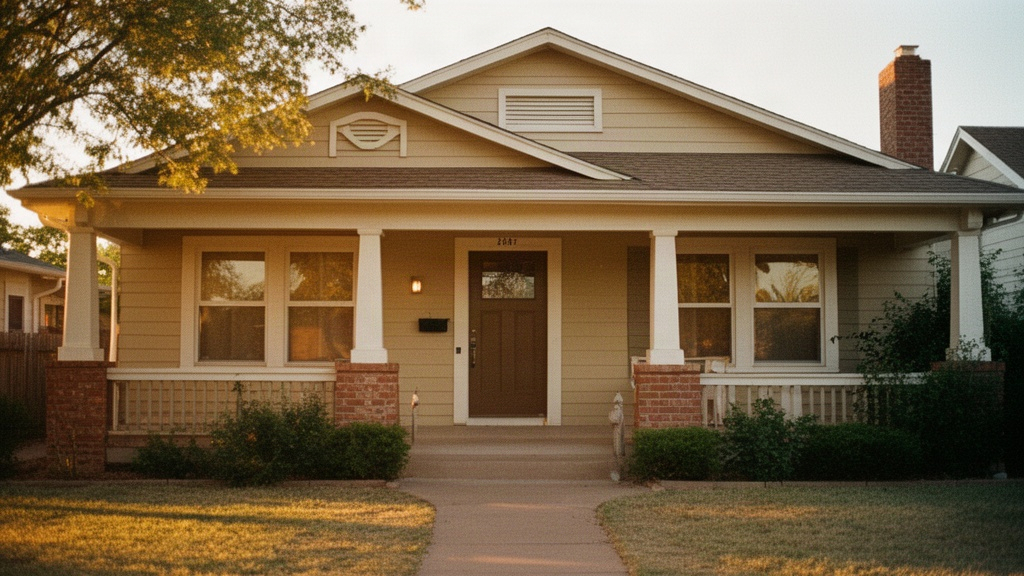
St. Matthews and Crescent Hill sit inside the Watterson Expressway loop and offer walkable access to restaurants, shops, and parks like Seneca Park and Cherokee Park. Housing stock here includes craftsman bungalows, Tudor-style homes from the 1920s and 1930s, and post-war ranches, with prices typically ranging from the mid-$200,000s to the low $500,000s. These neighborhoods are fully within JCPS, and the assigned schools vary by block. The proximity to Beargrass Creek Trail and easy access to downtown via Frankfort Avenue make these areas convenient for buyers who want urban walkability with a suburban feel.
4. Questions to Ask Before You Choose a Home
Knowing where to look is only part of the process. Before you write an offer on any Louisville property, there are specific questions worth asking to make sure the school assignment at that address matches what you researched. Getting this right before closing protects your investment and keeps your family's plans on track.
Confirming Your Assigned School at the Address Level
Use the JCPS school finder tool at jcpsky.net to enter the exact address of any home you are seriously considering. Print or screenshot the result and keep it with your home search notes. Attendance zones can be redrawn by the district board, so it is also worth calling the JCPS enrollment office directly to confirm that the assignment you see online is current and not subject to a pending rezoning. This one phone call can save you a significant headache.
Magnet Programs, Choice Zones, and Open Enrollment
JCPS operates a significant number of magnet and choice programs that allow students to attend schools outside their assigned attendance zone. Programs in arts, STEM, dual language immersion, and other specialties are spread across the district, and admission is typically by application with a lottery component. This means that even if the assigned school at your address is not your first choice, your child may still have access to programs across the district. Understanding this option can open up more areas of Louisville to your home search than you might initially expect.
5. Timing Your Purchase in Louisville's Market
As of August 2026, Louisville's housing inventory has been gradually increasing compared to the tight supply seen in 2024 and 2025, giving buyers more options to be selective about location and school zone. Interest rates remain a key factor in monthly payment calculations, and buyers who have done their school research in advance are better positioned to move quickly when the right property appears. Starting your research early puts you in a strong position to act confidently when a home in your target zone hits the market.
Research from the National Association of Realtors on home purchase timing and market conditions shows that buyers who prepare their criteria early, including school zone priorities, tend to make faster and more confident decisions once conditions align. In Louisville's market right now, preparation is genuinely your competitive advantage.
FAQ
How do I find out which school is assigned to a specific Louisville address?
The most reliable method is to use the JCPS school finder tool at jcpsky.net, which lets you enter any street address and see the assigned elementary, middle, and high school. After checking online, it is worth calling the JCPS enrollment office directly to confirm the assignment is current, since attendance zones are occasionally redrawn. Your real estate agent can also help you cross-reference this information during the home search process. Never rely solely on what a listing description says about school assignments; always verify at the address level. This is especially important in areas like Crescent Hill and the Highlands where zone lines shift mid-block.
Does living in a certain Louisville neighborhood guarantee access to a specific school?
Not automatically. JCPS assigns students based on attendance zones tied to specific addresses, not neighborhood names or ZIP codes. Two homes on the same street can be assigned to different schools if an attendance zone boundary runs between them. Additionally, JCPS operates magnet and choice programs that allow students to apply for schools outside their assigned zone, which means your assigned school is a starting point, not necessarily your only option. Always confirm the assignment at the exact property address before making a purchase decision based on school access.
Where can I find objective data on Louisville schools without relying on third-party ranking sites?
The Kentucky Department of Education publishes annual school report cards at education.ky.gov that include proficiency scores, growth data, attendance rates, and program information for every public school in the state. These are primary source documents produced by the state government, without the editorial weighting that commercial ranking sites apply. The JCPS website at jcpsky.net also publishes school-level information including program offerings, contact details, and enrollment procedures. For private school options, each school publishes its own admissions and academic information independently. Visiting schools in person and speaking with staff is still the most thorough way to evaluate fit for your household's specific needs.