← Back to Blog
Market Trends
Dubai Hills Estate Do People Trust the Most Real Estate Market Guide: Prices, Neighborhoods and Timing
By Mohan Soneri
September 10, 2026 · 10 min read
Dubai Hills Estate is one of the most closely watched addresses in Dubai right now, and for good reason: it sits at the intersection of master-planned green space, strong transaction volumes, and a price ladder that spans from mid-range apartments to large private villas. This guide covers everything buyers, sellers, and people relocating to Dubai need to know, including current prices, how the sub-communities differ from one another, service charge realities, and the timing question that every serious buyer asks. If you want a clear, numbers-grounded picture of the Dubai Hills Estate real estate market, you are in the right place.
1. What Makes Dubai Hills Estate Different from Other Master-Planned Communities
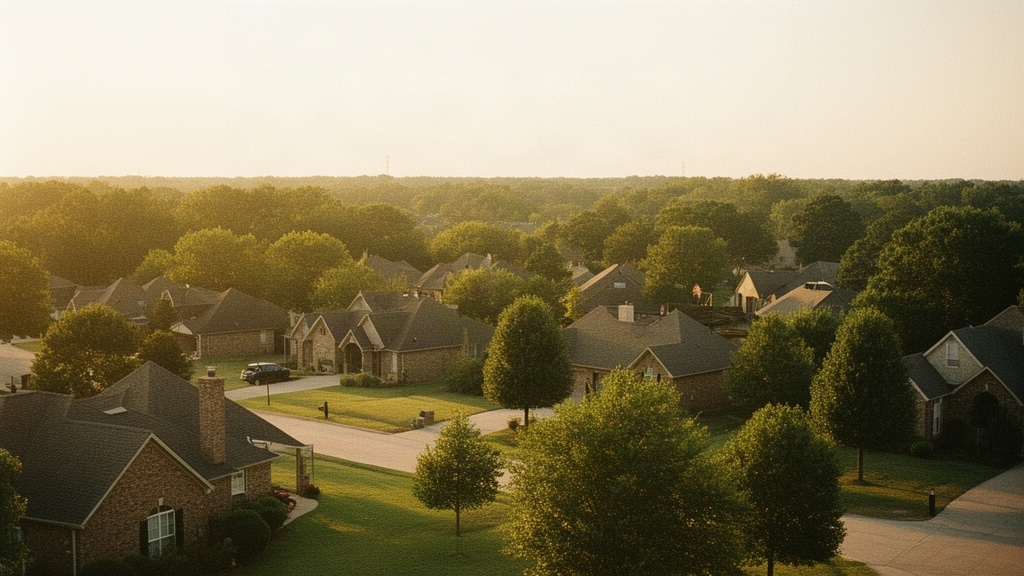
Dubai Hills Estate stands apart because of its physical layout, not just its branding. The community is a joint venture between Emaar Properties and Meraas, developed across roughly 11 million square metres in the Mohammed Bin Rashid City corridor. That scale allows for infrastructure that smaller communities simply cannot replicate: an 18-hole championship golf course, a 1.45-kilometre Dubai Hills Park running along the community spine, and the Dubai Hills Mall anchoring the retail core.
The Golf Course and Park as Physical Anchors
The Dubai Hills Golf Club course wraps around the eastern edge of the community, and a meaningful share of the villas in Golf Place, Parkway Vistas, and Emerald Hills sit on or directly adjacent to the fairways. This creates a clear price premium for golf-facing units compared to non-golf plots within the same sub-community. Dubai Hills Park, meanwhile, is a linear green corridor with jogging tracks, cycling paths, and open lawn areas that connects several residential clusters to the mall and the community centre.
How Dubai Hills Connects to the Rest of the City
Location is one of the strongest arguments for Dubai Hills Estate. Al Khail Road (E44) runs directly alongside the community, giving drivers a relatively direct corridor toward Downtown Dubai, roughly 15 to 20 minutes away in moderate traffic, and toward Dubai Marina and JBR, roughly 25 to 30 minutes away. The community also sits close to Al Barsha, Jumeirah, and the Expo City axis via Sheikh Mohammed Bin Zayed Road. For people relocating to Dubai who need central access without living in a high-density tower environment, the location is a practical advantage worth pricing into your decision.
If you are comparing commute times and distances from other villa communities, the article on commuting from Arabian Ranches to DIFC during morning rush hour gives you a useful reference point for how Dubai's arterial roads perform under pressure, and the same logic applies when mapping your Dubai Hills commute.
2. Current Prices Across Dubai Hills Estate in September 2026
Prices in Dubai Hills Estate have continued to firm up through the first half of 2026, driven by sustained end-user demand and limited secondary market supply in the villa segment. The Dubai Hills Estate market report for H1 2026 documents this trend in detail, noting that both transaction volumes and average prices per square foot moved upward compared to H1 2025.
Apartment Price Ranges by Bedroom Count
As of September 2026, apartment prices in Dubai Hills Estate's main residential towers (Park Heights, Collective, and Mulberry) sit in the following approximate ranges. Studios are trading between AED 700,000 and AED 950,000. One-bedroom apartments range from AED 1.1 million to AED 1.6 million depending on floor level, view, and finishing. Two-bedroom units in ready buildings are priced between AED 1.7 million and AED 2.5 million, with higher-floor units overlooking the park or golf course commanding the upper end. Three-bedroom apartments in the same clusters sit between AED 2.6 million and AED 3.8 million.
Villa and Townhouse Price Ranges
The villa and townhouse segment is where Dubai Hills Estate draws the most buyer attention in the secondary market. Three-bedroom townhouses in Maple and Sidra currently list between AED 3.5 million and AED 5.2 million. Four-bedroom townhouses in Maple III and Sidra II typically range from AED 4.8 million to AED 6.5 million. Standalone villas in Golf Place and Parkway Vistas, which sit on larger plots with golf-course or park views, are priced from AED 9 million to well above AED 25 million for the largest premium configurations. Emerald Hills, which offers custom-built plots, has seen completed villa transactions above AED 30 million for golf-facing positions.
Price Per Square Foot Benchmarks
On a per-square-foot basis, ready apartments in Dubai Hills Estate are trading between AED 1,400 and AED 1,900 per square foot as of September 2026, depending on the building and view. Townhouses in Maple and Sidra are averaging AED 1,500 to AED 1,850 per square foot. Golf Place villas, which are the most premium ready product in the community, have transacted at AED 2,200 to AED 2,800 per square foot for prime-facing units. These figures are meaningfully higher than what the same community was recording in 2024, reflecting the sustained demand that has characterised Dubai's villa market over the past two years.
For broader context on how Dubai Hills compares to the wider Dubai market, the Dubai UAE real estate market guide covering prices, neighborhoods and timing gives a city-wide picture that helps you calibrate where Dubai Hills sits in the overall landscape.
3. The Sub-Communities Inside Dubai Hills Estate and What They Offer
Dubai Hills Estate is not a single neighbourhood; it is a collection of distinct sub-communities, each with its own product type, plot sizes, and position within the master plan. Understanding the differences matters because the gap between the cheapest and most expensive sub-community can exceed AED 15 million for comparable bedroom counts, and the reasons for that gap are tied to specific physical attributes rather than abstract prestige.
Golf Place and Sidra
Golf Place is the most prominent villa cluster in the community, positioned directly on the championship golf course. Homes here are four and five-bedroom standalone villas on plots ranging from approximately 6,000 to over 12,000 square feet. The architecture is contemporary, with large glazed facades designed to maximise fairway views. Sidra, situated in the northern part of the master plan, offers three and four-bedroom villas on more compact plots, generally between 2,500 and 5,000 square feet. Sidra is a ready community with established landscaping, and its units trade frequently in the secondary market, making it one of the more liquid sub-communities for buyers and sellers alike.
Maple, Parkway Vistas, and Emerald Hills
Maple is the townhouse cluster most buyers encounter first, comprising three phases of three and four-bedroom townhouses in a traditional architectural style. Plot sizes in Maple typically run between 1,800 and 2,800 square feet, with built-up areas between 2,200 and 3,200 square feet. Parkway Vistas is a smaller, more exclusive cluster of standalone villas overlooking the park boulevard, with only a limited number of units and correspondingly higher price points. Emerald Hills represents the custom plot segment: buyers purchase a plot, typically between 8,000 and 20,000 square feet, and build their own villa to Emaar's design guidelines. This is the highest-cost entry point in the community and attracts buyers who want a bespoke product within a master-planned setting.
Collective, Park Heights, and Mulberry
The apartment clusters in Dubai Hills Estate are concentrated along the community's central boulevard and around Dubai Hills Park. Park Heights comprises two towers with studios through three-bedroom units, positioned close to the mall and the park entrance. Collective is a co-living influenced development with a strong amenity package including co-working spaces, a cinema room, and a rooftop pool, making it one of the more distinctive apartment products in the community. Mulberry is a low-rise apartment development surrounded by landscaping, with a quieter character than the taller towers. Each of these clusters has its own service charge rate and management company, so buyers should request the specific RERA-registered service charge schedule before committing.
4. Service Charges, Running Costs, and What Buyers Often Overlook
Service charges in Dubai Hills Estate are a material cost that every buyer needs to factor into their budget before signing anything. Unlike some older communities where service charges are low because infrastructure maintenance has been deferred, Dubai Hills Estate is a newer development with active community management, which means the charges are real and consistently collected. RERA registers and audits these rates annually, and the figures vary by sub-community and property type.
Typical Service Charge Rates in Dubai Hills
As of 2026, apartment buildings in Dubai Hills Estate carry service charges broadly in the range of AED 12 to AED 18 per square foot per year. For a 1,000-square-foot one-bedroom apartment, that translates to AED 12,000 to AED 18,000 annually, paid quarterly. Villa and townhouse community fees in Maple and Sidra are lower on a per-square-foot basis, typically AED 4 to AED 7 per square foot per year, but because the built-up areas are larger, the absolute annual figure can still reach AED 15,000 to AED 25,000 for a four-bedroom townhouse. Golf Place villas, with their larger footprints and higher-specification communal areas, carry community fees at the higher end of the villa range.
For a deeper look at how service charges work across Dubai's communities, the article on service charge rates per square foot in Downtown Dubai buildings as of 2026 explains the RERA framework and what the charges actually cover, which applies equally to Dubai Hills Estate buildings.
Community Fees and What They Cover
Beyond the RERA-registered service charge, Dubai Hills Estate owners pay a master community fee to Emaar Community Management. This covers the upkeep of shared infrastructure including Dubai Hills Park, the boulevard, street lighting, road maintenance within the master plan, and the community's security perimeter. The master community fee is separate from the building-level or cluster-level service charge, and both are payable annually. Buyers who budget only for the building service charge and miss the master community fee often find themselves surprised at handover or at the time of the first annual demand notice. Always ask for both figures before you calculate your total holding cost.
5. Timing the Dubai Hills Estate Market: When to Buy and When to Sell
The timing question is the one buyers and sellers ask most, and the honest answer is that Dubai Hills Estate is currently a market with low distressed inventory and sustained demand, which shifts negotiating leverage toward sellers in the villa segment. Gulf News reported in mid-2026 that Dubai's villa and prime apartment market shows no meaningful sign of distress sales, a signal that sellers are not under pressure to discount, and buyers should not expect significant price corrections in the near term.
Reading the Current Supply and Demand Balance
Ready villa supply in Dubai Hills Estate remains constrained. The community is largely built out in its villa clusters, meaning new secondary market listings come from existing owners rather than from new project completions. This structural supply limit has kept prices firm even as transaction volumes have remained healthy. In the apartment segment, there is more secondary market liquidity, and buyers have somewhat more room to negotiate, particularly in buildings where a higher proportion of units are investor-held and rented out rather than owner-occupied.
For sellers, September 2026 is a solid window. The post-summer market in Dubai typically sees a pickup in serious buyer enquiries from October onward, as residents return from extended summer travel and relocation decisions accelerate before the school year is fully underway. Listing in September, with your property photographed and priced accurately, positions you ahead of that wave rather than competing within it.
Off-Plan vs. Ready Properties in Dubai Hills
Emaar continues to launch new phases within the broader Dubai Hills Estate master plan, including apartment projects along the boulevard and new villa clusters in areas adjacent to the original community boundary. Off-plan prices in these newer launches are often positioned at or above current secondary market rates, which is a reversal of the traditional off-plan discount model. The attraction of off-plan in this context is the payment plan structure, typically 60 to 80 percent payable over construction with the balance on handover, rather than a price advantage. Ready secondary market properties require full payment or mortgage financing at the time of transfer, which has different cash-flow implications depending on your situation.
If you are weighing off-plan versus ready across Dubai more broadly, the complete buyer's guide on homes for sale in Dubai walks through the full process including financing options, DLD transfer fees, and what to expect at each stage.
FAQ
What is the average price for a villa in Dubai Hills Estate right now?
As of September 2026, villa prices in Dubai Hills Estate span a wide range depending on the sub-community and plot position. Three and four-bedroom townhouses in Maple and Sidra are broadly priced between AED 3.5 million and AED 6.5 million in the secondary market. Standalone villas in Golf Place and Parkway Vistas start around AED 9 million and can exceed AED 25 million for large golf-facing homes. Emerald Hills custom villas have transacted above AED 30 million. The price per square foot for ready villas in premium positions is currently running between AED 2,200 and AED 2,800.
Is Dubai Hills Estate a good investment for rental yield?
Dubai Hills Estate has delivered gross rental yields in the range of 5 to 7 percent for apartments and 4 to 6 percent for villas in recent years, with the exact figure depending on the unit type, size, and whether the property is furnished. Apartments in Park Heights and Collective tend to generate stronger gross yields relative to purchase price because entry costs are lower. Villa yields are more modest on a gross basis but the capital appreciation story has been stronger in that segment. You should always model net yield after service charges, agent fees, and any vacancy periods rather than relying on gross figures alone.
How does the Dubai Hills Estate market compare to Palm Jumeirah for buyers in 2026?
Dubai Hills Estate and Palm Jumeirah serve different buyer profiles based on what they are physically looking for. Palm Jumeirah offers beachfront and waterfront living on a man-made island, with a very different architectural character and a higher price floor for villas, typically starting above AED 15 million for ready standalone homes. Dubai Hills Estate offers a green, golf-course-anchored environment at a broader price range, with townhouse entry points below AED 4 million. Both communities have seen strong price growth through 2025 and into 2026. For a detailed breakdown of Palm Jumeirah pricing and sub-areas, the Palm Jumeirah real estate market guide on this site covers those specifics in full.