← Back to Blog
Buying
Investment Property Guide for Briarwood, New York: What Buyers Need to Know Before They Buy
By Molly Wynne
KW Greater Nassau
September 21, 2026 · 11 min read
This investment property guide for Briarwood, New York covers everything a serious buyer needs before committing capital to this Queens neighborhood. From understanding which property types generate rental income to calculating realistic cash flow numbers, this guide is built around the specific conditions you will find in Briarwood right now, in September 2026.
1. Why Briarwood Attracts Real Estate Investors
Briarwood draws investor interest because of one structural advantage that does not change with market cycles: transit. The Jamaica Van Wyck station, served by both the E and F subway lines, sits at the neighborhood's edge and puts Midtown Manhattan roughly 30 to 40 minutes away by train. For renters who commute to the city but cannot afford Manhattan or closer-in Queens neighborhoods, Briarwood represents a practical middle ground. That steady pool of commuter renters underpins demand for rental housing in the area.
Location and Transit Access
Briarwood sits between Jamaica to the east and Kew Gardens to the west, placing it near several major transportation corridors. The Van Wyck Expressway runs along its eastern boundary, and the Long Island Rail Road's Jamaica hub is a short walk or bus ride away. JFK International Airport is roughly 6 miles south, making the neighborhood accessible to workers in aviation, logistics, and hospitality industries that cluster near the airport. That geographic position creates a broad renter base beyond the typical Manhattan commuter.
For a closer look at commute times on the E and F lines, this breakdown of the Briarwood to Midtown Manhattan commute covers typical travel times and what to expect during peak hours.
Rental Demand Drivers
Several institutions and employers near Briarwood generate consistent rental demand. Jamaica Hospital Medical Center is about a mile away, and York College of the City University of New York is within a short commute. Queens Borough Hall and the Queens County Supreme Court complex in nearby Jamaica also bring a steady stream of employees and professionals to the area. Renters tied to these employers tend to stay for multiple years, which reduces turnover costs for landlords.
2. Property Types Available for Investment in Briarwood
Briarwood offers several distinct property types, and each comes with different investor implications. Not every structure in the neighborhood is eligible for traditional rental arrangements, so understanding the housing stock before you search is essential. For a full breakdown of what is available, this overview of Briarwood's home types covers single-family homes, co-ops, and condos in detail.
Single-Family Homes as Rentals
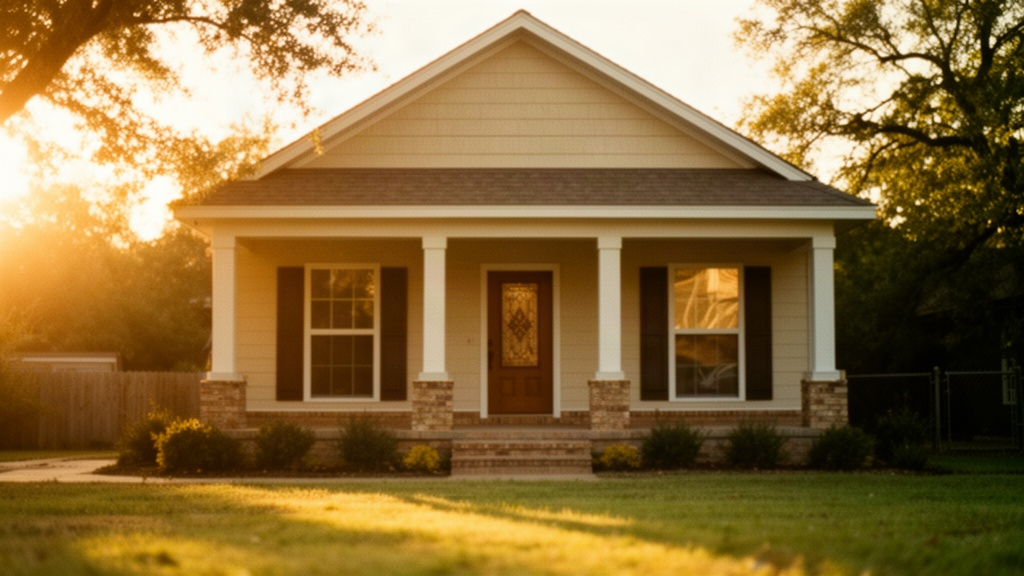
Single-family detached homes in Briarwood are predominantly brick Tudor and Colonial-style structures built between the 1920s and 1950s, typically on lots of 25 to 40 feet wide. Many have finished basements and detached garages, which can add usable square footage without structural changes. Investors who purchase a single-family home can rent the entire property to one household or, in some cases where the existing certificate of occupancy permits it, rent individual floors. Always verify the legal occupancy status with the New York City Department of Buildings before assuming any configuration is permitted.
Co-ops and Condos: What Investors Should Know
Co-ops make up a large portion of Briarwood's housing inventory, particularly in the mid-rise buildings along Hillside Avenue and Queens Boulevard. Most co-op boards in Briarwood restrict subletting, either prohibiting it outright for the first one to three years of ownership or capping the total number of units that can be rented at any one time. This makes co-ops a poor fit for investors whose primary goal is immediate rental income. If you are set on a co-op for investment purposes, request the proprietary lease and house rules before making an offer, and read the subletting policy word for word.
Condos in Briarwood are less common than co-ops but are generally more investor-friendly because you own the unit outright and are not subject to board approval for subletting. However, some condo declarations do include rental restrictions, so the same due diligence applies. Brickunderground's guide on buying an investment apartment in New York City walks through the co-op versus condo distinction in detail and is worth reading before you start touring units.
Multi-Family and Mixed-Use Options
True multi-family properties, meaning two- to four-unit buildings with separate residential units, are less common in Briarwood than in some adjacent Queens neighborhoods, but they do appear on the market. When they do, they tend to generate significant interest quickly. Mixed-use buildings with ground-floor retail and residential units above them exist along the commercial corridors on Queens Boulevard and Hillside Avenue. These carry more complexity in terms of commercial leasing, zoning compliance, and financing, but they also offer two income streams from a single asset.
3. Understanding the Numbers: Prices, Rents, and Cash Flow
Realistic numbers are the foundation of any investment decision, and Briarwood's current market in September 2026 gives investors a specific set of figures to work with. For the most current purchase price data, the September 2026 Briarwood home prices article on this site provides up-to-date figures broken down by property type.
Current Purchase Price Ranges
As of September 2026, single-family homes in Briarwood are generally trading in the range of $700,000 to $950,000, depending on lot size, condition, and whether a finished basement adds livable square footage. Co-op units typically list between $150,000 and $320,000, with maintenance fees that can range from $600 to over $1,200 per month depending on the building's age and amenities. Condos, when available, tend to price between $350,000 and $550,000. These ranges shift based on condition and specific location within the neighborhood, so treat them as starting points rather than fixed benchmarks.
Estimated Rental Income
Rental rates in Briarwood as of September 2026 reflect broader Queens market pressure. A one-bedroom apartment in a mid-rise building typically rents for $1,800 to $2,200 per month. Two-bedroom units in the same buildings range from $2,200 to $2,800 per month. A single-family home rented in its entirety can command $3,200 to $4,200 per month depending on size and condition. These figures assume a market-rate, unregulated tenancy; any unit that has been continuously rented since before 1974 may be subject to rent stabilization rules, which cap increases and limit your flexibility.
Expenses That Affect Your Return
Gross rent is not your return. For a single-family rental in Briarwood, you need to account for property taxes, which on a home assessed at $800,000 can run $10,000 to $14,000 per year before any exemptions. Add property insurance, typically $2,000 to $3,500 annually for a Queens single-family home. If you are financing the purchase, your mortgage payment will be the largest line item. Then budget for maintenance and repairs, roughly 1% of the property's value per year as a conservative estimate, plus vacancy allowance of 5 to 8% of annual gross rent.
For co-op units, monthly maintenance fees are paid by the shareholder and are not always fully recoverable from a tenant in a subletting scenario. Some co-op buildings also charge a sublet fee on top of the regular maintenance, which further compresses margins. Run the full expense stack before deciding a co-op works as an investment.
4. Financing an Investment Property in Briarwood
Financing an investment property in New York is meaningfully different from financing a primary residence. Lenders apply stricter standards, require larger down payments, and price the loan at a higher rate to account for the perceived risk of a non-owner-occupied property.
Down Payment Requirements
For a conventional investment property loan on a single-family or condo purchase in Briarwood, expect to put down at least 20%, and more commonly 25%, of the purchase price. On a $800,000 single-family home, that means $160,000 to $200,000 in cash at closing, before you account for closing costs, which in New York City typically add another 2% to 5% of the purchase price. FHA and VA loans are not available for pure investment properties; they require owner occupancy. If you plan to live in one unit of a two- to four-unit building, you may qualify for FHA financing with a lower down payment, but you must actually occupy the property.
Loan Types and Lender Expectations
Most investors purchasing in Briarwood use conventional conforming loans or, for higher-priced properties, jumbo loans. Lenders will scrutinize your debt-to-income ratio, credit score (typically 700 or above is required for investment property financing), and existing assets. Some investors use DSCR loans, which qualify based on the property's rental income rather than the borrower's personal income. These can be useful for investors who are self-employed or hold multiple properties, but they typically carry higher interest rates than conventional products.
Co-op Financing Restrictions
Financing a co-op for investment purposes is particularly challenging. Many lenders will not write a mortgage on a co-op unit that the buyer does not intend to occupy as a primary residence. Even those that do will require board approval of the financing, and many Briarwood co-op boards restrict investor purchases outright. If you are considering a co-op as an investment, consult with a lender who specializes in New York co-op financing before you make an offer, not after.
5. Legal, Tax, and Landlord Considerations in New York
New York State has some of the most tenant-protective landlord-tenant laws in the country, and investors in Briarwood need to understand the legal framework before they collect a single month's rent. Ignorance of the rules does not protect you from liability; it creates it.
New York Landlord-Tenant Law Basics
The Housing Stability and Tenant Protection Act of 2019 significantly changed the rules for landlords across New York State, and those changes remain in effect in September 2026. Security deposits are now capped at one month's rent for all residential tenancies. Late fees are capped at $50 or 5% of the monthly rent, whichever is lower. Lease renewal notice requirements have been extended, and eviction proceedings require strict procedural compliance. Consulting a New York real estate attorney before you draft your first lease is not optional; it is a baseline cost of doing business as a landlord in this state.
Property Taxes and Abatements
Property taxes in Briarwood are assessed by New York City and are based on the Department of Finance's assessed value, which may differ significantly from the market value. Class 1 properties (one- to three-family homes) and Class 2 properties (co-ops, condos, and larger residential buildings) are taxed at different effective rates. Some older buildings in Briarwood carry 421-a tax abatements that reduce the annual tax burden for a set number of years; when those abatements expire, the tax bill can increase sharply. Always request the current tax bill and check the abatement expiration date as part of your due diligence.
Permits and Certificate of Occupancy
Before assuming you can rent out a basement apartment or a converted attic in Briarwood, verify the property's certificate of occupancy with the New York City Department of Buildings. A finished basement that was never permitted as a legal dwelling unit cannot lawfully be rented, and doing so exposes you to fines and potential legal liability if a tenant is injured. If you are buying a property specifically because it appears to have extra rental units, make the purchase contingent on confirming those units are legally permitted.
6. How to Evaluate a Specific Property Before You Make an Offer
Every investment property in Briarwood needs to pass a basic financial and physical test before you commit. The market moves quickly; properties in Briarwood that are priced correctly often receive multiple offers within days. Preparing your analysis framework in advance lets you evaluate a property quickly without cutting corners.
Running a Basic Cash Flow Analysis
Start with the gross annual rent: multiply the expected monthly rent by 12. Then subtract your vacancy allowance (use 6% as a starting point for Briarwood, which reflects a tight but not frictionless rental market). From the resulting effective gross income, subtract all operating expenses: property taxes, insurance, maintenance reserve, property management if applicable (typically 8 to 10% of collected rent in Queens), and any HOA or co-op maintenance fees. What remains is your net operating income. Divide that by your total acquisition cost (purchase price plus closing costs plus any immediate repairs) to get your cap rate. In Briarwood's current market, cap rates on single-family rentals typically land between 3% and 5%, which is consistent with other transit-accessible Queens neighborhoods.
Due Diligence Checklist for Briarwood Properties
Beyond the financial model, a thorough physical and legal review protects you from surprises after closing. Order a full home inspection that covers the roof, boiler or HVAC system, plumbing, and electrical panel. Many Briarwood homes have original knob-and-tube wiring or cast-iron plumbing that may need updating. Request a title search to confirm there are no open liens, violations, or encumbrances on the property. Pull the Department of Buildings records to check for open permits or stop-work orders. If the property has tenants in place, review their leases and rent payment history before you close.
For context on what is currently listed and how quickly properties are moving, the Briarwood homes for sale page on this site provides a current snapshot of active inventory.
The broader New York City real estate investment landscape also matters for context. A recent analysis of assets driving New York City commercial real estate sales in 2024 from Forbes illustrates how investor appetite across property types in the city has been evolving, a trend that carries into the residential investment market in neighborhoods like Briarwood.
FAQ
Is Briarwood, New York a good area to buy a rental property?
Briarwood offers consistent rental demand driven by its direct subway access to Manhattan on the E and F lines, proximity to Jamaica Hospital Medical Center, and its position near major employment corridors along Queens Boulevard and the Van Wyck Expressway. Purchase prices for single-family homes currently range from roughly $700,000 to $950,000 as of September 2026, and market-rate rents for whole-home rentals run $3,200 to $4,200 per month, producing cap rates in the 3% to 5% range. Whether those numbers work for your investment goals depends on your financing structure, expense assumptions, and return expectations. This is a personal financial decision that warrants careful analysis specific to each property you evaluate.
Can I buy a co-op in Briarwood as an investment property to rent out?
Most co-op buildings in Briarwood restrict subletting, either prohibiting it for the first one to three years of ownership or limiting the percentage of units that can be rented at any time. Lenders also frequently decline to finance co-op units that will not be owner-occupied, which limits your financing options. Before making an offer on any Briarwood co-op with the intent to rent it out, request the proprietary lease and house rules, read the subletting policy carefully, and confirm with a co-op-experienced lender that financing is available for your intended use. Condos and single-family homes are generally more practical for investors seeking rental income.
What are the biggest legal risks for landlords in Briarwood, New York?
New York State's landlord-tenant laws are among the most protective in the country. The Housing Stability and Tenant Protection Act of 2019 caps security deposits at one month's rent, limits late fees, and significantly complicates the eviction process if a tenant stops paying or violates their lease. Renting an unpermitted unit, such as a basement apartment that was never legalized with the New York City Department of Buildings, can result in fines and liability exposure. Rent stabilization may also apply to units that have been continuously rented since before 1974, limiting your ability to raise rents. Consulting a New York real estate attorney before signing your first lease is strongly recommended.