← Back to Blog
Neighborhoods
HSR Layout, Bangalore Real Estate Market Guide: Prices, Neighborhoods and Timing
By Nausheer khan
September 18, 2026 · 11 min read
HSR Layout is one of Bangalore's most closely watched residential addresses, and for good reason: it sits at the intersection of strong infrastructure, established social amenities, and a housing market that has held its value through multiple cycles. This guide covers current flat prices per square foot across HSR Layout's sectors, what the physical neighbourhood looks like today, how the commute works, and how to read the timing if you are planning to buy or sell here in September 2026.
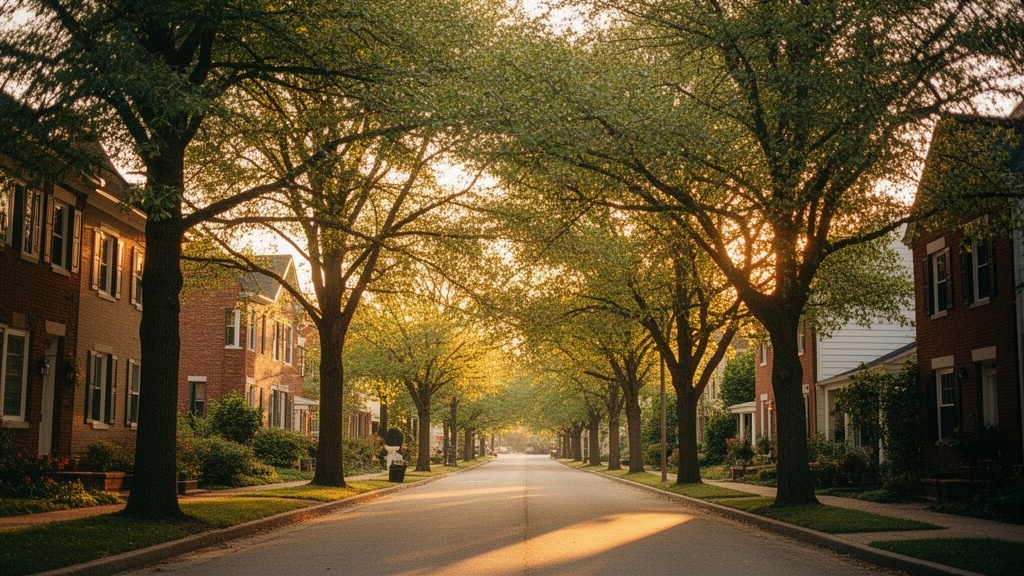
1. What HSR Layout Actually Looks Like on the Ground
HSR Layout is a planned residential township in South Bangalore, developed by the Bangalore Development Authority. It covers roughly 1,300 acres and is divided into seven sectors, each with its own internal road grid, parks, and commercial pockets. The planning is visible the moment you enter: wide arterial roads, numbered cross streets, and sector-specific parks make orientation straightforward compared to older, organically grown localities nearby.
The Grid Layout and Sector Structure
The seven sectors fan out from Sector 1 near Agara Lake down to Sectors 6 and 7 bordering Bommanahalli and Kudlu Gate. Sector 1 sits closest to Koramangala and 27th Main Road, which is HSR Layout's busiest commercial spine. Sectors 2, 3, and 4 are predominantly residential with lower commercial density. Sectors 5, 6, and 7 transition toward Silk Board Junction and have seen heavier mixed-use development over the past four years.
Agara Lake, the largest water body within the layout, anchors the northern end and has a walking track managed by the Bruhat Bengaluru Mahanagara Palike. Smaller lakes including Haralur Lake and Kasavanahalli Lake sit on the eastern periphery. These water bodies matter to buyers because BDA buffer zones restrict construction within 75 to 150 metres, which keeps certain pockets low-density.
Housing Stock: What You Will Find Here
HSR Layout's housing stock is a genuine mix. You will find BDA-allotted independent houses on 30x40, 40x60, and 50x80 sites, many of which have been converted into three-storey builder floors with individual units on each floor. Standalone apartment complexes, most of them built between 2005 and 2018, occupy a large share of the market. A smaller but growing segment consists of newer gated communities with amenities such as clubhouses, pools, and security, concentrated in Sectors 5 and 7.
Builder floor apartments, typically 2BHK units of 900 to 1,100 square feet, remain the most transacted format in HSR Layout. They appeal to buyers who want individual ownership of a floor without the overhead of a large gated community. Maintenance charges in these buildings are minimal, usually between Rs 1,000 and Rs 2,500 per month, which is considerably lower than the Rs 4,000 to Rs 8,000 per month common in larger gated communities elsewhere in South Bangalore.
2. HSR Layout Property Prices in September 2026
As of September 2026, apartment prices in HSR Layout range from approximately Rs 8,500 to Rs 14,500 per square foot depending on the sector, age of the building, and amenities. This is a meaningful spread, and understanding where within that range a specific property falls requires looking at the sector, floor, and building vintage carefully.
Apartment Prices by Sector
Sector 1 and the 27th Main Road corridor command the highest rates, typically Rs 12,000 to Rs 14,500 per square foot for well-maintained resale apartments and Rs 13,500 to Rs 15,000 per square foot for newer projects. Proximity to Koramangala, the density of cafes and co-working spaces on 27th Main, and the relatively short distance to the Outer Ring Road all factor into that premium. For a detailed look at how HSR Layout's pricing compares to the broader Bangalore market, the Bangalore real estate market guide on this site provides useful context.
Sectors 2, 3, and 4 sit in the Rs 9,000 to Rs 11,500 per square foot range for standard resale apartments. These sectors have quieter internal roads, larger parks, and older building stock. A 2BHK of 1,000 square feet in Sector 3 typically lists between Rs 90 lakh and Rs 1.15 crore in September 2026. Sectors 5, 6, and 7 show the widest price variation: older builder floors trade at Rs 8,500 to Rs 10,000 per square foot while newer gated community projects in Sector 7 near Kudlu Gate have crossed Rs 12,000 per square foot.
For a broader data reference, 99acres tracks current property rates and price trends in HSR Layout and is updated regularly with transaction-level data. Cross-referencing that with what is currently listed helps you spot whether an asking price is in line with recent deals.
Independent Houses and Plots
BDA-allotted sites in HSR Layout are among the most sought-after in South Bangalore. A 30x40 site (1,200 square feet of land) in Sectors 1 through 4 is currently priced between Rs 1.8 crore and Rs 2.6 crore depending on the road width and corner position. A 40x60 site (2,400 square feet) ranges from Rs 3.2 crore to Rs 4.8 crore. These numbers have risen sharply from 2024 levels, driven partly by the scarcity of clear-title BDA sites coming to market.
Constructed independent houses on 40x60 and larger sites, particularly those with rental income from upper floors, are priced between Rs 3.5 crore and Rs 7 crore. Rental yields on these properties, when the ground floor is owner-occupied and upper floors are rented, typically run between 2.5% and 3.5% annually on the total property value.
How HSR Layout Compares to Nearby Corridors
HSR Layout sits between Koramangala to the north and Sarjapur Road to the east. Koramangala's premium sectors trade at Rs 14,000 to Rs 18,000 per square foot, making HSR Layout noticeably more accessible for a similar physical location. Sarjapur Road's mid-segment gated communities, covered in detail in the flat prices per square foot on Sarjapur Road guide, currently range from Rs 7,500 to Rs 11,000 per square foot, which is lower than HSR Layout's median but comes with larger unit sizes and newer amenity packages.
3. Commute, Connectivity and Daily Infrastructure
HSR Layout's location gives residents access to three major corridors: Outer Ring Road to the north, Sarjapur Road to the east, and Hosur Road via Silk Board to the south. This connectivity is one of the primary reasons the locality has maintained strong demand across market cycles.
Road Access and Peak-Hour Conditions
Silk Board Junction remains the most significant traffic constraint for HSR Layout residents commuting toward Electronic City or Hosur Road. During morning peak hours between 8:00 AM and 10:30 AM, the stretch from HSR Layout's Sector 7 to Silk Board can take 25 to 45 minutes for a distance of roughly 3 kilometres. The Outer Ring Road flyover work and grade separators completed in late 2025 have partially relieved the Marathahalli and Kadubeesanahalli junctions, which benefits residents commuting north toward Whitefield or Bellandur.
27th Main Road, the commercial artery running through Sector 1, sees significant two-wheeler and pedestrian traffic on weekday evenings. Internal sector roads in Sectors 2, 3, and 4 are substantially quieter and are maintained at a reasonable standard. BDA roads within the layout are generally wider than in comparable older localities, which makes the last-mile commute from main roads to residential addresses less stressful.
Metro Connectivity and Future Plans
HSR Layout does not currently have a metro station within its boundaries as of September 2026. The nearest operational stations are Bommasandra on the Green Line (Phase 2 extension) to the south and BTM Layout on the proposed Phase 3 alignment. The Namma Metro Phase 3 corridor, which is planned to run along the Outer Ring Road and include a station near HSR Layout's northern edge, has been in detailed project report stage. Residents who rely on metro access currently drive or take an auto to Silk Board or Bommasandra, adding 15 to 25 minutes to their metro commute.
Water, Power and Civic Services
BWSSB Cauvery water supply covers most of HSR Layout, though coverage and pressure vary by sector and building age. Older standalone buildings in Sectors 2 and 3 that were not connected during the original BDA development sometimes rely on a combination of Cauvery supply and borewell water. Newer gated communities in Sectors 5 and 7 typically have rainwater harvesting systems and sewage treatment plants as RERA compliance requirements. Power supply in HSR Layout is managed by BESCOM and the locality generally experiences fewer extended outages than peripheral areas, though brief planned shutdowns for maintenance occur monthly.
4. Buying in HSR Layout: What to Know Before You Decide
Buying in HSR Layout requires a clear understanding of title types, building approval status, and the specific sector dynamics before making an offer. The locality has a mix of BDA-approved, BBMP-approved, and a smaller number of unapproved constructions, and distinguishing between them is essential.
Resale Flats Versus New Projects
Resale apartments dominate HSR Layout's transaction volume because the locality is largely built out. New project launches are limited to redevelopment of older sites or infill construction on the remaining vacant plots in Sectors 5, 6, and 7. When a new project launches here, it typically registers with RERA Karnataka (rera.karnataka.gov.in) and sells at a 15% to 25% premium over comparable resale units in the same sector. The premium reflects the new construction, amenity package, and builder warranty period.
Resale units offer the advantage of immediate possession and an established building society. You can assess the actual maintenance quality, water supply reliability, and parking situation before committing, which is harder to do with an under-construction project. The trade-off is that older buildings may require renovation investment, and the loan-to-value ratio offered by banks can be lower for buildings over 15 years old.
What Due Diligence Looks Like Here
For any property in HSR Layout, verify the Khata certificate and Khata extract from BBMP before signing any agreement. BDA-allotted sites will have a BDA allotment letter, possession certificate, and absolute sale deed as the primary title chain. Builder floor apartments on converted BDA sites should have a building plan approval from BBMP, an occupancy certificate, and a clear encumbrance certificate for the past 13 to 15 years. The property registration process in Bangalore and what the Khata transfer involves is covered in detail in the property registration and BBMP Khata transfer guide on this site.
Lake buffer zone compliance is a specific check that applies to properties near Agara Lake and the smaller tanks within the layout. The National Green Tribunal and Karnataka High Court have periodically directed demolition of structures within the 75-metre buffer zone. Before purchasing any property within 200 metres of a lake boundary, confirm that the building plan was approved with the lake boundary coordinates on file.
Timing the Market in HSR Layout
HSR Layout's market has shown consistent appreciation over five-year holding periods, with shorter-term price movements tied closely to Bangalore's overall IT employment cycle. In September 2026, inventory levels in the resale segment are moderate: properties priced accurately for the sector are moving within 45 to 75 days, while overpriced listings are sitting for four to six months. This is a market where negotiation is possible, particularly on builder floor apartments in Sectors 3 and 4 where supply is relatively higher.
The post-monsoon window from October through December has historically been an active buying period in Bangalore as companies complete hiring cycles and employees settle relocation decisions. If you are a buyer with financing pre-approved, the current September 2026 period is a reasonable time to shortlist and inspect properties before the October uptick in competition.
5. Selling in HSR Layout: Pricing Strategy and Realistic Timelines
Sellers in HSR Layout who price within 5% of the current sector benchmark are achieving transactions within 60 days in September 2026. Those who price at aspirational levels based on peak 2024 quotes are finding that buyers have good data access and are not stretching beyond recent comparable transactions.
Setting the Right Ask Price
The most reliable pricing anchor for a seller in HSR Layout is the registered sale price of comparable units in the same building or on the same street, available through the Karnataka government's Kaveri Online Services portal. Portal data lags by two to three months, so combining it with current listing prices on portals gives you both a floor and a ceiling for your ask. A 2BHK of 1,050 square feet in a well-maintained building in Sector 2 should realistically be listed between Rs 95 lakh and Rs 1.1 crore in September 2026, not Rs 1.3 crore, which is where several overoptimistic listings are sitting unsold.
Presentation matters significantly in HSR Layout's resale market. A freshly painted interior, repaired plumbing, and clean common areas can justify the upper end of the price range for your building. Buyers in this locality are comparing multiple options and the ones that photograph well and show well in person consistently close faster. The broader guide on selling a home in Bangalore covers the full process including documentation, negotiation, and registration timelines.
How Long Listings Typically Sit
Well-priced 2BHK apartments in Sectors 1 and 2 are currently moving in 30 to 50 days from listing. 3BHK units above Rs 1.8 crore are taking longer, typically 75 to 120 days, because the buyer pool at that price point in HSR Layout is smaller and buyers at that budget are also weighing options in Koramangala and Indiranagar. Independent houses on BDA sites, particularly those with rental income potential, are moving faster than apartments in the same price band because clear-title BDA plots are genuinely scarce.
If you are selling and also evaluating capital gains implications on a property you have held for several years, the guide on capital gains tax on a Bangalore flat sale in September 2026 explains how LTCG is calculated and whether indexation applies to your situation.
FAQ
What is the average price per square foot in HSR Layout in September 2026?
As of September 2026, the average price per square foot in HSR Layout ranges from approximately Rs 8,500 to Rs 14,500 depending on the sector, building age, and unit type. Sector 1 and the 27th Main Road corridor command the highest rates, while Sectors 3 and 4 offer more moderate pricing for similar floor areas. Independent BDA sites are priced separately on a per-square-foot-of-land basis and have seen sharper appreciation than apartments over the past two years. For the most current transaction data, the Karnataka government's Kaveri Online Services portal and 99acres both publish recent registered sale prices for the locality.
Is HSR Layout a good area to buy property right now?
HSR Layout has a well-established physical infrastructure, clear BDA-planned road grids, and proximity to the Outer Ring Road, Sarjapur Road, and Hosur Road corridors, which gives residents multiple commute options. The resale market in September 2026 has moderate inventory, meaning buyers have reasonable choice without the extreme competition seen in 2022 and early 2023. Due diligence is important: verify BBMP Khata status, building plan approvals, and lake buffer zone compliance before making any offer. Whether HSR Layout is the right fit for your specific needs depends on your workplace location, unit size requirements, and budget, all of which are worth discussing with a local agent who knows the sector-level price variations.
Does HSR Layout have metro connectivity?
As of September 2026, HSR Layout does not have an operational metro station within its boundaries. The nearest operational stations are on the Green Line extension toward Bommasandra in the south and the existing Purple Line stations accessible via the Outer Ring Road to the north. Namma Metro Phase 3, which includes a corridor alignment near HSR Layout's northern edge, is in the detailed project report and pre-construction phase. Residents currently commute to metro stations by auto or personal vehicle, adding 15 to 25 minutes to the total metro journey time. When Phase 3 becomes operational, properties closer to the planned station locations are expected to see a pricing response.