← Back to Blog
Buying
Homes for Sale in Burlington, Canada: A Complete Buyer's Guide for 2026
By Nayaki Penumarthy
September 22, 2026 · 10 min read
Burlington, Ontario is one of the most actively traded real estate markets in the Greater Golden Horseshoe, and right now homes for sale in Burlington are drawing serious attention from buyers relocating from Toronto, Hamilton, and beyond. This guide covers what you actually need to know: current prices, the types of housing stock you will find across Burlington's distinct communities, what the buying process looks like here, and how to position yourself to compete in a market that moves quickly.
1. What the Burlington Housing Market Looks Like Right Now
Burlington's real estate market in September 2026 sits in a measured but active phase. Inventory has risen compared to the tighter conditions seen in late 2024 and early 2025, giving buyers more choice without the market tipping into oversupply. The Realtors Association of Hamilton-Burlington (RAHB) has tracked steady transaction volumes through the summer of 2026, with the detached segment continuing to anchor overall market activity.
Prices and Inventory in September 2026
Benchmark prices across Burlington's housing types currently range broadly. Detached homes in Burlington are trading in the range of roughly $1.1 million to $1.6 million depending on the community, lot size, and age of the home. Semi-detached and freehold townhomes sit in the $750,000 to $950,000 range in most areas. Condo apartments, including newer high-rise units near the downtown core and Appleby GO corridor, are generally priced between $500,000 and $750,000 as of this month.
Days on market for homes for sale in Burlington currently average around 25 to 35 days across property types, which is longer than the frenetic 7 to 10 day averages seen in 2021 and 2022. That shift gives buyers time to conduct proper due diligence, including home inspections and financing reviews, without the pressure of same-day offer deadlines that defined earlier cycles.
How Burlington Compares to Surrounding Markets
Burlington consistently prices higher than Hamilton to the west and Grimsby to the east, reflecting its proximity to the QEW corridor, GO Transit access, and the concentration of employment in the Appleby and Fairview corridors. Compared to Oakville and Mississauga to the east, Burlington offers comparable lakefront access and suburban infrastructure at a price point that is typically 10 to 15 percent lower for similar square footage. That spread has kept Burlington on the radar for buyers priced out of the 905's eastern tier.
Broader market context matters here too. According to Vermont Biz reporting on North American housing trends, Burlington-area markets have demonstrated resilience through the rate adjustment cycle, with transaction volumes recovering as buyers adapt to the current interest rate environment. That pattern holds in Burlington, Ontario as well, where pent-up demand from buyers who paused in 2023 and 2024 has been gradually returning to the market through 2026.
2. Types of Homes for Sale in Burlington
Burlington's housing stock is genuinely varied, spanning everything from 1950s bungalows near the lake to new-build stacked towns in the city's northern reaches. Understanding what each property type offers, and what it costs to maintain, is one of the most practical things a buyer can do before starting active searches.
Detached and Semi-Detached Houses
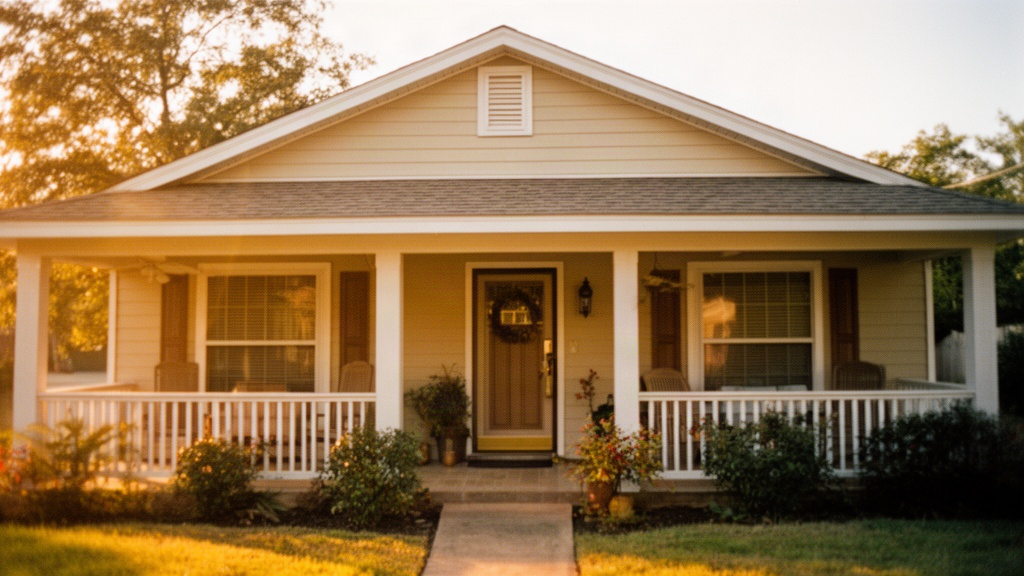
Detached homes make up the largest share of Burlington's residential inventory. Older neighbourhoods south of the QEW, particularly around Aldershot, Maple, and the downtown core, feature post-war bungalows and two-storey homes on lots ranging from 40 to 60 feet wide. Many of these have been renovated or expanded over the decades, so the finished square footage often exceeds what the original floor plan suggests. North Burlington, developed primarily from the 1990s onward, offers larger two-storey detached homes with double-car garages on lots typically 40 to 50 feet wide, with finished basements common in the Orchard, Millcroft, and Headon Forest areas.
Semi-detached homes are less common in Burlington than in Hamilton or Toronto but do appear in pockets of the city's south end and in some planned communities north of Upper Middle Road. They typically offer three bedrooms and 1,200 to 1,600 square feet of above-grade living space, making them one of the more accessible entry points into Burlington's freehold market.
Townhomes and Stacked Towns
Freehold townhomes in Burlington typically run 1,400 to 2,000 square feet across two or three storeys, often with a single-car garage and a small backyard. They appear in clusters throughout north Burlington, particularly in Orchard and the Alton Village area near Appleby Line and Dundas Street. Condo townhomes and stacked towns, which carry monthly maintenance fees, are concentrated closer to transit corridors and offer smaller footprints, generally 800 to 1,300 square feet, at lower purchase prices.
Condos and Loft Units
Burlington's condo market has grown considerably over the past decade. High-rise towers now line the downtown waterfront along Lakeshore Road and Brant Street, with units ranging from studios to three-bedroom suites. The Appleby GO station area has also seen mid-rise condo development, attracting buyers who commute to Toronto by rail. Monthly maintenance fees for Burlington condos currently average between $500 and $800 depending on building age, amenities, and unit size. Buyers should review status certificates carefully, as older buildings can carry deferred maintenance costs that affect the reserve fund.
3. Burlington's Key Communities and What You'll Find There
Burlington is organized into several distinct communities, each with its own character, price range, and housing stock. Knowing the physical differences between these areas helps buyers narrow their search before they start booking showings.
Aldershot and LaSalle Park
Aldershot sits at Burlington's eastern edge, bordering Hamilton, and is home to the Aldershot GO station on the Lakeshore West line. The housing stock here is largely post-war bungalows and raised ranches from the 1950s through 1970s, with lot sizes that tend to be generous by Burlington standards, often 50 to 65 feet wide. LaSalle Park, which borders the Royal Botanical Gardens and Grindstone Creek, features larger lots and mature tree canopies. Prices in Aldershot for detached homes currently start around $900,000 and rise depending on proximity to the lake and lot depth.
Millcroft and Tansley
Millcroft and Tansley are mid-Burlington communities developed primarily in the 1990s and early 2000s. Millcroft is built around the Millcroft Golf Club, with many streets backing onto the course. Homes here are predominantly two-storey detached properties with brick exteriors, double-car garages, and finished basements, ranging from about 2,000 to 3,200 square feet. Tansley, just to the north, offers a similar product mix with slightly more street-level density from townhome pockets. Both communities sit within a 10 to 15 minute drive of the QEW and Appleby GO station.
Orchard and Headon Forest
Orchard is one of Burlington's newer planned communities, located north of Dundas Street near Appleby Line. It features a mix of detached homes, freehold towns, and condo towns built from the late 1990s through the 2010s. Headon Forest, slightly west along Dundas, is an established area with mature landscaping and a range of bungalows, two-storeys, and backsplits. Both communities are within walking distance of Bronte Creek Provincial Park, which covers over 1,300 hectares and includes hiking trails, a working farm, and swimming facilities.
Downtown Burlington and the Waterfront
Downtown Burlington runs along Brant Street between the QEW and Lake Ontario, with the waterfront anchored by Spencer Smith Park and the Burlington Pier. The housing mix here is the most diverse in the city: century homes and Victorian-era properties on tree-lined streets sit alongside newer condo towers with lake views. Lakeshore Road between Brant and Martha Street is the retail and restaurant spine of the neighbourhood, with independent shops, cafes, and the Burlington Performing Arts Centre. Detached homes in the downtown core command a significant premium, with many properties listed above $1.4 million, while condo units in the waterfront towers range widely based on floor and exposure.
4. The Buying Process for Burlington Real Estate
Buying a home in Burlington follows Ontario's standard real estate transaction framework, but there are local nuances worth understanding before you make your first offer. Working with an agent who knows Burlington's specific inventory and offer dynamics is one of the most practical advantages a buyer can have in this market.
Getting Pre-Approved in Ontario
A mortgage pre-approval is the first step for any serious buyer in Burlington. Canadian lenders use the federal stress test, which requires qualifying at the higher of your contract rate plus two percent or the Bank of Canada's qualifying rate, currently sitting at 5.25 percent as of September 2026. For a home priced at $1.2 million with a 20 percent down payment, that means qualifying on a mortgage of roughly $960,000. Buyers should approach their bank or a mortgage broker early, because pre-approval letters are typically valid for 90 to 120 days and give you a firm budget before you start touring homes.
Making an Offer and Navigating Conditions
In Burlington's current market, conditional offers are more common than they were two or three years ago. A financing condition gives you typically five business days to confirm your mortgage approval after an accepted offer. A home inspection condition, also typically five business days, allows a licensed inspector to assess the property's structure, mechanical systems, roof, and more. Sellers in Burlington's detached segment still sometimes receive multiple offers, particularly on well-priced homes under $1.1 million, so your agent's ability to read the competitive environment and advise on offer strategy is genuinely important.
Closing Costs to Budget For
Closing costs in Ontario typically add 1.5 to 4 percent of the purchase price on top of your down payment. For a $1.2 million Burlington home, that means setting aside an additional $18,000 to $48,000. The main components include Ontario land transfer tax (Burlington does not have a municipal land transfer tax, unlike Toronto), legal fees of $1,500 to $2,500, title insurance of $300 to $500, and home inspection fees of $450 to $600. First-time buyers in Ontario may qualify for a land transfer tax rebate of up to $4,000. Buyers should also factor in moving costs, utility connection fees, and any immediate renovation or appliance needs.
5. What to Know Before You Relocate to Burlington
Burlington draws a significant number of buyers who are relocating from Toronto, Mississauga, and other parts of the Greater Toronto Area, as well as from outside Ontario entirely. If you are planning a move here, a few practical areas deserve attention before you commit to a specific part of the city.
Commute Options to Toronto and Hamilton
Burlington has three GO Train stations: Aldershot, Burlington, and Appleby, all on the Lakeshore West line. Peak-hour trains from Burlington GO station to Union Station in Toronto run approximately every 15 to 30 minutes and take about 55 to 65 minutes depending on the service. Appleby GO is the eastern-most station and is popular with buyers in Orchard and Millcroft. By car, Burlington sits roughly 55 kilometres from downtown Toronto via the QEW, a drive that can range from 45 minutes to well over 90 minutes depending on traffic. Hamilton's downtown core is about 20 kilometres west via Highway 403 or the QEW, typically a 25 to 35 minute drive.
Parks, Trails, and Everyday Amenities
Burlington's trail network connects much of the city through the Burlington Waterfront Trail, which runs along Lake Ontario for several kilometres, and the Bruce Trail, which passes through the Niagara Escarpment at the city's northern edge. Bronte Creek Provincial Park in the northwest and the Royal Botanical Gardens in Aldershot, covering over 1,100 hectares, are two of the city's largest green spaces. For everyday shopping, Burlington has major retail nodes at Appleby Line and Dundas Street, at Fairview Street and Guelph Line, and along Brant Street in the downtown core. Mapleview Centre is the city's main enclosed mall, anchored by major department stores and located near the QEW and Fairview Street interchange.
Researching Schools and Local Services
Burlington is served by the Halton District School Board and the Halton Catholic District School Board, with French-language options through the Conseil scolaire Viamonde and Conseil scolaire catholique MonAvenir. School boundaries in Burlington can vary significantly from one street to the next, so buyers with children should verify catchment areas directly with the relevant school board rather than relying on general assumptions. The Ontario Ministry of Education's School Locator tool is the most reliable way to confirm which schools serve a specific address. For healthcare, Joseph Brant Hospital on Lakeshore Road is Burlington's main acute care facility, offering emergency services, surgical care, and a range of outpatient programs.
For buyers tracking broader housing trends as context for their Burlington search, the early 2026 market report from Hickok and Boardman provides useful regional data on inventory levels and price movement that helps frame where Burlington sits within the wider market cycle this year.
FAQ
What is the average price of homes for sale in Burlington, Ontario right now?
As of September 2026, detached homes in Burlington are generally priced between $1.1 million and $1.6 million depending on the community, lot size, and the age and condition of the property. Freehold townhomes and semi-detached homes typically fall in the $750,000 to $950,000 range, while condo apartments are generally available from $500,000 to $750,000. These figures represent active listing ranges rather than a single benchmark, so prices shift based on specific streets, proximity to the lake or GO stations, and recent renovations. Working with a local agent who monitors Burlington's MLS data daily gives you the most current and accurate picture.
Is Burlington a good place to buy a home if I commute to Toronto?
Burlington has three GO Train stations on the Lakeshore West line: Aldershot, Burlington, and Appleby. Peak-hour trains from Burlington GO to Union Station take approximately 55 to 65 minutes, with service running every 15 to 30 minutes during rush hours. By car via the QEW, the drive to downtown Toronto covers about 55 kilometres and can take anywhere from 45 minutes to over 90 minutes depending on traffic conditions. Many buyers who relocate to Burlington choose their specific neighbourhood based on proximity to their preferred GO station, so it is worth mapping that commute before narrowing your property search. Nayaki Penumarthy can help you identify which Burlington communities offer the best access to the station that suits your schedule.
What closing costs should I expect when buying a home in Burlington?
Buyers in Burlington should budget for closing costs of approximately 1.5 to 4 percent of the purchase price, on top of their down payment. The main expenses are Ontario land transfer tax, legal fees of $1,500 to $2,500, title insurance of $300 to $500, and a home inspection fee of $450 to $600. Burlington does not have a municipal land transfer tax the way Toronto does, which reduces the overall cost compared to buying in the city. First-time buyers in Ontario may qualify for a land transfer tax rebate of up to $4,000. It is also worth setting aside funds for moving costs, any immediate repairs identified in the inspection, and utility deposits or connection fees.