← Back to Blog
Buying
Buying a Home in New Lenox, Illinois: Process, Costs and Timeline
By Niki Rocco
September 19, 2026 · 13 min read
Buying a home in New Lenox, Illinois involves more steps, more costs, and more local nuance than most buyers expect going in. This guide walks through the full process from pre-approval to closing day, with real numbers, Will County specifics, and New Lenox market context so you know exactly what to expect before you make an offer.
1. What the New Lenox Housing Market Looks Like Right Now
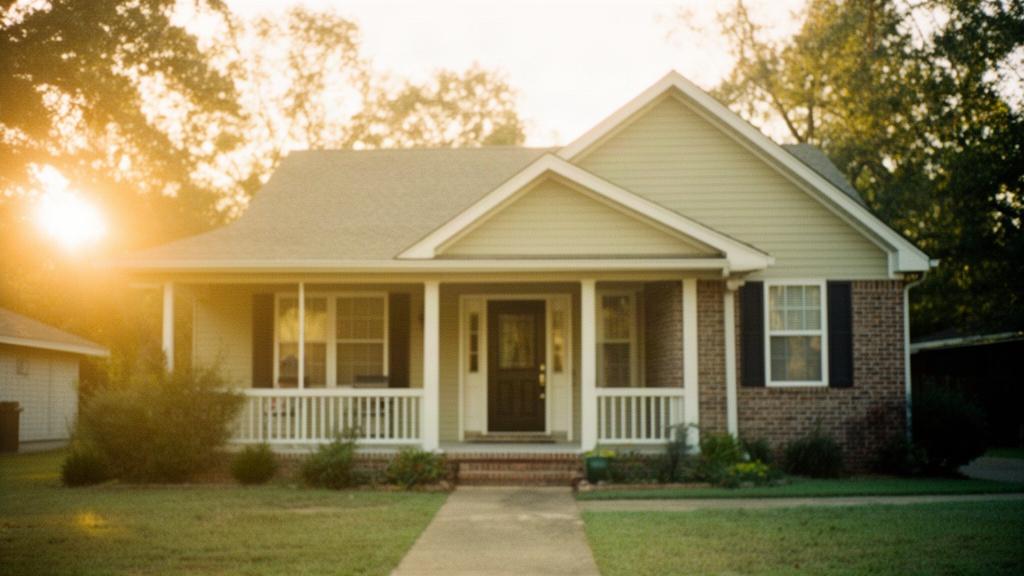
New Lenox sits in the northwest corner of Will County, about 35 miles southwest of downtown Chicago, and its housing market reflects that position: suburban pricing with genuine variety in housing stock, from modest ranch homes built in the 1970s near the historic downtown to larger two-story colonials and newer construction subdivisions on the village's expanding edges.
Price Ranges and Housing Stock
Median home prices in New Lenox currently sit in the low-to-mid $400,000s, with meaningful variation depending on subdivision, lot size, and age of construction. Entry-level attached townhomes and smaller single-family homes start in the $280,000 to $330,000 range. Mid-range detached homes with three or four bedrooms and a two-car garage typically fall between $380,000 and $480,000. Larger homes on half-acre or larger lots, particularly in established subdivisions like Timber Trails or newer communities near Route 30, can reach $550,000 to $700,000 and above.
The village has a mix of resale inventory and active new construction. If you are weighing those two paths, the article on new construction subdivisions being built in New Lenox in 2026 covers the active builders and communities in detail.
How Competitive Is the Market
As of September 2026, New Lenox remains a relatively tight market. Well-priced homes in the $350,000 to $475,000 range often receive multiple offers within the first week of listing. Homes priced above $550,000 tend to sit longer, giving buyers more room to negotiate. Inventory has been constrained by the same dynamic seen across the Chicago suburbs: homeowners who locked in low mortgage rates in prior years are reluctant to sell, which keeps the number of available homes below what demand would otherwise support.
Understanding that dynamic matters when you are structuring an offer. Knowing the difference between a home that has been on the market for six days versus sixty days tells you a great deal about how much negotiating room you have.
2. The Step-by-Step Process for Buying a Home in New Lenox, Illinois
The process of buying a home in New Lenox follows Illinois law and standard Will County practice. There are seven distinct phases, and each one has its own timeline and potential friction points.
Step 1: Get Pre-Approved
Pre-approval is the starting point, not a formality you handle after finding a home you like. In a competitive market like New Lenox, sellers and their agents will not take an offer seriously without a current pre-approval letter from a lender. The pre-approval process involves submitting tax returns, W-2s, pay stubs, bank statements, and authorization for a credit pull. A lender will tell you the maximum loan amount you qualify for and estimate your monthly payment at various price points. This typically takes three to seven business days if you have your documents organized.
Illinois has several first-time buyer programs through the Illinois Housing Development Authority (IHDA) that offer down payment assistance. If you are buying for the first time, ask your lender specifically about IHDA Access programs before you assume a conventional loan is your only option.
Step 2: Hire a Buyer's Agent
A buyer's agent represents your interests throughout the transaction, not the seller's. In Illinois, you will sign a Buyer Representation Agreement before your agent can show you homes listed in the MLS. This agreement outlines the agent's compensation and the scope of their duties. For most buyers, the seller covers the buyer's agent commission through the sale proceeds, though this is now negotiated on a transaction-by-transaction basis following changes to industry practice.
Choosing an agent who knows New Lenox specifically matters more than buyers sometimes realize. Subdivision-level knowledge, familiarity with which streets back to commercial property or rail lines, and relationships with local listing agents all affect your outcome. If you want to think through what to look for in representation, the guide on finding a good buyer's agent who knows New Lenox is worth reading before you commit.
Step 3: Search and Tour Homes
Once you have pre-approval and an agent, the active search begins. Your agent will set up an MLS search with your criteria and alert you to new listings as they hit the market. In a fast-moving price band, being among the first to tour a new listing can make a real difference. New Lenox homes in the $380,000 to $470,000 range frequently go under contract within seven to ten days of listing, so responsiveness matters.
During tours, pay attention to lot orientation, proximity to Route 30 or Route 6 (the main commercial corridors), overhead power lines, and whether the home is in a flood zone. Will County has pockets of flood-prone land, and FEMA flood zone designation affects both your insurance costs and your mortgage requirements.
Step 4: Make an Offer
An offer in Illinois is a written contract, not a casual expression of interest. Your agent will prepare a Multi-Board Residential Real Estate Contract (the standard form used across the Chicago metro area) that specifies the purchase price, earnest money amount, financing contingency, inspection contingency, closing date, and any personal property included in the sale. Once the seller signs, you are in a binding contract subject to those contingencies.
Earnest money in New Lenox typically runs one to two percent of the purchase price. On a $420,000 home, that is $4,200 to $8,400 deposited within 24 to 48 hours of acceptance. This money is held in escrow and applied to your down payment or closing costs at closing. It is at risk if you walk away without a valid contractual reason.
Step 5: Inspection and Attorney Review
Illinois is one of the few states where attorney review is standard practice, and it runs concurrently with the inspection period. You have five business days from contract acceptance to complete a home inspection and have an attorney review the contract terms. Your attorney can modify or void the contract during this window for any reason related to the contract language itself. The inspection gives you the right to request repairs, a price reduction, or a credit at closing based on what the inspector finds.
A general home inspection in the New Lenox area runs $400 to $550 for a typical single-family home. If the inspector flags the roof, HVAC system, or foundation, you may want a specialist follow-up, which adds another $150 to $300. Radon testing is common in Will County and typically costs $125 to $175 as an add-on.
Step 6: Mortgage Underwriting and Appraisal
After attorney review closes, your lender orders an appraisal and moves your file into underwriting. The appraisal verifies that the home is worth at least the purchase price from the lender's perspective. In a rising market, appraisals occasionally come in below the contract price, which triggers a renegotiation or requires the buyer to cover the gap in cash. Underwriting reviews your full financial file and may issue conditions you need to satisfy before they issue a clear-to-close.
This phase is where delays most commonly occur. Lenders request additional documentation, appraisers have backlogs, and title searches occasionally surface issues that need to be resolved. Building buffer time into your expected closing date is wise.
Step 7: Final Walkthrough and Closing
The final walkthrough happens within 24 hours of closing and confirms the home is in the agreed condition. Closing in Illinois is typically handled by a title company or real estate attorney. You will sign a significant stack of documents, wire your down payment and closing costs, and receive the keys. The whole closing appointment takes one to two hours.
3. What Does It Cost to Buy a Home in New Lenox, Illinois
The purchase price is only part of what you will spend. Buyers in New Lenox need to budget for a down payment, closing costs, and ongoing carrying costs that start the day you take ownership.
Down Payment
Down payment requirements vary by loan type. Conventional loans require as little as three percent down for qualified first-time buyers, though putting down less than twenty percent means paying private mortgage insurance (PMI) until you reach twenty percent equity. FHA loans require 3.5 percent down with a credit score of 580 or above. VA loans and USDA loans offer zero down options for eligible buyers.
On a $420,000 purchase, a ten percent down payment is $42,000 and a twenty percent down payment is $84,000. Many buyers in New Lenox put down ten to fifteen percent and carry PMI for the first few years, which typically adds $80 to $180 per month to the payment depending on loan size and credit score.
Closing Costs in Illinois
Closing costs for buyers in Illinois typically run two to three percent of the loan amount, though the exact figure depends on your lender, loan type, and what you negotiate with the seller. On a $400,000 purchase with ten percent down (a $360,000 loan), two to three percent works out to $7,200 to $10,800. Illinois has one cost that catches out-of-state buyers off guard: the state charges a transfer tax, though in most Illinois transactions the seller pays this. Buyers pay their own title insurance, lender fees, prepaid interest, homeowner's insurance, and property tax escrow deposits.
For a full breakdown of what Illinois buyers pay at the closing table, Rocket Mortgage's guide to average closing costs in Illinois is a useful line-item reference. You can also ask your lender for a Loan Estimate within three business days of submitting your application, which will itemize every cost you are expected to pay.
Ongoing Costs After Closing
Property taxes in New Lenox and Will County are a significant line item. Will County's effective property tax rate has historically run around two to 2.5 percent of assessed value, which means a home assessed at $400,000 might carry an annual tax bill of $8,000 to $10,000. Illinois assesses property at one-third of market value, so a $420,000 home would have an assessed value near $140,000, and the tax rate is applied to that figure. The math can be counterintuitive if you are relocating from a state with different assessment methods.
Homeowner's association fees apply in many New Lenox subdivisions, particularly newer planned communities and townhome developments. HOA dues typically range from $150 to $400 per month in New Lenox, depending on what the association covers. Some HOAs maintain common areas and handle snow removal only; others cover exterior maintenance, pools, and clubhouse facilities. Always request the HOA's financials and reserve study before you close.
4. How Long Does the Buying Process Take in New Lenox
From the day you start the pre-approval process to the day you receive keys, buying a home in New Lenox typically takes 60 to 120 days. The range is wide because the two biggest variables, how long it takes to find a home and how smoothly underwriting goes, are hard to predict.
From Pre-Approval to Closing
Pre-approval: three to seven business days. Active home search: two to eight weeks on average, though buyers with very specific criteria (a particular subdivision, a specific lot size, a finished basement) sometimes search for three to four months. Once you are under contract, the standard closing timeline in Illinois is 30 to 45 days from contract acceptance, though 45 to 60 days is common when buyers need time to satisfy lender conditions or when appraisals are delayed.
If you are buying new construction in New Lenox, the timeline is different. A spec home (already built or nearly complete) might close in 30 to 60 days. A to-be-built home on a lot can take six to twelve months from contract to closing, depending on the builder's current schedule and supply chain.
What Can Slow Things Down
Several issues commonly extend the timeline in Will County transactions. Title searches occasionally surface unpaid contractor liens, boundary disputes, or estate issues that require legal resolution before closing. Appraisals in suburban markets can take two to three weeks when appraisers are busy. Lender underwriting conditions, such as requests for updated bank statements or letters of explanation for deposits, add days or weeks if the buyer is slow to respond.
Inspection negotiations that stall can also push closing dates. If a seller refuses requested repairs and the buyer needs time to get contractor estimates for a credit negotiation, that back-and-forth eats into the calendar. Having an agent who manages these timelines actively, rather than waiting for things to move on their own, makes a measurable difference.
5. Local Details That Matter When Buying in New Lenox
Beyond the transaction mechanics, there are New Lenox-specific factors that affect which home is the right fit and how your ownership experience plays out.
Commute and Location
New Lenox is served by the Metra Rock Island District line, with the New Lenox station providing rail access toward downtown Chicago's LaSalle Street Station. The train ride runs roughly 55 to 65 minutes to downtown, depending on the express schedule. By car on I-80, the drive to the Loop takes approximately 45 to 60 minutes outside of peak hours and can stretch to 75 minutes or more during morning rush.
Where your home sits relative to the Metra station matters if you plan to commute by rail. Homes within a mile of the station on Cherry Hill Road or near the downtown New Lenox area offer walkable access. Homes in subdivisions on the village's western or southern edges require a drive to the station. The full commute breakdown is covered in the article on commuting from New Lenox to downtown Chicago by train or car.
Utilities, HOAs, and Property Taxes
New Lenox is a natural gas market; most homes heat with gas forced air, and ComEd provides electric service. Average monthly utility costs for a 2,000 to 2,500 square foot home run approximately $180 to $280 in winter months and $120 to $180 in summer, depending on insulation quality and the age of the HVAC system. Older homes built before 1990 often have higher utility costs than newer construction, which is worth factoring into your total cost of ownership calculation.
Illinois offers a homestead exemption that reduces your assessed value for property tax purposes once the home is your primary residence. Apply for it through the Will County Assessor's Office after you close. Missing this exemption in your first year of ownership means paying the full tax rate without the reduction, which can cost several hundred dollars.
New Construction vs. Resale
New Lenox has seen consistent new construction activity, with builders operating in multiple subdivisions across the village. New construction offers modern floor plans, energy-efficient systems, and builder warranties, but it typically comes at a price premium of ten to twenty percent over comparable resale homes. It also requires patience: build timelines, change order negotiations, and builder-controlled closing dates add complexity that resale transactions do not have.
Resale homes in established subdivisions like Timber Trails offer mature landscaping, known neighborhoods, and in many cases more square footage per dollar than new construction. The tradeoff is that mechanical systems, roofs, and appliances are older and may need replacement sooner. A thorough inspection and a realistic reserve budget for near-term repairs are essential when buying resale. For a closer look at one of New Lenox's most established communities, the Timber Trails real estate market guide covers pricing, lot sizes, and what to expect in that subdivision specifically.
Before you decide between new and resale, it helps to think through affordability holistically. The NAR's resource on how affordable a home really is walks through the full cost picture beyond the purchase price, which is a useful exercise before you set your budget ceiling.
FAQ
How much earnest money do I need to buy a home in New Lenox, Illinois?
Earnest money in New Lenox typically runs one to two percent of the purchase price, deposited within 24 to 48 hours of the seller accepting your offer. On a $420,000 home, that means $4,200 to $8,400 held in escrow. The money is applied toward your down payment or closing costs at closing, so it is not an additional expense on top of those. It is at risk if you back out of the contract without a valid contingency, such as a failed inspection or financing falling through. Your agent will advise you on the right amount to offer based on how competitive the situation is.
Do I need an attorney to buy a home in Illinois?
Illinois does not legally require an attorney for a real estate purchase, but attorney review is so standard in the Chicago metro area and Will County that most contracts include a five-business-day attorney review period as a default. During that window, your attorney can modify or void the contract for reasons related to its terms. Given that a home purchase is likely the largest financial transaction of your life, hiring a real estate attorney in Illinois is strongly advisable. Attorney fees for a residential closing in the New Lenox area typically run $500 to $900.
What property taxes should I expect on a home in New Lenox?
Will County property taxes are among the higher rates in the Chicago suburbs, with effective rates historically running around two to 2.5 percent of assessed value. Illinois assesses property at one-third of market value, so a home that sells for $420,000 would have an assessed value near $140,000, and the tax rate is applied to that figure. The resulting annual tax bill on a $420,000 home often falls in the $7,500 to $10,500 range, depending on the specific tax code area within New Lenox. You can look up the current tax bill for any property you are considering through the Will County Treasurer's website before you make an offer. Applying for the General Homestead Exemption after closing reduces your assessed value and lowers your annual bill.