← Back to Blog
Market Trends
New Lenox, Illinois Real Estate Market Guide: Prices, Neighborhoods, and Timing (The Guide Other Local Agents Refer Their Clients To)
By Niki Rocco
September 30, 2026 · 12 min read
If you are buying, selling, or relocating to New Lenox, Illinois, you need a clear picture of what the market is actually doing right now, not a generic overview that could describe any Chicago suburb. This guide covers current home prices, the distinct character of New Lenox's major subdivisions, and the timing factors that determine whether you come out ahead in this market. It is the kind of detailed, locally grounded resource that well-informed buyers and sellers in New Lenox keep coming back to.
1. Where New Lenox Home Prices Stand Right Now
The median home price in New Lenox currently sits in the low-to-mid $400,000s, with well-maintained four-bedroom colonials and ranch homes in established subdivisions routinely closing between $380,000 and $480,000. Homes with finished basements, three-car garages, or backing to open space tend to push toward the upper end of that band or above it.
Median Price and Price Per Square Foot
Price per square foot in New Lenox currently runs roughly $185 to $220 for most single-family resale homes, depending on finish level and lot size. That range is meaningfully higher than it was in late 2024, reflecting both sustained demand and limited resale inventory across Will County. New construction in the township, particularly along the Route 30 and Cedar Road corridors, is pricing closer to $230 to $260 per square foot given upgraded standard finishes.
For a current snapshot of aggregate price trends, Zillow's New Lenox market page tracks median values and year-over-year changes on a rolling basis and is worth bookmarking if you are tracking the market over several months.
How Prices Vary by Property Type
Townhomes and attached units in New Lenox, concentrated in complexes near Lincoln Highway and the Metra station area, generally trade between $250,000 and $320,000. Entry-level detached homes on smaller lots, common in the older sections of the village closer to downtown, tend to list in the high $200,000s to low $300,000s. At the upper end, larger homes on half-acre or larger lots in subdivisions like Sanctuary Pointe or Spencer Pointe regularly close above $550,000, with some custom builds exceeding $700,000.
What Has Shifted Since 2025
Compared to September 2025, median sale prices in New Lenox are up approximately 4 to 6 percent. That appreciation rate is more moderate than the sharp jumps seen in 2021 and 2022, but it is still consistent appreciation in a market where inventory remains tight. The correction that some analysts predicted for Will County suburbs has not materialized in New Lenox; demand from buyers relocating from Cook County and from within the southwest suburbs has kept the floor firm.
2. A Practical Look at New Lenox Neighborhoods and Subdivisions
New Lenox covers roughly 16 square miles and contains dozens of distinct subdivisions, each with its own price band, lot characteristics, and proximity to major roads and amenities. Understanding how the village is laid out physically is the first step toward making a confident offer or setting a competitive list price. For a deeper breakdown of individual subdivisions, the dedicated neighborhoods guide on this site covers each area in detail.
Established Subdivisions on the North and West Sides
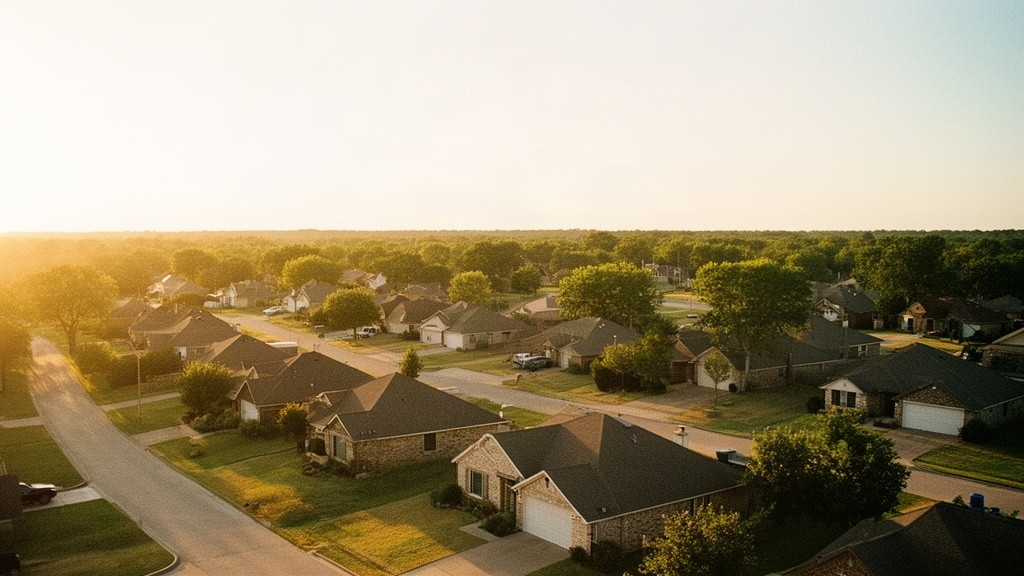
The north and west portions of New Lenox contain some of the village's most recognized subdivisions. Areas like Balmoral Estates, Chatham Square, and sections of Preserve at Briarwick feature predominantly brick-front two-story homes built between the mid-1990s and mid-2000s, with lot sizes typically ranging from 0.25 to 0.45 acres. Streets here tend to be quiet cul-de-sacs or looping interior roads, and many back to retention ponds or open green space maintained by homeowners associations. Prices in these established subdivisions currently range from the high $300,000s to the mid-$500,000s depending on square footage and updates.
Spencer Pointe, located in the northwest quadrant of the village, contains larger homes on generous lots and has consistently been one of the more active resale markets within New Lenox. Homes there typically run from the high $400,000s into the $600,000s and above. The subdivision connects to a network of walking paths that link to Hickory Creek Preserve, one of the Forest Preserve District of Will County's most-used trail systems.
Newer Construction Corridors
Active development in New Lenox is concentrated along the southern and eastern edges of the township, particularly near Cedar Road and the Route 30 corridor toward Frankfort. Builders including D.R. Horton and local custom builders have been active in these areas through 2025 and into 2026, delivering homes with open floor plans, nine-foot ceilings, and modern kitchen packages as standard. New construction buyers in these corridors typically pay a premium of 10 to 15 percent over comparable resale homes, but receive builder warranties and the ability to select finishes.
If new construction is on your radar, it is worth understanding how the process differs from a standard resale purchase before you walk into a builder's sales office. Builders have their own contracts and their own representatives whose job is to protect the builder's interests, not yours. Having an independent agent review the contract and negotiate on your behalf is standard practice and does not cost you more.
Downtown-Adjacent Streets and Older Ranch Neighborhoods
The blocks surrounding downtown New Lenox, centered on the intersection of Route 30 and Cedar Road, contain the village's oldest housing stock. Ranch-style homes from the 1960s and 1970s, many with original hardwood floors and brick exteriors, sit on lots that are sometimes larger than what you find in newer subdivisions. These homes offer a different value proposition: more land, walkability to the Metra station and the handful of local restaurants and shops along Lincoln Highway, and lower price points in the $260,000 to $360,000 range for buyers willing to update kitchens and baths.
The New Lenox Metra station on the Rock Island Line is a significant draw for this part of the village. The Rock Island Line runs to LaSalle Street Station in the Loop, with peak express trains covering the roughly 33-mile trip in about 55 to 65 minutes. For buyers who commute to Chicago several days a week, proximity to the station is a concrete, measurable advantage that shows up in resale demand.
3. Market Conditions in September 2026: Buyer or Seller?
New Lenox is currently operating as a seller's market in most price bands, though the intensity has moderated compared to the peak competition of 2021 and 2022. Buyers have more options than they did two years ago, but well-priced, well-maintained homes are still moving quickly and in some cases drawing multiple offers within the first week.
Inventory and Days on Market
Active inventory in New Lenox as of September 2026 is running lean, with typically fewer than 60 to 80 single-family homes available at any given time across all price points. Median days on market for homes that sell is hovering around 18 to 28 days, which is longer than the sub-10-day pace of 2022 but still well below the 45 to 60 day averages that characterize a balanced market. Homes priced accurately from day one are still the ones that move fastest. For a more detailed look at how long homes are sitting currently, the days-on-market breakdown on this site goes deeper into what those numbers mean for your strategy.
What Buyers Are Competing Against Right Now
The buyer pool in New Lenox right now is a mix of move-up buyers from Joliet and Mokena, relocating professionals from outside Illinois, and buyers stepping out of Cook County rentals looking for more space. Cash offers are less common in New Lenox than in some higher-priced Chicago suburbs, but they do appear, particularly on move-in-ready homes priced under $450,000. Buyers using conventional financing should expect to have their pre-approval letter ready before touring and should be prepared to move within 24 to 48 hours on a home they want.
How Sellers Should Read Current Demand
Sellers in New Lenox currently hold meaningful leverage, but that leverage is not unconditional. Homes that are overpriced relative to recent comparable sales, or that show poorly in photos, are sitting longer and sometimes requiring price reductions. The sellers who are getting the best outcomes right now are those who price at or very slightly below market value on day one, invest in professional photography, and declutter aggressively before going live. Buyers in 2026 are more price-sensitive than they were in 2021 because mortgage rates are higher, and they notice when a home is priced to account for that reality.
4. Timing Your Move in New Lenox: What the Data Actually Shows
Timing in real estate is real, but it is often overstated. The best time to buy or sell in New Lenox is when your personal circumstances align with market conditions, not when a calendar date says so. That said, there are genuine seasonal patterns in this market that are worth understanding before you set your timeline.
The Spring-to-Fall Demand Curve
New Lenox follows the broader Chicagoland seasonal pattern: buyer activity ramps up sharply in March and April, peaks through May and June, and then gradually softens from August onward. September and October still produce solid sales, but the pool of active buyers is smaller than it was in the spring. For sellers, this means that listing in September or October can still work well if the home is priced right, but you should not expect the same volume of showings you would have seen in April. For buyers, fall is historically a window where negotiating room opens up slightly, particularly on homes that have been on the market for more than 30 days.
If you are weighing whether to list now or hold until spring, the fall versus spring analysis on this site breaks down the trade-offs specific to the New Lenox market in 2026 in detail. The short version: spring brings more buyers, but it also brings more competing listings. Fall brings fewer buyers, but also fewer homes competing for their attention.
Interest Rate Context in 2026
Mortgage rates in 2026 remain elevated compared to the historic lows of 2020 and 2021, with 30-year conventional rates generally running in the mid-to-upper 6 percent range as of September 2026. This has a direct effect on purchasing power. A buyer qualifying for $3,000 per month in principal and interest can afford roughly $460,000 at 6.5 percent, compared to about $630,000 at 3 percent. That math is why some buyers who were active in 2021 are now looking at different price points or different property types than they originally planned.
For sellers, elevated rates mean your buyer pool is rate-sensitive, and a price that felt conservative in 2022 may need to be revisited. For buyers, the common advice to wait for rates to drop before buying carries a real risk: if rates fall meaningfully, demand will surge, inventory will tighten further, and prices will respond. Buying at today's rate with the option to refinance later is a strategy worth discussing with both your lender and your agent.
When Waiting Costs You More Than It Saves
In a market where prices have risen 4 to 6 percent year over year, waiting 12 months to buy a $420,000 home could mean paying $437,000 to $445,000 for the same property. That $17,000 to $25,000 difference is real money that does not come back. The calculus changes if you have specific reasons to believe prices will soften, but in New Lenox, the structural factors driving demand, including limited land for development, strong job access via Metra and I-80, and ongoing population growth in Will County, do not point toward a significant correction.
5. How to Use This Market Guide to Make a Real Decision
A market guide is only useful if it connects to a concrete next step. Here is how buyers, sellers, and relocators should translate what they have read here into action.
Steps for Buyers
Get pre-approved, not just pre-qualified, before you start touring homes. In New Lenox, homes in the $350,000 to $500,000 range move quickly, and a pre-qualification letter from an online lender carries less weight with listing agents than a full pre-approval from a local lender who has verified your income and assets. Identify your target subdivisions based on commute requirements, lot size preferences, and price range, then set up MLS alerts so you see new listings within hours of them going live.
Understand closing costs before you make your first offer. In Illinois, buyers typically pay 1.5 to 2.5 percent of the purchase price in closing costs beyond the down payment, covering items like title insurance, attorney fees, and lender charges. A detailed breakdown of what to expect is covered in the closing costs guide on this site.
Steps for Sellers
Request a comparative market analysis from an agent who has recent closed sales in your specific subdivision, not just in New Lenox broadly. Price per square foot and days on market can vary by 10 to 15 percent between subdivisions that are less than a mile apart, depending on lot size, HOA presence, and the age of the housing stock. A CMA built from sales in Balmoral Estates is not directly applicable to pricing a home in Timber Trails.
Address deferred maintenance before listing. In the current market, buyers are more likely to walk away from inspection issues than they were in 2021 when competition was fierce enough that buyers accepted homes as-is. Furnace age, roof condition, and water heater age are the three items that most commonly create renegotiation or deal-fall-through situations in New Lenox transactions.
What to Ask Your Agent Before You Commit
Before signing a listing agreement or a buyer representation agreement, ask your agent three specific questions. First, how many homes have you closed in New Lenox in the last 12 months, and in which subdivisions? Second, what was the average sale-to-list price ratio on those transactions? Third, can you show me the comparable sales you used to arrive at this price recommendation, and walk me through why you weighted them the way you did? An agent who cannot answer all three questions clearly and specifically is not the right fit for a New Lenox transaction.
Niki Rocco works specifically in New Lenox and the surrounding southwest suburbs, including Mokena, Frankfort, and Manhattan, and brings current, subdivision-level knowledge to every pricing and negotiation conversation. Whether you are buying your first home near the Metra station, selling a four-bedroom in Spencer Pointe, or relocating from out of state and trying to understand the market before you arrive, the depth of local knowledge in this guide reflects the kind of guidance Niki provides to every client.
FAQ
What is the current median home price in New Lenox, Illinois?
As of September 2026, the median home price in New Lenox is in the low-to-mid $400,000s for single-family resale homes, with significant variation by property type and subdivision. Townhomes and attached units generally trade between $250,000 and $320,000, while larger homes in premium subdivisions like Spencer Pointe or Sanctuary Pointe can exceed $550,000 to $700,000. Price per square foot for most resale single-family homes runs roughly $185 to $220, with new construction pricing somewhat higher. Prices are up approximately 4 to 6 percent compared to September 2025, reflecting continued demand and limited inventory across Will County.
Is New Lenox, Illinois currently a buyer's market or a seller's market?
New Lenox is operating as a seller's market in most price bands as of September 2026, though conditions have moderated from the extreme competition seen in 2021 and 2022. Active inventory typically sits below 80 single-family homes at any given time, and median days on market runs 18 to 28 days for homes that sell, which is still well below the 45 to 60 days associated with a balanced market. Well-priced, move-in-ready homes can still draw multiple offers within the first week. Buyers have somewhat more negotiating room than they did two or three years ago, particularly on homes that have been listed for more than 30 days without an accepted offer.
What are the most important things to know about timing a home purchase or sale in New Lenox?
New Lenox follows a clear seasonal demand curve, with buyer activity peaking in March through June and softening from August onward. Fall listings face a smaller buyer pool but also less competition from other sellers, which can balance out. For buyers, waiting for lower mortgage rates carries a real price risk: if rates drop, demand typically surges and prices respond quickly. In a market where prices have been rising 4 to 6 percent annually, a 12-month delay on a $420,000 purchase could cost $17,000 to $25,000 in additional purchase price. The best timing decision combines your personal financial readiness with a clear-eyed read of current inventory levels in your target price range and subdivision.