
← Back to Blog
Market Trends
Investment Property Guide Melbourne Florida: What Works Most
By Norma Gutierrez
REMAX Elite
September 11, 2026 · 11 min read
If you are looking for an investment property guide for Melbourne, Florida that cuts through the noise and focuses on what works most right now, this is it. Melbourne sits along the Space Coast with a growing job base, strong rental demand, and a housing market that continues to attract investors from across the country. This guide covers property types, realistic numbers, financing basics, and the local details that actually move the needle.
1. Why Melbourne, Florida Attracts Real Estate Investors Right Now
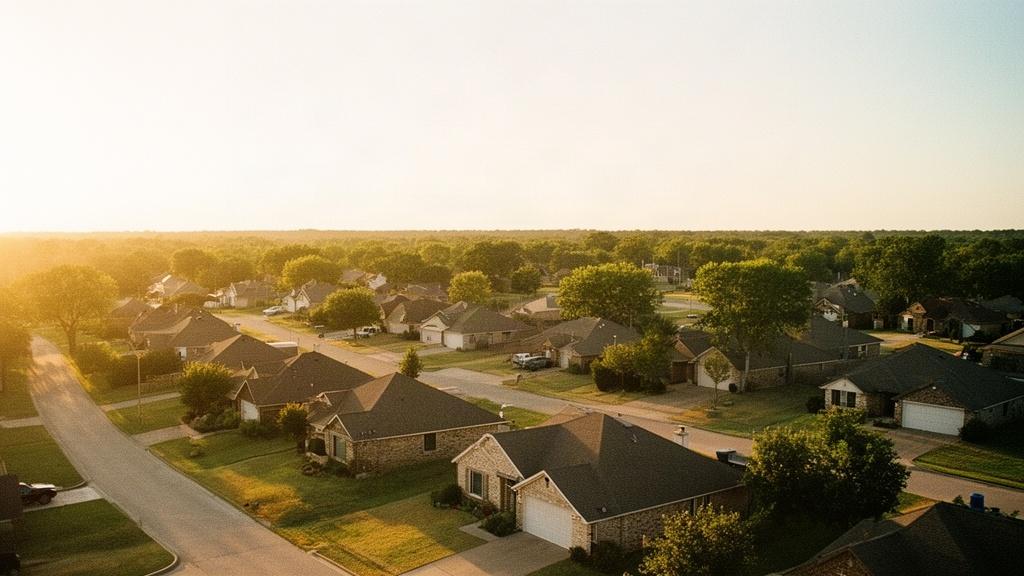
Melbourne is one of the most active investment markets on Florida's east coast. The city of roughly 85,000 people anchors Brevard County's Space Coast economy, and that economy has been expanding steadily through 2026. Kennedy Space Center, Patrick Space Force Base, and a dense cluster of aerospace and defense contractors including L3Harris Technologies and Northrop Grumman employ tens of thousands of workers within commuting distance of Melbourne's neighborhoods. That employment base creates consistent rental demand from workers who relocate here but are not yet ready to buy.
A Job Market That Drives Rental Demand
Brevard County's unemployment rate has held below the national average for most of 2026, and the Space Coast continues to attract new aerospace contracts tied to commercial launch activity at Cape Canaveral. Florida Institute of Technology, located directly in Melbourne, adds a steady flow of graduate students, faculty, and visiting researchers who need housing. The combination of a university, a military installation, and a private-sector aerospace cluster is unusual for a mid-sized Florida city, and it is one of the reasons rental vacancy rates in Melbourne have remained tight.
Melbourne's proximity to Orlando is another factor investors weigh. The drive up I-95 or US-192 to Orlando typically runs 60 to 75 minutes depending on traffic, which means some residents commute to Orlando-area employers while living in Melbourne where housing costs are lower. That dynamic keeps demand for Melbourne rentals elevated even when the Orlando market tightens. You can read more about that commute in detail in the article How Long Does It Take to Commute from Melbourne Florida to Orlando.
What the Numbers Look Like in September 2026
As of September 2026, the median sale price for a single-family home in Melbourne sits in the mid-to-upper $300,000s, with entry-level investor properties starting around $260,000 in areas like Eau Gallie and West Melbourne. Waterfront and Viera-area homes push well above $450,000 and into the $600,000-plus range. The price spread means investors can enter the Melbourne market at different budget levels and still find properties that pencil out, which is not always possible in South Florida markets where entry points have climbed sharply.
2. Which Investment Property Types Work Most in Melbourne
Not every property type performs equally well in every market. In Melbourne, three categories consistently attract investor interest: single-family rentals, short-term vacation rentals, and small multifamily properties. Each carries a different risk profile, management burden, and income potential. Understanding which one fits your goals and capital is the most important early decision in this investment property guide for Melbourne, Florida.
Single-Family Rentals
Single-family homes are the most common investment vehicle in Melbourne, and for good reason. The city's housing stock skews heavily toward detached homes built between the 1960s and the early 2000s, with concrete block construction that holds up well in Florida's climate. Neighborhoods like Satellite Beach, Indialantic, and Melbourne Beach offer homes close to the Atlantic coast, while inland areas like Palm Bay and West Melbourne offer lower price points with larger lots. A three-bedroom, two-bathroom home purchased in the $280,000 to $330,000 range in a non-coastal Melbourne neighborhood can generate gross monthly rents in the $1,900 to $2,400 range, depending on condition and location.
Florida's single-family rental market has shown resilience even during periods of interest rate pressure, though investors should review current market conditions carefully before committing. HousingWire's analysis of Florida's single-family rental market notes that the sector remains resilient but carries real risks tied to insurance costs and local supply dynamics, both of which apply directly to Melbourne.
Short-Term and Vacation Rentals
Melbourne's coastal location makes it a genuine short-term rental market, not just a theoretical one. Barrier island communities like Melbourne Beach, Indialantic, and Satellite Beach draw visitors year-round, with peak demand running from November through April when snowbirds arrive and from June through August when families vacation. A well-located three-bedroom beach house can generate $3,500 to $5,500 per month in peak season through platforms like Airbnb and VRBO, though off-season months will be softer.
Florida has consistently ranked among the top states for short-term rental investor returns. A study covered by Inman found that Florida leads the country for short-term rental investor performance, driven by coastal demand and year-round tourism. Before buying a short-term rental in Melbourne, confirm the specific zoning rules for the parcel and check whether any HOA restrictions apply. Brevard County and the City of Melbourne have their own short-term rental ordinances, and compliance is non-negotiable.
Small Multifamily Properties
Duplexes, triplexes, and four-unit buildings are less common in Melbourne than single-family homes, but they do exist, particularly in older parts of the city near downtown Melbourne and the Eau Gallie arts district. A duplex in the $380,000 to $480,000 range can produce combined monthly rents of $2,800 to $3,600 when both units are occupied. The advantage is that one vacancy does not eliminate all income, which improves cash flow stability. The trade-off is that these properties require more active management and often need more capital for maintenance.
3. Understanding Melbourne's Rental Income Potential
Rental income potential in Melbourne varies meaningfully by submarket. Investors who treat the city as a single uniform market often overpay for properties in areas where rents do not support the purchase price, or underprice properties in areas where demand is stronger than the county-wide averages suggest.
Long-Term Rental Rates by Area
As of September 2026, long-term rental rates in Melbourne and the surrounding Space Coast area break down roughly as follows. In Palm Bay, three-bedroom single-family homes typically rent for $1,750 to $2,100 per month, reflecting the area's lower purchase prices. In central Melbourne and West Melbourne, three-bedroom homes command $1,950 to $2,400. In Viera, which features newer construction and master-planned amenities including The Avenue Viera shopping and dining district, rents for comparable homes run $2,200 to $2,700. Barrier island properties in Indialantic and Melbourne Beach can push $2,500 to $3,200 for long-term tenants, given their proximity to the ocean and limited housing supply.
These figures are gross rents before expenses. A realistic operating expense ratio for a Melbourne single-family rental typically runs 35 to 50 percent of gross rent when you account for property management fees (usually 8 to 10 percent of collected rent), property taxes, insurance, maintenance reserves, and vacancy allowance. Property taxes on a $400,000 investment property in Melbourne will be higher than on a primary residence because investment properties do not qualify for the Florida homestead exemption. For a detailed breakdown of how Brevard County property taxes work, see the article How Much Are Property Taxes on a $400,000 Home in Melbourne, Florida.
Short-Term Rental Considerations
Short-term rentals in Melbourne can outperform long-term rentals on gross income, but the expense structure is different. Cleaning fees, platform commissions (typically 3 to 5 percent for Airbnb hosts), furnishing costs, and higher utility bills all reduce net income. A realistic annual occupancy rate for a Melbourne Beach short-term rental runs 65 to 78 percent when managed actively. At that occupancy, a well-priced three-bedroom coastal property can generate $40,000 to $60,000 in gross annual revenue, though net income after all expenses will be considerably lower. Investors who underestimate turnover costs or who buy in areas with restrictive HOAs often find the short-term rental model does not perform as projected.
4. Financing an Investment Property in Melbourne, Florida
Financing is where many first-time investors get tripped up. Investment property loans carry different requirements than primary residence mortgages, and understanding those differences before you make an offer saves significant frustration. This section of the investment property guide for Melbourne, Florida covers the most common loan structures investors use in this market.
Conventional Investment Loans
A conventional investment property loan typically requires a minimum 20 to 25 percent down payment, a credit score of 680 or higher (with better rates available above 740), and documented income sufficient to support the debt. As of September 2026, 30-year fixed rates on investment properties are running approximately 0.5 to 0.75 percentage points above primary residence rates. On a $320,000 purchase with 25 percent down, that means financing $240,000 at a rate in the mid-to-upper 7 percent range for most borrowers, which produces a principal and interest payment of roughly $1,650 to $1,700 per month before taxes and insurance.
DSCR Loans and Portfolio Lending
Debt service coverage ratio (DSCR) loans have become widely used by Melbourne investors who are self-employed or who own multiple properties. A DSCR loan qualifies the borrower based on the property's rental income relative to its debt obligations rather than on personal income. Most lenders require a DSCR of 1.0 to 1.25, meaning the property's gross monthly rent must equal or exceed 100 to 125 percent of the monthly loan payment. These loans typically carry slightly higher rates than conventional loans but offer more flexibility for investors with complex income situations. Several community banks and credit unions serving Brevard County also offer portfolio loans that can be structured around local market conditions.
Key Cost Factors Buyers Often Underestimate
Florida property insurance is a significant line item that investors from out of state consistently underestimate. A single-family investment property in Melbourne can carry annual insurance premiums of $3,500 to $7,000 or more depending on the age of the roof, the home's distance from the coast, and the insurer. Homes built before 2002 that have not had roof replacements often face higher premiums or difficulty obtaining coverage. Flood insurance is a separate policy and is required by lenders for properties in FEMA-designated flood zones, which includes parts of Melbourne's barrier island and low-lying coastal areas. Factoring in realistic insurance costs before making an offer is essential to accurate underwriting.
5. How to Evaluate a Deal in Melbourne's Current Market
Knowing what to buy is only half the work; knowing whether a specific property is priced correctly for investment is the other half. Melbourne's market in September 2026 is more balanced than it was during the frenzied 2021 to 2022 period, which means investors have more room to negotiate and more time to conduct due diligence. That said, well-priced properties in strong rental corridors still move quickly.
Running the Numbers Before You Commit
The two most commonly used metrics for evaluating a rental property are the gross rent multiplier (GRM) and the capitalization rate (cap rate). The GRM is simply the purchase price divided by annual gross rent. A property priced at $320,000 that rents for $2,200 per month has a GRM of about 12.1, which is calculated as $320,000 divided by $26,400. In Melbourne's current market, GRMs for single-family rentals typically run between 11 and 15, with lower numbers indicating better value relative to rent. The cap rate divides net operating income (gross rent minus operating expenses, before debt service) by the purchase price. A cap rate of 5 to 7 percent is a reasonable range for Melbourne single-family rentals in September 2026.
Location Factors That Affect Return
Within Melbourne, several location factors have a measurable effect on rental performance. Properties within a short drive of Florida Institute of Technology, Holmes Regional Medical Center, or the Eau Gallie arts district tend to attract stable, longer-term tenants. Homes near the US-1 corridor in central Melbourne offer easy access to employment centers and are popular with working professionals. The Viera area, developed largely from the 1990s onward, features newer construction with concrete tile roofs, lower maintenance costs, and proximity to the Avenues Viera outdoor shopping center and multiple recreational facilities. New construction communities currently underway in Melbourne's western growth areas are also worth monitoring; you can review what is being built in the article What New Construction Developments Are Currently Being Built in Melbourne Florida in 2026.
Common Mistakes First-Time Investors Make
The most common mistake investors make in Melbourne is using optimistic rent estimates without verifying current market rents for comparable properties. Pulling active rental listings on Zillow and Apartments.com for the specific zip code and bedroom count of your target property takes about 20 minutes and gives you a realistic rent ceiling. A second common mistake is ignoring deferred maintenance. Melbourne's older concrete block homes can have plumbing, electrical, or roof issues that are not visible on a walkthrough. A thorough home inspection from a licensed Florida inspector, combined with a wind mitigation inspection that can affect your insurance premium, is money well spent. A third mistake is not accounting for property management costs if you do not plan to self-manage, especially if you live outside Brevard County.
If you are also considering whether to hold a current Melbourne home as a rental rather than sell it, the article Is Right Now a Good Time to Sell a Home in Melbourne, Florida walks through the current seller's market conditions that affect that decision.
FAQ
What is the average return on an investment property in Melbourne, Florida?
Cap rates for single-family rentals in Melbourne in September 2026 typically run between 5 and 7 percent for properties purchased at market value, though this varies significantly by submarket and property condition. Short-term rental properties in coastal areas like Melbourne Beach and Indialantic can produce higher gross income but also carry higher operating expenses, so net returns are not always superior. Investors should model both scenarios using actual comparable rents and realistic expense ratios before deciding which strategy fits their goals. Working with a local agent who has current transaction data is the most reliable way to pressure-test your projections before making an offer.
Do I need a property manager for a rental in Melbourne, Florida?
You are not legally required to hire a property manager, but investors who live outside Brevard County or who own multiple properties generally find professional management worth the cost. Property management fees in Melbourne typically run 8 to 10 percent of monthly collected rent, plus a leasing fee of one-half to one full month's rent when a new tenant is placed. A good property manager handles maintenance calls, tenant screening, lease enforcement, and local code compliance, all of which are time-intensive if you manage from a distance. For short-term rentals, specialized vacation rental management companies operate in the Melbourne Beach and Indialantic area and typically charge 20 to 30 percent of gross revenue.
Are there any restrictions on short-term rentals in Melbourne, Florida?
Yes, and they vary by location within Brevard County. The City of Melbourne has adopted short-term rental regulations that require registration, minimum stay requirements in certain zones, and compliance with noise and parking ordinances. Properties governed by homeowners associations may have additional restrictions or outright prohibitions on rentals of fewer than 30 days, regardless of what the city allows. Before purchasing any property with the intent to operate it as a short-term rental, you should review the current city ordinance, the county regulations for unincorporated areas if the property is outside city limits, and the full HOA documents. A local real estate agent familiar with Melbourne's investment market can help you identify which properties are cleared for short-term use before you spend time or money on due diligence.