← Back to Blog
Market Trends
Sandy Springs, Georgia Real Estate Market Guide: Prices, Neighborhoods and Timing
By Patrice Green
September 9, 2026 · 12 min read
Sandy Springs, Georgia sits just north of Atlanta's city limits along the Chattahoochee River, and its real estate market has its own distinct rhythm that differs meaningfully from the broader metro. This Sandy Springs, Georgia real estate market guide covers current home prices, what each major pocket of the city looks like on the ground, how timing affects your negotiating position, and what buyers and sellers relocating from outside Atlanta most often get wrong. Whether you are shopping for a townhome near Perimeter Center or a larger single-family home closer to the river, the details here will help you move with confidence.
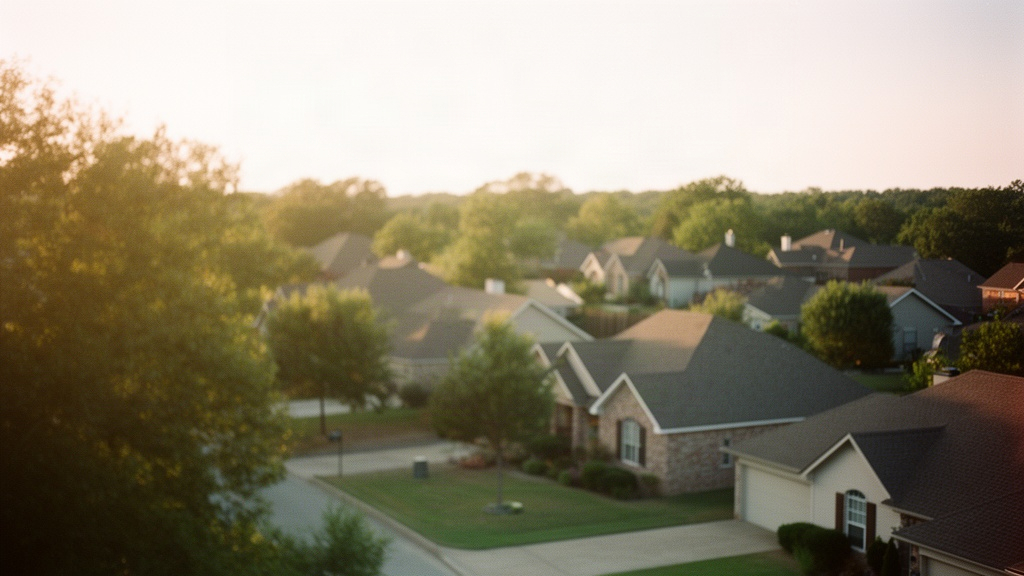
1. Sandy Springs Real Estate Market Conditions in September 2026
The Sandy Springs market is currently in a measured, balanced state. Prices have held firm through 2026 after several years of sharp appreciation, and inventory has loosened enough that buyers have real choices without facing the frantic bidding wars that defined 2021 and 2022.
Where Prices Stand Right Now
As of September 2026, the median sale price for a single-family home in Sandy Springs sits in the range of $650,000 to $720,000, depending on the specific pocket and the size of the lot. Townhomes and attached condos along the Perimeter Center corridor trade closer to $380,000 to $480,000, while larger homes on Riverside Drive or near the Chattahoochee River routinely exceed $900,000. For broader Atlanta metro context, see the average home price overview for Atlanta in September 2026, which shows how Sandy Springs compares to intown neighborhoods like Virginia-Highland and Midtown.
The luxury segment, defined loosely as homes above $1.2 million, has seen the most noticeable softening. Sellers in that price tier are sitting on the market longer than they were in 2023 or 2024, and list-to-sale price ratios have compressed. Below $750,000, well-priced and updated homes are still moving within two to three weeks.
How Inventory Has Shifted
Sandy Springs entered 2026 with roughly two to three months of supply across most price bands, up from under one month during the peak seller's market years. That shift is meaningful: buyers now have time to schedule inspections, negotiate repair credits, and compare multiple properties before committing. The city's own Q1 2025 data pointed toward this balancing act beginning to take hold, and the trend has continued through the summer of 2026.
A recent analysis from HousingWire noted a stark divide in how quickly Georgia homes sell, with properties in high-demand corridors like Sandy Springs still moving faster than rural or exurban Georgia, but slower than the frenetic pace of 2021 to 2022. That context matters when you are setting a list price or deciding how long to wait before making an offer.
Days on Market and What It Means for You
The median days on market in Sandy Springs currently runs between 18 and 30 days for single-family homes priced under $800,000. Homes above $1 million are averaging closer to 45 to 60 days. That split tells you something practical: if you are a seller at a higher price point, your marketing window is longer and your pricing precision matters more. If you are a buyer under $800,000, you still need to be ready to act within a few days of a home hitting the market.
2. Sandy Springs Neighborhoods: What Each Area Actually Looks Like
Sandy Springs is not a monolithic market. The city spans roughly 37 square miles and contains everything from dense mixed-use corridors near I-285 to quiet wooded streets that back up to the Chattahoochee National Recreation Area. Understanding the distinct pockets helps you know what your budget actually buys.
Perimeter Center and Hammond Drive Corridor
The Perimeter Center area, clustered around the intersection of I-285 and GA-400, is Sandy Springs' most commercially dense zone. Residential options here lean heavily toward townhomes built between 2000 and 2020, condos in mid-rise buildings, and a growing number of newer mixed-use developments. Lot sizes are small or nonexistent, but walkability to restaurants, offices, and the Dunwoody MARTA station on the Gold Line is a concrete advantage.
Prices in this corridor range from about $320,000 for a one-bedroom condo to $550,000 for a newer three-bedroom townhome with a two-car garage. HOA fees in this area tend to be higher than elsewhere in Sandy Springs, often running $300 to $600 per month depending on the community's amenities and maintenance obligations.
Riverside and the Chattahoochee Corridor
The western edge of Sandy Springs, running along Riverside Drive and the streets that feed toward the Chattahoochee River, contains some of the city's most established single-family neighborhoods. Homes here were largely built between the 1960s and 1990s on lots ranging from a quarter acre to over an acre. Many have been substantially renovated, and you will find a mix of original brick ranches alongside fully rebuilt contemporaries.
The Chattahoochee National Recreation Area runs along the river here, offering hiking trails and water access that are literally steps from some residential streets. Prices in the Riverside corridor reflect that proximity: entry-level homes start around $600,000 and well-renovated properties on larger lots routinely trade above $1 million.
Northside Drive and Powers Ferry Area
The Powers Ferry and Northside Drive corridor sits in the central and eastern portions of Sandy Springs and offers one of the widest price ranges in the city. You will find traditional two-story colonials from the 1980s priced in the $500,000 to $700,000 range alongside newer infill construction that pushes past $1.5 million. Streets like Glenridge Drive and Mount Vernon Highway cut through this area and connect quickly to GA-400.
Morgan Falls Overlook Park and the Chattahoochee River National Recreation Area's Cochran Shoals unit are both accessible from this part of Sandy Springs, giving residents green space options without leaving the city. Lot sizes here tend to run between a third of an acre and three quarters of an acre, which is larger than what you will typically find in comparable-priced intown Atlanta neighborhoods.
Sandy Springs City Center and Roswell Road
The City Center area around City Springs, Sandy Springs' performing arts and civic hub on Roswell Road, has become a focal point for the city's identity since the complex opened in 2018. Residential development near City Springs includes newer townhome communities and some apartment-to-condo conversions. Roswell Road itself is a commercial spine with restaurants, retail, and services running from the city's southern boundary near I-285 all the way north toward Roswell.
Homes on the quieter side streets off Roswell Road tend to be 1970s and 1980s construction on modest lots, priced between $450,000 and $650,000 for updated three- and four-bedroom homes. This part of Sandy Springs is also where you will find some of the city's older condominium stock, with units in buildings from the 1980s sometimes available in the $200,000 to $300,000 range.
3. Commute Times and Connectivity from Sandy Springs
Sandy Springs offers some of the most direct highway access to Atlanta's employment centers of any suburb in the metro. GA-400 bisects the city from north to south and connects directly to I-285, giving residents multiple routes into Buckhead, Midtown, and Downtown depending on the time of day.
Driving to Downtown Atlanta and Midtown
From most of Sandy Springs, the drive to Midtown Atlanta runs about 20 to 30 minutes outside of peak hours, covering roughly 14 to 18 miles via GA-400 south. During morning rush hour, that same trip can stretch to 40 to 55 minutes depending on where exactly you are starting and where you are going in Midtown. Downtown Atlanta is roughly 5 to 8 miles further south and adds another 10 to 15 minutes under normal conditions.
Buckhead sits between Sandy Springs and Midtown, making it the closest major employment and retail hub for Sandy Springs residents. The drive from central Sandy Springs to Buckhead's office towers on Peachtree Road is typically 15 to 20 minutes without traffic. For a full breakdown of how Sandy Springs compares to other Atlanta neighborhoods on commute times, the article on Atlanta neighborhoods with the shortest commute times to Downtown and Midtown puts those numbers in context.
MARTA Access and Transit Options
Sandy Springs is served by two MARTA Gold Line stations: Sandy Springs station on Abernathy Road and Dunwoody station just over the city's eastern border. Both stations have park-and-ride lots, and the Gold Line connects directly to Buckhead, Midtown, and Downtown without a transfer. The ride from Sandy Springs station to Arts Center station in Midtown takes approximately 18 to 22 minutes on the train.
Not all of Sandy Springs is walkable to a MARTA station. The Riverside corridor and the western portions of the city are a 10- to 15-minute drive from the nearest station, which means transit use there typically requires driving to a park-and-ride first. If car-free or low-car living is a priority, the Perimeter Center area and streets within a mile of the Sandy Springs station are the most practical choices.
4. Timing the Sandy Springs Market: When to Buy and When to Sell
Timing in Sandy Springs follows Atlanta's broader seasonal rhythm, but with some nuances specific to this market. The spring window from late February through May consistently produces the highest volume of transactions and the strongest list-to-sale price ratios. Fall, particularly September through November, is the second-most active period.
Seasonal Patterns in Sandy Springs
Sellers who list in March or April in Sandy Springs typically see the most competitive offers, particularly for homes priced between $500,000 and $900,000 where corporate relocation buyers are active. The summer months of June through August see continued activity but with some slowdown as families manage school-year transitions. December and January are the quietest months for new listings, which can actually work in favor of buyers who are willing to shop then: fewer competing offers and sellers who are genuinely motivated.
Rate Environment and Affordability in 2026
Mortgage rates in September 2026 remain the dominant factor shaping buyer purchasing power in Sandy Springs. With 30-year fixed rates still elevated compared to the historically low levels of 2020 and 2021, monthly payments on a $700,000 home are substantially higher than they would have been four years ago at the same price. That pressure has kept some move-up buyers on the sidelines, which is one reason inventory has grown.
Buyers who can pay cash or put down 30 percent or more have a meaningful negotiating advantage in the current environment, particularly above $1 million where financed buyers are competing against a smaller pool of all-cash purchasers. For buyers using financing, getting fully underwritten pre-approval rather than a simple pre-qualification letter is the single most effective way to strengthen an offer in a market where sellers are scrutinizing buyer qualifications more carefully than they did two years ago.
What Sellers Should Know About Pricing Strategy
Overpricing in Sandy Springs in September 2026 carries a real cost. Homes that sit more than 30 days without an accepted offer develop a perception problem that is difficult to reverse even with a price reduction. Buyers and their agents notice days-on-market figures, and a stale listing in a neighborhood where comparable homes sold quickly signals that something is off.
The most effective pricing strategy in the current Sandy Springs market is to come in at or slightly below the most recent comparable sales, generate early showing traffic, and let competition do the work. Homes priced aggressively from day one in the $550,000 to $800,000 range are still attracting multiple offers in September 2026. Sellers considering listing this fall should also factor in that new construction activity in parts of Sandy Springs and adjacent Dunwoody and Brookhaven is adding competing inventory, particularly in the townhome segment.
5. What Buyers and Sellers Relocating to Sandy Springs Often Miss
Relocating buyers in particular tend to underestimate several Sandy Springs-specific factors that affect both the purchase decision and the long-term cost of ownership. Getting these details right before you make an offer saves significant money and frustration later.
Property Taxes and Fulton County vs. City of Sandy Springs
Sandy Springs incorporated as a city in 2005 and operates its own city government, which means property owners pay both Fulton County taxes and a separate City of Sandy Springs millage rate. The combined effective tax rate on a $700,000 home in Sandy Springs, after the standard homestead exemption, typically runs between $7,000 and $10,000 per year depending on the assessed value and any additional exemptions the owner qualifies for. For a detailed breakdown of how Georgia property taxes are calculated, the article on property taxes in Atlanta and how they are calculated for new homeowners walks through the full methodology.
One thing relocating buyers frequently miss: Georgia's homestead exemption requires you to apply separately with Fulton County by the April 1 deadline in the year after you purchase. Miss that deadline and you pay the full unexempted rate for another full year. Your closing attorney should flag this, but it is worth putting a calendar reminder on the day you close.
HOA Structures in Sandy Springs Communities
A large share of Sandy Springs homes, particularly townhomes and condos but also many single-family subdivisions, carry HOA obligations. Annual HOA fees in single-family communities typically run $500 to $2,000 per year and cover common area maintenance, entry feature upkeep, and sometimes swim-tennis amenities. Townhome and condo HOAs are considerably higher, often $300 to $600 per month, and may cover exterior maintenance, roof reserves, and landscaping.
Before making an offer on any Sandy Springs property with an HOA, request the current budget, the reserve fund balance, and the meeting minutes from the past two years. An HOA with a depleted reserve fund is a signal that a special assessment could be coming, which would add thousands of dollars in unexpected costs after closing.
New Development and Its Effect on Resale Values
Sandy Springs has seen meaningful new construction activity along the Roswell Road corridor and near City Springs, with mixed-use projects adding both residential units and retail. For buyers considering a resale townhome or condo in the Perimeter Center area, it is worth understanding what new product is coming to market nearby, since new construction competes directly with resale in that segment and can affect how quickly your property appreciates or resells.
The article on new construction and major development projects in Atlanta in 2026 and their effect on home values covers several projects in the Sandy Springs and Perimeter Center area that are relevant for anyone evaluating a purchase in that corridor right now.
For single-family homes in Sandy Springs' established neighborhoods, new construction is less of a direct competitive factor. Lot availability is limited in the Riverside and Powers Ferry areas, so infill teardown-rebuilds are the primary form of new product, and those tend to push comparable values upward rather than creating competing inventory at lower price points.
FAQ
What is the median home price in Sandy Springs, Georgia right now?
As of September 2026, the median sale price for a single-family home in Sandy Springs is roughly $650,000 to $720,000, though that range varies considerably by neighborhood. Townhomes and condos in the Perimeter Center corridor trade closer to $380,000 to $480,000, while homes in the Riverside and Chattahoochee corridor regularly exceed $900,000 for updated properties on larger lots. The luxury segment above $1.2 million has softened the most, with longer days on market and more negotiating room for buyers. Homes priced under $800,000 and in good condition are still moving within two to three weeks when priced accurately.
Is Sandy Springs a good time to buy or sell in September 2026?
September 2026 sits at an interesting inflection point in the Sandy Springs market. Inventory is higher than it was in 2021 through 2023, which gives buyers more options and negotiating leverage than they have had in several years. For sellers, the market still rewards well-priced and well-presented homes, particularly under $800,000, but overpricing carries a real penalty in the form of extended days on market and eventual price reductions. Buyers who are fully pre-approved and flexible on closing timelines are in a stronger position than at any point since 2019. The fall season through November is historically the second-most active period in Sandy Springs, so both buyers and sellers have a meaningful window right now.
How do Sandy Springs property taxes compare to other Atlanta suburbs?
Sandy Springs property owners pay both Fulton County taxes and a City of Sandy Springs millage rate, which together produce an effective combined rate that is comparable to other Fulton County cities like Brookhaven and Buckhead. On a $700,000 home with the standard homestead exemption applied, annual property taxes typically run between $7,000 and $10,000 depending on the exact assessed value and any additional exemptions. Georgia assesses property at 40 percent of fair market value, so the taxable value on a $700,000 home is roughly $280,000 before exemptions. New homeowners must apply for the homestead exemption with Fulton County by April 1 of the year following their purchase; missing that deadline means paying the full unexempted rate for an additional year.