← Back to Blog
Neighborhoods
What Is It Actually Like to Live in the Old Fourth Ward Neighborhood in Atlanta?
By Patrice Green
September 4, 2026 · 11 min read
If you are wondering what it is actually like to live in the Old Fourth Ward neighborhood in Atlanta, the short answer is this: it is one of the most walkable, historically layered, and architecturally diverse pockets inside the city limits. This guide covers the housing stock, price ranges, commute realities, green space, dining, and everything else a buyer or renter needs to know before making a move to O4W.
1. A Quick Orientation: Where Old Fourth Ward Actually Is
Old Fourth Ward sits roughly 1.5 miles east of Downtown Atlanta and about a mile southeast of Midtown. Its rough boundaries run from Freedom Parkway on the north, DeKalb Avenue on the south, Boulevard to the east, and the connector formed by I-75 and I-85 on the west. That puts it in a genuinely central position inside the city, which is one reason it draws so much attention from buyers who want to be close to the urban core without paying Midtown prices for every square foot.
The Boundaries and What Is Around Them
The neighborhood borders Inman Park to the east, Poncey-Highland to the north, Sweet Auburn to the south, and Old Town to the west. That cluster of intown neighborhoods means that stepping outside your front door in O4W puts you within walking or biking distance of the Martin Luther King Jr. National Historical Park, the Jimmy Carter Presidential Library and Museum, and the Atlanta BeltLine Eastside Trail. The geography is genuinely compact, and that compactness shapes daily life here in a way that feels different from Atlanta's sprawling suburban corridors.
Getting a Feel for the Street Grid
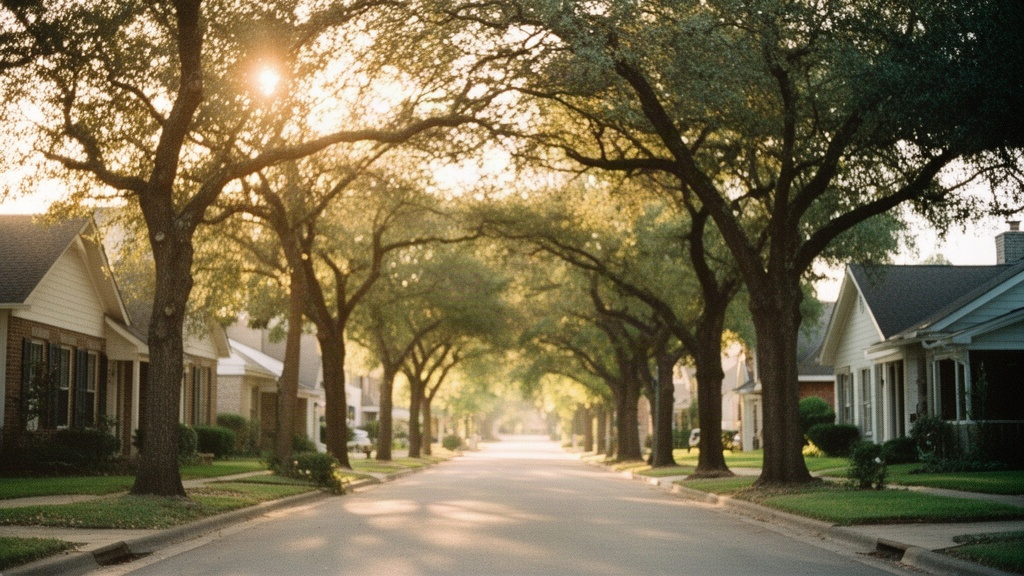
The street grid in O4W is older and more irregular than Atlanta's suburban neighborhoods, which is part of its character. Streets like Edgewood Avenue, Auburn Avenue, and North Avenue cut through the neighborhood and connect it to surrounding areas. Edgewood Avenue in particular has become a concentrated stretch of bars, restaurants, and small retail that gives the neighborhood a distinct evening energy. If you are used to cul-de-sacs and wide arterials, the narrower tree-lined streets here will feel like a different city entirely.
2. The Housing Stock in Old Fourth Ward
Old Fourth Ward offers one of the most varied housing inventories of any intown Atlanta neighborhood, spanning Victorian-era single-family homes, mid-century bungalows, adaptive-reuse loft conversions, and brand-new construction townhomes. That range means buyers at very different price points can find something here, though the entry-level options have compressed as the area has grown more established over the past decade.
Historic Bungalows and Craftsman Homes
The oldest residential blocks in O4W contain single-family homes built between the 1890s and the 1940s. You will find Craftsman bungalows with front porches, exposed rafter tails, and original hardwood floors; Victorian cottages with decorative gingerbread trim; and a handful of larger foursquare-style homes on deeper lots. Many of these have been renovated to varying degrees. A fully updated three-bedroom Craftsman on a 6,000-square-foot lot in O4W was listing in the $650,000 to $850,000 range as of September 2026, depending on the block and the quality of the renovation.
Unrenovated or partially updated homes on the same blocks can still be found in the $450,000 to $580,000 range, though that inventory is thin. Buyers willing to take on a project can find real value here, but they should budget carefully for the cost of bringing older systems, including knob-and-tube wiring, cast-iron plumbing, and original HVAC, up to current standards. A good inspection is non-negotiable in a neighborhood with this much pre-war housing.
Condos, Townhomes, and New Construction
The condo and townhome segment in O4W is substantial and growing. Loft-style condos in converted warehouse buildings along Krog Street and the surrounding blocks typically run between $300,000 and $550,000 for one- and two-bedroom units, with larger units or those with BeltLine-facing views pushing higher. New construction townhomes, particularly those built within the last five years along the BeltLine corridor, have been listing in the $600,000 to $950,000 range, with some luxury end-units crossing $1 million.
HOA fees vary widely across the condo and townhome segment. Older loft conversions often carry fees in the $300 to $500 per month range, while newer townhome communities with amenities like rooftop decks and gated parking can run $400 to $700 per month. Buyers should factor those numbers into their monthly payment calculations before falling in love with a unit's square footage. For a broader view of what homes are trading for across Atlanta right now, the average home price guide for Atlanta in September 2026 provides useful context.
What Prices Look Like Right Now
As of September 2026, the median sale price for homes in Old Fourth Ward sits in the $525,000 to $600,000 range, depending on property type. Single-family detached homes pull that median up, while the volume of condo transactions in the $300,000s keeps the overall range wide. Days on market for well-priced listings has been running between 18 and 30 days, which reflects a market that is active but not the frenzied seller's market Atlanta saw in 2021 and 2022. Buyers have a bit more time to think, but correctly priced homes in good condition still attract multiple offers.
For a detailed breakdown of the O4W housing market, the neighborhood profile on Trulia's Old Fourth Ward guide tracks recent sale prices and listing trends that are worth reviewing before you make an offer.
3. Getting Around: Commutes, Transit, and Walkability
Old Fourth Ward's central location makes it one of the more commute-friendly intown neighborhoods in Atlanta, though your experience will depend heavily on your destination and your preferred mode of transportation. This is not a neighborhood where every errand requires a car, which is a meaningful distinction in a metro area that is otherwise heavily auto-dependent.
Driving and Parking
By car, Downtown Atlanta is roughly a 10-minute drive from most O4W addresses under normal traffic conditions. Midtown is about 10 to 15 minutes northwest, and Buckhead is 20 to 25 minutes depending on the route and the time of day. The Hartsfield-Jackson Atlanta International Airport is approximately 25 to 30 minutes south via I-75 or I-85. Morning rush hour on the connector can add 10 to 20 minutes to southbound and westbound commutes, so buyers who drive daily should test their specific commute route at peak hours before committing to a home.
Street parking in O4W ranges from easy to competitive depending on the block. Residential streets away from Edgewood Avenue and Krog Street generally have ample on-street parking. Blocks near Ponce City Market and the BeltLine trailhead see heavier congestion on weekends. Most single-family homes have driveways; condos and townhomes vary, so confirm off-street parking before you close.
MARTA and the BeltLine
Old Fourth Ward does not have a MARTA rail station within the neighborhood itself, but the King Memorial station on the Blue and Green lines sits at the neighborhood's southwestern edge near Auburn Avenue. From King Memorial, a rider can reach Five Points in Downtown Atlanta in about four minutes, and the airport in roughly 20 minutes without transfers. The Inman Park-Reynoldstown station on the same lines is about a 15-minute walk from the eastern edge of O4W. MARTA bus routes along North Avenue and DeKalb Avenue also serve the neighborhood.
Biking and Walking
O4W's Walk Score tends to run in the high 70s to mid-80s, which is high by Atlanta standards. The BeltLine Eastside Trail runs directly through or adjacent to the neighborhood, giving cyclists and pedestrians a protected path that connects to Inman Park, Poncey-Highland, and points north and south without touching a major road. Commuters who work in Midtown or near Piedmont Park can realistically bike the BeltLine to work in 20 to 30 minutes. That kind of car-free option is rare in Atlanta and is one of the defining features of daily life in O4W.
4. Parks, Green Space, and Everyday Amenities
One of the clearest answers to what it is like to live in the Old Fourth Ward neighborhood in Atlanta is that green space and daily conveniences are genuinely close at hand. The neighborhood is not a concrete desert; it has real parks, a substantial trail network, and a food and retail scene that means most residents do not need to drive far for everyday needs.
Ponce City Market and the BeltLine Trail
Ponce City Market, the adaptive reuse of the former Sears, Roebuck and Co. building at 675 Ponce de Leon Avenue, anchors the northern edge of the O4W experience. The building contains a central food hall, independent retailers, office space, and residential units, and it sits directly on the BeltLine Eastside Trail. Residents of O4W can walk or bike to Ponce City Market in under 15 minutes from most addresses in the neighborhood. The rooftop amusement park and event space adds a layer of activity that is visible and audible on weekend evenings from surrounding blocks.
Historic Fourth Ward Park
Historic Fourth Ward Park is a 17-acre green space that opened in 2011 and sits at the center of the neighborhood's BeltLine-adjacent development. The park includes a stormwater retention pond, a splash pad, a skate park, a dog park, and open lawn areas. It connects directly to the BeltLine trail and serves as a genuine gathering point throughout the week. On weekday mornings the park sees a steady mix of dog walkers, joggers, and people working remotely on laptops at the outdoor seating areas. It is a good test of whether a neighborhood's public space is well-maintained and actively used, and Fourth Ward Park passes that test.
Dining, Coffee, and Groceries
Edgewood Avenue is the neighborhood's primary dining and nightlife corridor, with a dense stretch of bars and restaurants running from the Boulevard intersection westward. Krog Street Market, just across the border in Inman Park but walkable from most O4W addresses, houses additional food stalls and restaurants. The Ponce City Market food hall adds another layer of options within biking distance. For groceries, the Kroger on Ponce de Leon Avenue is the closest full-service supermarket, roughly a half-mile from the neighborhood's core. A Whole Foods sits in Midtown about 1.5 miles away. The combination means most residents can handle weekly grocery runs without a long drive.
Coffee shops are well-represented in and around O4W. Spiller Park Coffee at Ponce City Market has become a neighborhood institution, and several independent cafes operate along Edgewood and Auburn Avenues. The Martin Luther King Jr. National Historical Park, which includes the birth home of Dr. King and the Ebenezer Baptist Church, sits on Auburn Avenue at the southern edge of the neighborhood and draws visitors year-round, giving the area a historical weight that is part of its everyday texture.
5. What Buyers and Sellers Should Know About the O4W Market Right Now
Understanding what it is like to live in the Old Fourth Ward neighborhood in Atlanta also means understanding how the real estate market here behaves, because the market dynamics shape who can buy in, what sellers can realistically expect, and how quickly things move. O4W is not a sleepy market; it is one of the more active intown submarkets in Atlanta.
Market Conditions in September 2026
The O4W market in September 2026 is best described as a balanced-to-slight-seller's market for well-located, move-in-ready properties. Homes that are priced correctly and show well are going under contract within three to four weeks. Properties that need significant work or are priced above comparable sales are sitting longer, sometimes 45 to 60 days, which gives buyers more room to negotiate on those specific listings. Interest rates have moderated compared to their 2023 peak, which has brought more buyers back into the market and kept demand relatively steady through mid-2026.
New construction townhomes along the BeltLine corridor have continued to sell at a premium, with builders holding firm on pricing because demand from buyers who want walkable intown living remains strong. Resale condos in older loft buildings have seen slightly softer pricing, partly because HOA reserves and deferred maintenance in some of those buildings have become a concern for buyers doing their due diligence. A thorough review of HOA financials is especially important in O4W's older converted buildings.
Who Is Buying Here and Why It Matters for Sellers
O4W draws a broad pool of buyers: people relocating to Atlanta for work in the tech, healthcare, and film sectors; buyers downsizing from larger suburban homes who want walkability; and buyers purchasing investment properties to rent out in a high-demand intown location. That breadth of demand is good news for sellers because it means your buyer pool is not narrow. Sellers who invest in pre-listing updates, particularly kitchen and bathroom refreshes, tend to see stronger offers in this market. Staging matters here because buyers are often comparing O4W listings against similar properties in Inman Park, Poncey-Highland, and Midtown simultaneously.
If you are considering selling a home in O4W, it is worth reading about how to choose the right agent for your situation. The article on which real estate agent to hire to sell your house in Atlanta covers what to look for in an agent who knows intown submarkets well.
Buyers relocating to Atlanta who are weighing O4W against other intown options should also look at the guide to finding a real estate agent who specializes in relocation buyers, which explains how to find someone who can walk you through neighborhood comparisons in detail.
FAQ
Is Old Fourth Ward a walkable neighborhood in Atlanta?
Old Fourth Ward is one of the more walkable neighborhoods inside Atlanta's city limits, with Walk Scores typically in the high 70s to mid-80s. Residents can reach Ponce City Market, Historic Fourth Ward Park, and the BeltLine Eastside Trail on foot from most addresses in the neighborhood. Edgewood Avenue's restaurants and bars are within walking distance for many residents, and the Kroger on Ponce de Leon Avenue handles grocery needs without a car. That said, some blocks on the eastern and southern edges of the neighborhood are more car-dependent, so the specific address matters. Testing your daily errands on foot during a visit before making an offer is always a good idea.
What is the price range for homes in Old Fourth Ward in Atlanta right now?
As of September 2026, home prices in Old Fourth Ward span a wide range depending on property type. Loft-style condos in older converted buildings start around $300,000 for a one-bedroom unit and can reach $550,000 or more for larger two-bedroom units with premium finishes. Single-family Craftsman bungalows and Victorian cottages in move-in condition typically list between $600,000 and $900,000, with unrenovated homes occasionally appearing in the $450,000 to $580,000 range. New construction townhomes along the BeltLine corridor have been listing between $600,000 and $1 million-plus. The median sale price across all property types sits roughly in the $525,000 to $600,000 range as of this month.
How do Old Fourth Ward schools work and where can I find information about them?
Homes in Old Fourth Ward are served by Atlanta Public Schools, and the specific school assignments depend on the exact address of the property you are considering. School assignments can change, so the most reliable approach is to look up the specific address on the Atlanta Public Schools website directly, which maintains a school finder tool. The Georgia Department of Education also publishes school report cards and performance data that you can review independently. Because school assignments and programs are a personal consideration that every buyer should evaluate based on their own priorities, Patrice Green recommends going directly to those official sources rather than relying on third-party rankings.