← Back to Blog
Market Trends
Appleton, Wisconsin Real Estate Market Guide: Prices, Neighborhoods and Timing
By Peyton Kloehn
September 2, 2026 · 12 min read
If you are trying to buy, sell, or relocate in Appleton, Wisconsin, this real estate market guide covers everything you need to make a confident decision: current prices, what different parts of the city actually look like on the ground, and how timing affects your leverage. Appleton sits in the Fox Cities corridor along the Fox River, and its housing market has its own rhythms that differ meaningfully from Madison or Milwaukee. Read on for the numbers, the neighborhood details, and the strategic timing information that matter most right now in September 2026.
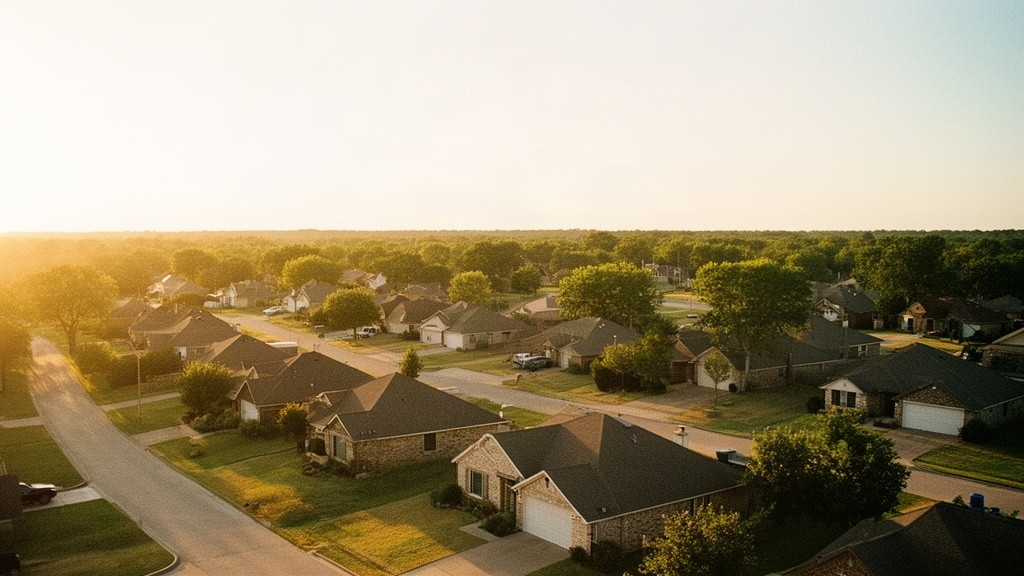
1. Where Appleton Home Prices Stand Right Now
The Appleton housing market has appreciated steadily over the past several years, and September 2026 prices reflect that momentum. The median sale price for single-family homes in Appleton sits in the upper $280,000s to low $300,000s as of this month, depending on the specific neighborhood and lot configuration. Condominiums and attached townhomes trade lower, typically in the $180,000 to $240,000 range, making them a meaningful entry point for buyers who want to build equity in the Fox Cities without stretching their budget to a detached home.
Median Sale Price and Price Per Square Foot
Price per square foot in Appleton currently runs roughly $155 to $185 for updated single-family homes, with older unrenovated stock coming in below that floor and newer construction pushing above it. According to NeighborhoodScout's Appleton real estate appreciation data, Appleton has posted consistent long-run appreciation that outpaces many comparably sized Midwest cities, which is relevant context for buyers deciding whether to purchase now or wait. A home bought at the median price point five years ago has gained meaningful equity, and that trend has continued into 2026.
How Appleton Compares to the Broader Fox Cities Region
Appleton generally prices above Neenah and Menasha for comparable square footage, and above Kaukauna and Little Chute as well. Oshkosh, roughly 20 miles south on Highway 41, tends to run 10 to 15 percent lower on median price, which draws some buyers who are willing to add commute time in exchange for lower acquisition cost. Within Appleton itself, address location relative to the Fox River, school district boundaries, and lot size account for most of the price spread you see between one block and the next.
What Different Price Bands Get You
In the $200,000 to $260,000 range, buyers typically find 1,000 to 1,400 square foot ranches and split-levels from the 1960s through 1980s, often with original kitchens and bathrooms that have been maintained but not updated. The $270,000 to $340,000 band opens up two-story colonials and four-bedroom ranches with at least one renovated bathroom and a two-car attached garage, which is the most competitive segment of the market right now. Above $350,000, buyers start finding newer construction from the 2000s and 2010s, larger lots in outlying subdivisions, and homes with finished basements. Luxury product above $500,000 exists but is a smaller slice of total volume in Appleton compared to the Fox Cities average.
2. Appleton Neighborhood Housing Stock: What to Expect in Each Area
Appleton is not a single housing market; it is several overlapping markets defined by era of construction, lot configuration, and proximity to the Fox River, College Avenue, and Highway 41. Understanding what each part of the city actually looks like on the ground helps buyers set realistic expectations before they start scheduling showings, and helps sellers price accurately relative to nearby competition. For a broader look at what is currently listed across these areas, the homes for sale in Appleton, Wisconsin 2026 article on this site covers active inventory in more detail.
Near East Side and Downtown Appleton
The Near East Side, roughly bounded by Oneida Street to the west and the river to the south, contains some of Appleton's oldest and most architecturally varied housing stock. You find Craftsman bungalows from the 1910s and 1920s, American Foursquares, and two-story frame houses on lots that run 40 to 60 feet wide. Many of these homes have been renovated multiple times, so condition varies dramatically from one property to the next. Prices here can reach into the $320,000 to $380,000 range for a fully updated bungalow with a detached garage and original woodwork intact. The proximity to the Fox River Trail system, which runs along both banks of the river, and the walkability to College Avenue restaurants and the Fox Cities Performing Arts Center are features that draw buyers to this area.
Downtown Appleton itself has seen continued investment in mixed-use development over the past decade. Condominium and loft-style units in converted commercial buildings along College Avenue and the adjacent blocks trade in the $180,000 to $280,000 range, depending on floor, finish level, and parking situation. These units are typically smaller in square footage than suburban alternatives but offer walkability to the farmers market at Houdini Plaza and the full stretch of College Avenue retail and dining.
Grand Chute and the West Side
Grand Chute is a separate municipality that borders Appleton to the west, and its housing market is closely linked to Appleton's in terms of buyer demand. The Fox River Mall anchors the commercial corridor on Appleton Road, and the residential streets surrounding it contain a mix of 1980s and 1990s subdivisions with ranch and two-story homes on lots of 0.2 to 0.35 acres. Prices in Grand Chute run close to Appleton proper, generally in the $260,000 to $330,000 range for updated four-bedroom homes. The area has strong access to Highway 41, making it practical for people who commute north toward Green Bay (roughly 30 miles, about 35 minutes in normal traffic) or south toward Oshkosh.
Appleton's west side along Wisconsin Avenue and Northland Avenue has a mix of mid-century ranches and newer infill construction. Erb Park and Telulah Park both sit in this general corridor, offering baseball diamonds, tennis courts, and access to the Fox River Trail. Buyers who want a larger lot and a single-story floor plan at a price point below the Near East Side often concentrate their search here.
Neenah-Menasha Border and the South Side
The southern edge of Appleton transitions into Neenah and Menasha, two cities with their own housing markets but significant overlap in buyer pools with Appleton. Homes along Ballard Road and the streets feeding off Highway 10 toward Neenah tend to be 1970s and 1980s construction: split-levels, bi-levels, and ranches with attached garages and full basements. These properties often trade at a slight discount to comparable Appleton addresses, which makes them worth including in a search if the buyer's priority is square footage per dollar rather than a specific Appleton mailing address.
Newer Subdivisions on the Outer Edges
Appleton has expanded steadily to the north and northwest, with newer subdivisions in areas like Northbrook and along County Road CB adding homes built between 2005 and the present. These properties typically feature open floor plans, three-car garages, and larger lots of 0.3 to 0.5 acres. New construction in these corridors starts around $350,000 for a production build and climbs toward $500,000 and above for custom finishes. The tradeoff is distance: these addresses can sit 8 to 12 miles from downtown Appleton, which adds meaningful commute time for anyone working in the College Avenue corridor or the Appleton medical district near Calumet Street.
3. Market Conditions: Inventory, Days on Market, and Buyer Competition
Appleton's housing supply remains constrained in September 2026, which continues to favor sellers in the most in-demand price bands. Active inventory across the Fox Cities has been running below historical norms for several consecutive years, and Appleton has not been immune to that pressure. Buyers who have been watching the market for the past 12 to 18 months have seen well-priced listings move quickly, often within days of hitting the MLS.
Current Inventory Levels
As of September 2026, Appleton is operating with roughly 1.5 to 2 months of housing supply in the $250,000 to $350,000 range, which is the segment with the highest transaction volume. A balanced market sits at around 4 to 6 months of supply, so this remains a seller's market by conventional measures, though the gap has narrowed slightly from the extreme lows of 2022 and 2023. Above $400,000, supply is somewhat more comfortable, giving buyers in that range a bit more time to evaluate options before making a decision.
How Fast Homes Are Moving
Well-priced, well-presented homes in Appleton's core price bands are averaging 10 to 20 days on market before going under contract in September 2026. Homes that sit longer than 30 days typically have a pricing issue, a condition issue, or both. Buyers should not interpret a longer days-on-market figure as a signal that a home is undesirable; it is worth investigating the specific reason before passing. Sellers, on the other hand, should understand that overpricing at list will result in price reductions that ultimately net less than a correctly priced launch would have.
What This Means for Buyers vs. Sellers
For sellers, the current conditions in Appleton support strong list prices, but only if the home is in competitive condition and priced accurately against recent comparables. For buyers, the market requires preparation: pre-approval in hand before touring, clarity on must-haves versus nice-to-haves, and willingness to move quickly when the right home appears. Buyers who are still in the research phase should read through the guide to finding a trustworthy Realtor in Appleton for first-time buyers on this site to understand what to look for in representation before they start making offers.
4. Timing the Appleton Market: When to Buy and When to Sell
Timing matters in any real estate market, and Appleton follows seasonal patterns that create real strategic differences depending on whether you are buying or selling. Understanding those patterns lets you plan your move rather than react to whatever the market happens to be doing when you feel ready.
Seasonal Patterns in Appleton
Appleton's peak listing season runs from late March through June, when snow is off the ground and buyers are most active. This is when sellers see the most competing offers and the shortest days on market. July and August see continued activity but a modest slowdown as families focus on summer plans. September through October represents a second, shorter active window: buyers who did not find a home in spring return to the market, and sellers who want to close before the Wisconsin winter sets in list with urgency. November through February is the slowest stretch, with lower inventory and fewer buyers, though motivated sellers and buyers during this period often negotiate more efficiently because there is less competition on both sides.
Why September Is a Useful Window
September 2026 sits at the opening of Appleton's fall market window, which offers specific advantages for both buyers and sellers. Buyers face less competition than they did in April and May, which means fewer multiple-offer situations and more room to negotiate on inspection repairs or closing costs. Sellers who list in September still benefit from reasonable buyer demand before the market quiets for winter, and homes that photograph well in fall foliage along the Fox River corridor tend to present attractively online. If a seller is not ready to list until October or November, the calculus changes: they should either move quickly to catch the fall window or plan for a spring launch instead.
Interest Rate Context in 2026
Mortgage rates have been a dominant factor shaping buyer behavior across the country for the past several years, and Appleton is no exception. Research from the National Association of Realtors shows that mortgage application volumes respond meaningfully to even modest rate movements, which means that any rate improvement in 2026 is likely to bring additional buyers into the Appleton market and intensify competition further. Buyers who are waiting for rates to drop before purchasing should weigh that potential rate benefit against the reality that lower rates historically bring more buyers off the sidelines, which pushes prices up and reduces negotiating leverage.
5. Practical Steps for Buyers and Sellers in Appleton Right Now
Knowing the market conditions is only useful if you translate that knowledge into a concrete plan. Here is what buyers and sellers in Appleton should be doing in September 2026 to position themselves well, regardless of which side of the transaction they are on.
Steps for Buyers
First, get fully pre-approved, not just pre-qualified, before you tour a single home. In Appleton's faster-moving price bands, a seller will not take an offer seriously without documented pre-approval from a reputable lender. Second, define your non-negotiables clearly: number of bedrooms, garage configuration, maximum commute to your workplace, and basement requirement. Appleton winters make a full basement or at minimum a deep crawl space important for mechanical systems. Third, set up MLS alerts so you see new listings the day they appear; homes in the $270,000 to $330,000 range routinely go under contract within a week of listing. Fourth, interview your agent before committing. The questions to ask when interviewing a real estate agent resource on this site gives you a practical framework for that conversation.
Fifth, budget for closing costs beyond the down payment. In Wisconsin, buyers typically pay 2 to 3 percent of the purchase price in closing costs, covering lender fees, title insurance, prepaid property taxes, and homeowners insurance escrow. On a $300,000 Appleton home, that is $6,000 to $9,000 in addition to your down payment. Sixth, think about resale from day one: homes near the Fox River Trail, with two-car attached garages, and within a short drive of the Highway 41 interchange tend to hold value and sell faster when it is time to move on.
Steps for Sellers
Sellers in Appleton right now should start with a realistic comparative market analysis, not a Zestimate. Online automated valuations can be off by 5 to 10 percent in either direction on Appleton homes because they do not account for basement finish quality, garage configuration, or recent kitchen updates that dramatically affect buyer perception. An accurate list price, set within 2 to 3 percent of true market value, will generate the most showing activity and the best final sale price.
Presentation matters more than sellers often expect in a market where buyers are browsing dozens of listings online before scheduling a single showing. Professional photography, a clean and decluttered interior, and any deferred maintenance addressed before listing will directly affect how quickly your home goes under contract and at what price. In Appleton's older housing stock on the Near East Side and west side, fresh paint in neutral tones and updated light fixtures are low-cost improvements that photograph well and help buyers see past the age of the home. Sellers who want a detailed breakdown of how to price and present their specific property should speak directly with an experienced local agent before making any decisions.
FAQ
What is the median home price in Appleton, Wisconsin in September 2026?
The median sale price for single-family homes in Appleton sits in the upper $280,000s to low $300,000s as of September 2026, with price per square foot running roughly $155 to $185 for updated properties. Condominiums and attached townhomes trade lower, generally in the $180,000 to $240,000 range. Prices vary meaningfully by neighborhood: the Near East Side and areas closest to the Fox River tend to command premiums, while outer subdivisions in Grand Chute and the northern edges of the city offer more square footage per dollar. New construction above $350,000 is available in the newer subdivisions on Appleton's north and northwest sides. For the most current figures on active listings, a local agent with live MLS access will give you a more precise picture than any automated tool.
Is it a buyer's market or a seller's market in Appleton, Wisconsin right now?
Appleton is still a seller's market in September 2026, particularly in the $250,000 to $350,000 price band that sees the highest transaction volume. Active inventory sits at roughly 1.5 to 2 months of supply in that segment, well below the 4 to 6 months that defines a balanced market. Well-priced homes are going under contract in 10 to 20 days on average. That said, conditions have moderated slightly from the extreme lows of 2022 and 2023, and buyers in the $400,000-plus range have a bit more room to negotiate. Buyers should enter the market pre-approved and prepared to move quickly; sellers should price accurately and invest in presentation to maximize their outcome.
What is the best time of year to buy or sell a home in Appleton, Wisconsin?
For sellers, the spring window from late March through June is historically the strongest in Appleton, with the most buyer activity, shortest days on market, and the highest likelihood of multiple offers. September and October represent a second, shorter active window before the Wisconsin winter slows the market. For buyers, the fall window offers a practical advantage: fewer competing buyers than in spring, which creates more room to negotiate on price, inspection repairs, or closing costs. The slowest stretch runs November through February, when inventory drops and fewer buyers are active, though motivated parties on both sides can sometimes negotiate more efficiently in that quieter period. Interest rate movements in 2026 are also a relevant timing factor, since rate drops tend to bring additional buyers into the market and increase competition.